
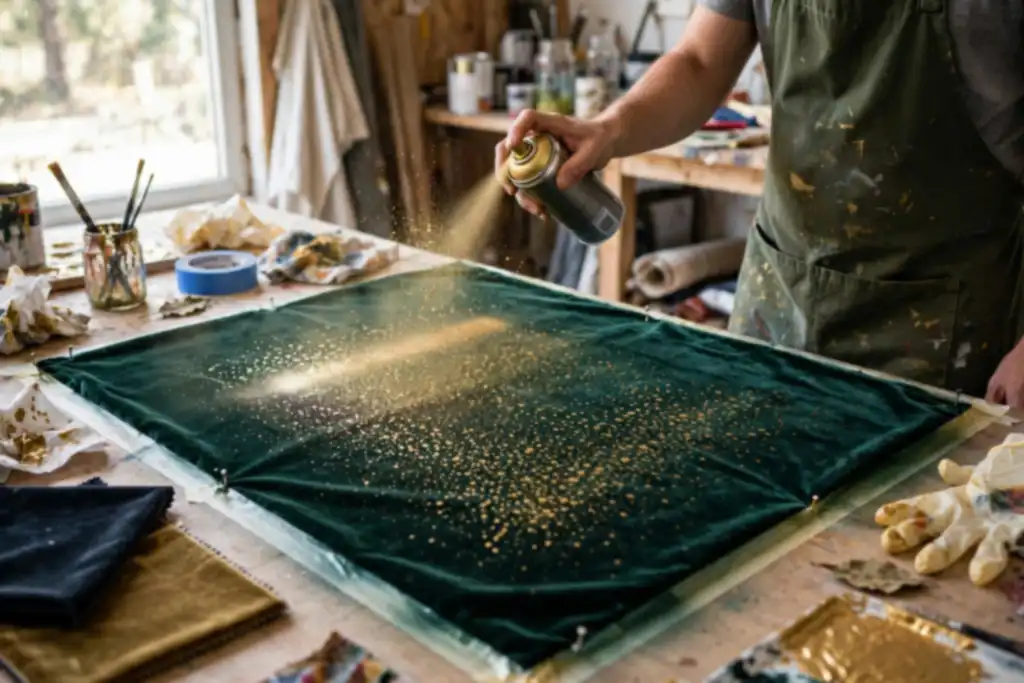
It depends on the velvet and your goal. Spray paint can work on velvet fabric, but only with light coats and proper surface preparation to avoid stiffening and matting of the pile.
You found a vintage velvet armchair at a garage sale, and the color is all wrong for your living room. Before you drag it to the reupholsterer, you wonder: can you spray paint velvet fabric? The short answer is yes, but the long answer involves a few critical steps to keep the velvet’s soft hand and rich nap intact.
This article gives you the straight talk on spray painting velvet. You will learn why velvet’s pile, the raised fibers that give it depth, makes spray paint risky, and how to avoid common mistakes like stiffening, matting, and uneven color. We cover surface preparation, the right products, and drying time so you can decide if this is a job for you.
Can You Spray Paint Velvet Fabric? the Honest Answer
Yes, you can spray paint velvet fabric, but only if you accept that the soft hand and sheen will change. The pile, the raised fiber surface that gives velvet its depth, is fragile, so success depends on prep and restraint rather than a single heavy pass.
| Situation | What it means | What to do |
|---|---|---|
| Light upholstery use | Pile gets flattened and matted | Use fabric spray paint in light coats |
| Clothing or wearables | Stiffening ruins drape and feel | Skip paint and dye instead |
| Car interior trim | Heat and friction speed wear | Test a hidden patch first |
| Heavy daily handling | Paint cracks and sheds | Choose reupholstery over coating |
| Decorative pillows | Low contact hides texture loss | Seal with a fabric-safe clear coat |
| Full color change | Coverage needs multiple passes | Plan extra drying time between coats |
Recommended for this job

Tulip ColorShot Fabric Spray Paint
Adds sprayable black color to velvet with stencil-friendly, even application.

Fabricoat Fabric Paint & Upholstery Dye
Water-based dye offers flexible, washable color alternative for velvet upholstery projects.

Tulip ColorShot Interior Upholstery Spray Paint
Interior upholstery spray delivers even coffee brown coverage with soft-to-touch finish on velvet.
What ‘Yes, with Caveats’ Actually Means
You can coat velvet fabric, but treat it as a texture trade, not a color swap. Fabric spray paint stays flexible on cloth, while general-purpose aerosol dries hard and stiffens the pile, the raised fibers that give velvet its softness. Apply 2 to 3 light coats, about 8 to 10 inches away, instead of one wet pass.
Where Spray Paint Works and Where It Doesn’t
Low-contact pieces like decorative pillows accept fabric spray paint reasonably well. Daily-use cushions and car interior trim rarely survive the wear. Vacuum loose fibers, lay a drop cloth, and wear an OSHA-rated respirator for filtered air. Test a hidden 2-inch patch first and allow 24 hours of drying time before judging matting.
Matting is when velvet's raised fibers flatten and shine, dulling the soft, light-catching texture.
Keeping Painted Velvet Looking Good: Care and Maintenance
How to Clean Painted Velvet Without Cracking the Paint
Vacuum gently with a brush attachment on low suction, because scrubbing flexes the coating until it cracks. Keep water minimal; a barely damp cloth beats a soaked one every time. Blot, never rub, and let the piece air dry fully before you sit on it or wear it.
Brushing the Nap After Wear
Use a soft-bristle brush in one direction to lift the nap, which is the raised fiber surface that gives velvet its feel. Do this after wear or weekly on upholstery to fight matting, where fibers flatten and shine. Skip stiff brushes and heavy pressure, since both pull paint off the pile.
Spot-Cleaning vs. Full Washing
Spot-clean only. Full washing or machine washing will break down the paint film and stiffening, the added rigidity that keeps the coating from flexing apart. Treat stains fast with a mild soap solution and a white cloth, then rinse by blotting with clean water.
- Test any cleaner on a hidden area first
- Blot fresh spills instead of rubbing them in
- Air dry away from direct heat
Does Weather or Climate Change the Answer?
Humidity and Slow-Drying Mist Coats
High humidity stretches drying time and lets mist coats stay tacky, so dust settles into the pile. Spray only when relative humidity is under 50 percent and the temperature sits between 65 and 75°F. In damp air, wait 30 to 60 minutes between light coats and let the piece cure 24 hours before handling.
Cold Garages and Uneven Curing
Cold air slows curing and can leave a soft film that never bonds to the fibers. Most fabric spray paint labels require 60°F or warmer, so move the project indoors or wait for a mild day. Below that range, drying time roughly doubles and matting risk climbs.
Dry Indoor Heat and Brittle Paint
Forced-air heat dries the coating too fast, making the film brittle and prone to cracking across the nap. Keep the piece away from vents and space heaters, and let each light coat flash off evenly. A flexible fabric spray paint handles dry air better than general-purpose aerosol, and a fabric-safe clear coat seals the surface without stiffening it.
When Spray Painting Velvet Doesn't Work
High-Touch Velvet You Sit or Sleep on
Skip aerosol color on seating, cushions, or headboards you use daily. Paint sits on the fibers instead of bonding into them, so friction and body oils wear it off fast.
Dyeing is the better choice here. It penetrates the fibers and keeps the fabric soft, which paint cannot promise.
Crushed Velvet and Delicate Pile
Crushed patterns and thin, delicate pile usually lose their look after painting. The pile is a raised surface of fibers, and paint mats it down and locks in the crush marks.
Once the fibers stiffen, meaning they harden and lose flexibility, you cannot brush the texture back. Plan on dyeing instead, or accept a flat, painted finish.
Heirloom or Dry-Clean-Only Pieces
Do not spray anything you plan to dry clean or pass down. Solvents in cleaning can lift or smear the coating, and the finish rarely survives handling.
Heirlooms deserve a professional dye job or a textile conservator. Aerosol paint is a one-way change with no clean undo.
How to Spray Paint Velvet Fabric Step by Step
Clean and Tape off the Area
Using a brush attachment, vacuum the velvet fabric, then tape off trim and edges with painter’s tape. Lay a drop cloth underneath to catch overspray. Work outside or in a ventilated garage and wear a respirator, a device that filters the air you breathe, plus eye protection.
Apply Thin Mist Coats, Not Wet Passes
Hold the can 8 to 10 inches away and mist on light coats so the pile is dusted, not soaked. Wet passes cause stiffening, a method of making material rigid, and matting of the nap. Build color over several passes instead of one heavy layer.
Brush the Nap Between Coats
Brush the nap with a soft brush between coats while the surface is still slightly tacky. This lifts the fibers so they dry separately rather than glued flat. Wait 15 to 30 minutes between coats, and stop if the fabric feels crunchy.
Let It Dry and Cure Fully
Give the piece 24 hours before light use and 48 to 72 hours before heavy contact. Drying time runs longer in humid conditions. Test a corner first, since fabric spray paint bonds better than general-purpose aerosol on upholstery.
Work in this order and the velvet keeps its texture instead of turning into a crunchy shell.
When Spray Painting Velvet Works Best
Decorative, Low-Touch Velvet
Spray painting velvet works best on decorative items that won’t be handled or sat on, throw pillows, wall hangings, or display pieces. The coating sits on the surface rather than soaking in, so the nap will feel different, but on untouched pieces that trade-off rarely matters. Velvet’s pile mats under wet paint and can’t spring back; light coats preserve some texture, but expect a flatter, stiffer finish.
Light-Colored Velvet for a Color Shift
Best results go lighter to darker or within a similar range. Dark velvet painted pale looks muddy because the base shows through. Fabric spray paint is thin, so coverage builds slowly across several light coats. Allow 15 to 30 minutes drying time between coats depending on humidity; rushing causes runs and uneven color.
Small Accent Pieces and Props
Small items give the most control and least risk, photo props, costume accents, and craft pieces. Use a drop cloth in a ventilated area and wear a respirator, since aerosol overspray travels. Skip clear coat on velvet; it adds shine and locks fibers into a hard shell, defeating the point of keeping any softness.
Your Action Plan Before You Spray
A quick test and the right product turn a risky job into a predictable one. Do these three steps first, and velvet fabric stays soft instead of turning into a stiff board.
| Action | Why it helps | How to start |
|---|---|---|
| Patch test | Reveals color and texture damage | Spray a hidden patch, wait 24 hours |
| Fabric spray paint | Flexes with the pile | Check the label for fabric use |
| Respirator | Filters solvent vapors | Match cartridges to the product |
| Ventilation | Clears fumes fast | Open windows, add a fan |
| Drop cloth | Catches overspray and drips | Cover a wide area around the item |
| Light coats | Prevents matting and stiffening | Mist from 8 to 12 inches away |
| Drying time | Lets fibers relax between coats | Wait 1 to 2 hours per coat |
Run the 24-hour Patch Test
Test a hidden patch first by spraying it and waiting a full 24 hours before committing. The nap, the raised surface of the pile, tells you fast whether the coating mats or sheds.
Choose Fabric Spray Paint Over General-Purpose
Fabric spray paint is formulated to flex with soft fibers, while general-purpose spray paint often dries hard and causes stiffening, a permanent loss of softness. Check the can label before you buy.
Set up Ventilation and a Drying Space
Work outdoors or in a garage with cross airflow, and wear a respirator, a mask that filters vapors from your lungs, per OSHA guidance. Lay a drop cloth over a wide area and let pieces dry 15 to 30 minutes per light coat.
Is It Possible to Spray Paint Velvet Without Ruining the Texture?
How the Nap and Pile React to Paint
The short answer is yes, but only if you accept that the surface will change. Velvet’s nap is the directional grain of the fibers, and its pile is the raised fiber layer itself. Aerosol paint lands on the tips of those fibers and bonds them together instead of soaking in like dye.
That means the soft, light-catching directionality gets flattened. Fabric spray paint formulated for textiles flexes better than general-purpose aerosol, but neither one restores the original hand of the cloth.
Will the Velvet Feel Stiff or Crunchy Afterward?
Usually, yes, at least somewhat. Stiffening, which is a method of increasing rigidity in a material, is exactly what happens when resin binds fiber tips together. Thin, light coats reduce the effect; heavy wet passes make it worse.
Expect a noticeable change in hand feel on upholstery and clothing. On car interior trim the stiffer surface is often acceptable, since durability matters more than softness there.
The Stiffness Trade-Off Most Guides Skip
You cannot keep true velvet softness and get durable color from an aerosol. Pick one. If the texture is the point, dye or reupholstery is the honest route.
If color change is the goal, work in light coats with a respirator and drop cloth, and plan on a clear coat only where abrasion is a concern.
Spray Painting Velvet Upholstery, Clothing, and Car Interiors
Sofa and Chair Upholstery: Low-Touch Zones Only
Yes, you can recolor velvet furniture with spray paint, but treat it as a spot fix, not a full restoration. The pile, meaning the raised fiber surface, mats down under paint and loses its soft hand. Aim for low-touch zones like the back panel or a side chair rather than seat cushions.
Start with surface preparation: vacuum loose dust, then tape off trim and lay a drop cloth. Apply fabric spray paint in light coats from about 10 to 12 inches away, letting each pass flash off before the next. Heavy coats cause stiffening, which is a method of increasing rigidity, and that kills the velvet feel.
Clothing and Costumes: Flexibility Matters
Spray paint on wearable velvet usually fails because the film cracks when the fabric bends. If you must try it, use a flexible fabric spray paint and keep the coat thin. Test on an inside hem first and check the drape after full drying time, typically 24 hours.
Headliners and Car Interiors: Heat and Wear
Car headliners and trim see heat and abrasion that painted velvet rarely survives, so expect fading and flaking within months. Wear an OSHA-rated respirator, since a respirator is a device that supplies filtered air and protects your lungs from aerosol mist. Work outdoors or with strong ventilation, and skip clear coat on fabric, which only adds stiffness.
Sealing, Safety, and the Real Cost of Painted Velvet
Sealing and Protecting the Painted Surface
Finish with a clear coat made for fabric if you want the color to survive handling. A light mist of clear coat locks pigment into the pile, which is the raised fiber surface, and reduces rub-off on cushions and trim. Skip heavy coats, since extra film accelerates stiffening and matting.
Let each layer cure fully before use. Typical drying time runs 24 to 72 hours depending on humidity and coat thickness.
Ventilation and Respirator Safety
Spray outdoors or in a garage with the door open and a fan moving air across the work area. Aerosol solvents build fast in closed rooms, so airflow matters more than a mask alone. Wear a respirator, a device that filters what you breathe, rated for organic vapors, plus gloves and eye protection.
Lay a drop cloth beyond the item, because overspray travels. Follow the manufacturer’s label and OSHA guidance for solvent exposure.
Cost Comparison: Spray Paint vs. Reupholstery vs. Dye
Spray paint is the cheapest route, typically $10 to $30 in cans for a small piece, but texture loss is permanent. Dye runs roughly $20 to $60 and keeps the nap soft, though color shifts on dark fabric are limited.
Professional upholstery usually costs $200 to $800 or more per piece, yet it restores both color and feel. Weigh the savings against the stiffening risk before you commit.
Common Mistakes That Ruin Velvet
Heavy Wet Coats That Mat the Pile
One thick pass is the fastest way to flatten the nap and leave crusty patches. Apply fabric spray paint in light coats, keeping the can moving, and let each pass flash off before adding more.
Skipping the Brush-Between-Coats Step
Velvet fibers bond together as paint dries, so brush the pile gently between coats to keep it standing. A soft brush restores loft and prevents permanent matting.
Painting Over Dirt or Sizing
Dust, oils, and sizing block adhesion, so paint flakes off the moment the fabric flexes. Vacuum and wipe the surface preparation down first, then test a hidden patch for stiffening before you commit.
- Over-wetting: soaking the fabric collapses the pile and leaves a hard shell instead of soft texture.
- No test patch: skipping a hidden spot check means you discover stiffening after the whole item is painted.
- Ignoring safety gear: wear a respirator (a device that supplies filtered air) and lay a drop cloth, since overspray travels.
- Rushing drying time: recoating too soon traps solvent and causes cracking or uneven color.
- Assuming a clear coat helps: most clear coats stiffen velvet further and add sheen the fabric never had.
When to Ask a Store Expert, Manufacturer, or Local Pro
Ask About Fabric Compatibility Before You Buy
Bring a fabric swatch and ask staff which fabric spray paint suits velvet with a soft nap. Request a flexible product, not one that hardens the pile. Ask when dyeing beats painting, a pro can say if dye keeps the cloth’s hand while paint only coats it.
Check Care Labels and Warranty Limits
Call the manufacturer before spraying upholstery or car trim. Ask if coating voids the warranty, what cleaning method is allowed, the recommended drying time, and whether clear coat is safe on velvet (some finishes stiffen or mat).
Get a Quote If the Piece is Valuable
Ask a local pro to estimate dyeing or reupholstery for antique, tailored, or costly items, a fair comparison against aerosol work.
- Have a store expert test a hidden patch with your exact spray.
- Ask the manufacturer about care labels and warranty.
- Get a pro quote for dyeing vs. painting if valuable or deep pile.
- Request written respirator and ventilation guidance.
Can You Spray Paint Velvet Fabric: Frequently Asked Questions
?Can You Spray Paint Velvet Fabric Without a Respirator?
No. Wear a respirator, a device that provides mechanical ventilation to your lungs, whenever you spray paint velvet fabric indoors. Aerosol paint puts fine particles and solvent vapors in the air, and velvet's pile traps overspray you can't see. Set up a drop cloth, open windows, and keep the respirator on through drying time. Skip it and you're breathing the mistake.
?Does Fabric Spray Paint Work Better Than Regular Spray Paint on Velvet Fabric, and Can You Spray Paint Velvet Fabric at All?
Yes, fabric spray paint usually works better, and you can spray paint velvet fabric with care. Fabric formulas stay flexible, so they bend with the nap instead of cracking off. Regular spray paint dries hard and speeds up stiffening and matting. If you only have general-purpose paint, test a hidden patch first. Product choice matters more on velvet than on almost any other fabric.
?Can You Spray Paint Velvet Fabric That Gets Heavy Use, Like a Couch?
No, not if you want it to last. Spray paint sits on the surface and wears away where hands and bodies rub, and velvet upholstery takes constant contact. It also stiffens the pile, which feels wrong on seating. For a couch, dye or reupholster. Reserve spray paint for low-contact velvet fabric like display pieces, trim, or costume items.
?How Many Light Coats Should You Spray on Velvet Fabric?
Plan on three to four light coats, not one heavy pass. Light coats let the paint grip the pile without soaking it into a matted mess. Wait the full drying time between coats, usually the label's recoat window. Heavy coats are the number one cause of stiffening, where the fabric turns rigid, and uneven color. Slow and thin wins on velvet fabric every time.
?Why Does Spray Paint Make Velvet Fabric Feel Stiff and Rough?
Because paint bonds the fibers together. Velvet's soft feel comes from loose, upright pile, and spray paint glues those fibers down, causing matting and stiffening, a method of increasing rigidity rather than softness. You can't fully avoid it. Brushing the nap after each light coat and keeping coats thin limits the damage, but expect some texture change on any spray-painted velvet fabric.
?is Surface Preparation Different for Spray Painting Velvet Fabric Than Other Materials?
Yes. Vacuum or brush the nap first, then wipe with a lint-free cloth. Don't soak velvet fabric with cleaners, since moisture mats the pile. Mask off areas you're not painting and lay a drop cloth. Also test spray paint on a hidden patch and let it cure fully before committing. Velvet punishes skipped surface preparation more than smooth fabrics do.
?What Clear Coat Should You Use Over Spray Paint on Velvet Fabric?
Use a flexible fabric-safe clear coat, and test it first. A hard clear coat adds shine and stiffness to velvet fabric and can crack when the nap flexes. Many painted velvet projects do better with no clear coat at all, just careful handling. If you seal it, apply thin coats and check that the texture and color hold up before doing the whole piece.
Our Thoughts
Yes, aerosol color can go onto velvet fabric, but the result is a thin coating sitting on delicate fibers, not a dye job. That means light coats, real surface preparation, and realistic expectations are what keep the pile from matting or stiffening, which is a method of increasing rigidity, into a crunchy shell. Skip any of those steps and you get a patchy, scratchy mess you cannot undo.
Your next step is a hidden test: mask off an inconspicuous spot, work in a ventilated space with a respirator (a device that supplies filtered air to protect your lungs), lay a drop cloth, and apply two or three light coats, letting each dry fully. If the nap stays soft, continue; if it mats, stop and consider fabric spray paint or reupholstery instead.