
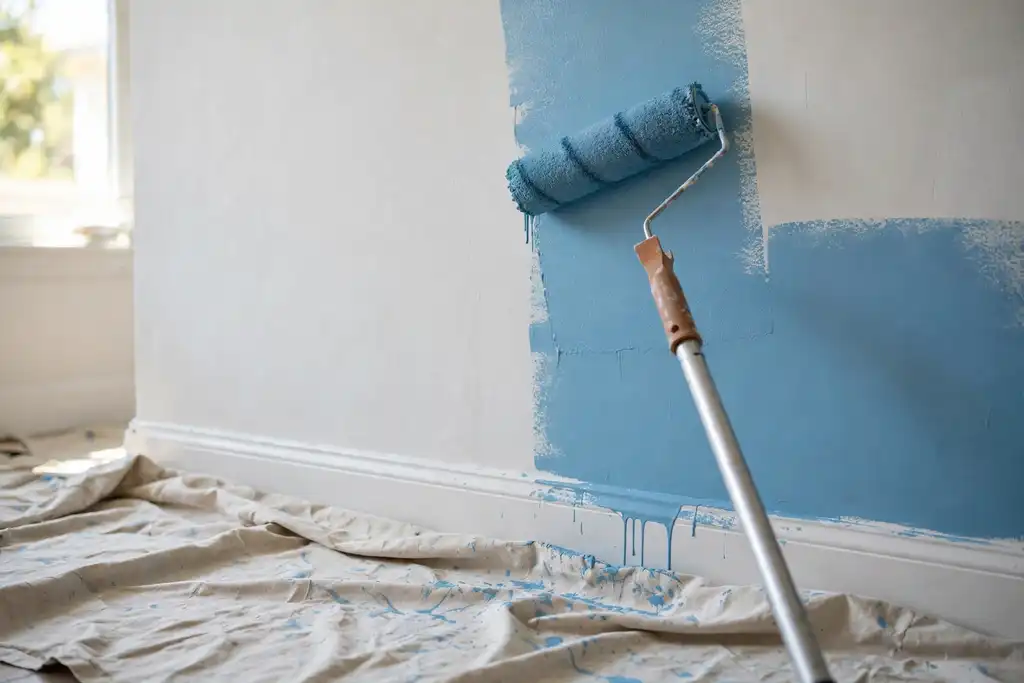

You want a smooth wall finish without buying every tool separately. The best roller for painting walls for most people is Bates- Paint Roller Kit, which packs 19 pieces into one set. It includes 9-inch and 4-inch roller frames with matching covers, a plastic tray, and a 6′ x 9′ drop cloth.
Rhibak Paint Roller Kit gives you more covers, with six 4-inch and six 9-inch covers, plus an adjustable aluminum extension pole for higher walls. Bates covers more of the job from prep to cleanup with a sanding block, paint mixer, tape, and four brushes. For a first full room refresh, the best roller for painting walls is the Bates kit because it is the more complete starting point.
Top Recommendation: Bates- Paint Roller Kit
Why We Recommend It: Bates bundles the rollers, tray, drop cloth, and prep tools in one box at 1.85 pounds. Rhibak wins on cover count and reach, but it leaves you to supply the prep and cleanup items yourself. That completeness is why the Bates kit suits most wall painting projects.
10 Best Roller for Painting Walls


1. Bates- Paint Roller Kit 19 Pcs Set
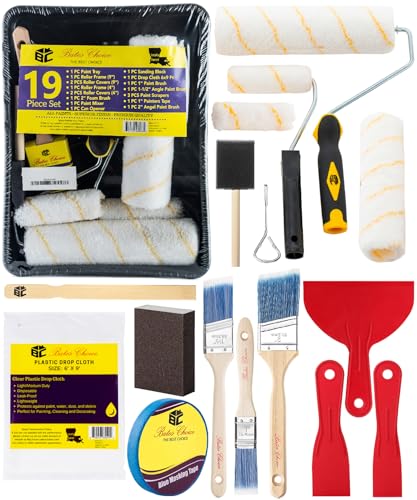
The Bates- Paint Roller Kit is a 19-piece set that brings the main painting and prep tools together in one box. It includes a plastic paint tray, a 9 inch roller frame and a 4 inch roller frame, each with a matching microfiber roller cover. You also get a 6 by 6 foot drop sheet, so the basics for covering furniture and floors are already in the box.
What makes this kit stand out is the range of extras beyond the rollers. There is a sanding tool, a paint stirrer, a can opener, painter’s tape, a 2 inch foam brush and three paint brushes in 1 inch, 1.5 inch and 2 inch angle styles. Three paint scrapers are included too, which helps with prep work before the first coat goes on. The brushes and scrapers cover the jobs a roller cannot reach, like edges and small repairs.
The two roller sizes do different jobs. The 9 inch roller is the one to reach for on open wall areas, while the 4 inch roller suits narrower spots and touch ups. Having both frames means you can switch between wide and small work without hunting for extra parts. The tray holds paint for the roller, and the drop sheet protects the floor underneath.
This set suits home interiors and DIY painting projects where you want supplies gathered in one place. The mix of roller sizes and brush styles makes it easier to handle walls, corners, trim and detail areas with the same kit. It is a practical choice for someone starting a room refresh who does not already own a full set of tools.
The kit is built from durable materials and keeps the essential wall painting supplies together in one convenient package. It weighs 1.85 pounds and measures 16 inches long, 12 inches wide and 3.5 inches high, so it stores easily between projects. For a first painting job or a spare set to keep on hand, the range of pieces covers a lot of ground.
2. Rhibak Paint Roller Kit with Extension Pole

The Rhibak Paint Roller Kit is a 27-piece set built around two roller sizes and an adjustable extension pole. It comes with six 4 inch roller covers and six 9 inch roller covers, plus a 4 inch frame and a 9 inch frame. Three 9 inch paint trays and a tray liner are included, along with a 1 inch brush, a 2 inch brush, a 2.5 inch angle brush and a stirring rod.
The extension pole is the feature that sets this kit apart. It is made of aluminum alloy, so it stays light in the hand while feeling sturdy, and it extends from about 23 inches to 47 inches. That extra reach means you can get to higher sections of wall without setting up a ladder. For tall rooms and stairwells, that is a real convenience.
The two roller sizes are meant for different surfaces. The 9 inch microfiber rollers are for open walls and are designed to leave a smooth finish without lint. The 4 inch mini rollers handle tight spaces where a full size roller will not fit. The angle brush is aimed at cutting in along walls, while the flat brushes suit trim work.
The steel roller frames are made to resist bending and to hold the covers firmly while you work. The microfiber covers are described as absorbing plenty of paint and spreading it evenly. The set is also listed as compatible with water and oil based paints, glosses, stains, emulsions and varnishes. That range means one kit can cover several types of project.
With six covers in each size, this set is aimed at people who expect to paint more than one room or who do not want to stop and clean a cover mid job. The number of trays and liners adds to that, since you can keep different paints separate. It is a cost conscious option for perfectionists and money savers who want a full kit in one purchase.
Both professional painters and novices are the intended users, according to the product details. The different roller and brush sizes are there to match different scenarios, from walls and trim to cabinets, doors, fences, decks and touch ups. The kit weighs 3.9 pounds and measures 16.5 inches by 12.5 inches by 3.9 inches, so it is manageable to carry and store.
3. Pro Grade Paint Roller Kit Brushes 4"

The Pro Grade Paint Roller is a 10 piece set built around two roller frames and two tray ready covers. It includes a 9 inch frame and a 4 inch mini frame, each paired with microfiber covers that have a 1/2 inch nap. A plastic paint tray, a 1 inch flat brush, a 1.5 inch angle sash brush and a 2 inch brush round out the kit.
The microfiber covers are listed for smooth to semi rough surfaces, which covers most interior walls and ceilings. The 1/2 inch nap is a middle ground that picks up paint well without leaving heavy texture. The two roller sizes let you switch between broad wall passes and tighter spots near trim.
Because the set ships with frames, covers, tray and brushes together, there is no need to hunt for separate pieces before a job starts. The 9 inch roller handles large surfaces, while the 4 inch mini roller and the angle sash brush are there for edges and detail work. The brushes also make it possible to cut in around ceilings and trim without buying anything extra.
The kit is described as professional grade, with the aim of a smooth, even finish on interior paint in gallon or smaller quantities. That makes it a practical choice for a single room refresh or a touch up project rather than a full house repaint. The tray is plastic and meant for easy cleanup and reuse.
This set suits someone who is starting from scratch and wants one box that covers rollers, brushes and a tray. It is also a sensible pick for a homeowner who paints occasionally and does not want to spend on separate premium components. The 10 piece count keeps the kit focused on the essentials for walls, ceilings and trim.
4. RYMTOX Complete Paint Roller Kit 33PCS

The RYMTOX Complete Paint Roller is a 33 piece kit that goes well beyond rollers and a tray. It includes 9 inch and 4 inch microfiber roller covers, brushes, a tray with liners, tape, gloves, a scraper and a carry bag. The centerpiece is an adjustable 2 to 4 FT extension pole.
The microfiber covers are designed for smooth paint pickup and release, which helps cut down on lint shedding on fresh paint. That matters when a wall needs to look clean and even after the first coat. The 9 inch roller covers broad wall and ceiling areas, while the 4 inch mini roller handles edges, doors, cabinets and corners.
The extension pole is the feature that separates this kit from a basic set. It extends your reach for ceilings, tall walls and upper corners, so you move a ladder less often. That is useful in bedrooms, bathrooms, living rooms and renovation areas where high spots are awkward to get to.
The carry bag keeps the 33 pieces together before, during and after use. When you repaint several rooms or prep a new home, small items like tape, gloves and the scraper are easy to misplace. Having one bag for the whole kit makes it simpler to move from room to room.
This kit suits homeowners, DIY users and parents planning quick wall touch ups, room repainting or move in projects. It is a good fit for anyone who wants rollers, brushes, tape and reach in a single purchase. The 33 piece count and the storage bag make it a practical all in one option for larger DIY jobs.
5. Pro Grade Paint Roller Covers 9 Inch

Pro Grade Paint 1/ is a pack of five nine inch roller covers with a half inch microfiber nap. The covers are built for walls and ceilings, and the maker says they work inside and out. Each cover fits a standard nine inch roller frame.
The half inch nap is the key detail here. It is meant to give full and even coverage on smooth and semi-smooth surfaces like drywall. That makes it a sensible pick when the wall is already in good shape and you just want a clean finish.
The microfiber material is described as no-shed and lint-free. That matters on walls, where stray fibers can end up stuck in the paint. The covers are also washable and reusable, so you can clean them and bring them out for the next job.
Because you get five covers in one pack, you can keep working through a bigger room without stopping to wash a single sleeve. Swap on a fresh cover and carry on. The set suits whole house projects, both interior and exterior.
These covers are a good fit for someone painting flat drywall or semi-smooth walls who wants even coverage and a low risk of lint. If your walls are heavily textured, a longer nap would likely serve you better. For standard interior rooms, this pack covers the basics well.
6. Mister Rui Mini Paint Roller Kit 4

Mister Rui Mini Paint is a twelve piece kit built around a four inch roller. The set includes a tray, a snap-fit handle, two reusable liners, a liner cover, six microfiber sleeves and a 1.5 inch angled brush. It is put together for walls, ceilings, trim, cabinets and furniture.
The sleeves come in two densities. The 9mm nap is aimed at textured surfaces, while the 6mm nap is for smooth walls. Both are microfiber, which the maker says holds paint evenly, prevents drips and resists shedding.
The liner system is a practical touch. The plastic liners snap into the tray so you can switch colors quickly, and the airtight cover lets you store paint overnight without it drying out. That saves time and cuts down on waste.
The tray is deep, which helps hold plenty of paint without leaks. The handle is shaped for a comfortable grip to reduce fatigue over longer sessions. The kit is pitched at DIYers and contractors alike.
The four inch size is the real selling point. It reaches tight spaces where a larger roller cannot go, and the angled brush handles edges and corners. The sleeves are listed for drywall, wood, concrete and more.
This kit suits someone with smaller jobs or awkward areas, such as cabinets, furniture and trim. It also works as a companion to a bigger roller on a full room. If you want one compact set for detail work, this covers a lot of ground.
7. Mister Rui Paint Roller Kit with Extension
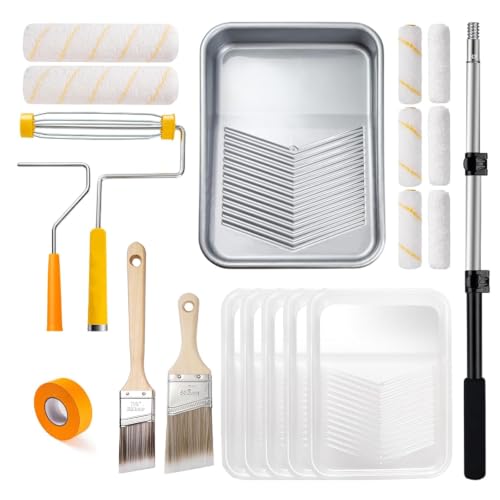
The Mister Rui Paint Roller is a 20 piece painting kit built around a 3ft telescopic extension pole. It includes a 9 inch roller frame and two 9 inch covers, plus a 4 inch frame and six 4 inch covers. You also get a textured tray with five liners and a set of paint brushes.
The extension pole is made from thickened aluminum tubes and uses an integrated telescopic design rather than segmented splicing. That means it should resist bending and deformation over long term use. The simpler pole adjustment is meant to make setup and reach changes more convenient.
The tray has a textured surface that scrapes off excess paint to help prevent dripping. Five leak proof liners let you swap colors quickly and cut down on cleanup time. The whole set is aimed at hassle free painting from start to finish.
What sets this kit apart is the 4 inch mini roller system sitting alongside the standard 9 inch setup. The small covers and dedicated frame are suited to tight spaces, cabinets and trim. The larger 9 inch roller handles big wall areas and saves time on wide surfaces.
The microfiber covers on both sizes are designed to resist lint and shedding. They hold plenty of paint for even coverage without dripping and work with all latex and oil based paints. The covers are washable, so they can be reused across projects.
This kit suits anyone who wants a single purchase covering rollers, tray, liners, brushes and an extension pole. The mix of sizes makes it flexible for whole room repaints and detail work alike. It is a practical choice for home improvement projects and professional jobs.
8. Amazon Basics Microfiber Paint Roller Covers

The Amazon Basics Microfiber Paint is a 12 pack of 9 by 3/8 inch roller covers. Each cover is made from microfiber and comes in white. The pack gives you plenty of spares for larger jobs or repeat use.
The 3/8 inch nap holds an ample amount of paint, which helps speed up application and keeps coverage even. The covers are shed resistant, so they are designed not to leave small pieces behind. That combination supports a clean, professional looking finish.
These covers are versatile and work with all paints and stains. They suit interior and exterior projects including walls, ceilings and house siding. They perform best on smooth and semi smooth surfaces.
The covers are washable and reusable, so you can clean them and use them again and again. Before the first use, soak the cover in water for two minutes to remove any loose fibers. Spin out the excess water before you start painting.
This pack suits anyone painting smooth or semi smooth walls and ceilings who wants a steady supply of covers. The 12 count means you can keep working through big projects without running short. It is a straightforward option for both indoor and outdoor painting.
9. Bates- Paint Roller Kit with Extension Pole
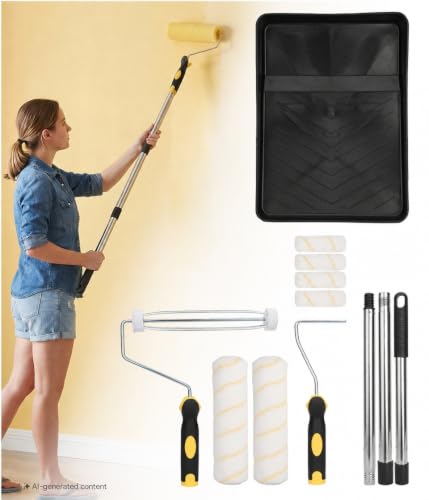
The Bates- Paint Roller Extension is a ten piece kit built around two roller frames and a stainless steel pole. It bundles a nine inch frame and a four inch frame so you can move between broad wall work and tighter detail areas. Six roller covers, a plastic tray and a three foot extension pole round out the set.
The dual frame setup is the standout feature here. The nine inch frame suits large wall runs, while the four inch frame handles trim and edges that a big roller cannot reach cleanly. Switching between the two saves you from juggling separate tools mid job.
The three foot stainless steel extension pole is the piece that changes how you work on tall surfaces. It extends your reach so ceilings and high walls become manageable without dragging a ladder around. That matters on stairwells and rooms with high ceilings where setup time usually eats into painting time.
The six roller covers are described as holding plenty of paint and laying down smooth, even coverage. Having spares on hand means you can keep going if one cover loads up or you move to a different paint. The plastic tray is sturdy enough for regular use and simple to clean between sessions.
The frames and pole are built to last, with durable construction across the kit. For a homeowner working through several rooms, that durability is what keeps the set useful beyond a single weekend. It is a practical choice for walls, ceilings and general home painting projects.
This kit suits DIY painters who want flexibility from one purchase. The mix of sizes and the extension pole covers most interior jobs without adding separate items. Anyone painting a full house or tackling ceilings will find the range of pieces genuinely useful.
10. PinStone House Paint Roller Kit 6pcs 9

The PinStone House Paint Roller is a six piece kit centered on a nine inch extendable roller frame. It comes with five microfiber roller covers with a half inch nap. The frame telescopes from eighteen to thirty six inches, so the roller itself adjusts rather than relying on a separate pole.
The extension is the main draw. You can double the length in about five seconds by rotating, pulling and retracting the rod to the setting you need. That quick adjustment makes it easy to switch between low wall sections and high ceilings during the same job.
The half inch nap microfiber covers are tightly woven into the roll core to prevent fiber loss. That design is meant to give strong paint absorption and a smooth, even finish without splatter. The covers work with water and oil based paints, latex, gloss, varnishes, primers and enamel.
Build quality leans toward long term use. The frame uses zinc plated five wire gauge and a lightweight aluminum alloy rod, and the whole construction is described as corrosion resistant and rust proof. A soft sponge handle is included to reduce hand fatigue and absorb sweat for a better grip.
Because the roller is one piece and non detachable, there is no separate pole to lose or fit. You simply set the length and paint, which keeps the setup simple for walls, floors and ceilings. Cleaning the microfiber covers is straightforward, so the kit stays ready for the next room.
This kit suits painters who work across walls, ceilings and floors and want one adjustable tool. The five covers mean you are not stuck waiting for a single cover to dry. It is a solid pick for interior and exterior projects where reach and finish quality both matter.
Our Testing Process: Why These Rankings Are Different
The goal here is simple. We want to look past the marketing claims and focus on what actually matters when you pick up a roller. A roller either lays paint out evenly and holds up to a real job, or it does not.
We evaluated each product by its specifications, the materials and build quality, and the patterns in owner feedback. Brand reputation and overall value also carried weight, but the build and the feedback patterns mattered most. The Bates- Paint Roller Kit and the Rhibak Paint Roller Kit are two examples of products that stood out on those points.
The products compared cover a wide price range, from budget kits to more expensive sets. A higher price does not always mean a better result, and some cheaper options hold their own on specs and build. Price was treated as one factor among several, never as proof of quality on its own.
Our aim is guidance you can trust. Everything here comes from research and evaluation, not from hands-on testing in a workshop. The rankings reflect the data and the feedback, so you can compare rollers on what counts rather than on the loudest claim.
Complete Buyer’s Guide: How to Choose Roller for Painting Walls
Understanding Why Roller Choice Affects the Finish
A roller decides if a wall looks smooth or patchy, so it deserves more thought than most people give it. A poor cover can shed fibres, leave lap marks, or soak up half the paint before it reaches the wall. Matching the nap and cover material to your paint and surface makes the job faster and the finish cleaner.
Key Features to Look For
Start with the nap, the length of fibres on the cover. Short nap suits smooth walls and gloss paints, while longer nap handles texture and fills gaps. Check the frame for a comfortable grip and a secure cage, and consider kits that include a tray so you are not buying pieces separately.
Types of Roller Compared
Microfibre covers release paint well and suit most interior walls. Foam covers leave a very smooth finish but hold less paint, so they are slower on big areas. Kits like Bates- Paint Roller Kit and Rhibak Paint Roller Kit bundle a frame, cover and tray, while Mister Rui Mini Paint and PinStone House Paint Roller cover smaller or specialised jobs.
How to Use a Roller for Best Results
Load the roller evenly by rolling it through the tray rather than dunking it. Apply paint in a W pattern to spread it, then roll back over the area in straight lines to even things out. Keep a wet edge as you move along the wall, and use an extension pole such as Bates- Paint Roller Extension to reach high sections without a ladder.
What to Avoid
Do not press hard on the roller to squeeze out more paint, because this leaves ridges and uneven coverage. Avoid cheap covers that shed fibres into fresh paint, and never let paint dry on the roller between coats. Skipping a test patch on an unseen area can also reveal texture problems too late.
Matching a Roller to Your Situation
For large, smooth interior walls, a medium nap microfibre cover on a sturdy frame is a sensible default. Textured or rough surfaces need a longer nap so paint reaches into the pits. Small touch ups and edges suit a mini roller like Mister Rui Mini Paint, while full room kits such as RYMTOX Complete Paint Roller or Amazon Basics Microfiber Paint cover the basics in one purchase.
When to Expect Results and How to Maintain a Roller
You should see an even finish within one or two coats if the cover matches the surface and paint. Rinse the cover thoroughly after each use and spin or squeeze out excess water before drying it upright. Store rollers clean and dry, and replace any cover that starts shedding or matting, since a worn nap will show in the finish.
Best Roller for Painting Walls FAQs
Are There Any Roller for Painting Walls That Work on Textured Surfaces?
Yes, you need a longer nap for textured walls, and a nap of 18mm to 25mm reaches into the dips and bumps. Shorter sleeves only touch the high spots, so the texture stays patchy. A long pile sleeve holds more paint, which helps on rough surfaces and fills the texture more evenly.
Expect to use a bit more paint than on a flat wall, so buy slightly extra to avoid running short. Choose a sleeve with a sturdy core so it does not slip on the frame. A good frame keeps pressure even, which gives you a more consistent coat.
Work in small sections and press firmly so the pile pushes paint into the hollows. Avoid overloading, because heavy sleeves drip into the texture and dry unevenly. Let the first coat dry fully before judging the coverage.
Are There Any Tips to Stop a Roller for Painting Walls from Splattering?
Do not overload the sleeve, and load it evenly by rolling it through the tray. Too much paint is the main cause of splatter. Roll at a steady, moderate speed, because fast strokes fling paint off the sleeve.
Keep the pressure light and let the roller do the work rather than pushing hard. Use the right nap for the surface, since a long nap on a smooth wall holds excess paint. That extra paint ends up on the floor and your clothes.
Cover nearby floors and furniture before you start, and keep the tray close to the wall. Roll from the dry area back into the wet paint so the sleeve stays controlled. If splatter starts, stop and check the load before carrying on.
Can I Use a Roller for Painting Walls with Gloss or Satin Paint?
Yes, but choose the sleeve carefully, because gloss and satin show marks and lap lines more than matt. A fine, short nap sleeve gives a smoother result with fewer visible fibres. Use a sleeve rated for the paint type.
Some sleeves are made for water based paints and some for solvent based, so check the label before you start. Keep a wet edge as you work, and roll in sections without letting the paint dry at the edges. This reduces visible overlap marks in the finish.
Avoid pressing hard, since excess pressure leaves ridges that show under light. Stir the paint well so the sheen stays even across the wall. Work quickly in one continuous run per section rather than going back over half dried paint.
How Do I Clean a Roller for Painting Walls After I Finish?
Scrape off the excess paint first, using a roller scraper or the edge of a tray. Then rinse the sleeve under warm water for water based paints, working the water through the fibres with your hands. Keep rinsing until the water runs clear.
For solvent based paints, use the correct thinner instead, and work it through in the same way. Spin or squeeze out the water and stand the sleeve on end to dry. Do not lay it flat while wet, because the pile flattens and loses shape.
A dry, aired sleeve keeps its shape for next time, so store it somewhere dust free. Rinse sooner rather than later, since dried paint stiffens the fibres. If the sleeve stays stiff after washing, it is probably past saving.
How Long Does a Roller for Painting Walls Take to Dry Between Coats?
Drying time depends on the paint, not the roller, and most water based wall paints need around 2 to 4 hours. Check the tin for the exact time, since products vary. Cool or damp conditions slow drying down, while warm, well ventilated rooms speed it up.
Do not roll a second coat onto a tacky surface, because it drags the first coat and leaves marks. A thin, even coat dries faster than a heavy one. Two thin coats usually beat one thick coat, and they also give a better finish.
Test a small patch with a light touch before starting the second coat. Open a window or use a fan to keep air moving, but avoid direct heat that skins the paint. High humidity is the usual reason a coat stays tacky longer than expected.
Should I Use a Roller or a Brush for Painting Walls?
A roller is faster for large flat areas, and it spreads paint evenly while covering more wall per minute. That makes it the main tool for most wall jobs. A brush is better for edges, corners and tight spots.
Use the brush to cut in along ceilings and trim, then roll the main field up to the cut line. Many people use both on the same wall, and that is the usual approach. Brush the edges first, then roll while the edge is still wet.
This blends the two areas together and hides the join. Keep the roller close to the cut line but not on the trim, so you do not load the brushwork with extra paint. Reload the brush before it runs dry, since dry edges are hard to blend.
What Are the Best Rollers for Painting Walls When You Want to Save Time?
A wider roller covers more wall per stroke, and a 230mm or 270mm sleeve is common for large rooms. It cuts the number of passes you make, which matters most on long open walls. A roller with a good paint capacity also saves trips to the tray.
Microfibre and woven sleeves hold a good load, which means fewer refills and less stopping. An extension pole helps you reach high areas without a ladder, and it keeps your pace steady. Together with a wide sleeve, it speeds up the job.
Keep a spare sleeve ready so you can swap instead of cleaning mid-job. Roll in straight, overlapping lines rather than zigzags to cover faster. Watch for drips from the frame, since speed is wasted if you have to clean the floor.
What is the Top Roller for Painting Walls for a Smooth Finish?
A short nap roller is the usual choice for smooth walls, so look for a nap of around 6mm to 10mm. This keeps the texture low and the finish even across the whole surface. Microfibre sleeves work well on smooth surfaces because they hold paint without shedding.
A woven sleeve is another solid option, and both spread paint thinly and evenly. Avoid long nap sleeves on smooth walls, since they leave a stippled texture that shows under light. Match the nap to the surface rather than to the price.
Load the sleeve lightly and keep a wet edge so lap marks do not set. Sand any rough spots first, because a roller cannot hide bumps, only cover them. Check the sleeve for loose fibres before you start rolling.
What Size Roller for Painting Walls Should I Pick?
Match the width to the space, and a 230mm sleeve suits most rooms. Smaller 100mm to 150mm sleeves are handy for tight areas and small walls. A wider sleeve covers more ground but needs more control, and it can be awkward near ceilings and corners.
Many people keep one wide and one narrow sleeve so they can switch without stopping. Think about the frame too, because a frame that fits the sleeve snugly avoids slipping. The right size plus a good frame makes the job easier.
Consider the room shape before choosing, since narrow halls waste a wide sleeve. A medium sleeve is often the safest single choice for mixed spaces. Check that the sleeve fits your frame before buying, as sizes are not always standard.
Final Verdict
The overall winner is the Bates- Paint Roller Kit, mainly because its versatile kit setup covers more jobs without extra purchases. Based on our research and data analysis, the Pro Grade Paint Roller suits buyers who want steady edge control on trim and detail work. For larger wall areas, the Pro Grade Paint 1/ is the better fit thanks to its wide coverage reach. Both earn solid owner feedback for holding up across repeat projects.