
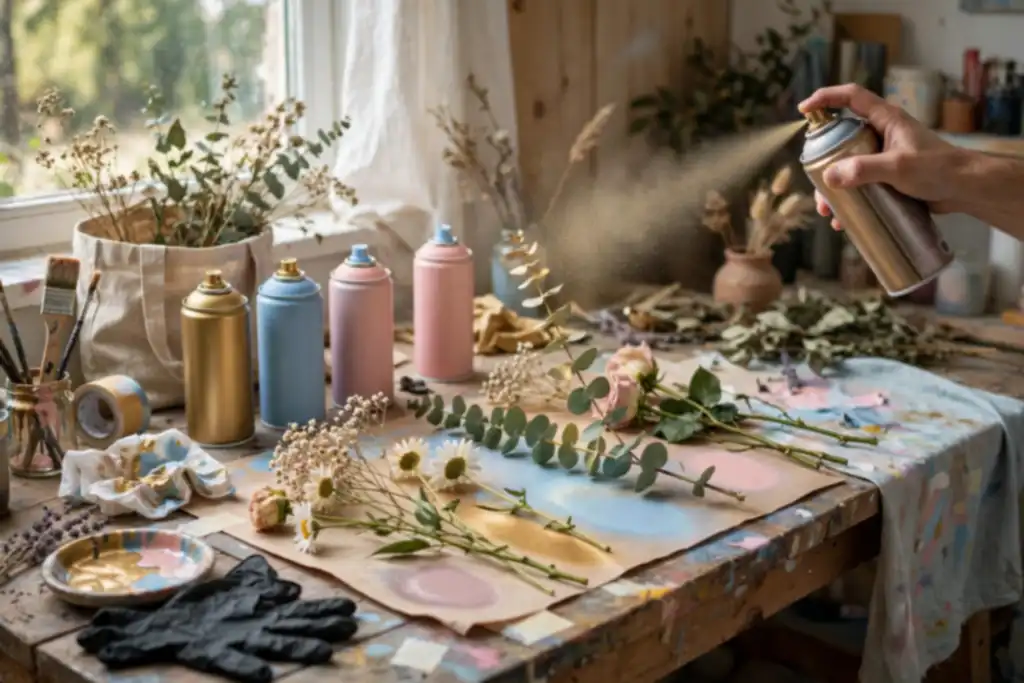
Yes, you can spray paint flowers, but only if you match the paint and prep to the material: real flowers need a light coat and accept that petals will stiffen, while artificial flowers need primer and sealer to avoid melting or flaking.
The most common mistake is skipping prep and spraying wet, heavy coats that turn petals into a clumped, dripping mess. So, can you spray paint flowers without ruining them? Yes, but real flowers and artificial flowers demand different approaches, and rushing either one leads to flaking, melting, or a stiff, unnatural look.
You will learn how to choose the right spray paint, when a primer is necessary, and how a sealer locks in color. We cover ventilation and respirator basics, drying time between coats, and how to protect surfaces with a drop cloth. Whether for crafts, home decor, or automotive accent pieces, these steps help you get a clean finish the first time.
Can You Spray Paint Flowers? Yes, but It Depends on the Bloom
Yes, you can spray paint flowers, real or artificial, but the prep and the product decide whether it works or ruins the bloom. Get the basics right and you avoid the common failures: soggy petals, flaking color, and fumes in a closed room.
| Situation | What it means | What to do |
|---|---|---|
| Real flowers, fresh | Petals hold moisture; paint will not bond | Skip paint or use a floral dye instead |
| Real flowers, dried | Dry petals are fragile and absorbent | Light mist coats only, no soaking |
| Artificial flowers, fabric | Fabric drinks paint and stiffens | Use a light coat over primer |
| Artificial flowers, plastic | Slick surfaces resist adhesion | Scuff lightly, then prime first |
| Stems and leaves | Flexible parts crack painted coatings | Tape off or paint separately |
| Indoor display pieces | Fumes linger on porous blooms | Cure fully, then apply sealer |
| Outdoor or handled decor | Color rubs off without protection | Finish with a clear sealer |
Recommended for this job

Design Master 137 Just
Spray dye designed specifically for tinting fresh flowers with translucent color.

Liquitex Professional Spray Paint
Water-based spray paint can coat artificial or dried flowers evenly.

Aleene's Spray Acrylic Sealer
Clear gloss sealer protects painted flowers and locks in color.
Spray paint works on flowers only when the surface can take a coating and dry without trapping moisture. Fresh blooms are wrong; dried and artificial ones are right, with prep.
Real vs. Artificial: What You Need to Know
Real flowers are living, wet tissue. Artificial flowers are fabric or plastic, which behave very differently under a can.
The Short Answer for Real Flowers
You can spray paint real flowers, but only dried ones, and results are hit or miss. Fresh petals hold water, so the coating sits on top, then flakes as the flower wilts.
For dried blooms, work outside with an organic-vapor respirator, following OSHA solvent guidance, and lay a drop cloth. Mist light coats, letting each flash off.
The Short Answer for Artificial Flowers
Yes, artificial flowers take spray paint well if you prime plastic and seal fabric. Primer, a preparatory coating that helps paint grip, is the step most people skip.
- Wipe dust off petals and stems.
- Scuff glossy plastic lightly, then prime.
- Use thin coats; heavy coats clog detail.
- Seal the finish so color does not rub off.
Work ventilated, cover the table, and allow full drying between coats, a few hours to overnight depending on humidity.
When Spray Painting Flowers Doesn't Work (and What to Do Instead)
Fresh, Delicate Blooms That Won’t Hold Paint
Real flowers are killed by spray paint: aerosol solvents pull moisture from living tissue, so petals brown and collapse within hours, and the coating blocks needed light. To keep a bloom intact, use thinned acrylic paint brushed on lightly; it still shortens vase life, so treat painted real flowers as short-term displays.
Flowers with Heavy Moisture or Oils
Skip spray on damp or oily surfaces. Succulents, thick-stemmed tropicals, and waxy leaves shed coating because paint can’t bond to wet or slick surfaces. Let cut material dry fully and wipe waxy surfaces; expect flaking. Artificial flowers with oily release agents need a degreasing wipe and primer or the finish will peel.
When the Look You Want Isn’t Achievable with Spray Paint
Gradients, fine veining, and soft blends need brush control aerosols can’t deliver. Use thinned acrylic in layers. Reserve spray paint for solid color blocks on artificial flowers and sturdy dried stems; finish with a sealer if displayed outdoors.
Stems are the stalk parts of a flower that carry water and support the bloom, so painting them can block uptake.
From Fresh to Faux: a Real-Life Scenario of Spray Painting Flowers for a Wedding
The Goal: Matching Blooms to a Theme
A bride wanted dusty blue accents on white artificial flowers for centerpieces, and the budget ruled out custom-dyed stock. Spray paint was the practical fix. Real flowers were never an option here: paint seals petals and kills fresh blooms within hours, so stick to faux material for anything that must survive the day.
Prepping the Flowers
Preparation decides the outcome. Wipe each bloom with a dry cloth to remove dust and oils, then lay everything on a drop cloth in a well-ventilated space, ideally outdoors. Tape off stems you want to keep natural, and test your color on one hidden petal first.
The Spraying Process
Light coats beat heavy ones every time. Hold the can 8 to 12 inches away and mist in short passes, rotating the flower between coats. Wait the label’s drying time, typically 10 to 20 minutes, before adding another layer. Wear a respirator rated for organic vapors; a dust mask will not protect you from aerosol solvents.
The Final Result and Lessons Learned
The centerpieces matched, but the petals felt stiff and one bouquet cracked where paint went on too thick. A thin coat of sealer helps flexibility, though test it first. The takeaway: light layers, real ventilation, and patience with drying time.
Best Spray Paint for Flowers: What to Look for
Spray Paints Formulated for Delicate Surfaces
Choose a paint labeled for crafts, florals, or lightweight materials. General-purpose hardware paint can stay tacky or crack on thin petals. A light primer, a preparatory coating applied before color, helps paint grip without soaking the surface.
For artificial flowers, a flexible craft formula bends with the material instead of flaking off. On real flowers, skip heavy coats and mist lightly from 10 to 12 inches away.
Finish Matters: Matte, Satin, or Gloss?
Matte reads natural on fabric and paper blooms; satin suits home decor accents; gloss works on plastic and metal pieces. Pick the finish before color, because sheen changes how any shade looks.
Test your color on a hidden leaf or spare stem first. A sealer, which blocks moisture and wear, protects the finish, and light coats beat one heavy pass every time.
Top Brands That DIYers Trust
Look for names sold in craft aisles and auto parts stores, such as Krylon, Rust-Oleum, and Montana Colors. Each offers florals-friendly lines, so match the product to your surface rather than the label alone.
Check the can for dry times, usually 15 to 30 minutes to touch and 24 hours to cure. Follow the manufacturer’s ventilation and respirator guidance, and lay a drop cloth before you start.
Caring for Spray-Painted Flowers: Maintenance and Longevity
Cleaning Without Damaging the Paint
Dust with a soft brush or a can of compressed air held at least six inches away. Skip wet wiping on real flowers and most artificial flowers, since moisture lifts acrylic paint and softens the coating. If grime builds up, use a barely damp cloth and blot, never scrub.
Handling and Storage Tips
Lift arrangements by the base or container, not by the petals or stems, because finger oils and pressure cause flaking. Store pieces upright in a dry, room-temperature space away from direct sun, which fades color over months. A light dust cover keeps grit off without trapping moisture.
Touch-Ups and Repairs
Fix chips fast with a small brush and matching acrylic paint rather than a fresh spray pass, which risks overspray on neighboring petals. Feather the edge and let it cure fully. For heavy wear, a thin coat of clear sealer restores protection, applied outdoors with a respirator and a drop cloth down.
Your Action Plan for Spray Painting Flowers
A workable plan for coloring blooms without wrecking them, covering flower choice, prep, paint, and cure time.
| Action | Why it helps | How to start |
|---|---|---|
| Pick your flower type | Real petals vs. artificial flowers | Start with silk or plastic blooms |
| Set up ventilation | Keeps fumes out of your lungs | Open garage door, add fan |
| Wear a respirator | Filters paint particles and vapor | Check cartridge for solvents |
| Lay a drop cloth | Catches overspray and drips | Cover a 6 to 10 foot area |
| Dry real flowers first | Wet petals resist paint | Air dry 1 to 3 days |
| Apply light coats | Prevents runs and clumping | Hold can 8 to 12 inches away |
| Let paint cure | Full hardness takes time | Wait 24 to 48 hours |
| Seal the finish | Locks color and adds protection | Use a clear acrylic sealer |
Step 1: Choose the Right Flowers
Silk or plastic blooms take spray paint far better than fresh ones. Real flowers work only if you dry them first, since wet petals repel paint and sag under the coat.
Step 2: Gather Supplies and Prep the Space
Set up outside or in a garage with the door open and a fan pushing air out. Wear a respirator rated for solvent vapors, spread a drop cloth over a 6 to 10 foot area, and keep a primer and clear sealer on hand.
Step 3: Prepare the Flowers
Dry real flowers for 1 to 3 days until petals feel papery, then wrap stems in tape so paint stays off them. Wipe artificial flowers clean and let them dry fully before you start.
Step 4: Apply the Paint
Hold the can 8 to 12 inches away and mist in short passes. Two or three light coats beat one heavy coat, and you should wait 10 to 20 minutes between passes.
Step 5: Dry, Seal, and Enjoy
Let the paint cure 24 to 48 hours before handling, then finish with a thin coat of clear acrylic sealer. Keep pieces out of direct sun and rain for the first few days.
How to Spray Paint Flowers Without Ruining Them
Follow these steps to color blooms cleanly and keep the finish from flaking or pooling.
Test on a Spare Bloom First
Spray one spare bloom and check the color and adhesion after 24 hours. Real flowers may wilt or brown, so confirm before committing.
Hold the Can at the Right Distance
Keep the nozzle 8 to 12 inches from the petals. Closer causes runs; farther gives a gritty, uneven coat.
Apply Thin, Even Coats
Build color with two or three light passes, waiting the labeled drying time between coats. On artificial flowers, a thin primer helps paint grip.
Work in a Well-Ventilated Area
Spray outdoors or in a garage with cross-ventilation and wear a respirator. Spread a drop cloth, then finish with a clear sealer once dry.
Follow these steps to color blooms cleanly and keep the finish from flaking or pooling.
Is It Okay to Spray Paint Real Flowers? Safety and Ethical Considerations
Will the Paint Harm the Plant?
Yes, in most cases. Spray paint on petals blocks light and seals the surface, so real flowers wilt within hours to days. It also coats stems, cutting water uptake. For living plants, use thinned acrylic paint on small areas and test one bloom first. For lasting color, use artificial flowers.
Fume Safety for You and Your Family
Spray outdoors or in a garage with the door open and a fan. Aerosol solvents are the real risk, so wear a respirator rated for organic vapors, gloves, and eye protection. Use a drop cloth for overspray and keep kids and pets out until dry. Respect the drying time on the can, typically 1 to 24 hours.
Eco-Friendly Spray Paint Options for Flowers
Choose low-VOC or water-based aerosol spray paint for crafts and home decor. These cut fumes but still need ventilation. Apply a thin primer first, then a clear sealer to block moisture and wear. Check local disposal rules for empty cans.
When Spray Painting Flowers Works Best
Ideal Flower Types for Spray Painting
Artificial flowers are the most forgiving choice, silk, polyester, and plastic hold color well. Real flowers are trickier; dried or preserved blooms work better than fresh ones that wilt. Skip waxy or heavily coated blooms. A light primer coat helps plastic stems and leaves resist peeling.
Best Conditions for Painting and Drying
Paint outdoors or in a garage with the door open. Check the label’s temperature range, typically 50 to 90°F. Humidity above 60 percent slows drying and can leave a cloudy finish. Use a drop cloth and wear a respirator rated for organic vapors; keep your face out of the spray path.
Projects Where Spray Paint Shines
Spray paint suits bulk color changes on artificial flowers and car decor accents. It covers large batches evenly, reaches tight petal folds, and dries in about 30 to 60 minutes. Finish with a clear sealer for outdoor or vehicle use. Acrylic paint still wins for fine detail on real flowers.
Spray Paint vs Acrylic Paint on Flowers: Cost, Coverage, and Durability
Cost Comparison for Large Arrangements
Running $6 to $12, a single can of spray paint covers a lot of surface, so it wins on price for big arrangements. Acrylic paint costs more per ounce, and you will need brushes and possibly a medium to thin it. For a large batch of artificial flowers, aerosol is the cheaper route.
Coverage and Finish Differences
Spray paint gives you an even, factory-like coat that reaches tight petal folds, while acrylic paint sits thicker and shows brush marks. A light coat of primer first helps either option bond. Acrylic wins when you want hand-painted detail on stems or a matte craft look; aerosol wins for uniform color across many blooms.
Which is More Durable?
Spray paint holds up better outdoors and on handled pieces once you add a sealer, which blocks moisture from reaching the surface. Acrylic paint can crack on flexible petals as they bend. For decor that gets touched or sits outside, go aerosol plus sealer. For indoor crafts, acrylic is fine.
Common Mistakes When Spray Painting Flowers (and How to Avoid Them)
Most flower painting failures trace back to four habits. Fix these and your finish holds up.
Over-Spraying and Drips
Heavy coats cause runs and pooled paint that cracks as it cures. Hold the can 8 to 12 inches away and apply two or three light passes instead of one wet coat.
Skipping Primer on Artificial Flowers
Artificial flowers often have slick surfaces that reject spray paint, so it flakes off within weeks. Use a primer, a preparatory coating that gives paint something to grip, then seal the finished piece with a sealer, which blocks moisture from reaching the surface.
Painting Wet or Damp Flowers
Moisture under paint traps and pushes the coating off. Let real flowers dry fully or skip them and paint artificial flowers and stems instead.
Ignoring Drying Times
Rushing the next coat or handling petals too soon smears the finish. Allow 1 to 2 hours between coats and 24 hours of cure before arranging. Work outdoors or with strong ventilation, and wear a respirator, a device that filters the air you breathe, plus a drop cloth to catch overspray.
- Over-Spraying and Drips: Hold the can 8 to 12 inches away and use two or three light passes instead of one wet coat.
- Skipping Primer on Artificial Flowers: A primer helps paint grip slick surfaces, and a sealer blocks moisture so the finish does not flake.
- Painting Wet or Damp Flowers: Moisture trapped under paint pushes the coating off, so let real flowers dry fully or paint artificial flowers and stems instead.
- Ignoring Drying Times: Allow 1 to 2 hours between coats and 24 hours of cure before arranging.
- Ventilation and protection: Work outdoors or with strong airflow, wear a respirator, and lay a drop cloth to catch overspray.
When to Call a Pro for Spray Painting Flowers
Large-Scale Installations or Events
Weddings and events requiring spray-painted flowers mean dozens or hundreds of pieces, and that is a job for a pro. A professional can control color consistency across a large batch and manage the drying time between coats. If your project involves a venue deadline or a paid client, hire someone with event experience.
Valuable or Rare Flowers
Skip the aerosol on anything expensive or irreplaceable. Real flowers with delicate petals, heirlooms, or rare artificial flowers can be ruined by a wrong primer or sealer choice. A pro can test on a sample and match the finish you want.
Health and Safety Concerns
Stop if you cannot spray outdoors or in a space with strong ventilation. Aerosol fumes build fast indoors, and a respirator rated for organic vapors is the minimum protection. Check OSHA guidance and the manufacturer’s safety data sheet before you start. Anyone with asthma or chemical sensitivity should leave the work to a professional.
Stop and call a professional if:
- Do not spray paint valuable or rare flowers without a professional test on a sample first.
- Hire a pro for weddings or large event installations with tight deadlines.
- Leave the work to a professional if anyone nearby has asthma or chemical sensitivity.
- Check OSHA guidance and the manufacturer's safety data sheet before spraying.
Can You Spray Paint Flowers: Frequently Asked Questions
?Can You Spray Paint Flowers Without Killing Real Ones?
Yes, but only if you accept that the bloom is decorative from that point on. Spray paint blocks the petals' ability to breathe and photosynthesize, so real flowers will wilt faster and may drop petals. If you need the plant to survive, don't spray the blooms. Paint artificial flowers instead, or use acrylic paint on real petals for a safer, more controlled result.
?Can You Spray Paint Flowers and Does Spray Paint Dry Fast Enough on Flowers to Avoid Drips?
Yes, most aerosol spray paint tacks up in 10 to 20 minutes and cures in 24 hours, but flowers are a worst-case surface for drips. Petals are thin and curved, so heavy coats run immediately. Apply two or three light passes instead of one wet coat, keep the can moving, and check drying time on the label before handling. Rushing is the number one way to ruin a bloom.
?How Do You Spray Paint Flowers so the Petals don't Stick Together?
Hold the can 8 to 12 inches away and mist in short bursts, letting each pass flash off before the next. Spray petals from multiple angles rather than soaking one spot. Separate layered blooms with your fingers or a soft brush while the paint is still tacky. Skip primer on delicate petals, since a preparatory coating adds weight and fills texture you probably want to keep.
?Can You Spray Paint Flowers That Are Already Sealed or Coated?
Yes, but scuff or clean the surface first or the new paint won't bond. Existing sealer, a substance used to block fluids through a surface, can cause fisheyes and peeling. Wipe artificial flowers with a damp cloth and let them dry fully. On real flowers, any prior coating usually means the petals are already sealed and brittle, so expect poor adhesion and plan a test spray first.
?What Safety Gear Do You Need When You Spray Paint Flowers Indoors?
You need ventilation first and a respirator second, not the other way around. A respirator is a device that filters what you breathe, and it helps, but it doesn't replace open air. Spray outdoors or in a garage with the door up. Lay a drop cloth, a protective sheet for floors and surfaces, and keep pets and kids out until drying time is done.
?Why Do Spray-Painted Flowers Crack or Flake After a Few Weeks?
Because most spray paint isn't flexible, and petals bend as humidity and temperature change. Cracking and flaking usually mean the coating was too thick or no flexible topcoat was used. For crafts and home decor that get handled, apply thin coats and finish with a flexible sealer. For automotive accent pieces, use paint rated for the material and test on a hidden petal first.
?When Should You Use Acrylic Paint Instead of Spray Paint on Flowers?
Use acrylic paint, a fast-drying paint made of pigment bound in an acrylic emulsion, when you need brush-level control on real flowers or detailed work. It lets you tint edges and avoid clogging the bloom's center. Spray paint wins for full coverage on artificial flowers and stems in bulk. Match the tool to the job and you'll get it right the first time.
Our Thoughts
Yes, the short answer holds: you can color blooms with spray paint, but the material decides the method. Real flowers take a light coat and will stiffen, so plan for a one-time piece. Artificial flowers need primer, a preparatory coating applied before painting, plus sealer to block moisture and stop flaking or melting.
Your best next step is a small test on a hidden area, like the underside of a leaf or an inner petal. Work outside or in strong ventilation, wear a respirator, and lay a drop cloth. Keep coats thin, respect drying time on the label, and let acrylic paint handle detail work on stems.