
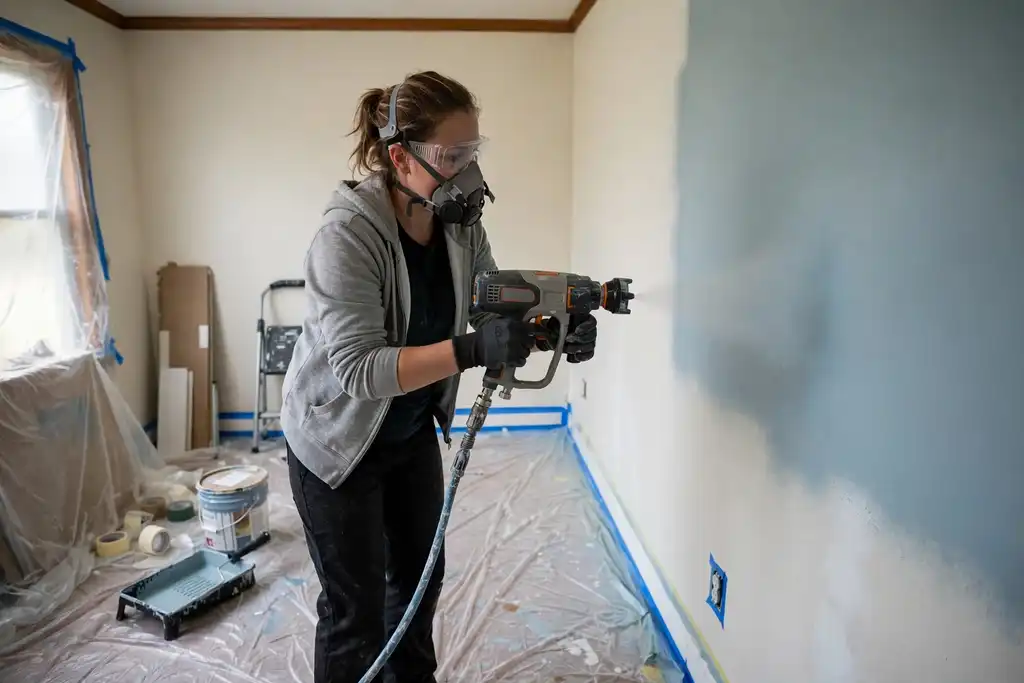
If you want a sprayer that keeps up without a steep learning curve, start with the best beginner paint sprayer for your budget and space. The HomeRight Super Finish Max stands out because it requires less thinning than the Finish Max or other hand-held sprayers. It also offers fast and easy setup, multiple spray settings and quick cleaning, and it stays lightweight in your hand at 3.3 pounds.
The PULENDY Paint Sprayer gives you more nozzles, with four sizes (1mm, 1.5mm, 2mm and 3.0mm) plus three spray patterns, along with a dust blowing attachment and tool-free assembly. Here are the best beginner paint sprayer, with what each one does best.
Top Recommendation: HomeRight Super Finish Max HVLP
Why We Recommend It: The HomeRight Super Finish Max earns the top spot with its lighter thinning requirement, multiple spray settings, quick cleaning and 3.3 pound weight. The PULENDY adds nozzle variety and a dust blower, but the HomeRight keeps the whole process simpler from setup to cleanup.
9 Best Beginner Paint Sprayer


1. HomeRight Super Finish Max HVLP Paint and Stain
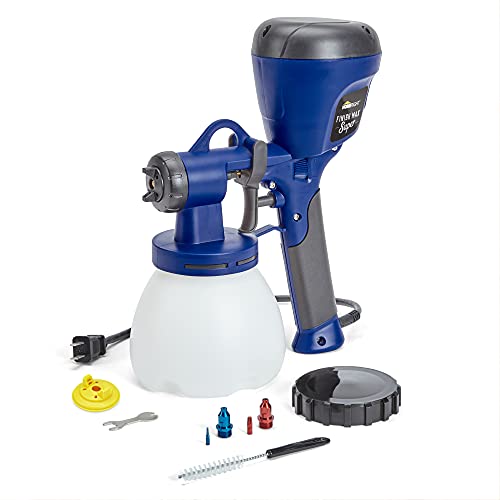
The HomeRight Super Finish Max is an HVLP paint and stain sprayer built for household projects. It comes with three brass tips and three spray patterns, so one tool can handle stains, sealers and latex paint. HomeRight says it needs less thinning than the Finish Max or other hand-held sprayers.
Setup is fast and easy, which matters when you are learning as you go. Multiple spray settings let you adjust the output to the job in front of you, and quick cleaning helps you move on to the next project without a long cleanup. For an eager painter, that combination keeps the work moving.
Despite having more power than the Finish Max, this sprayer stays lightweight in the user’s hand. It weighs 3.3 pounds and measures 12.5 inches high, 9.5 inches long and 6 inches wide. That light build helps when you are spraying overhead or working along a long fence line.
HomeRight lists fences, decks, furniture, cabinets, crafts and dressers as good targets for this sprayer. The goal is a smooth finish with less thinning, which suits stain and sealer work as well as latex paint. If you want one sprayer to cover a range of household painting and staining jobs, this is the kind of tool to consider.
The pitch here is saving money by tackling your own painting and staining instead of hiring it out. A beginner can set it up quickly, pick a tip and pattern, and get to work on a first project. The three brass tips give you room to grow as you take on different surfaces and materials.
This sprayer suits do-it-yourselfers who want a lightweight hand-held unit with more power than the base Finish Max. It is a practical pick for furniture, cabinets and trim as well as larger outdoor surfaces like fences and decks. Beginners who value fast setup and quick cleaning will find it easy to live with.
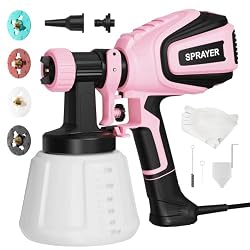
2. PULENDY Paint Sprayer HVLP Spray Gun
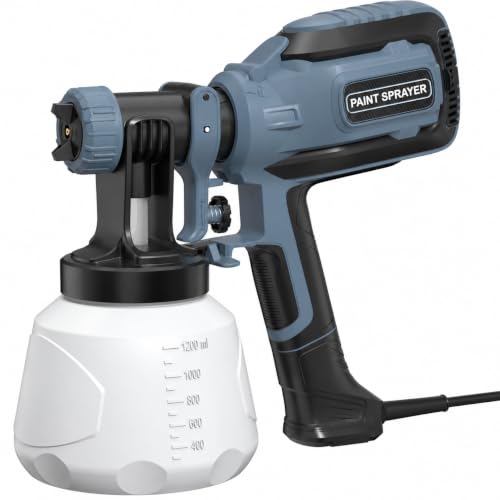
The PULENDY Paint Sprayer is an HVLP sprayer aimed at furniture, cabinets, decks, walls and other DIY projects. It comes in a bright blue finish and includes four nozzle sizes plus three spray patterns. That range lets you match the sprayer to different materials and jobs as you learn.
The nozzle sizes are 1mm, 1.5mm, 2mm and 3.0mm, which covers everything from fine detail work to thicker coatings. Three spray patterns give you more control over how the paint lands on the surface. Having both options in one kit means fewer reasons to buy a second sprayer later.
A dust blowing attachment is included for removing dust and debris before you paint. Cleaning with it first helps you get a smoother finish, since dust under fresh paint shows through. It is a small extra that makes a real difference on furniture and cabinet work.
Assembly needs no tools, which keeps setup simple for beginners. You can put the sprayer together, fill it and start on a project without hunting for a screwdriver. Cleaning is also designed to be easy, so the end of a job does not turn into a chore.
An adjustable flow control knob lets you turn the paint output up or down to suit the job. That control helps when you move between thin stains and thicker paints, or between small pieces and large surfaces. The kit includes 11 items in total, so you get the parts you need in one box.
This sprayer suits beginners working through DIY projects around the house, from cabinets and furniture to walls and doors. The four nozzles and three patterns give you flexibility without a steep learning curve. Tool-free assembly and simple cleaning make it a friendly first sprayer for someone just starting out.
3. 1000W HVLP Paint Sprayer Electric Spray Gun

The 1000W HVLP Paint Sprayer is an electric spray gun built around a 1000W motor. It is designed to deliver steady and efficient spray output for furniture, cabinets, fences, doors, walls and other indoor or outdoor projects. The package comes in a yellow finish and measures 6 inches high, 7 inches long and 7 inches wide.
One of the main features is the choice of spray patterns. You can switch between horizontal, vertical and circular patterns to suit different surfaces. Four copper nozzles are included, which gives you flexible options for various paint types and project sizes.
Paint output is controlled with an adjustable flow knob. This lets you fine-tune the spray amount for detailed work or larger surfaces, and it helps reduce unnecessary overspray and paint waste. For a beginner paint sprayer, that kind of control is useful while you learn how much material to lay down.
Cleaning is kept simple thanks to removable spray components. A cleaning brush and an unclogging needle are included to help clear paint residue from the nozzle and internal passages. Quick disassembly means routine cleaning after each project does not turn into a chore.
The complete kit centres on a 1400ml paint container. Along with the four copper nozzles, you get a viscosity cup, filter funnels, protective gloves, a cleaning brush and an unclogging needle. These are the essential accessories for everyday painting tasks, so you can get started without hunting for extras.
This sprayer suits people working through a range of home projects, from cabinets and furniture to fences and walls. The combination of pattern options, nozzle sizes and flow control makes it a practical pick for varied DIY work. It is a sensible option for anyone who wants one sprayer to cover both indoor and outdoor jobs.
4. Tilswall Paint Sprayer Ultra-Light Spray Gun Dreamer400

The Tilswall Paint Sprayer Ultra-Light is a handheld electric spray gun aimed at house painting tasks. It weighs only 1.5lb, which the brand says makes it 48% lighter than other electric paint sprayers. The body uses aerospace-grade materials, and the white unit is built to be comfortable to hold for longer sessions.
Inside is a 500W pure power motor that delivers spray performance up to 500ml per minute at maximum output. It pairs with a 600ml paint container, which suits small scale spraying tasks. Furniture, cabinets, walls, ceilings, decks and doors are all within its remit.
Two nozzle sizes are included, 1.5mm and 2.0mm. The 1.5mm nozzle is meant for thin paints like sealers and varnish, while the 2.0mm handles thicker paints such as latex, chalk or milk paint. Three spray patterns, vertical, horizontal and circular, let you change coverage to match the surface.
Using it is straightforward. You just pull the trigger for smooth, even coverage on wood, metal and more, and the flow is adjustable. The brand advises thinning paint to 120 DIN viscosity for finer atomisation and a flawless coat, and diluting before use helps avoid sagging and orange peel.
Cleaning matters with any sprayer, and the guidance here is to clean the gun within 15 minutes after use. That prevents paint accumulation and blockage, which keeps the nozzle working properly over time. Following the viscosity guidelines and cleaning routine is the key to a professional finish.
This model suits beginners who want a light, fatigue-free gun for smaller jobs around the house. It comes with a 2 year manufacturer warranty, and the brand offers support on product use, spraying techniques and maintenance. If you want an easy to handle entry point into spraying, this is a strong candidate.
5. Paint Grids 1000W HVLP Paint Sprayer Electric

The Paint Grids 1000W HVLP is a corded electric spray gun built around a 1000W motor. It is aimed at furniture, cabinets, fences, doors, walls and general indoor and outdoor DIY work. The blue body measures 6 inches high, 7 inches long and 7 inches wide, so it is compact enough to handle for longer stretches.
The motor is the centre of this unit and it delivers smooth, consistent paint output. Three spray patterns, horizontal, vertical and circular, let you match the gun to the surface in front of you. Four copper nozzles add flexibility across different paint types and project sizes, so you are not locked into one finish.
Flow control is handled by an adjustable knob on the gun. You can dial the paint output up for large flat areas or down for detailed work. This also helps cut down on unnecessary overspray and wasted paint, which matters when you are learning how much material a sprayer actually uses.
Cleaning has been thought about here. The spray components come apart quickly for routine cleaning after each project. A cleaning brush and an unclogging needle are included to clear residue from the nozzle and internal passages, which is the part beginners usually find hardest.
The kit is complete for everyday painting tasks. You get a 1400ml paint container, four copper nozzles, a viscosity cup, filter funnels, protective gloves, the cleaning brush and the unclogging needle. That covers mixing, filtering and cleanup without a separate shopping trip.
Because it runs on mains power, this one suits a workshop or a job close to an outlet. It is a sensible pick for a first sprayer if your projects are furniture, cabinets or fencing rather than distant fence lines. The included accessories make the learning curve gentler for someone new to spraying.
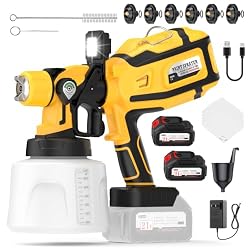
6. Cordless Paint Sprayer Sprayer,1200ML Electric Spray Gun

The Cordless Paint Sprayer is a battery-powered electric spray gun in a yellow body. It comes with two 4.0Ah batteries, and each one provides roughly 20 to 45 minutes of spraying. With no cord to drag around, you get proper freedom of movement and hands-free operation while you work.
Battery life is managed through a quick-swap design. When one battery runs down you switch to the other and keep going, so work is not interrupted. The pair together covers around 20 to 40 square metres efficiently, which is a useful guide when planning a fence or a set of cabinets.
Five nozzle sizes are supplied: 1.0mm, 1.5mm, 2.0mm, 2.5mm and 3.0mm. That range handles furniture, doors, walls, garden tables and more. Three spray patterns, horizontal, vertical and diagonal, give you precise results on different surfaces and shapes.
A flow control knob lets you fine-tune paint output for each project. You can adjust the spray effect to suit the material and the surface rather than fighting a fixed setting. This also helps minimise overspray and avoid unnecessary paint waste, which is a real concern for anyone new to spraying.
Assembly is tool-free and quick, which makes the sprayer beginner-friendly from the first use. A cleaning brush and a nozzle needle are included for removing paint residue. Keeping the nozzle and passages clear is what keeps the gun running smoothly and extends its service life.
The accessory list is thorough. You get the sprayer, two 4.0Ah batteries, five nozzles, five paper funnels, a viscosity cup, a cleaning needle and a brush. The manufacturer also states that its team responds within 24 hours to questions or issues. For a beginner working away from outlets, this is a strong all-in-one option.
7. 1000W High Power Paint Sprayer Corded HVLP
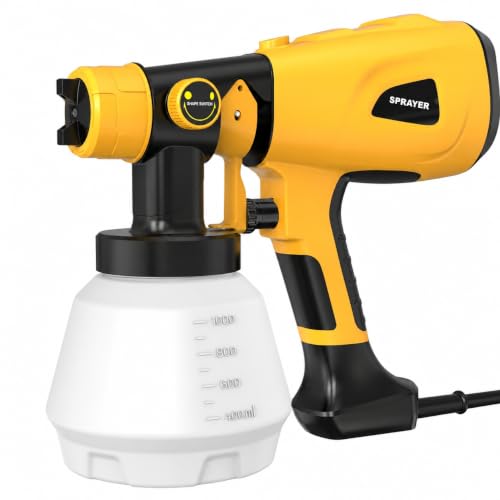
The 1000W High Power Paint is a corded HVLP sprayer built around a 1000W motor. That motor is meant to deliver steady and efficient spray output across furniture, cabinets, fences, doors, walls and other indoor or outdoor projects. It comes in a bright yellow body and ships as a complete DIY painting kit.
The kit covers a lot of ground for a first sprayer. You get the sprayer itself, a 1400ml container, four copper nozzles in multiple sizes, protective gloves, a viscosity cup, filter funnels, a cleaning brush and an unclogging needle. Having the nozzles and the measuring tools in the box means fewer extra purchases before you start.
Three spray patterns give you vertical, horizontal and circular options to match different surfaces and tasks. The four copper nozzles handle different paint types and project requirements, so you can move between a cabinet door and a fence panel without changing machines. A built-in flow control knob lets you adjust paint output for better control on different surfaces.
That flow control is the feature most beginners will lean on. Turning the output down helps reduce overspray, paint waste and uneven application while you get used to the trigger and your moving speed. It is worth doing a test pass and adjusting the knob before committing to the actual workpiece.
Cleaning is where many sprayers lose people, and this one is designed to come apart without additional tools. The included cleaning brush and unclogging needle help remove paint residue from the nozzle and fluid passages after use. Rinsing promptly after each session keeps the copper nozzles clear for the next job.
This sprayer suits a beginner who wants one corded unit for a mix of home improvement projects and does not mind a slightly heavier machine. The 1000W motor and the nozzle range give it room to grow as your confidence does. If your list includes tables, chairs, fences and walls, it covers all of them.
8. VONFORN Paint Sprayer for House Painting 700W
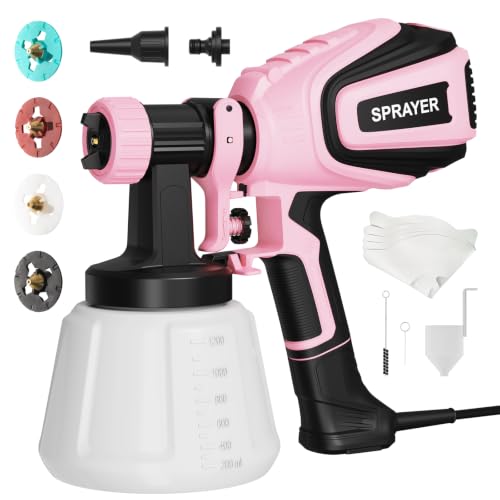
The VONFORN Paint Sprayer is a 700W HVLP spray gun aimed at home painting projects, finished in light pink. It is built for furniture, cabinets, walls, doors, doors and garden chairs, so it fits a wide spread of DIY work. The package includes the sprayer plus the accessories you need to get going.
Four nozzle sizes, 1.0mm, 1.5mm, 2.0mm and 3.0mm, let you match the setup to the paint and the surface. Three adjustable spray patterns, horizontal, vertical and circular, cover everything from refreshing furniture and cabinets to painting fences, doors and garden chairs. Switching between them is part of the normal workflow rather than a special operation.
Two extras stand out for beginners. A dust blowing joint lets you clear loose dust and debris from the surface before painting, which helps the finish. After use, you detach the motor body and use the cleaning connector to attach the removable spray assembly to a suitable water supply for flushing.
Setup is tool-free, which matters when you are new to paint spraying. The included user manual walks you through getting started, and a cleaning brush and nozzle needle are provided to remove paint residue from the nozzle and small parts after use. The flow control knob lets you fine-tune paint output to suit different project needs.
The advice in the instructions is to start with a test spray and adjust the flow before painting your workpiece. That lets you tailor the output as you move between furniture, cabinet doors, fence panels and other DIY projects. Doing the test on scrap material first saves a lot of frustration.
The box is generous: the paint sprayer, four nozzle sizes, five paint filters, a viscosity cup, a nozzle cleaning needle, a cleaning brush, a dust blowing joint, a cleaning connector, a pot lid and a user manual. For a beginner who wants cleaning and surface prep handled by the kit itself, this is a sensible place to start.
9. Cordless Paint Sprayer 700W Spray Gun
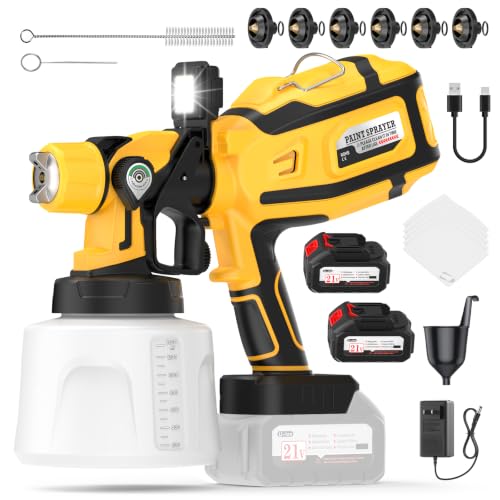
The Cordless Paint Sprayer 700W is a battery powered spray gun built for people who want to move around a project without dragging a cord behind them. It runs on two 4000mAh batteries, and each one gives a maximum working time of 25 minutes. That setup makes it practical for ladders, tight spaces and outdoor jobs where a power lead would get in the way.
The motor is a 700W copper unit, and the brand says copper motors last two to three times longer than other motor types. That steady power feeds a fine atomization that helps cut down on leaks, drips and patchy coverage. For a beginner paint sprayer, that combination of a strong motor and clean output is a sensible starting point.
A 1400ml tank means fewer stops to refill, which matters on larger surfaces like walls, ceilings and fences. The kit also includes six brass nozzles in 0.5, 0.8, 1.0, 1.2, 1.8 and 2.5mm sizes, so you can go from fine detail work to broad coverage. Three spray patterns, vertical, horizontal and circular, let you match the spray to corners, edges and curves.
Setup is kept simple with one click assembly, so you can connect the parts and start spraying right after pouring in the paint. No other tools are needed, and cleaning is straightforward too. A built in LED light helps you see dark corners and ceilings, and it charges over USB for convenience.
The box includes the sprayer, six brass nozzles, five paint filters, two 21V batteries, a charger, a viscosity funnel, an unclogging needle, a cleaning brush and the LED light. At 5.5 pounds, it is light enough to handle on a ladder or overhead without tiring your arm quickly. The yellow body measures about 9.65 inches high and 5.9 inches wide.
This sprayer suits furniture, walls, ceilings, fences, siding, cabinets, tables, doors and desks, so it covers most beginner projects around the house. If you want the freedom of battery power and a wide choice of nozzles in one kit, the Cordless Paint Sprayer 700W is a practical option. Just keep in mind the 25 minute run time per battery when planning bigger jobs.
Our Testing Process: Why These Rankings Are Different
The goal here is simple. We wanted to look past marketing claims and focus on what actually matters when you are choosing a beginner paint sprayer. Plenty of listings promise professional results, so the useful question is which features and build details really help a first-time user.
Our evaluation drew on specifications, materials and build quality, patterns in owner feedback, brand reputation and overall value. We weighed those factors against what beginners need most, such as easy setup, forgiving operation and straightforward cleaning. The HomeRight Super Finish Max and the PULENDY Paint Sprayer are good examples of products that stood out once those practical factors were compared side by side.
We compared models across a wide price range, from budget-friendly options to more expensive units. A higher price does not always mean a better result, because extra cost can reflect features a beginner will never use. What mattered was whether the price matched the build, the specifications and the experience reported by owners.
The aim is trustworthy, data-driven guidance rather than hype. This section reflects research and evaluation of product data and owner feedback, not hands-on testing. We have kept the focus on facts that help you make a confident choice for your own projects.
Complete Buyer’s Guide: How to Choose Beginner Paint Sprayer
Understanding Why Beginners Struggle with Paint Sprayers
A sprayer covers a fence or wall far faster than a brush, yet it amplifies every mistake. Thin paint runs, thick paint clogs, and excess overspray lands on surfaces you never meant to coat. Beginners often blame the machine when the real issue is viscosity or tip size. Learning those two basics first prevents much frustration.
Key Features to Look For
Start with wattage, since models like the 1000W HVLP Paint Sprayer and the Cordless Paint Sprayer 700W sit at different points on that scale. Examine the nozzle size and any extra tips included, because one size rarely suits both stain and emulsion. Check container capacity too, as a small cup means frequent refills on bigger jobs.
Types of Beginner Paint Sprayer Compared
Most starter machines are HVLP units, which use high volume and low pressure to reduce bounce back and waste. Corded models such as the VONFORN Paint Sprayer and the Tilswall Paint Sprayer Ultra-Light need a nearby socket but run all day without charging. Cordless options like the Cordless Paint Sprayer trade runtime for freedom from cables, suiting fences and garden furniture.
How to Use a Beginner Paint Sprayer for Best Results
Thin your paint to the consistency the manual recommends, then test on scrap card before touching the real surface. Keep the gun moving at a steady speed and hold it parallel to the work, overlapping each pass by about half. Clean the nozzle and cup straight after every session, because dried paint is the most common cause of a clogged nozzle and uneven spray.
What to Avoid
Do not buy a sprayer with no spare tips or a vague manual, since you will have no way to adjust for different materials. Avoid spraying in wind or direct sun, which causes overspill drift and dry, patchy finishes. Skip rushing the masking stage, because covering floors, windows and nearby furniture takes minutes and prevents hours of cleanup.
Matching a Beginner Paint Sprayer to Your Project
Small jobs like a cabinet or a single door suit a compact unit such as the PULENDY Paint Sprayer or the HomeRight Super Finish Max. Larger runs of fencing and sheds reward a bigger cup and steadier output, which is where the Paint Grids 1000W HVLP or the 1000W High Power Paint make more sense. Without power nearby, a cordless model keeps the job moving.
When to Expect Results and How to Maintain a Beginner Paint Sprayer
Expect a few practice passes before the finish looks even, so plan a small test area first. Rinse the cup, strainer and nozzle with the thinner suited to your paint after each use, and store the gun clean and dry. A light check of the air filter and seals keeps spray pattern quality steady over time.
Best Beginner Paint Sprayer FAQs
Are There Any Beginner Paint Sprayer Tips for Getting an Even Coat?
Thin the paint to the consistency the manual recommends, then stir it thoroughly so nothing settles at the bottom. Test the spray on a piece of cardboard first, adjusting the flow until the pattern looks even. This saves you from discovering a problem on the real wall.
Keep the gun moving at a steady speed and hold it level and parallel to the surface. Overlap each pass by about half the spray width so the coats blend together. Trigger the gun just before the surface and release just after you pass the edge to avoid heavy spots at the ends.
Apply two light coats rather than one heavy coat, because heavy coats run and drip, especially on vertical surfaces. Let the first coat dry properly before adding the second, and check the can for the right interval.
Are There Any Common Beginner Paint Sprayer Problems and How Do I Avoid Them?
Clogs and spitting are the most common issues, and they usually come from paint that is too thick or a dirty nozzle. Thin the paint to the right consistency and clean the tip before each use. A quick wipe between coats prevents most of these problems.
Uneven coverage often means the gun is moving too fast or sitting too far from the surface. Keep a consistent distance and a steady speed, and overlap each pass evenly so the coats blend. Watch the pattern on the surface rather than the gun itself.
Runs happen when you spray too much in one spot, so use light coats and keep the gun moving. Practice on scrap material first to build confidence and learn how your unit behaves. If a problem repeats, stop and check the nozzle and paint thickness before continuing.
Can I Use a Beginner Paint Sprayer for Furniture and Cabinets?
Yes, but choose the right type for the job. An airless model can work, though it is harder to dial down for small pieces, so an airless or HVLA unit with fine nozzle options gives you more control on trim and edges. Check that the sprayer handles the paint or finish you plan to use.
Prep the surface before you spray anything. Sand, clean and prime so the paint bonds properly, and remove doors and drawers so you can spray them flat. Flat surfaces reduce runs and make it easier to reach the edges evenly.
Use light passes and keep the gun at an even distance from the piece. Thin coats avoid drips on detailed edges and corners. Practice on a spare board first so you learn the trigger and speed before you touch the real cabinet.
How Do I Clean a Beginner Paint Sprayer After Use?
Clean the sprayer right away, before paint dries inside the gun and lines. Flush everything with the solvent your paint calls for, which for water based paints usually means warm soapy water. Waiting even an hour can turn a quick rinse into a long scrub.
Disassemble the nozzle and filter and soak them while you flush the rest. Use the small brush that came with the unit on narrow passages, and rinse until the flush runs clear. Pay attention to the tip, since that is where dried paint causes spitting later.
Dry the parts and store them loosely rather than tightening everything down. A dry, fully assembled gun can seize up, and forcing it can damage the seals. Keep the manual handy for the exact cleaning steps for your model, since they vary between brands.
How Long Does Paint Need to Dry Between Coats with a Beginner Paint Sprayer?
Follow the paint can rather than the sprayer manual, because dry times depend on the paint type, temperature and humidity. Most water based paints need a few hours between coats. Cool or damp conditions can double the drying time, so plan around the weather.
Sprayed coats are often thinner than rolled coats, which can shorten the wait slightly. Still, do not rush the second coat just because the surface looks dry. Thin coats can feel set on top while remaining soft underneath.
Test with a light touch before recoating. If the paint feels tacky or lifts slightly, wait longer and check again later. Rushing this step is how first time sprayers end up with wrinkles, lifting and a finish that never quite hardens properly.
Is It Better to Roll or Spray with a Beginner Paint Sprayer for a First Project?
Spraying is faster on large, open surfaces, and a sprayer lays down an even coat with fewer lap marks. That makes it appealing for walls and ceilings where speed and consistency matter. The trade off is more masking and setup before you start.
Rolling is simpler for small rooms and tight spaces because it needs less masking and less setup time. Cleanup is also quicker for a single wall, and you can stop and start without worrying about the gun clogging. For a first project, that lower stress can be worth the slower pace.
Many people combine both methods. Spray the broad areas for speed, then back roll while the paint is still wet for a uniform finish. Start with a small test area to see which approach suits your project and your comfort level.
What Are the Best Beginner Paint Sprayers for Small DIY Jobs?
Small jobs suit HVLP or handheld units because they are light, easy to store and quick to clean. That makes them friendly for trim, doors and small furniture where a full size sprayer would be overkill. You do not need much power for these tasks.
Look for a model with a small cup and fine nozzle options, since a compact unit gives better control on detailed work. Check the paint thickness it supports before you buy, because some handhelds struggle with thicker finishes. Confirm spare parts and nozzles are easy to find.
Do not overspend for occasional use. A simple unit with good reviews for reliability is enough for most home projects, and the money you save can go toward paint and masking supplies. Focus on easy cleaning and parts availability rather than extra features you will rarely use.
What Should I Look for in a Beginner Paint Sprayer?
Begin by matching the sprayer type to the finish you want. For walls and fences, an airless or HVLP model usually makes sense because it handles larger areas without tiring your arm. Check the maximum paint thickness it can push through, since thick paint is the usual cause of clogs.
Look closely at the spray pattern and the nozzle sizes in the box. A wider pattern speeds up big flat surfaces, while adjustable settings let you practice control before you commit to a whole wall. Confirm you can buy extra nozzles later, because that affects what paints you can use.
Weight and cleanup deserve more attention than most buyers give them. A lighter unit is easier to hold through a long session, and a model that comes apart quickly keeps a first project from becoming a chore.
Which Beginner Paint Sprayer is Best for Painting a Fence?
For a fence, an airless sprayer is usually the practical pick because it handles thicker exterior paints and covers large areas quickly. Fences have many edges and slats, so speed matters more than fine control. Check that the unit supports the paint or stain you plan to use.
Some exterior stains are thick and need a larger nozzle, so confirm the size you need is available before you buy. Buying a unit that only ships with a small nozzle can leave you unable to spray the product you already own. A spare nozzle is cheap insurance.
Wind and overspray are the main risks outdoors. Spray on a calm day and mask nearby surfaces, including anything you cannot move. Keep a brush handy for touch ups on tight spots the spray pattern cannot reach cleanly.
Final Verdict
Your goal is simple: a sprayer that is easy to handle and forgiving on a first project. Based on our research and data analysis, the Paint Grids 1000W HVLP suits homeowners who want steady corded power and simple cleanup for fences, furniture and walls. If you would rather work away from outlets, the Cordless Paint Sprayer serves that need with free movement and quick setup for touch-ups and small jobs. Either way, your first finish can look neat and even.