
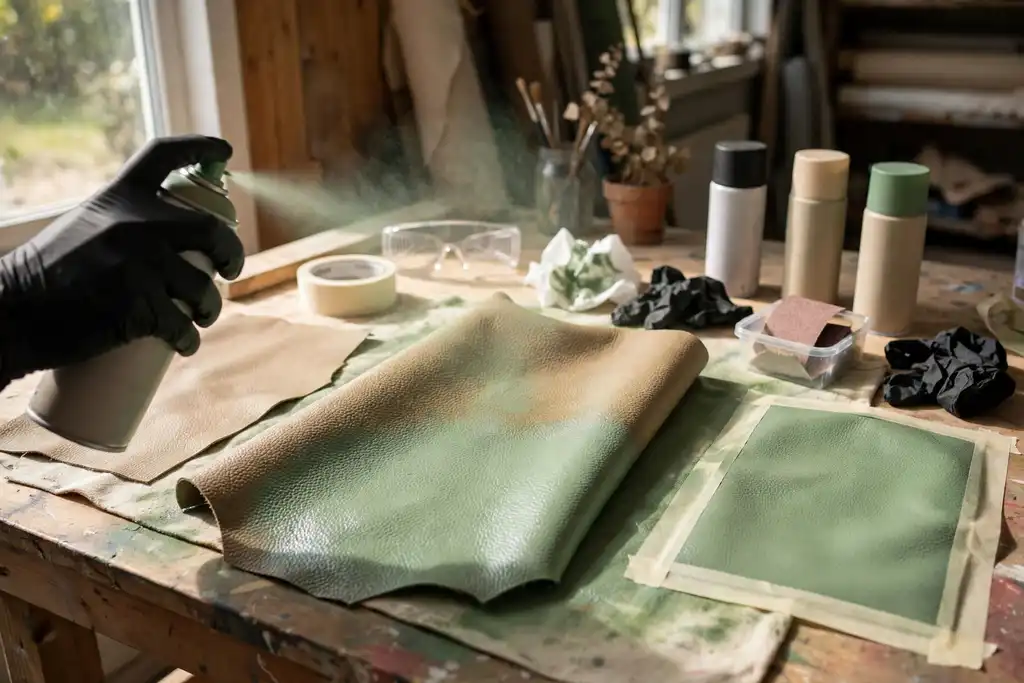
Yes, you can spray paint faux leather, but only if you use flexible spray paint over properly cleaned and prepped vinyl, otherwise the coating will crack and peel at every flex point.
Your faux leather couch has a worn patch on the armrest, or the car seat is looking faded and cracked. Before you haul it to the curb, you wonder: can you spray paint faux leather? The short answer is yes, but treating it like a wooden chair will end in peeling, cracking, and wasted money.
Faux leather is a man-made material that has similar properties and appearance to animal leather, and it flexes. Standard spray paint dries rigid, so it fails fast on vinyl, a synthetic plastic polymer. This article gives you the safety rules and step-by-step prep, including adhesion promoter, cleaning, scuffing, thin coats, dry time, curing, and clear coat, so your refresh holds up without turning into a sticky mess.
Can You Spray Paint Faux Leather? the Straight Answer
Yes, you can spray paint faux leather, but only if you use a flexible coating and prep the surface correctly. Skip either step and you get cracking, peeling, or a finish that fails within weeks.
| Situation | What it means | What to do |
|---|---|---|
| Worn couch or chair | Flexing, high-touch vinyl | Use flexible spray paint plus clear coat |
| Car seat or door panel | Heat and abrasion stress | Add adhesion promoter, cure fully |
| Jacket or bag | Constant bending | Thin coats only, avoid thick buildup |
| Small craft item | Low flex, easy control | Standard prep and thin coats |
| Cracked or torn vinyl | Damage under the paint | Repair or fill before spraying |
| Shiny factory finish | Paint won't grip | Clean, then scuff lightly |
| Cold or humid workspace | Slow dry time, poor bonding | Spray above roughly 60 to 70 F |
Recommended for this job
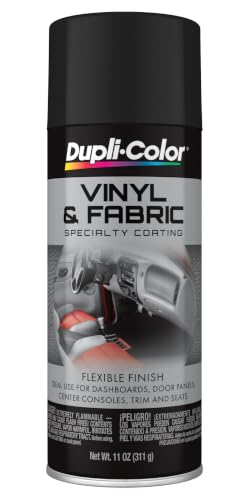
Dupli-Color Vinyl & Fabric Spray
Flexible vinyl and fabric paint bonds to faux leather without cracking.

Rust-Oleum Automotive Adhesion Promoter Spray
Adhesion promoter helps spray paint grip slick faux leather surfaces.
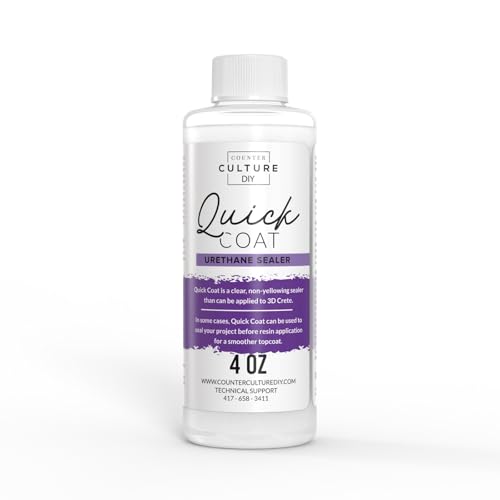
Counter Culture DIY Quick Coat Clear
Clear sealer protects spray-painted faux leather from wear and moisture.
The Short Answer: Yes, with Conditions
You can spray paint faux leather, but only with flexible spray paint made for vinyl and fabric. The surface must be clean, scuffed with fine-grit sandpaper, and primed with adhesion promoter, a chemical substance that helps the coating bond to slick plastic. Skip any of those steps and the finish will crack or peel within weeks.
What Faux Leather Actually is (polyurethane/PVC Vinyl)
Faux leather is a man-made material that looks and behaves like animal leather, usually a fabric backing coated with polyurethane or vinyl, a synthetic plastic polymer. That plastic skin does not absorb paint like real leather, so adhesion depends entirely on surface prep. Cleaning with isopropyl alcohol removes oils and mold release agents, and scuffing creates a 2 to 4 mil profile for the paint to bite into.
Why Flexibility is the Make-Or-Break Factor
Rigid paint cannot move with a material that bends, so flexibility decides whether the job lasts. Thin coats of 1 to 2 mils wet keep the film elastic, and curing, the process of hardening into cross-linked polymer chains, takes 5 to 7 days longer than the 1 to 2 hour dry time. For car interior work, add a flexible clear coat and let everything cure 7 days before use.
Faux Leather vs Genuine Leather: Why Painting Them is Not the Same
How Vinyl and Polyurethane Differ from Animal Hide
Faux leather is a man-made material that looks like animal leather but is a fabric backing coated with vinyl (a synthetic plastic polymer) or polyurethane. That non-porous film is what you spray, and it can fail if the coating underneath is incompatible. A typical couch cushion flexes thousands of times, so the paint must stretch with it.
Why Genuine Leather Needs Different Prep and Products
Animal hide is porous, so leather dye and finish soak into fibers and bond mechanically. Vinyl and polyurethane are non-porous, so coatings sit on top and rely on adhesion, not absorption. Leather-specific paints on synthetics often never grip, peeling off in sheets after a few weeks of use.
Peeling is when the coating lifts off the vinyl in sheets because it never bonded to the surface.
The Risk of Using Leather Paint on Faux Leather
Leather paint on vinyl or polyurethane commonly cracks and peels, especially on car seats and couch cushions that flex daily. The hard coating can’t move with the stretching film, so failures show up within 2 to 6 weeks. Use flexible spray paint made for vinyl and synthetics, add an adhesion promoter, and treat surface prep, cleaning, and scuffing as non-negotiable.
Apply thin coats, respect dry time, and allow full curing between layers, since there’s no porosity to forgive a heavy hand.
Does Spray Paint Work on Faux Leather?
What ‘Work’ Means: Adhesion, Flexibility, and Durability
Success means the coating bonds to the vinyl and moves with it instead of flaking off. Faux leather flexes constantly, so any rigid finish fails at the first crease. Judge results on adhesion, flexibility, and durability, a good job survives handling, sunlight, and temperature swings without lifting.
Why Some Spray Paints Fail on Vinyl
Standard aerosol paint is wrong for vinyl; it sits on top, dries stiff, and cracks or peels as the material bends. Skipping prep worsens this because oils block adhesion. Clean and scuff first, then use an adhesion promoter on hard-to-stick plastics like car panels and seats.
The Role of Flexible Coatings
Flexible spray paint made for vinyl is the only reliable choice. These coatings stay elastic after curing, stretching with the material. Apply thin coats and respect dry time between passes. Finish with flexible clear coat. Curing takes 5 to 7 days depending on temperature and humidity, so avoid heavy use until then. Done right, a refresh costs far less than replacement.
When Spray Painting Faux Leather Works (and When It Doesn't)
Ideal Candidates: Smooth, Non-Porous Faux Leather
Smooth, non-porous vinyl is best for spray paint. Faux leather holds a flexible coating well when sealed and clean. Skip suede-textured or heavily perforated pieces, since paint bridges holes and stiffens texture. Do the water drop test: if water beads, you have a paintable barrier; if it soaks in, the finish is porous and will drink paint unevenly.
Items with Low Flex and Minimal Wear
Paint survives best on surfaces that barely bend: headboards, ottomans, decorative panels, and seat backs. High-flex zones like seat cushions and steering wheels fatigue even flexible spray paint, reserve those for touch-ups. Check wear: frayed seams, deep scratches, and peeling edges telegraph through coating. Repair or skip those pieces.
When Color Change is Minimal or Matching the Original
A light refresh or close color match hides imperfections better than a drastic switch. Beige to black on a worn couch magnifies cracks and thin spots. Thin coats over a similar tone keep results even. Do not paint faux leather that is cracked through, flaking, or shedding, fresh paint cannot bond to a failing surface and will peel within weeks. Replace or reupholster instead.
When Spray Paint Won't Cut It: Exceptions and Limits
High-Flex Areas Like Car Seats and Jacket Elbows
Skip the spray can on surfaces that bend constantly unless you use flexible vinyl-rated paint. A car seat or jacket elbow flexes thousands of times, and most aerosol finishes cannot stretch that far without failing.
If the piece sees daily movement, use a flexible spray paint rated for vinyl and add an adhesion promoter first. Even then, expect touch-ups over time.
Deeply Textured or Porous Faux Leather
Heavy grain and open pores soak up paint unevenly, so the finish looks blotchy and wears through fast. Smooth vinyl takes coating well; deep texture fights you.
Test a hidden spot before committing. If the paint pools in the grain or beads up, stop and consider a professional vinyl dye instead.
Items with Heavy Wear or Damage
Paint hides color, not damage. Cracks, tears, and exposed backing will show through and spread once the coating dries.
Repair or replace those pieces first. Spraying over failing material wastes paint and leaves you with peeling within weeks.
Your Action Plan for Spray Painting Faux Leather
Spray painting faux leather works only when you prep for flexibility, not just color. Skip a step and you get cracking, peeling, or a sticky mess that ruins the piece.
| Action | Why it helps | How to start |
|---|---|---|
| Bend-and-scratch test | Reveals if paint will flex or flake | Test a hidden spot first |
| Clean with mild soap | Removes oils that block adhesion | Wipe, rinse, let dry fully |
| Apply adhesion promoter | Helps flexible spray paint bond to vinyl | Mist thin, even pass |
| Light scuffing | Gives slick vinyl a paint-gripping texture | Use fine grit, go gentle |
| Spray thin coats | Prevents cracking and pooling | Several light passes, not one heavy |
| Respect dry time | Stops coats from lifting | Wait between passes per label |
| Cure before use | Lets coating harden fully | Allow 24 to 72 hours |
| Seal with flexible clear coat | Adds wear protection | Apply after cure, thin layers |
Step 1: Hidden Test First
Test a hidden spot with the bend-and-scratch test. Spray a light pass, let it dry, then bend and scratch it. If it flakes, stop and switch products.
Step 2: Clean and Prep
Clean with mild soap and water to strip oils and grime. Rinse, then let the vinyl dry completely before anything else touches it.
Step 3: Adhesion Promoter
Apply adhesion promoter in one thin, even pass. It helps flexible spray paint grip slick vinyl instead of beading up.
Step 4: Light Scuffing
Scuff shiny areas gently with fine grit, then wipe dust away. Skip this on soft or embossed surfaces where scuffing could damage the grain.
Step 5: Thin Coats
Build color in several thin coats, respecting dry time between passes. Let it cure 5 to 7 days, then seal with a flexible clear coat.
How to Tell If Your Faux Leather is a Good Candidate (and What to Do)
Before you commit, test any faux leather, a man-made material that mimics leather. Pick a hidden spot no one sees and work through these checks in order.
Test on a Hidden Area First
Prep matters more than paint. Clean the spot with mild soap and water, then let it dry fully before you touch it.
- Fold a hidden corner back on itself and hold it 10 seconds.
- Scratch the spot with a fingernail to see if color lifts or feels tacky.
- Press a 1 inch strip of tape down, pull it fast, and check for lifted finish.
- Rub with a clean white cloth and mild soap to check for dye transfer.
- Spray a small test square with flexible spray paint and wait the full dry time.
- Flex the patch after the full cure and skip the project if it cracks.
Check for Peeling or Flaking
Peeling edges mean the top layer is already failing, and paint will follow it off. If flakes come up on your tape, plan on replacement instead.
Assess Flexibility and Exposure to Friction
High-flex spots like seat bolsters and elbows need an adhesion promoter, a chemical that helps coatings bond to slick vinyl, a synthetic plastic polymer. Add a clear coat on car interior panels that see daily rubbing.
Run these five checks before you buy a single can, because a failed test on a hidden spot saves you a ruined couch or car seat.
The Bend-and-Scratch Test: Predict Cracking Before You Commit
How to Do the Test on a Hidden Area
Pick a spot nobody sees, like the back of a cushion or the underside of a seat. Clean it, let it dry fully, then press your thumbnail in and twist slightly. If the surface whitens, lifts, or feels tacky, that tells you a lot before you buy any product.
Next, bend the material sharply and hold it for a few seconds. Watch for fine lines along the crease. Those lines are your warning sign.
What Results Mean for Paint Adhesion
A flexible coating needs the vinyl to move without fighting back. If the hidden spot stays smooth after bending, adhesion promoter and thin coats have a fair chance. If it cracks or flakes at the crease, paint will likely follow the same path once the item flexes in daily use.
Note the texture too. Heavy grain hides minor flaws, but slick spots need scuffing so the coating can grip. Skipping surface prep here is the mistake that causes peeling later.
When to Abandon the Project
Walk away if the material is brittle, torn at seams, or shedding a top layer. No spray fixes a failing substrate, and car interior heat will speed up the breakdown. Replacement covers or professional reupholstery cost more but outlast a doomed repaint.
Doing It on a Budget Without Cutting Corners
Cost of Spray Paint and Sealer vs Replacement or Reupholstery
Spray paint and sealer usually cost far less than reupholstery. Expect roughly $15 to $40 for flexible spray paint and adhesion promoter, plus $10 to $20 for a clear coat, depending on the item size and brand. A full reupholstery job or a new couch typically runs hundreds to over a thousand dollars.
Where to Save and Where Not to
Save on quantity, not on chemistry. Buying the cheapest generic aerosol is a false economy on vinyl, a synthetic plastic polymer, because weak formulas peel fast.
- Skip fancy applicators; a basic flexible coating works.
- Buy only the cans you need for thin coats.
- Do not skip adhesion promoter or quality surface prep.
The Break-Even Point
Your break-even depends on how much life the piece has left. A faded armchair or car seat with sound seams is a strong candidate for a spray refresh. If the vinyl is torn, cracked through, or stiff, paint will not fix structure and replacement wins.
Care and Maintenance for Spray-Painted Faux Leather
Cleaning Painted Faux Leather Without Damaging the Finish
Wipe the surface with a damp cloth and a drop of mild soap, then dry it right away. Skip alcohol, acetone, and abrasive cleaners, since they soften the flexible spray paint and dull the color. For heavier grime, use a soft brush with light pressure only.
Vacuum crumbs and dust from seams before washing, because grit acts like sandpaper on a painted vinyl surface. Keep water from pooling in stitching, and blot spills instead of rubbing.
Protecting High-Wear Areas
Add a flexible clear coat on seats, armrests, and steering wheels before daily use. A clear coat is a protective top layer that resists friction and UV fading, and it extends the life of the color coat.
On a car interior, park in shade when you can and use a sunshade. For a couch or bag, rotate cushions and avoid harsh denim rubs on the same spot.
How Long the Finish Lasts
Expect roughly one to three years on low-contact pieces and six months to a year on car seats, depending on prep and sun exposure. Thin coats, proper curing, and a clear coat push you toward the longer end.
Watch for cracking or peeling at flex points, and touch up small spots early. A patch repair beats repainting the whole panel later.
Cracking is when a rigid paint film splits along flex lines as the vinyl bends beneath it.
Common Mistakes That Cause Peeling and Cracking
Skipping Adhesion Promoter
Adhesion promoter is a chemical primer that gives paint something to grip on slick vinyl. Without it, flexible spray paint sits on the surface and lifts at the first flex or rub.
Heavy Wet Coats on Flexible Vinyl
Thick coats stay soft underneath and crack when the material bends. Build several thin coats instead, letting each one flash off before the next.
Not Allowing Proper Cure Time
Curing is the process of the coating hardening into a durable film, and it takes longer than the can’s dry time. Handle the piece after the recommended dry time, but wait the full cure window before real use.
Using the Wrong Paint Type
Rigid paint and standard clear coat will peel on anything that flexes. Choose flexible spray paint and a flexible clear coat made for vinyl, and test on a hidden spot first.
- Skipping adhesion promoter: primer is required on slick vinyl or the paint lifts.
- Heavy wet coats: thick layers stay soft and crack when the material bends.
- Thin coats instead: build color in several light passes with flash time between.
- Ignoring dry time: recoating too soon traps solvent and causes lifting.
- Skipping curing: the finish needs full cure time before real use or cleaning.
- Wrong paint type: rigid paint and clear coat crack on flexible surfaces.
- No test spot: check adhesion on a hidden area before committing.
When to Call a Pro (and When to Walk Away)
Real Warning Signs: Cracking, Peeling, or Strong Odors
If vinyl is cracked through, peeling in sheets, or smells strongly of mildew or chemicals, skip spray paint, the material is failing and paint will flake off. A soft, sticky surface signals plasticizer breakdown no coating will fix. Test a hidden spot first; if tape lifts the finish, stop.
Safety First: Ventilation and Protective Tools
Spray outside or in a garage with the door open and a fan pushing air out. Aerosols and adhesion promoters release fine particles and solvent vapor. Wear an N95 or better respirator, nitrile gloves, and eye protection. Keep flames and pilot lights away during application and dry time. Follow label warnings and EPA/OSHA guidance.
Professional Reupholstery vs DIY Painting
Call an upholsterer for structural issues: broken foam, torn seams, or deep gouges. Paint hides color, not damage. Budget roughly $150, $600 per seat for pro reupholstery versus $20, $60 in materials for DIY. For valuable pieces or factory-level results, pay the pro.
Stop and call a professional if:
- Stop if the vinyl is cracked through or peeling in sheets, since paint will flake off with the failing material.
- Stop if the surface feels soft or sticky, which signals plasticizer breakdown that no coating will fix.
- Stop if a strong mildew or chemical odor persists after cleaning, because the material may be contaminated or degrading.
- Stop if a tape test on a hidden spot lifts the finish, meaning adhesion will fail.
- Stop if the item has structural damage like broken foam, torn seams, or deep gouges, and call an upholsterer.
- Stop if the piece is valuable or you need factory-level results on a car interior, and hire a trim shop.
Can You Spray Paint Faux Leather: Frequently Asked Questions
?Can You Spray Paint Faux Leather Without It Cracking Later?
Yes, if you use flexible spray paint and keep the coats thin. Cracking comes from rigid paint on a surface that stretches, so pick a coating made for vinyl and build up several light passes instead of one heavy wet coat. Let each coat flash off per the label, and avoid bending the item hard during the first few days.
?Can You Spray Paint Faux Leather, and How Do You Prep It First?
Yes, you can spray paint faux leather, but prep is essential. Clean it first, then scuff it lightly. Faux leather is a man-made material that looks and behaves like animal leather, and its smooth finish gives paint little to grab. Wipe off oils and grime, scuff dull with a fine abrasive pad, wipe the dust, then apply adhesion promoter so the flexible spray paint has a base that holds.
?Can You Spray Paint Faux Leather Car Seats or Will It Peel?
It can hold, but car interiors are the toughest test. Heat, sunlight, and body friction punish any coating, so clean and scuff thoroughly, use adhesion promoter, and apply thin coats with full dry time between them. Finish with a flexible clear coat. Skip high-wear bolsters if you want a result that lasts.
?Why Does Spray Paint Peel off Faux Leather?
Peeling almost always traces back to bad surface prep. Leftover oils, skipped scuffing, or no adhesion promoter means the paint sits on top instead of bonding to the vinyl. Heavy coats make it worse because the top skins over while solvent stays trapped underneath. Clean, scuff, promote adhesion, and spray thin.
?When Should You Not Spray Paint Faux Leather?
Skip it when the material is cracked through, flaking, or peeling at the seams. Paint hides color, not structural failure, and it will fail right along with the surface underneath. Also walk away from pieces that flex constantly at the same spot, like tight seat bolsters, unless you accept a shorter lifespan.
?What Spray Paint Should You Use on Faux Leather?
Use flexible spray paint made for vinyl and upholstery, not general-purpose enamel. Vinyl is a synthetic plastic polymer, and it moves, so the coating has to move with it. Pair it with an adhesion promoter, and plan on a flexible clear coat for anything that sees handling, sunlight, or friction.
?How Long Should Spray Paint on Faux Leather Cure Before You Use It?
Wait at least 24 to 72 hours before normal use, and longer for car interiors. Curing is the process of the coating hardening into a durable film, and that takes far longer than the touch-dry time on the can. Keep the item cool and ventilated, avoid folding or pressing it, and let it sit a full week before heavy wear.
Our Thoughts
Yes, flexible spray paint can work on faux leather, a man-made material with a leather-like look, provided you clean, scuff, and prime the vinyl, a synthetic plastic polymer, first. Skip any step and the coating will crack or peel at every flex point. Thin coats and full curing, the process of hardening into a durable finish, are what make it last.
Your next step: test your chosen paint and adhesion promoter, a bonding chemical, on a hidden patch of the item. Let it cure fully, then flex it hard. If it holds without cracking, proceed to the full piece, and add a flexible clear coat on car interior surfaces.
Sources and further reading: guidance from EPA.