
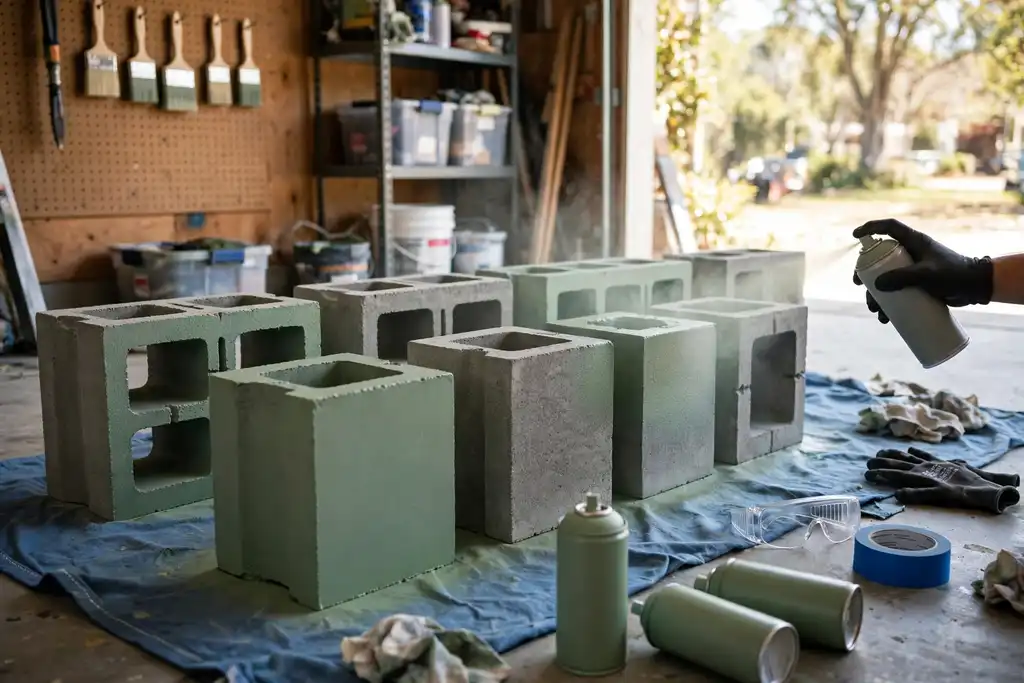
Yes, you can spray paint concrete blocks, but only if you clean, prime, and seal them first. Skip those steps and the paint will peel off the porous masonry within months.
Here is a clear, practical look at can you spray paint concrete blocks.
Yes, you can spray paint concrete blocks, and it will last if you treat the porous masonry right. This is not a wipe-and-spray job: concrete blocks are like sponges, so without surface preparation and a bonding primer (a preparatory coating that helps paint stick), the spray paint will flake and look patchy.
You will get the exact order of operations: how to clean the blocks, which primer to use, how many coats of aerosol (fine paint droplets in air) or spray gun coating to apply, and when a sealer (a fluid-blocking topcoat) is worth it. Expect typical drying times of 2 to 4 hours between coats and coverage of 15 to 25 square feet per can, depending on block texture.
Can You Spray Paint Concrete Blocks? the Straight Answer
Yes, you can spray paint concrete blocks, and it works well when you prep the surface and pick the right coating. Skip either step and the finish will peel, chalk, or wear through in a season.
| Situation | What it means | What to do |
|---|---|---|
| Brand-new block | High porosity, dusty surface | Let it cure, then dust off |
| Weathered garden wall | Dirt, moss, old efflorescence | Scrub, rinse, dry fully |
| Previously painted block | Loose or chalky old coating | Scrape and sand edges |
| Smooth or sealed block | Low porosity blocks adhesion | Roughen with light sanding |
| Planter or retaining wall | Constant moisture exposure | Use masonry primer and sealer |
| Small decorative piece | Easy to handle and rotate | Prime, then spray in thin coats |
| Large wall project | Aerosol cans run out fast | Switch to a spray gun |
Recommended for this job

Seymour 20-600 Traffic Specialties Stripe Renew
Sprays upside down to stripe and mark concrete blocks quickly and evenly.
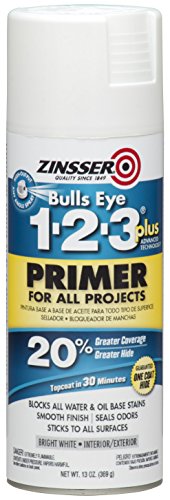
Zinsser Bulls Eye 1-2-3 Plus Spray
High-hide primer bonds to concrete block so topcoat paint adheres better.

Rust-Oleum Seal-Krete High Gloss Clear Wet
Spray sealer protects concrete block with a high-gloss wet-look finish.
Yes, you can spray paint concrete blocks. The coating sits on the surface rather than soaking in like a stain, so the result depends almost entirely on surface preparation and the product you choose.
What Spray Paint Actually Does to a Concrete Block
An aerosol, a fine mist of paint particles carried in gas, lays a thin film across the face of the block. Because masonry is porous, that film only holds if the block is clean and dry. Adhesion, the bond between paint and surface, fails fast on dust or moisture.
Why the Answer is Yes (with Two Conditions)
Condition one is a primer, a preparatory coat that gives the paint something to grip and blocks the block from drinking your color. Condition two is real cleaning, the removal of dirt, efflorescence, and loose material before any coating goes on. Allow drying time of roughly a day to several days after washing, depending on weather.
Drying time is the period a freshly sprayed coat must sit before it is dry enough to recoat or seal.
Block Wall vs. Single Block: Same Answer?
Same answer, different tools. A single block takes a couple of light coverage coats from a can. A full wall drinks aerosol fast, so a spray gun is the practical choice. Finish porous or damp-prone work with a sealer, a coating that blocks moisture movement, and follow safety basics: ventilate, mask nearby surfaces, and check the manufacturer’s label.
How Weather and Season Change the Spray Painting Answer
How Weather and Season Change the Spray Painting Answer
Below 50°F, most aerosol spray paint stops curing, so the answer flips to no. Cold concrete blocks hold that chill and leave a tacky film that never hardens. Bring smaller blocks indoors to reach room temperature, then spray in a heated, ventilated space.
Humidity, Dew Point and Blushing
Keep humidity under 70% and the dew point well below block surface temperature. Trapped moisture causes blushing, a white haze that wrecks adhesion, the bond between the spray paint and the masonry. A $15 hygrometer tells you in seconds whether to spray today.
Hot Sun and Fast Flash-Off
Above 90°F in direct sun, the aerosol flashes off before it levels, giving dry spray and thin coverage. Move blocks to shade and spray before 10 a.m. Or after 4 p.m. Hold the can 8 to 12 inches away in thin passes.
Rain, Wind and Covered Outdoor Walls
Rain within 24 hours washes fresh paint off, and wind carries overspray onto cars and siding. Spray on a calm day, mask nearby surfaces with 0.7 mil plastic sheeting, and wait 24 to 48 hours before rain exposure. After full cure, a masonry sealer, which blocks liquid from passing through the surface, adds weather protection.
From Bare Block to Finished Wall: a Weekend Walkthrough
Saturday Morning: Cleaning and Masking
Start with cleaning, the process of stripping dirt, efflorescence, and loose grit off the block face. Scrub with a stiff brush and mild detergent, rinse, then let the blocks dry fully, typically 24 hours in warm weather. Mask adjacent surfaces with tape and plastic before you pick up any spray paint.
Midday: Priming the Porous Face
Prime the blocks to give the topcoat something to grip. A block-face primer (a preparatory coating that seals open pores) tames porosity so paint sits evenly instead of soaking in. One coat on a dry surface, usually 1 to 2 hours to touch dry, then check for missed pinholes.
Afternoon: First and Second Coats
Two thin coats beat one heavy pass every time. Hold the aerosol can or spray gun 8 to 12 inches away and keep the wrist moving in overlapping strokes to build coverage without runs. Wait the label’s recoat window between coats, and expect roughly 15 to 25 square feet per aerosol can depending on block texture.
Sunday: Sealing and Touch-Ups
Finish with a masonry sealer, a coating that blocks moisture from passing into the block. Apply it once the paint has cured, usually 24 hours, then touch up thin spots with light passes. Good adhesion now means fewer repairs later.
Picking the Right Spray Paint for Concrete and Masonry
Concrete and Masonry Aerosols: What the Label Should Say
A can labeled for concrete or masonry is the only one you should trust here. Check that the label names masonry as a substrate and lists a primer or bonding agent. If it says metal or wood only, put it back.
Elastomeric and Rubberized Coatings for Block
Rubberized and elastomeric coatings flex with the block and bridge hairline cracks. They cost more per can, roughly $10 to $20 for a standard aerosol, but they hold up on garden walls and planters that move with weather. Standard flat paint will crack where these stretch.
Water-Based vs. Solvent-Based Cans
Water-based cans dry faster and clean up easier, while solvent-based cans bite harder into porous block. For a first coat on raw concrete, a solvent-based product usually gives better adhesion. Water-based works fine over a primed surface and indoors where fumes matter.
Using Spray Guns vs. Aerosol Cans
A spray gun, a device that pushes coating through the air onto the surface, pays off on large walls; aerosols win for small projects. Aerosol cans, fine particles suspended in gas, suit planters and touch-ups. Guns need thinning, masking, and cleanup, but coverage gets cheaper past roughly 100 square feet.
When Spray Painting Concrete Blocks Works Best
Small Walls, Crafts and Trim Pieces
Small jobs are where spray paint shines. Garden wall caps, planter accents, and concrete crafts take an even coat fast, and you avoid brush marks on textured faces.
For crafts, hold the can 8 to 12 inches away and move in steady passes. Two thin coats beat one heavy coat because heavy layers trap solvent and hurt adhesion.
Smooth or Split-Face Block with Light Texture
Block with a closed, lightly textured face takes paint well. Deep pores and rough split faces soak up material, so expect uneven coverage and higher use.
Fill or knock down loose ridges first. A primer made for masonry gives the coating a stable base so it grips instead of flaking.
Dry, Cured Block at Least 28 Days Old
Fresh block holds moisture that pushes paint off later. Wait at least 28 days, then confirm the surface is dry before you start.
Cleaning comes first: scrub off dust, efflorescence, and oil, then rinse and let it dry fully. Surface preparation decides how well the coating sticks.
Projects Where Speed Beats Precision
If you need fast color on a utility wall or backdrop, aerosol cans deliver. Accept that overspray drifts, so mask nearby surfaces and work upwind.
For large flat runs, a spray gun with a masonry primer and topcoat gives better control and coverage than cans. Either way, wear a respirator and eye protection.
Is It Okay to Spray Paint Cinder Blocks?
Cinder Block vs. Concrete Block: Does the Paint Care?
Concrete blocks can indeed be spray painted. Paint cares about what the block is made of, not the name. Cinder blocks contain coal cinders or ash; true concrete blocks are mostly cement and aggregate. Both accept paint with proper prep.
The Extra Porous Face of Cinder Block
Cinder blocks are more porous than standard concrete block, soaking up liquid fast and pulling the carrier out of spray paint before it sets, which hurts adhesion. A primer fills those pores and gives color something to grip. Clean blocks first to remove dust, grit, and flaking material, then let dry fully (typically 24 to 48 hours). Prime and spray in thin coats.
When the Answer Flips to Brush or Roller
Spray paint wins on detail work and small decorative pieces, but switch to a brush or roller on large flat walls. Aerosol cans run out fast across wide areas and cost more per square foot. For big surfaces, a spray gun or roller gives better coverage and control. Finish with a sealer to block moisture. Wear a respirator and eye protection, and spray outdoors or in strong ventilation.
Spray Can vs. Brush vs. Roller: Cost, Coverage and the Decision Rule
Cost Comparison: Spray Paint vs. Brush for Large Areas
Aerosol cans cost more per ounce than brush-on paint; spray wins on convenience, not price. A large garden wall usually costs more in cans than in brush-on paint, since aerosol cans cost more per ounce. Small pieces flip that math, one can finishes the job.
Coverage Math: Cans per Square Foot of Block
One 12-ounce can covers about 15-25 square feet of block face, depending on porosity. Porous masonry drinks paint, so plan two coats minimum and buy 20 percent extra. A gallon of brush paint covers 250-350 square feet per coat.
The Size-and-Texture Rule for Spray vs. Roller
Spray pieces under roughly 50 square feet or deep texture a roller can’t reach. Larger flat walls go faster with a roller or spray gun. Rollers push paint into pores for better adhesion.
Labor Time You Save (or Don’t)
Spraying halves application time on textured block but adds masking and overspray control. Rolling is slower per square foot yet needs little prep. Either way, surface preparation, cleaning, and drying time eat hours first.
When Spray Painting Concrete Blocks Doesn't Work
Heavily Textured or Pitted Block Faces
Bridging peaks while leaving pits bare, aerosol paint causes thin, blotchy spots. Fill or smooth worst areas first, or use a brush and roller to push paint into pores.
Damp, Efflorescent or Newly Poured Block
Moisture blocks adhesion; efflorescence repels paint and trapped damp pushes it off. Let new blocks cure 28 days, fix water source, brush off salt, and test dryness before spraying.
Previously Painted Surfaces with Peeling
Spray won’t glue down failing paint. Scrape, sand, feather edges, and spot prime. If peeling is extensive, strip it back rather than paint over a recurring problem.
Large Walls Where Overspray Costs Add up
Aerosol loses on coverage and cost per square foot on big areas. A spray gun or roller wins past a few dozen square feet. Mask nearby surfaces either way.
Troubleshooting Adhesion Issues
If paint lifts, beads, or scrapes off, stop. Culprits: leftover dust, no primer on porous block, or cold/humid conditions. Scuff, reclean, prime, and check temperature range.
How to Spray Paint Concrete Blocks Step by Step
Clean, Etch and Rinse the Block
Scrub the block with a stiff brush and a degreaser, then rinse until water runs clear. Etching opens the surface so paint can bite, and rinsing removes the dust that kills adhesion.
Mask Edges, Ground and Nearby Surfaces
Mask edges, the ground, and anything within a few feet with plastic sheeting and painter’s tape. Overspray from an aerosol travels farther than you expect, especially on a breezy day.
Prime the Porous Face
Prime the block with a masonry primer, which is a preparatory coating that seals porosity and gives the topcoat a uniform base. A spray gun or roller works; let it dry 2 to 4 hours per the label.
Spray in Thin Passes, Not Heavy Coats
Hold the can 8 to 12 inches away and spray thin, overlapping passes. Heavy coats sag, trap solvent, and peel; two or three light passes give better coverage and adhesion.
Respect Drying and Curing Times
Wait 2 to 4 hours between coats, then let the paint cure 24 to 48 hours before sealing. A masonry sealer blocks moisture and extends the finish; wear a respirator and work outside.
Follow these steps in order and your block wall or planter will take paint that actually stays put.
Your Spray Painting Action Plan
Spray painting concrete blocks works, but only if you treat the block like the porous masonry it is. Skip the prep and the coating will fail. Follow this sequence and you get a finish that lasts.
| Action | Why it helps | How to start |
|---|---|---|
| Clean the block | Removes dust and oils so paint bonds | Scrub, rinse, dry fully |
| Apply primer | Fills pores and improves adhesion | Use a masonry primer, 1 to 2 coats |
| Test a spare block | Confirms color and coverage first | Spray one block, let cure |
| Mask and protect surroundings | Stops overspray drift | Cover nearby surfaces, tape edges |
| Spray thin coats | Prevents runs and uneven buildup | 2 to 3 light passes per coat |
| Seal after curing | Blocks moisture and extends life | Apply masonry sealer when dry |
Measure Square Footage and Buy Enough Cans
Figure square footage of every face you’ll coat, then add a buffer for porosity. Rough blocks soak up more paint, so expect 2 to 3 coats. Buy all cans in one batch for color match.
Check the Forecast and Block Moisture
Spray only when the block is dry and air stays above roughly 50°F for several hours. Let new masonry cure about 28 days first. Avoid wind or direct hot sun.
Set up Ventilation and Respiratory Protection
Work outdoors or in a well-ventilated space; wear an aerosol-rated respirator and eye protection. Keep pets and kids clear of the spray zone.
Schedule Coats and Cure Windows
Space coats per the label, typically 2 to 4 hours for recoating and 24 hours before sealing. Rushing causes wrinkling and poor adhesion. Let the final coat cure fully.
Plan Maintenance and Touch-Ups
Inspect the finish once a season and touch up chips before moisture gets in. Keep leftover paint and note the color code. Reseal every couple of years to prevent fading.
Common Mistakes That Ruin a Sprayed Block Finish
Spraying Too Close or Too Fast
Holding the can too close or laying it on heavy causes runs, drips, and uneven color. Keep the nozzle 8 to 12 inches away and use light, overlapping passes. Two thin coats beat one thick coat every time.
Ignoring Silica Dust and Fumes
Dry sanding or blasting concrete blocks releases silica dust, which can damage your lungs. Wear an N95 respirator and safety glasses, and spray outdoors or in good ventilation. Follow the manufacturer’s label and OSHA guidance on solvent fumes.
Painting a Damp or Dirty Wall
Moisture and grime kill adhesion, so the coating peels within months. Let blocks dry fully, usually 24 to 48 hours after cleaning, and brush off dust before you spray. Skip this and you will repaint sooner.
Forgetting Overspray Protection
Overspray drifts onto siding, plants, and cars, so mask surfaces you want to keep clean. Lay drop cloths and tape off edges before you start. Dispose of empty aerosol cans and solvent waste per your local rules, not the storm drain.
Skipping Primer on Porous Block
Bare block soaks up paint unevenly, so a masonry primer helps seal the surface and improve adhesion. Use a block filler or primer rated for concrete, then let it cure before topcoating. Without it, coverage suffers and touch-ups multiply.
- Skipping Primer on Porous Block: Bare block drinks paint and dries patchy; use a masonry primer first to improve adhesion and even coverage.
- Spraying Too Close or Too Heavy: Runs and drips come from thick passes; hold 8 to 12 inches away and apply two light coats.
- Ignoring Silica Dust and Fumes: Sanding or spraying releases dust and solvent fumes; wear an N95 respirator, eye protection, and work with ventilation.
- Painting a Damp or Dirty Wall: Moisture and grime break adhesion; clean the blocks and let them dry 24 to 48 hours.
- Forgetting Overspray Protection: Aerosol drift lands on plants, cars, and siding; mask and cover nearby surfaces before spraying.
- Disposing of Waste Wrong: Empty cans and solvent rags belong with household hazardous waste, not the trash or storm drain.
When to Ask a Store Expert, Manufacturer or Local Pro
Asking About Product Compatibility with Your Block
Bring a palm-sized chunk or phone photo of your concrete block to the paint counter, plus a note on whether it is new, painted, or chalky. Ask the clerk to point you to a masonry-rated spray paint and a primer, a preparatory coating that helps paint stick to porous surfaces. Confirm the can lists concrete, brick, or masonry on the label, not just wood or metal.
Calling the Manufacturer About Cure and Coverage
Call the manufacturer’s tech line when the label leaves recoat windows vague. Ask how many hours the primer needs before topcoat and what square footage one can covers on rough block, typically less than on smooth panels. Confirm the minimum temperature and humidity for spraying, since cold block can kill adhesion, the bond between coating and surface.
Hiring a Pro for Large or Tall Walls
Get a local pro for walls above about 6 feet or any job needing scaffolding. Request a written scope covering cleaning, primer, coating, and spray gun setup, a device that sprays coating through the air onto a surface. Ask for proof of liability insurance before work starts.
Getting a Second Opinion on Adhesion Failures
Ask a pro or manufacturer when paint peels within 30 days. Show your surface preparation and cleaning steps, drying time, and product labels. They can identify whether moisture, dust, or the wrong primer broke adhesion and recommend a masonry sealer, a coating that blocks fluid passage, before recoating.
- Ask a store expert which spray paint and primer suit your concrete block type.
- Call the manufacturer to confirm recoat times and coverage on porous masonry.
- Hire a local pro for tall walls, scaffolding, or spray gun work.
- Get a second opinion if adhesion fails after your first coat.
Can You Spray Paint Concrete Blocks: Frequently Asked Questions
?Can You Spray Paint Concrete Blocks Without a Primer?
Yes, but don't expect it to last. Bare concrete blocks are porous, meaning they soak up liquid like a sponge, and that porosity steals paint and kills adhesion, which is how well the coating sticks to the surface. A primer is a preparatory coating applied before paint to seal and bond. On raw block, use a masonry primer first or your spray paint will fade and flake fast.
?Can You Spray Paint Concrete Blocks, and How Much Spray Paint Does It Take to Cover Them?
Yes, you can spray paint concrete blocks, but plan on more paint than you think because porosity eats coverage. A typical aerosol can covers roughly 15 to 25 square feet on smooth surfaces, but block faces and mortar joints drink paint, so expect less per can. Buy one extra can per project, and remember a spray gun with bulk paint usually beats aerosol for larger walls on cost.
?Can You Spray Paint Concrete Blocks That Are Wet or Damp?
No. Spray paint needs a dry surface or adhesion fails and the coating lifts. Concrete blocks hold moisture deep inside, so let them dry fully after cleaning, ideally several days in good weather. Test by pressing a dry paper towel to the block; if it feels damp, wait. Trapped moisture under paint causes peeling and bubbling.
?Why Does Spray Paint Peel off Concrete Blocks?
Because the surface wasn't prepped. Dust, efflorescence, mold release agents and moisture all sit between the block and the paint, and adhesion can't happen through that layer. Cleaning, meaning removing unwanted material from the surface, is the fix: scrub, rinse, dry completely, then prime. Skipping surface preparation is the number one reason sprayed block finishes fail.
?What Safety Gear Do You Need When You Spray Paint Concrete Blocks?
Wear an N95 respirator, safety glasses and gloves, and work outdoors or with strong ventilation. Aerosol is a cloud of fine particles or droplets suspended in air, and you will breathe it without protection. Keep kids and pets away, cover plants and cars, and never spray near open flames. Safety first; the finish is second.
?When Should You Seal Spray Painted Concrete Blocks?
Seal once the paint is fully cured, usually several days, not just dry to the touch. A sealer is a coating that blocks fluids from passing through the surface, so it protects color from moisture, UV and staining. Use a breathable masonry sealer so any interior moisture can escape; a trapping sealer causes blistering.
?is Spray Painting Concrete Blocks Cheaper Than Brushing or Rolling?
Sometimes, but not always. Aerosol cans cost more per square foot and lose the cost battle on big walls, while a spray gun with bulk paint wins on coverage and speed. Brushes and rollers are cheapest for small planters and touch-ups. Match the tool to the job size, and factor in primer and sealer either way.
Our Thoughts
Yes, you can spray paint concrete blocks, and it will hold up when you do the prep right. Cleaning lifts the dust and oils that block adhesion, the bond between paint and masonry, and a primer, a preparatory coating applied before paint, gives the porous surface something to grip. Seal the job afterward with a sealer, a coating that blocks moisture from passing through the block, and you avoid the peeling that ruins bare spray jobs.
Your most useful next step is a test pass on a spare block. Spray one light coat with your aerosol, a fine mist of paint particles carried in air, or a spray gun for larger jobs, then check coverage and adhesion after it cures. That small trial tells you whether your surface preparation and drying time are working before you commit to the whole wall.