
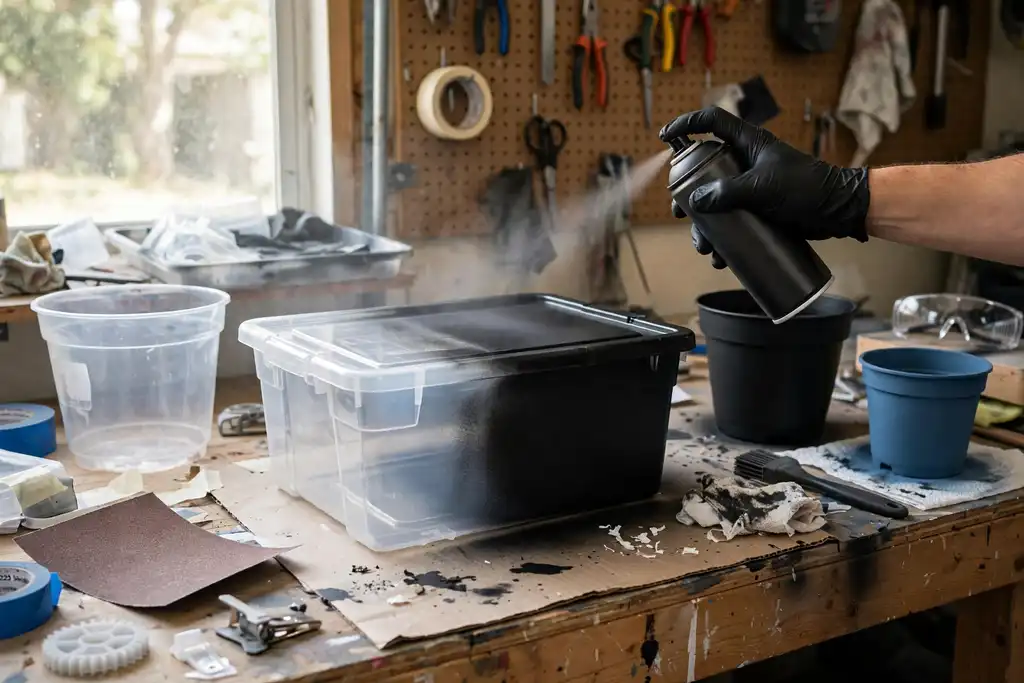
Yes, spray paint works on plastic, but only when the surface is properly prepared with cleaning and sanding, and you use a primer or adhesion promoter to ensure adhesion and durability.
Yes, spray paint for plastic works when the coating is formulated for plastic and the surface is prepped correctly. The real question isn’t whether does spray paint for plastic work; it’s whether you’ll take the steps that make adhesion last. Plastic is a synthetic material that often resists paint, so success depends on cleaning, sanding, and using the right primer or adhesion promoter.
You’ll get a clear, step-by-step approach to surface preparation, product selection, and application so your finish holds up. Expect straightforward guidance on avoiding common mistakes like skipping adhesion promoter or rushing drying time between coats. The goal is a durable finish that survives handling, weather, and flexibility without cracking or peeling.
Does Spray Paint for Plastic Work? the Honest Answer
Yes, spray paint can work on plastic, but only when the plastic is clean, the paint is formulated for it, and you accept that some plastics fight back. Skip any one of those steps and you get peeling, cracking, or a finish that looks fine for a month and then fails.
| Situation | What it means | What to do |
|---|---|---|
| Rigid PVC or ABS | Holds paint well with light scuffing | Sand, clean, prime, then coat |
| Polypropylene or polyethylene | Low surface energy resists adhesion | Use an adhesion promoter first |
| Car bumper or trim | Flexible plastic that bends and shifts | Flexible primer plus flexible paint |
| Bare plastic, unknown type | Adhesion is a gamble without prep | Test a hidden spot first |
| Glossy or oily surface | Paint beads up and peels | Clean with a plastic-safe cleaner |
| Outdoor furniture or planters | Sun and rain stress the coating | Use UV-stable paint, seal if needed |
| Thin coats applied too fast | Solvent attacks the plastic | Build several light coats with dry time |
Recommended for this job

Rust-Oleum Painter's Touch 2X Ultra Cover
Oil-based formula bonds to plastic and other surfaces for durable indoor and outdoor coverage.

Rust-Oleum Automotive Adhesion Promoter Spray
Clear adhesion promoter improves spray paint bonding specifically on difficult automotive plastic surfaces.

Rust-Oleum Painter's Touch 2X Ultra Cover
Flat white primer prepares plastic and other surfaces so topcoat spray paint adheres better.
Spray paint works on plastic when three things line up: the surface is prepared, the product matches the plastic, and you apply thin coats. Miss any of them and the coating fails early.
What ‘Work’ Means: Adhesion, Durability, and Finish
Success means the paint sticks (adhesion, the bond between paint and plastic), survives handling and weather (durability, how well it holds up over time), and looks even. A finish that scratches off with a fingernail did not work, no matter how good it looked wet.
The Role of Plastic Type and Paint Formulation
Plastic is a broad family of synthetic materials, and each type grips paint differently. Rigid, slightly textured plastics take paint readily. Slick plastics like polypropylene and polyethylene resist adhesion, so an adhesion promoter (a chemical tie coat that helps paint bond) is often required. Formulations such as Krylon Fusion and Rust-Oleum plastic paints are built for this job.
Krylon Fusion is a spray paint formulated to bond directly to plastic, reducing the need for a separate primer on many jobs.
When a Simple Can of Spray Paint is Enough
For a small indoor item with a rigid, paintable surface, one can of plastic-rated spray paint is enough if you do the prep. Wash off oils and dust, scuff with fine sanding to give the paint a grip, wipe clean again, then apply several light coats. Rushing coats or skipping primer on a demanding plastic is where most failures start.
Can You Spray Paint Plastic? Yes, but These Plastics Are Picky
Identifying Your Plastic: Recycling Codes and Burn Tests
Flip the item over and look for a recycling code, usually a triangle with a number inside. That number tells you what the plastic is made of, which predicts how well paint will stick.
No code? Cut a sliver from a hidden spot and burn it with a lighter. A sweet, chemical smell points to ABS; a waxy smell with a smoky flame suggests polyethylene or polypropylene. Do this outdoors only.
Polypropylene and Polyethylene: the Difficult Ones
These resist paint because their surfaces have very low surface energy, so adhesion barely happens without help. You need an adhesion promoter, a chemical product made to bond paint to hard-to-stick plastics, before anything else.
Clean the part, apply a thin promoter coat per the label, then topcoat within the window the can specifies. Skip the promoter and expect peeling within months.
PVC, ABS, and Polystyrene: Friendlier Surfaces
These plastics accept paint readily after basic surface preparation. Scuff them with fine sanding, clean off dust and oils, then apply a plastic primer before your color coats.
Rigid PVC trim and ABS parts hold up well outdoors with proper coats. Thin polystyrene sheets stay flexible, so use light coats and let drying time between passes do the work.
Drying time is the wait between coats and before handling, letting solvents flash off so the paint bonds instead of running.
When Spray Paint for Plastic Doesn't Work (and What to Do Instead)
Flexible Plastics That Crack Under Rigid Paint
Standard spray paint dries hard, so it fails on parts that bend, like bumper covers or flexible trim. The film can’t move with the plastic and cracks or peels at the first flex. Use a flexible adhesion promoter first, then a paint labeled for flexible substrates.
Test on a hidden spot before committing. Bend a painted scrap piece after full drying time to confirm the coating moves with the surface.
High-Heat or High-Wear Plastic Surfaces
Engine covers, radiators, and parts that see friction need coatings rated for those conditions. Ordinary cans won’t hold up, and heat cycling will blister or discolor the finish. Choose a high-heat product and follow the manufacturer’s cure schedule exactly.
For wear areas, add extra coats and expect shorter service life. Durability, the ability to keep performing over time, depends on matching the product to the abuse.
When Brush-On Paint or Dye is the Better Choice
Small parts, tight textures, and interior pieces often do better with brush-on paint or a plastic dye. Dye penetrates rather than sitting on top, so scratches show less. Brush-on coatings give you more control near masked edges.
Skip aerosol on anything you can’t prep properly. Poor surface preparation, meaning incomplete cleaning and sanding, guarantees adhesion failure no matter which product you pick.
How to Spray Paint Plastic so It Actually Sticks
Follow these steps in order, and your spray paint will bond to plastic instead of peeling off.
- Wash the plastic with warm water and a few drops of dish soap, then rinse and dry completely.
- Scuff the surface with 400-grit sandpaper using light pressure until it looks uniformly dull.
- Wipe away all sanding dust with a microfiber cloth dampened with isopropyl alcohol.
- Apply a thin coat of adhesion promoter or plastic primer, holding the can 6 to 8 inches away.
- Let the promoter flash off for 10 to 15 minutes before spraying color.
- Choose a paint made for plastic, such as Krylon Fusion or Rust-Oleum plastic formula, and spray thin coats.
- Apply two or three thin coats, waiting 10 to 15 minutes between passes to avoid runs.
- Let the piece cure 24 to 48 hours at 70°F or above, since cool air slows drying time and weakens adhesion.
Follow these steps in order, and your spray paint will bond to plastic instead of peeling off.
Spray Paint vs. Brush-On Paint on Plastic: a Decision Rule
Match the Method to Plastic Type and Project Size
Rigid plastic such as car bumper trim or resin patio chairs holds spray paint well; flexible pieces like polypropylene bins need a paint with added flexibility or the film will crack within one season. Test a hidden 1 inch square first.
Bare or unknown plastic usually needs an adhesion promoter, a chemical bonding layer that helps the coating grip. A primer adds another grip layer on hard-to-stick surfaces.
When Spray Paint Saves Time Without Sacrificing Quality
Spray paint wins on flat panels over 2 square feet where an even film matters more than precision. Aerosol cans lay down coats of roughly 1 to 2 mils that flash dry in 10 to 15 minutes, avoiding brush marks and drips.
- Lawn chairs, storage bins, and car trim benefit from quick, even coverage.
- Krylon Fusion or Rust-Oleum plastic formulas cut prep time when you follow the label.
- Three to four light coats build durability better than one heavy pass.
Projects Where Brush-On Wins for Control and Coverage
Brush-on paint gives control on lettering, edges, and tight corners under 1 inch where overspray would hit glass or siding. You waste less product and skip masking a 6 foot perimeter.
Brush formulas also suit indoor jobs where fumes and ventilation are concerns. Sanding with 220 to 400 grit to scuff the surface, then cleaning away oils and dust, decides how well the finish holds.
Keeping Sprayed Plastic Looking Good: Care and Maintenance
Cleaning Without Damaging the Paint
Wash cured spray paint on plastic with a pH-neutral car soap diluted per the bottle, using a microfiber cloth and light pressure. Rinse with plain water and dry with a second microfiber to avoid water spots. Never use acetone, lacquer thinner, or a pressure washer above 1,500 PSI, which can lift edges where adhesion is weakest.
When and How to Apply a Protective Topcoat
Apply clear coat only after the color coats fully cure, usually 24 to 48 hours at 70°F and 50% humidity. Confirm the clear lists plastic compatibility, then lay two thin coats 10 to 15 minutes apart. Thin layers preserve flexibility, so the film bends with the plastic instead of cracking.
Touch-Up Strategies for Chips and Wear
Sand the chip edge with 800 to 1,000 grit wet sanding, clean with isopropyl alcohol, then spot-apply adhesion promoter, primer, and color in thin coats. Blending toward a panel seam hides the repair. Repeat chips usually mean surface preparation or the adhesion promoter step was skipped.
Spray Painting Plastic on a Budget Without Cutting Corners
Where to Save: Paint Brands and Primer Alternatives
Save on the can, not the chemistry. Krylon Fusion and Rust-Oleum make plastic-specific sprays that build adhesion into the formula, so you can skip a separate primer on many jobs. A general-purpose spray paint plus a dedicated adhesion promoter, a chemical helper that makes paint stick to slick surfaces, costs about the same and covers more materials.
Where Not to Skimp: Prep and Safety Gear
Prep is where cheap shortcuts fail. Cleaning and sanding remove mold release agents and gloss so the coating can grip; skip either and peeling starts within weeks. Buy a respirator rated for organic vapor, not a dust mask, and spray outdoors or in a garage with the door open, per OSHA ventilation guidance.
Cost Breakdown: DIY Spray Paint vs. Buying New or Pro Refinishing
Expect roughly $15 to $40 in materials for a small project: two cans of paint, an adhesion promoter or primer, sandpaper, and tack cloths. Pro refinishing of a single piece often runs $100 to $300, while replacement furniture can cost more than either. Your real investment is a few hours of drying time between coats.
Safety First: Ventilation and Respiratory Protection When Spraying Plastic
Why Plastic Paints Demand More Than a Dust Mask
A dust mask won’t protect you from solvent vapors. Most aerosols formulated for plastic carry organic solvents that irritate lungs and nerves, and some adhesion promoters are worse. Use a respirator rated for organic vapor, and check the cartridge fits your face.
Spray in a space with real airflow, not a closed garage. OSHA’s ventilation guidance applies here: cross-breeze in, exhaust out, away from doors and windows.
Setting up a Safe Spray Zone
Pick an outdoor spot or a garage with the door open and a fan pulling air past you. Tape off nearby surfaces, and keep the piece on a stand so you’re not bending into the overspray.
Lay down a drop cloth, since overspray drifts farther than you expect. Keep pets and kids out until the piece is dry and the area is aired out.
Skin, Eye, and Fire Safety Essentials
Wear nitrile gloves and sealed goggles. Solvents pass through latex and sting eyes fast, and adhesion promoter is especially nasty on skin.
No flames, pilot lights, or smoking anywhere near. Aerosol propellants are flammable, and rags soaked with solvent can self-ignite if balled up. Let them dry flat, then discard.
Your Action Plan for Spray Painting Plastic
Spray paint can absolutely work on plastic, but only if you treat the surface first. Skip the prep and you get peeling, cracking, or a finish that lifts within weeks. Follow this sequence and the coating will hold.
| Action | Why it helps | How to start |
|---|---|---|
| Identify the plastic type | Tells you if a primer is needed | Check the item's label or underside |
| Clean the surface | Removes mold release and oils | Wash with mild soap, rinse, dry fully |
| Scuff with fine sanding | Gives the coating a mechanical grip | Light passes with 400 to 600 grit |
| Apply adhesion promoter | Bonds paint to slick plastics | Mist on a thin coat, let flash off |
| Choose a plastic-rated product | Formulated to flex with the surface | Krylon Fusion or Rust-Oleum plastic lines |
| Build thin coats | Prevents runs and poor adhesion | Several light passes, not one heavy coat |
| Cure before handling | Full hardness takes time | Wait days, not hours, for durability |
Assess the Plastic and Choose Your Products
Know your material before you buy anything. Rigid plastics like ABS take paint well; flexible parts need a product that stays flexible. Check the item’s label, then pick a coating made for plastic, such as Krylon Fusion or a Rust-Oleum plastic line.
Prep, Prime, and Paint in the Right Conditions
Surface preparation decides whether the finish stays put. Wash off oils, scuff with fine sanding, and wipe clean again. On slick plastics, an adhesion promoter (a chemical that helps dissimilar surfaces stick) gives the primer and color a real grip. Spray in mild temperatures and low humidity.
Cure, Topcoat, and Maintain for Durability
Patience protects your work. Build several thin coats, let each flash off, then allow days of drying time before hard use. A clear topcoat adds durability against scuffs and sunlight. Clean gently afterward and touch up chips early.
When Spray Paint for Plastic Works Best
Ideal Plastics, Projects, and Weather Conditions
Reliable bonding to rigid plastics like ABS, PVC, and most polycarbonate occurs with spray paint when they are clean and scuffed, and to many flexible plastics with a suitable product. Skip polyethylene and polypropylene unless labeled otherwise; they resist adhesion and need an adhesion promoter.
Spray between roughly 50-90°F with humidity below about 70 percent; cold or damp air slows drying and can leave a dull, soft finish.
Small to Medium Items with Simple Shapes
Best results come on small to medium pieces with flat or gently curved surfaces, like planters, bins, frames, and trim. Complex parts with deep recesses, tight grilles, or moving joints need thin coats and extra drying time.
Cosmetic Refreshes vs. High-Stress Parts
Cosmetic work shines: faded patio chairs, scuffed toy bins, or dated switch covers look new with cleaning, light sanding, and a bonding primer. High-stress parts that flex, take impacts, or see constant handling need paint labeled for plastic, such as Krylon Fusion or Rust-Oleum plastic formula, and eventual recoating.
Common Mistakes That Ruin Spray Paint on Plastic
Skipping Adhesion Promoter on Difficult Plastics
Some plastics, like polypropylene and polyethylene, resist paint no matter how well you clean them. An adhesion promoter is a chemical coating that helps dissimilar surfaces stick together, and skipping it on these materials means peeling within weeks. Test a hidden spot first, and use a promoter made for plastic before any primer.
Spraying Too Thick or Too Far Away
Heavy coats trap solvents and cause wrinkling, while spraying too far lets paint dry midair and land as grit. Hold the can 8 to 12 inches away and apply thin coats, letting each one flash off. Two or three light passes beat one soaked layer every time.
Painting in Poor Weather or Without Proper Curing
Cold, damp, or windy conditions wreck adhesion and leave a hazy finish. Work between 50 and 90 degrees Fahrenheit with low humidity, and give the piece full drying time before handling. Rushing the cure invites scratches and early failure.
- Ignoring the plastic type: check the item or underside for a recycling code before buying paint.
- Skipping sanding and cleaning: scuff the surface and wipe off mold release agents or oils first.
- Using the wrong product: Krylon Fusion and Rust-Oleum make plastic-specific formulas that bond better.
- Forgetting flexibility: bumpers and trim need a paint that bends without cracking.
When to Call a Pro for Painting Plastic
Most plastic projects are DIY-friendly. A few situations demand a pro, and pushing past them risks ruined parts, health issues, or real danger.
Large or Complex Projects Like Car Trim and Furniture
Big, curved, or multi-piece parts are where adhesion failures show up fast. A shop has the tools and controlled space to prep and coat them evenly.
Safety Concerns: Toxic Fumes or Confined Spaces
If you cannot ventilate the work area properly, stop. Spray paint fumes in a garage or basement can build to unsafe levels, and OSHA guidance on solvents applies to professionals for good reason.
High-Value Items Where Failure is Costly
On expensive parts, a failed coat means stripping, sanding, and starting over, or replacing the piece. Paying for a pro’s prep and products is often cheaper than one bad outcome.
- Stop if the part is too large or awkward to coat evenly by hand.
- Stop if fumes cannot be vented safely to open air.
- Stop if the item is expensive enough that a failed finish hurts.
- Stop if the plastic type is unknown and test patches keep failing.
Does Spray Paint for Plastic Work: Frequently Asked Questions
?Does Spray Paint for Plastic Work on Any Plastic, or Only Some Types?
No, it does not work on every plastic. Rigid plastics like ABS, PVC, and most car trim accept spray paint well once surface preparation is done. Flexible plastics, polypropylene, and polyethylene resist adhesion, so they need an adhesion promoter, a chemical substance that helps coatings stick, before the spray paint will hold.
?Why Does Spray Paint Peel off Plastic Even When It Looks Dry?
Peeling usually means adhesion failed, not the paint itself. Adhesion is the bond that makes dissimilar surfaces stick together. Skip cleaning, sanding, or primer and the coating sits on contaminants or a slick surface instead of gripping. Clean with a degreaser, sand lightly, and use a primer or adhesion promoter made for plastic before spraying.
?Does Spray Paint for Plastic Work Better with a Primer Underneath?
Yes, a primer makes a real difference. A primer is a preparatory coating applied before paint to give the topcoat something to grab. On bare or unknown plastic, one thin primer coat improves adhesion and hides color underneath. Products like Krylon Fusion or Rust-Oleum plastic-specific lines already build in that bonding chemistry, so check the label first.
?How Does Spray Paint for Plastic Work on Flexible Parts Like Bumpers?
It can work, but flexibility is the catch. Standard spray paint dries rigid and cracks when the plastic flexes. Use a flexible primer and a flexible topcoat rated for plastic, and keep coats thin. Thin coats move with the part; thick coats crack. Durability, the ability to keep performing over time, depends on that flexibility match.
?What Surface Preparation Makes Spray Paint Work on Plastic?
Cleaning and sanding are non-negotiable. Cleaning removes mold release agents, oils, and dirt that block adhesion. Sanding, which scuffs and removes surface imperfections with an abrasive, gives the paint a mechanical bite. Use a fine grit, scuff evenly, wipe clean, then spray in thin coats with proper drying time between them.
?When Does Spray Paint for Plastic Work Best, and When Should I Skip It?
It works best on rigid, clean, paintable plastics in good condition. Skip it on parts that flex heavily, see high heat, or are made of unidentified plastic that resists adhesion. If the part is valuable or the finish must last, test a hidden spot first. A failed test costs minutes; a failed repaint costs a weekend.
?Does Spray Paint for Plastic Work Safely Indoors, or Do I Need Ventilation?
No, do not spray indoors without serious ventilation. Aerosol solvents and particles build up fast and pose real respiratory risk. Spray outside or in a garage with the door open and a fan moving air, and wear a respirator rated for organic vapors. Keep spray paint away from flames and let coats dry fully before handling.
Our Thoughts
So the short answer holds: yes, spray paint works on plastic, but the surface preparation and a primer or adhesion promoter are what make it stick. Skip those steps and you get peeling, cracking, or a finish that rubs off under light handling. Adhesion, the way two dissimilar surfaces stick together, depends on a clean, scuffed surface and the right base coat.
Your best next step is to test on a scrap piece of the same plastic before touching the real project. Clean it, sand it lightly, apply your primer or promoter, then lay down thin coats and respect the drying time on the can. Products like Krylon Fusion and Rust-Oleum are formulated for plastic, but flexibility and durability still hinge on your prep work.