
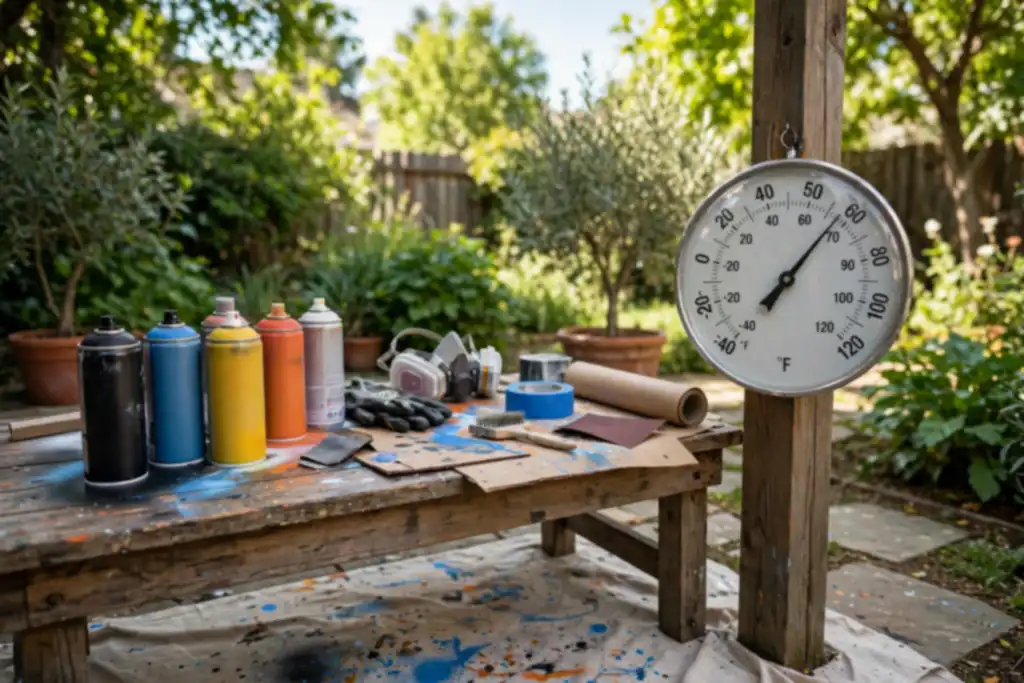

You can spray paint outside when the air temperature stays between 50°F and 90°F, but surface temperature and humidity matter just as much as the reading on your thermometer.
Here is a clear, practical look at what temp can you spray paint outside.
Many people believe that if it feels warm enough to you, it is warm enough to spray paint. The truth is that the coating cares about the surface temperature, not your comfort. That is why the real answer to what temp can you spray paint outside starts with a range, then adds conditions that decide whether your finish will cure or fail.
Avoid the common mistake of spraying in direct sunlight or on a surface that is too hot or too cold. You will get the safe temperature window, how humidity and drying time interact, and when to check manufacturer guidelines for primer, clear coat, aerosol, or spray gun products. Follow these rules once, and you skip the rework.
What Temp Can You Spray Paint Outside? the Quick Answer
Spray paint needs the air and the surface to sit in a workable temperature band. Go too cold and the coating won't cure right; go too hot and it dries before it levels.
| Situation | What it means | What to do |
|---|---|---|
| Ideal air temperature | Roughly 50°F to 90°F | Spray in this band |
| Below 50°F | Slow or failed curing | Wait or heat the space |
| Above 90°F | Fast dry, poor leveling | Spray early morning |
| Surface in direct sunlight | Much hotter than the air | Shade it, then check |
| High humidity | Blushing and slow drying time | Pick a drier day |
| Cold surface temperature | Paint won't bond | Let it warm up first |
| Windy outdoor day | Overspray and uneven coat | Shelter the work area |
Recommended for this job

Etekcity Infrared Thermometer Laser Temperature Gun
Checks surface and air temperature instantly so you know if it's safe to spray.

Odor/Particulate Multipurpose Respirator
Protects your lungs from fumes and particles while spraying in outdoor conditions.

Rust-Oleum Painter's Touch 2X Ultra Cover
Label lists recommended temperature range for proper outdoor spray application.
Most spray paint wants air and surface temperature between about 50°F and 90°F. That range lets the coating flow out, then cure into a hard film instead of a sticky or powdery mess.
The Ideal Range: 50°F to 90°F (10°C to 32°C)
Stay inside roughly 50°F to 90°F for both the air and the surface. Check the label first, since some aerosol and spray gun products list a tighter window.
An aerosol is a fine mist of liquid droplets or solid particles suspended in air, delivered from a pressurized can.
Why 50°F is the Usual Minimum
Below about 50°F, curing slows sharply and the film may never harden properly. Cold surface temperature also stops primer and paint from bonding.
Why 90°F is the Usual Maximum
Above roughly 90°F, the coating skins over before it levels, leaving a rough finish. Direct sunlight can push surface temperature well past the air reading, so shade the piece and recheck.
When Spray Painting Outside Works: Conditions That Hit the Sweet Spot
Air and Surface Temps Both in Range
Spray paint generally works best when both air and surface temperature are 50â90°F. Surface temperature can differ from air; check both with an infrared thermometer. Metal in direct sun can hit 120°F while air reads 75°F, causing solvent to flash too fast and leave a rough, dry finish. Move the piece into shade first.
Humidity Below 60%
Keep relative humidity under about 70%. Moisture slows solvent evaporation and can trap water in the film, causing blushing (a milky haze). It also stretches drying time between coats.
Wind Under 10 Mph
Wind under 10 mph keeps overspray manageable and stops debris from landing in wet paint. Use a windbreak on breezy days and keep ventilation in mind for fumes.
Product Labeled for Your Conditions
Follow manufacturer guidelines, since every primer, color coat, and clear coat has its own range. Some tolerate cooler air; others need 60°F or warmer through the full curing window. Match the product to the day.
How Temperature Affects Drying and Curing (and Why It Matters)
Drying vs Curing: What’s the Difference?
Drying means solvents leave the film and it feels dry to the touch, often in 15 to 30 minutes. Curing is the longer hardening into cross-linked polymer chains, typically 24 hours to 7 days. Air temperature drives both clocks.
Cold Slows Drying and Can Trap Solvents
Below roughly 50°F, most spray paint films dry much slower, and each coat may need double the usual 15 to 30 minutes. Solvents can stay trapped under a skin, leaving a soft or hazy finish. Cold also stretches curing from days into weeks, so do not recoat early.
Heat Speeds Drying but Can Cause Solvent Pop
Above about 90°F, the surface skins over before solvents escape, causing pinholes called solvent pop. Work in shade, not direct sunlight, and keep surface temperature within the product’s range. A primer or clear coat needs the same care.
- Check manufacturer guidelines for the exact range.
- Watch humidity and keep air moving for ventilation.
When It Doesn't Work: Temperature Exceptions and Limits
Below 50°F: Most Aerosols Fail to Adhere
Stay above 50°F for most spray paints; some formulas need 60°F+. Cold slows solvents, so coating skins over before bonding, causing peeling, runs, or chalky finish.
Above 90°F: Increased Fume Inhalation and Fire Risk
Above 90°F, solvent vapors build fast and drying is uneven. Spray early morning with strong ventilation. OSHA treats fumes as an inhalation hazard; cans can rupture in sunlight. Move to shade; never spray near ignition sources.
High Humidity Above 70%: Blushing and Poor Adhesion
Keep humidity under about 60%, or trapped moisture causes blushing (milky haze) and weak adhesion. Humid air stretches drying time, letting dust and bugs land on wet paint. Wait for a drier day.
Surface Too Hot or Too Cold Even If Air is Fine
Measure surface temperature, not just air; metal and concrete run hotter in sun, colder in shade. A surface outside roughly 50°F to 90°F ruins adhesion regardless of air temp. If it feels hot or cold, wait.
How to Check Conditions and Adjust Your Spray Painting Plan
Step 1: Check the Air Temperature with a Thermometer
Labels on spray paint typically call for air between about 50 and 90°F. Read the can first, then confirm with a thermometer at the project site, not on your porch.
Step 2: Measure Surface Temperature with an Infrared Thermometer
Surface temperature drives adhesion and curing, and metal or concrete in direct sunlight can run 20°F or more above the air. Point an infrared thermometer at the panel and compare it to the label range.
Step 3: Check Humidity and Wind Forecasts
High humidity slows drying time and can dull the finish, so aim for below roughly 60 percent relative humidity. Wind above about 10 mph invites overspray and dust, so plan around it.
Step 4: Read the Product Label for Temperature Limits
Every aerosol and spray gun coating has its own window, and the manufacturer guidelines override general advice. Note the recoat time and minimum curing temperature before you shake the can.
Step 5: Choose the Best Time of Day (Mid-Morning to Mid-Afternoon)
Spray between mid-morning and mid-afternoon, when the air is warming and dew has burned off. Avoid early morning and evening, when falling temperatures trap moisture and stretch drying time.
Get the conditions right before you pick up the can, and the coating will do the rest.
What is the Lowest Temperature You Can Spray Paint Outdoors?
The 50°F Rule and Why It Exists
Coating products from aerosols and spray guns usually want air and surface temperature at 50°F or above. Below that, resin thickens and solvents flash off slowly, so the film never lays down evenly. Manufacturer guidelines beat any general rule.
Products Labeled for Lower Temps (Down to 35°F)
Some cold-formulated spray paint and primer lines claim application down to 35°F, assuming rising temperatures after you spray. A low-temp claim usually shortens the recoat window.
Risks of Pushing Below the Limit: Poor Adhesion, Long Drying, Defects
Spraying too cold causes poor adhesion, days-long drying, and defects like blushing, orange peel, and runs. Curing stalls in the cold, leaving a soft film that fails within a season.
Cold-Weather Tips: Warm the Can, Warm the Surface, Extend Drying Time
Warm aerosol cans in tap water before shaking and store indoors between coats. Surface temperature matters more than air: let the piece sit in direct sunlight, avoid condensation, add drying hours, keep ventilation going, and never rush the clear coat.
Myths vs Facts: Temperature and Outdoor Spray Painting
Myth: You Can Spray in Direct Sun If It’s Not Too Hot. Fact: Surface Can Be 20 to 30°F Hotter, Causing Defects
Air temperature is not surface temperature, which is the actual reading at the material you’re coating. A panel baking in direct sunlight can run 20 to 30°F above the air, pushing it past the product’s safe range. Move the piece into shade and let it cool before you spray.
Myth: Humidity Doesn’t Matter If It’s Not Raining. Fact: High Humidity Slows Drying and Causes Blushing
Moisture in the air interferes with how a coating cures, the process of hardening into a solid film. Above roughly 60 percent relative humidity, drying time stretches and trapped moisture can cloud clear coats, a defect called blushing. Check the forecast and your manufacturer guidelines before you commit.
Myth: If the Air Temp is 50°F, You’re Good to Go. Fact: Surface Temp May Be Lower; Always Measure
Cold metal or concrete can sit well below the surrounding air, especially in morning shade. Use an infrared thermometer on the actual piece, not the wall thermometer. Most aerosol and spray gun products want surface and air between 50 and 90°F, so confirm both before loading your primer.
Hot Weather Spray Painting: Precautions and Pro Tips
Spray Early Morning or Late Afternoon to Avoid Peak Heat
Aim for a window when air temperature sits in the 60 to 80°F range and is trending steady. Midday sun pushes surface temperature well above the air reading, which can flash off solvents too fast. Early morning or late afternoon gives you slower, more even drying.
Keep Cans Cool (Not in Direct Sun) and Shake Well
Store aerosol cans and mixed coating in shade until you spray. A hot can builds pressure and spits unevenly, and warm primer or clear coat may not flow out. Shake per the label, usually one to two minutes, and re-shake between passes.
Use a Respirator: High Heat Increases Fume Inhalation and Fire Risk
Wear a NIOSH-rated respirator and eye protection, because heat raises vapor concentration and solvent flash risk. Spray upwind with strong ventilation, and keep ignition sources far away. OSHA treats these solvents as serious respiratory hazards, hot day or not.
Watch for Solvent Pop and Dry Spray
Fast evaporation in heat traps solvent under the skin, causing solvent pop pinholes, while overspray dries mid-air into gritty dry spray. Keep coats thin, follow manufacturer guidelines for recoat windows, and expect shorter drying time before curing completes.
Your Action Plan for Temperature-Smart Outdoor Spray Painting
Spray painting outside is a temperature game: get the range right and the coating cures hard, miss it and you get runs, blushing, or a finish that never sets. Work through these five steps before you pick up an aerosol or spray gun.
| Action | Why it helps | How to start |
|---|---|---|
| Check the forecast and product label | Confirms the safe range for your coating | Read the can or tech sheet first |
| Measure air and surface temps | Surface temperature drives adhesion and drying time | Use a thermometer, not the weather app |
| Prepare the surface properly | Clean, dry, primed surfaces hold paint better | Wipe down, then apply primer if needed |
| Set up a safe, ventilated area | Cuts fumes and keeps overspray off nearby surfaces | Pick open air away from walls and cars |
| Spray in the ideal window | Steady temperatures prevent uneven curing | Mid-morning to early afternoon works best |
| Bring items indoors to cure | Protects fresh clear coat from dew and cold | Move pieces inside once touch dry |
Your Action Plan for Temperature-Smart Outdoor Spray Painting
Check the label first: most aerosol spray paint and spray gun coatings call for 50°F to 90°F air temperature, with surface temperature within 5°F of air. Read both with an infrared thermometer before you start.
Keep humidity under 60% and skip direct sunlight, which can push surface temperature 20°F above air and cause solvent pop. Work mid-morning to early afternoon, when temperatures are climbing toward the day’s high.
Apply primer within its label window, usually 1 to 4 hours, then topcoat. Add 50% to drying time for every 10°F below 70°F, and move pieces indoors if overnight lows drop below the label minimum.
A Real-Life Scenario: Spray Painting a Patio Set in Spring
The Setup: Air Temp 55°F, Surface 50°F, Humidity 65%
Your thermometer reads 55°F and the metal feels colder. Surface temperature drives spray paint behavior, and 50°F sits at the edge of most product limits. Humidity at 65% slows drying further.
Step 1: Check the Label, Product Works Down to 50°F
Many aerosols list a minimum of 50°F, some require 60°F or higher. If your product fails that check, wait for a warmer day.
Step 2: Warm the Cans in a Bucket of Warm Water
Cold propellant sprays unevenly. Set cans in warm tap water for 10 to 15 minutes, dry them, then shake for a full minute.
Step 3: Spray in the Afternoon When Surface Warms up
Metal gains heat through sunlight, so early afternoon is best. Wipe clean, apply primer if bare, work in light coats, keep ventilation strong.
Step 4: Extend Drying Time and Bring Indoors Overnight
Cool air often doubles drying time, and curing stalls below 50°F. Move pieces into a garage or shed overnight. Add clear coat only after full cure.
Common Mistakes When Spray Painting Outside in Less-Than-Ideal Temps
Mistake: Not Measuring Surface Temperature
The number that matters most is not air temperature. Surface temperature, the reading right at the material you are coating, can run hotter or colder than the air around it. Use an infrared thermometer on the actual panel before you start.
Mistake: Spraying in Direct Sunlight
Direct sunlight pushes surface temperature well above the air reading, so the coating skins over before it can flow out. Move the project into shade and check the panel again. A cooler surface gives you a smoother finish and fewer solvent pops.
Mistake: Ignoring Humidity
High humidity slows solvent evaporation and can leave a hazy, blushed finish, especially with aerosol clear coat. Check the forecast and the product label before you commit. If the air feels heavy, wait for a drier day.
Mistake: Using the Wrong Product for the Temperature
Not every spray paint behaves the same in cool or hot weather. Read manufacturer guidelines for the stated temperature range, and pick a primer and topcoat rated for the conditions you have. Cold-rated products exist for a reason.
Mistake: Storing Spray Paint in Freezing Conditions
Frozen cans can separate or spray poorly even after warming up. Store aerosol cans indoors within the label’s recommended range. Bring them to outdoor temperature before spraying, and shake them longer than usual.
- Surface temperature vs air temperature: an infrared thermometer on the panel tells you more than the weather app.
- Direct sunlight: shade the project and recheck the surface before spraying.
- Humidity: heavy air slows drying time and can cause blushing on clear coat.
- Product choice: follow manufacturer guidelines for the temperature range on the label.
- Storage: keep aerosol cans indoors, never in a freezing garage.
- Warm-up: let cold cans reach outdoor temperature and shake them thoroughly.
When to Call a Pro for Outdoor Spray Painting
You Need a Flawless, Durable Finish on a Large or Valuable Item
Use a spray gun for control over flow and overlap on large surfaces like cars, cabinets, or doors. Pros sequence primer and clear coat within their temperature and humidity limits without trapping solvent.
Temperatures Are Borderline and You Can’t Risk Rework
Call a pro near the edge of the range on the can. Coating behavior shifts fast below 50°F or above 90°F, causing runs, blushing, or poor adhesion.
You’re Using Two-Component Coatings with Tight Temperature Windows
Two-part products cure chemically; wrong temperature or humidity can leave a soft, dull film that never hardens.
You Lack Proper Safety Gear for High-Heat or Confined Outdoor Spraying
Stop without real ventilation and the right respirator. Mists carry solvents and fine particles; OSHA expects respiratory, eye, and skin protection.
Stop and call a professional if:
- The surface is hot from direct sunlight and you cannot move the item into shade.
- Wind is blowing dust, pollen, or debris onto the wet coating.
- You are spraying a car panel or other high-value item without a controlled booth.
- The product label lists a temperature or humidity range you cannot meet for the full drying time.
- You smell solvent strongly or feel dizzy while spraying outdoors.
- You are using a two-component coating for the first time on a critical surface.
What Temp Can You Spray Paint Outside: Frequently Asked Questions
?What Temp Can You Spray Paint Outside If I Want a Safe, Mistake-Free Job?
Aim for 50-90°F air temperature, with 60-80°F ideal. Below 50°F, most spray paint stops flowing and curing properly; above 90°F, it can skin over too fast and trap solvent. Always check the manufacturer guidelines on the can or technical data sheet, since primer and clear coat often have their own ranges. Surface temperature matters too, metal in direct sunlight can run 20-30°F hotter than the air.
?Does Humidity Matter as Much as Temp When You Spray Paint Outside?
Yes, humidity matters nearly as much as temp when you spray paint outside. High humidity slows drying and can cause blushing or a hazy finish, especially with clear coat. Low humidity combined with high temp makes paint dry too fast and lose flow. Most labels call for below 85% relative humidity, with 40-60% being a comfortable working range.
If humidity is high, wait for a drier window rather than pushing it, since solvent trapped under a fast-drying skin causes curing problems later.
?How Do I Check Surface Temperature Before I Spray Paint Outside?
Use an infrared thermometer, not the air temp reading. Surface temperature is the temperature at the surface of the body you're coating, and it drives how paint behaves. Touch the panel: if it's too hot or cold for your bare hand, it's outside the safe range. Shade the work and recheck, direct sunlight pushes metal and car panels well above air temp. Spray when surface temp sits inside the product's stated range.
?Can I Spray Paint Outside in Cold Temps If I Warm the Can First?
No, warming the aerosol or paint doesn't fix cold substrate. The paint may spray, but it hits a cold surface, thickens, and curing stalls. Curing is the process of hardening a material into cross-linked polymer chains, and it needs adequate temperature to complete. Cold panels also hold moisture. Move the project indoors to a ventilated, heated space if you must work in winter, or wait for a warmer day.
?What Temp Can You Spray Paint Outside When Using a Spray Gun Instead of Aerosol?
Same general range: 50-90°F, with the product's technical data sheet as the final word. A spray gun is a device for spraying a coating through the air onto a surface, and gun coatings like automotive primer and clear coat often specify tighter windows than rattle cans. Watch viscosity, cold paint sprays thick and orange-peels; hot paint flashes too fast. Adjust reducer and speed per the manufacturer guidelines.
?Why Does Direct Sunlight Wreck an Otherwise Good Temp Day for Spray Painting Outside?
Because it heats the surface, not the air. A 75°F day can put a dark car panel or metal patio table well past 100°F in direct sunlight. Paint skins over before solvent escapes, causing solvent pop, blisters, or poor adhesion. Work in shade or move the piece, and check surface temperature right before you spray. Also plan ventilation, outdoor spraying still needs airflow so you don't breathe aerosol, a colloid of fine particles or droplets suspended in air.
?When is It Too Risky to Spray Paint Outside, Temp-Wise?
Below 50°F or above 90°F air temp, or when surface temp falls outside the label range. Also skip rain, wind above about 10 mph, and high humidity. These conditions cause runs, poor adhesion, blushing, or incomplete curing, and rework costs more than waiting. If your deadline is tight and conditions won't cooperate, that's when to call a pro with a controlled spray booth.
Our Thoughts
Stick to that 50°F to 90°F window for the air, and you will avoid the most common outdoor spray paint failures. Below 50°F, the coating may not flow out or cure properly, and above 90°F, the aerosol can spit and the finish can dry too fast, trapping solvent.
Check surface temperature too, since metal or concrete in direct sunlight can run far hotter than the air, and skip spraying when humidity is high or rain is close.
Your next step is simple: read the manufacturer guidelines on the can or product data sheet before you start. They list the exact temperature and humidity limits for that primer, color, and clear coat, plus the recoat and drying time windows. Match your conditions to those numbers, work in shade with good ventilation, and you get a finish that holds up instead of one you have to strip and redo.
Sources and further reading: guidance from EPA, OSHA.