
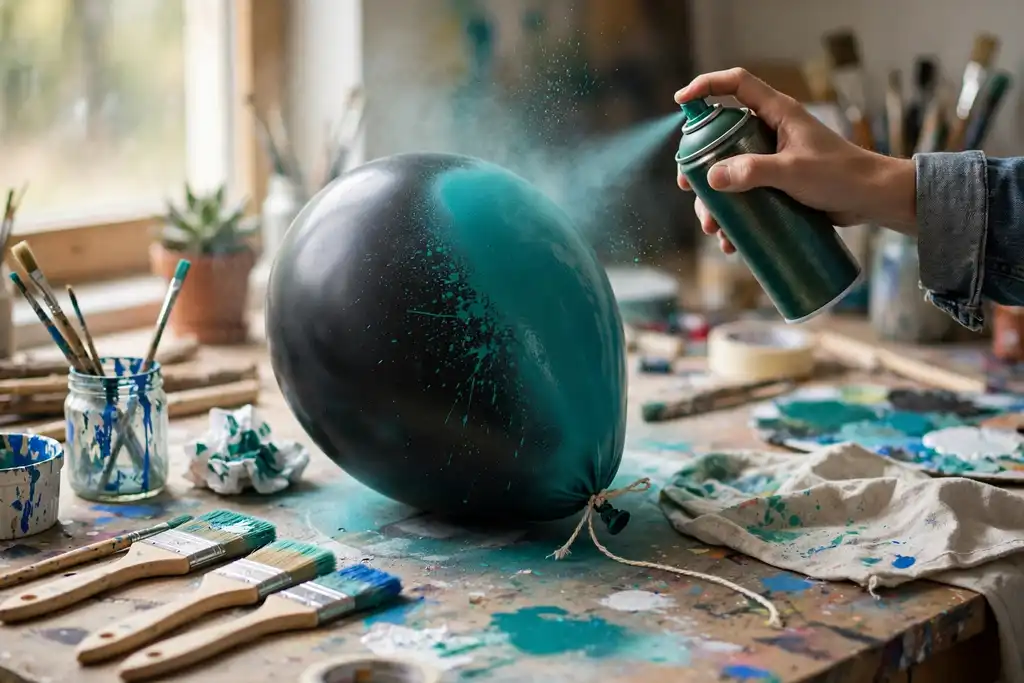

Yes, you can spray paint a balloon, but only if you use light coats and accept that the paint will crack when the balloon flexes. Heavy coats or a fully inflated balloon will flake or stick.
You hold a latex balloon in one hand and a can of spray paint in the other, wondering if the paint will stick or destroy the rubber. So, can you spray paint a balloon? Yes, but success depends on how you handle adhesion, flexibility, and the solvent in the paint. The rubber stretches, and most paints do not, so the wrong technique leads to cracking or flaking.
This article gives you the exact steps to coat a balloon without ruining it. You will learn which paints work, how to apply light coats for proper adhesion, and why drying time matters. You will also get safety basics: a respirator and ventilation are non-negotiable when working with aerosol. Follow these rules, and your craft project or decoration will survive deflate and re-inflate.
Can You Spray Paint a Balloon? the Honest Answer Before You Ruin a Batch
Yes, you can spray paint a balloon, but only if you respect how rubber and aerosol coatings behave. Skip the prep and you get a sticky, cracking mess instead of a finished craft project.
| Situation | What it means | What to do |
|---|---|---|
| Latex balloon, inflated | Rubber stretches under pressure | Use light coats, accept some cracking |
| Deflated balloon | Flatter surface, still flexible | Paint thin, dry fully before inflating |
| Full wet coat | Solvent pools and softens rubber | Stop at light coats, build slowly |
| Rigid spray paint | Film cannot follow rubber movement | Expect cracking and flaking over time |
| Poor adhesion | Paint lifts or beads on the surface | Test one balloon before a batch |
| Enclosed workspace | Aerosol fumes build fast indoors | Ventilate well, wear a respirator |
| Inflating too soon | Wet film splits as rubber expands | Wait out full drying time first |
Recommended for this job

Liquitex Professional Spray Paint
Water-based fine art spray adheres gently to balloon surfaces with low odor.

Odor/Particulate Multipurpose Respirator
Respirator filters paint fumes and particles while spraying balloons indoors.

Rust-Oleum Painter's Touch 2X Ultra Cover
Gloss clear oil-based spray adds durable, fast-drying coating to balloon surfaces.
Short answer: yes, with caveats. A light coat of spray paint can color a latex balloon, but the film has limited flexibility, so it may crack once the rubber stretches.
What Actually Happens When Paint Hits Rubber
The aerosol carries a solvent, a liquid that dissolves the rubber surface just enough to help adhesion, meaning the paint sticks to the latex instead of beading off. That same solvent weakens the rubber, so one heavy pass can leave a sticky, brittle patch. Two or three thin passes at 8 to 10 inches beat a single wet coat every time.
The Caveats That Decide Success or Failure
Rigid paint films crack and flake, the separation of thin layers, once the balloon inflates past roughly 80 percent of its rated size. Work in light coats, wait the full drying time on the label, often 24 hours, and spray outdoors or with a fan plus an OSHA-rated respirator for solvent fumes.
Why a Test Balloon Saves Your Whole Project
Spray one small latex balloon first and check adhesion after it cures. If it passes, commit to the batch, including any deflate and re-inflate step.
Deflate and re-inflate means letting the air out of the painted balloon and blowing it up again to check whether the coating cracks.
Why Latex Balloons Fight Back Against Paint
How Latex Stretches and Why Rigid Paint Cracks
A latex balloon is a thin elastic membrane, roughly 0.01 to 0.03 inches thick, and that flexibility is the core problem. Standard spray paint dries into a rigid film with poor adhesion, meaning the paint and rubber do not stick together well. Inflate the balloon and the film cannot follow the stretch, so cracking starts almost immediately.
You get visible splits and flaking, where thin flat pieces of coating peel away from the surface. A balloon that looked fine deflated can fail the moment it fills with air, often within a small amount of expansion.
Surface Oils and Mold-Release Residue
New balloons carry mold-release powder and surface oils that block adhesion. Wipe the rubber with a mild dish soap solution and let it dry fully, about 15 to 30 minutes, before any coating goes on. Skip this and even careful light coats will lift off in sheets.
The Deflate-And-Reinflate Test That Predicts Cracking
Paint a scrap balloon, let it cure for 24 hours, then deflate and re-inflate it. If the coating cracks or flakes during that cycle, it will fail on your finished piece. Test first, and always work outdoors or with strong ventilation plus a respirator rated for solvent vapors.
Does Spray Paint Stick to Balloons?
Which Paints Bond and Which Just Sit on Top
Latex takes paint best when the coating stays flexible, so look for spray paint labeled for plastic, rubber, or craft foam. Standard hardware enamel will stick at first but hardens brittle and fights the balloon’s stretch. Skip anything with a hot solvent load, since a solvent (a liquid that dissolves another material) can soften or eat the rubber.
How Surface Prep Changes Adhesion
Adhesion, the way two unlike surfaces stick together, depends on a clean, slightly textured balloon. Wipe the surface with a dry cloth to remove talc, then inflate and tie it so the rubber is taut. Light coats, two to three thin passes with a few minutes between them, bond better than one wet layer that pools and wrinkles.
Signs the Paint is Holding vs Peeling
Good paint flexes with the balloon and stays put through a gentle squeeze. Cracking (the coating splitting under internal pressure) or flaking (thin layers separating from the surface) means the bond failed. If you plan to deflate and re-inflate, test a scrap balloon first, and always spray outdoors or with a respirator and strong ventilation.
Your Balloon Spray Painting Action Plan
Spray painting a balloon works only if you respect the rubber. The plan below keeps adhesion honest, prevents solvent damage, and tells you when to walk away.
| Action | Why it helps | How to start |
|---|---|---|
| Inflate fully and tie off | Taut surface shows real stretch | Inflate to final size first |
| Wipe with mild soap, dry | Removes mold release and oils | Let it air dry fully |
| Test on a scrap balloon | Checks solvent compatibility first | Spray one light pass, wait |
| Spray light coats, 6 to 10 inches | Builds adhesion without pooling | Sweep in steady passes |
| Wait 10 to 15 minutes between coats | Lets solvent flash off | Touch test a hidden spot |
| Cure 24 to 48 hours | Improves flexibility and grip | Keep dust-free, room temp |
| Deflate and re-inflate slowly | Reveals cracking before display | Stop if flaking starts |
Prep, Test, Spray, Cure, Re-Inflate
Start with a clean, fully inflated latex balloon and a test scrap. Work outside or in strong ventilation, and wear a respirator rated for organic vapors. Hold the can 8 to 10 inches away and sweep in light passes.
Light Coats vs Heavy Coats: the Schedule
Light coats win every time. Heavy passes flood the rubber with solvent, which softens it and kills adhesion. Space coats 10 to 15 minutes apart, then cure 24 to 48 hours before you deflate and re-inflate.
When to Stop and Switch to Acrylic Instead
If you see cracking or flaking during re-inflation, stop. Aerosol solvent is fighting the flexibility of the rubber, and more coats will not fix it. Switch to flexible acrylic paint for craft project work.
Painting Inflated vs Deflated Balloons: Pick Your Battles
Spraying a Balloon While It’s Inflated
Yes, you can spray an inflated latex balloon, but the coating fights you the whole way. The rubber stretches under pressure, and cured paint does not stretch with it, so cracking and flaking start as soon as the surface flexes. Keep the balloon only partly inflated and build thin coats.
Adhesion, the bond that makes paint stick to a surface, is weak on slick rubber. Wipe the balloon with a light solvent to cut the mold release, then apply several light coats instead of one wet pass. Allow full drying time between coats, typically 10 to 20 minutes in mild conditions.
Painting Flat and Re-Inflating Later
Deflate the balloon, paint it flat, and you get a smoother, more even finish with far less cracking. The catch is the re-inflation step: paint that dried stiff will split along stress lines once the rubber expands, so test one balloon before committing to a batch.
Which Method Suits Parties vs Practice Panels
For party decor that stays put, spray the inflated balloon and handle it minimally. For practice panels and color tests, paint flat balloons first so you learn how your paint behaves before risking a decorated set.
When Spray Paint on Balloons Doesn't Work
Cracking and Flaking on High-Stretch Balloons
Stretched rubber wins the fight against most paint. A cured film can’t move with the latex balloon, so it splits and peels off in thin layers, which is flaking. If you plan to deflate and re-inflate, expect cracks at the neck and shoulders.
Humidity and Cold That Wreck the Cure
Cool, damp air slows the cure and softens adhesion, meaning the paint never really grips the rubber. Spray when temps are roughly 60 to 80 degrees Fahrenheit and humidity is moderate. Otherwise, give light coats extra drying time, often 24 hours, before handling.
Balloons That Flex Too Much for Any Coating
Some shapes simply move too much for a rigid film to survive. Water balloons and thin party stock are the worst offenders. If the balloon must stay inflated and untouched, paint can work; if it has to stretch, skip the aerosol and use a flexible coating instead.
How to Spray a Balloon Without It Cracking
Work outdoors or in a garage with the door open, and wear a respirator rated for organic vapor. Aerosol particles stay airborne, so give the area 30 minutes to clear before you handle the balloon.
Scuff and Clean the Surface First
Paint sticks poorly to slick rubber, so prep decides your result. Skip it and the coating will peel in sheets.
Build Three Thin Coats, Not One Wet One
Heavy coats trap solvent under the skin, and that solvent attacks the latex. Thin layers let it flash off.
Let It Cure Fully, Then Do the Re-Inflate Test
Dry to the touch is not cured. Give it a full day, then flex the balloon gently before trusting it.
Follow these steps in order and the coating has a real chance of flexing with the rubber instead of failing.
A Birthday Party Batch, Start to Finish
Testing One Balloon Before Committing
Spray one latex balloon first, because the rubber stretches and most paints do not. A light coat of spray paint may hold at first, then fail as the balloon expands. Give it a full drying time of 24 hours, then inflate slightly and watch for cracking or flaking.
Good adhesion means the coating sticks to the surface without lifting. On rubber, that bond is hard to get, so test before you commit to a batch.
Spraying a Dozen in a Ventilated Garage
Work outside or with the garage door open and a fan moving air. Aerosol means fine particles suspended in air, and you do not want to breathe them. Wear a respirator rated for organic vapor, plus gloves and eye protection.
Set balloons on a rack or string, then apply several light coats instead of one heavy pass. Heavy coats trap solvent, which is a liquid that dissolves other substances, and slow curing leads to cracks.
Transporting and Re-Inflating on the Day
Plan on deflate and re-inflate, since painted balloons rarely survive a full stretch. Keep them flat and cool, and expect some touch-up. For party decorating, consider painting deflated balloons and inflating only partway, or skip paint and use colored latex.
How Weather and Climate Change the Answer
Humid Days and Slow Curing
High humidity stretches drying time on any coated latex balloon, so plan for longer between coats than the usual 10 to 15 minutes. Trapped moisture under the film weakens adhesion, the bond that makes paint stick to the rubber. Spray in the morning when humidity is lower, and let the balloon cure fully before handling.
Cold Garages and Brittle Paint
Paint applied below about 50°F stays soft and grips poorly, then cracks as the rubber flexes. Cold also makes the latex itself stiff, so even light coats can flake off at the first squeeze. Warm the balloon and the can to room temperature first, and skip outdoor spraying on frosty mornings.
Indoor vs Outdoor Spraying Windows
Outdoors gives you free ventilation, but wind blows aerosol mist onto everything nearby and dust ruins the finish. Indoors, you control debris but need strong airflow and a respirator, a fitted mask that filters airborne particles. Either way, avoid direct sun: heat makes the film skin over before the solvent, the liquid that carries the paint, fully evaporates.
When Spray Painting Balloons Actually Works
Low-Stretch Decorative Balloons
Coating works best when the latex balloon barely changes size after painting. Inflate it first, paint it at that diameter, and keep it at that diameter. Any real stretch will fight the paint film.
Light coats protect flexibility. Two or three thin passes with drying time between them hold up better than one wet layer, because thick paint loses adhesion and starts cracking.
Short-Lived Event Displays
Decorating for parties and events is realistic if the balloons stay indoors and stay put for hours, not days. Aerosol paint on rubber is a surface coating, not a permanent bond, so treat it as temporary.
Skip helium for painted balloons unless you have tested the lift. The added weight of paint can keep them low, and solvent residue can soften the rubber.
Car Paint Practice Panels
Spray painting balloons for car paint practice is a legitimate exercise in gun control and light coats. A balloon gives you a curved, unforgiving surface that shows runs and uneven overlap instantly.
Work outside or in strong ventilation and wear a respirator rated for organic vapor. Keep the balloon partly inflated on a stand, and never practice near a finished vehicle.
Common Mistakes That Ruin Spray Painted Balloons
Heavy Wet Coats on a Flexible Surface
One thick pass is the fastest way to ruin a balloon. Rubber stretches, and a heavy layer of paint can’t move with it, so adhesion fails and you get cracking or flaking once it flexes.
Skipping the Test Balloon
Always spray one spare latex balloon first. It tells you how your brand of spray paint behaves, how much flexibility survives, and whether it survives deflate and re-inflate before you commit to the real thing.
Spraying in a Closed Room with Kids Nearby
Solvent fumes build up fast indoors, and that is the biggest hidden risk in this craft project. Aerosol particles hang in the air, so work outside or with strong ventilation, wear a respirator, and keep children and pets away until the paint is fully dry.
- Heavy coats: build light coats instead, keeping each pass thin for flexibility and adhesion.
- No test run: try one balloon first to check cracking and flaking.
- Closed rooms: solvent fumes concentrate indoors, so spray outside or ventilate hard.
- Kids nearby: keep children away from wet paint and lingering aerosol until drying time ends.
- Rushing the finish: let light coats dry fully before adding the next.
When to Call a Pro (or Just Skip the Spray Paint)
Kids’ Parties and Fume Exposure
Skip the can entirely when children will be near the work area. Aerosol particles hang in the air and solvent vapors linger, so no amount of ventilation makes indoor spraying around kids a good idea.
If a child must be present during setup, use acrylic paint or balloon dye instead and let an adult handle any spraying outdoors, far from the party zone, wearing a proper respirator rated for organic vapors.
Large Event Batches Needing Consistency
Stop and rethink when you need dozens of identical balloons. Hand spraying rarely delivers even color across a big batch, and adhesion plus flexibility vary from balloon to balloon.
At that scale, material costs climb fast, and a pro decorator or a dye-based method will beat your results. One uneven batch can sink a display.
Cleanup, Disposal and Solvent Waste
Call it quits if you cannot dispose of solvent-soaked rags and leftover cans properly. Follow the manufacturer and your local EPA guidance for household hazardous waste.
- Stop if fumes bother anyone in the household.
- Stop if you cannot spray outdoors or in strong ventilation.
- Stop if you lack a fitted respirator for solvent-based cans.
- Stop if the project needs a flawless, uniform finish.
Stop and call a professional if:
- Stop if anyone in the household reports headaches, dizziness, or breathing irritation during or after spraying.
- Stop if you cannot work outdoors or in strong ventilation.
- Stop if you do not have a fitted respirator rated for solvent vapors.
- Stop if the project requires a flawless, uniform finish across many balloons.
- Stop if you cannot properly dispose of solvent-soaked rags and leftover cans.
Can You Spray Paint a Balloon: Frequently Asked Questions
?Can You Spray Paint a Balloon Without It Popping?
Yes, if you keep the coat thin and the balloon barely inflated. The solvent in spray paint can attack the latex balloon and weaken it, so heavy wet coats are what pop balloons. Light coats that flash off fast are far safer. Test one balloon before committing a whole batch.
?How Do You Spray Paint a Balloon so the Paint Actually Sticks?
Start with a clean, dry latex balloon and mist on light coats instead of one wet pass. Adhesion, which is simply how well two surfaces stick together, depends on the paint gripping the rubber rather than sitting in a puddle. Let each coat tack up before the next. Deflated balloons take paint more evenly than inflated ones.
?Can You Spray Paint a Balloon that's Already Inflated?
Yes, but treat it as a low-stretch job. Inflate the balloon softly, spray light coats, and don't expect the paint film to survive much squeezing. Aerosol paint dries into a shell that has almost no flexibility, so any real expansion will crack it. If the balloon needs to stay full-size, paint it deflated and inflate gently after.
?Why Does Spray Paint Crack or Flake on Balloons?
Because cured paint is stiffer than rubber. Cracking is the coating breaking under internal pressure when the balloon stretches, and flaking is thin layers separating from the surface. Both mean the paint lost adhesion, usually from too-thick coats or spraying a balloon that was inflated tight. Light coats and a loose balloon reduce both problems.
?Can You Spray Paint a Balloon and Then Deflate and Re-Inflate It?
No, not reliably. The paint film doesn't stretch with the latex balloon, so deflating and re-inflating will crack or flake the finish almost every time. If the balloon must be reused, paint it deflated, keep it slack, and accept that the coating is decorative only. For anything that needs to move, skip the spray paint.
?What Safety Gear Do You Need When You Spray Paint Balloons?
Wear a respirator rated for organic vapors and work outside or with strong ventilation. Aerosol means fine paint particles suspended in air, and the solvent, a liquid that dissolves the paint solids, is what you don't want in your lungs. Gloves keep paint off your hands. Skip the enclosed garage, even with the door cracked.
?When is Spray Painting Balloons a Bad Idea?
When the balloon has to stay inflated, get handled, or sit in heat. Sun and warm cars soften latex and stress the paint film, and kids squeezing balloons will crack the coating fast. For a craft project that hangs still, it works. For a party batch that gets touched, plan on touch-ups or use another method.
Our Thoughts
Yes, spray paint can work on a latex balloon, provided you build thin layers and expect the coating to crack as the rubber flexes. Adhesion, the way paint sticks to a surface, is weak on stretched rubber, so heavy coats flake fast. A fully inflated balloon makes it worse.
Your best next step is a test pass: deflate and re-inflate the balloon, then spray light coats with proper drying time between them. Work outdoors or with strong ventilation and wear a respirator, since aerosol and solvent fumes are not worth breathing.