
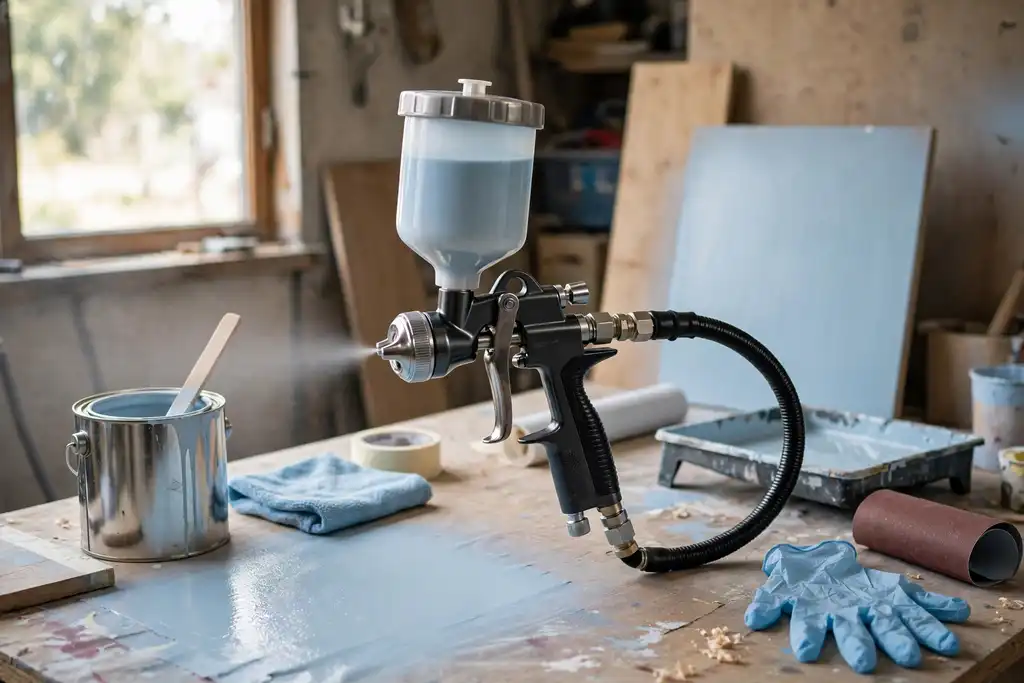

An HVLP paint sprayer is a spray gun technology that stands for high volume low pressure, atomizing paint with a high volume of air at low pressure. It is used for smoother finishes with less overspray on DIY projects, automotive work, and fine art.
The most common mistake is buying an HVLP paint sprayer without understanding what it actually means, then blaming the tool when the finish orange-peels or the paint clogs the nozzle. So what does HVLP paint sprayer mean? HVLP stands for high volume low pressure, a spray gun technology that atomizes coatings using a high volume of air at low pressure, which cuts overspray and boosts transfer efficiency.
You will get a plain explanation of how HVLP works, why the low pressure matters for safety and finish quality, and the mistakes that ruin results. Expect practical guidance on matching paint viscosity, setting CFM and PSI, and choosing between a turbine and air compressor setup so you buy once and spray right.
What Does HVLP Paint Sprayer Mean, Exactly?
HVLP stands for high volume low pressure: a spray gun setup that atomizes coating with a large amount of air delivered at low pressure. That single design choice cuts overspray and raises transfer efficiency, meaning more paint lands on the panel and less floats in your shop air.
| Type | What it is | Best use |
|---|---|---|
| HVLP spray gun | Low-pressure gun fed by compressor or turbine | Fine furniture, trim, auto panels |
| Conventional spray gun | High pressure gun, more bounce-back | Fast coverage on large rough surfaces |
| Turbine HVLP | Self-contained unit, no shop compressor | Home shops with limited air supply |
| Compressor HVLP | Gun runs off existing air compressor | Auto painting, cabinet work |
| LVLP spray gun | Even lower air demand than HVLP | Small compressors, spot repairs |
| Airless paint sprayer | Pumps paint at high pressure, no air | Walls, fences, exterior siding |
| Gravity-feed gun | Cup on top, paint drops into nozzle | Detail work, small batches |
Recommended for this job

ENDOZER Professional HVLP Spray Gun Set
Demonstrates HVLP as high-volume, low-pressure air gun for auto paints and primers.
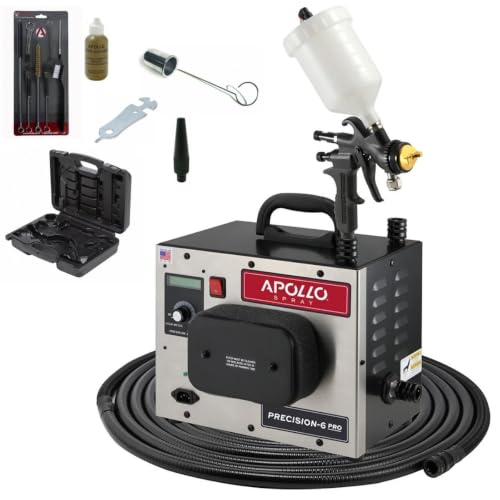
Apollo Precision-6 PRO Turbo HVLP Paint
Shows HVLP meaning via multi-stage turbine producing high volume at low pressure.
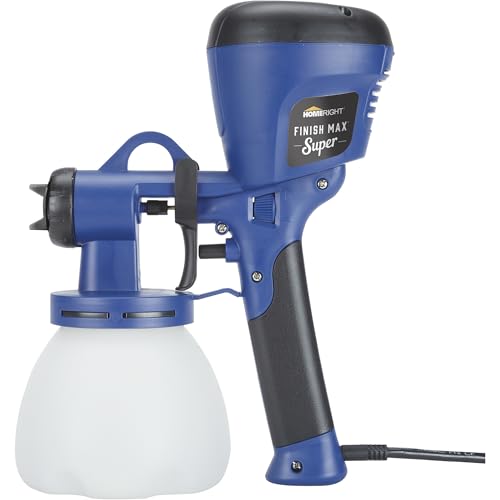
HomeRight Super Finish Max HVLP Paint
Illustrates HVLP as high-volume, low-pressure spraying for stains and latex paint.
The Words Behind the Letters
High volume low pressure describes the air supply, not the paint. The gun moves a lot of air at low PSI (pounds per square inch) to break coating into fine droplets. That process, atomization, is what gives you a smooth finish instead of spatter.
Why Low Pressure Matters More Than You Think
Lower pressure means less overspray bouncing off the surface and back into your face. That is a safety win: less airborne mist means less need for a full respirator setup, though you still wear one. It also saves material, since more of what leaves the nozzle actually sticks.
What HVLP Means for DIY and Automotive Painters
For you, it means matching the gun to your air supply. Check compressor CFM (cubic feet per minute) against the gun spec before buying. Thin coating to the right viscosity, test on scrap, and keep the nozzle clean. Do that and an HVLP paint sprayer delivers a pro-level finish without the fog.
A paint sprayer is a paint tool that uses air or pressure to turn coating into a fine mist and apply it evenly to a surface.
How HVLP Actually Turns Paint into a Fine Mist
Air Volume vs. Air Pressure
HVLP moves a large amount of air at low pressure (4-10 PSI at the nozzle, depending on model) instead of a small amount at high pressure, keeping paint from bouncing off as overspray. Your compressor needs enough CFM to feed that stream steadily; too little causes sputtering and uneven coverage.
Where the Paint Meets the Air
Paint flows from cup to nozzle, where the high-volume, low-pressure stream breaks it into droplets (atomization). Thick paint won’t atomize well, so thin it to the right viscosity. Turbine units supply their own air; compressor-driven guns pull from your shop tank. Nozzle size and fluid adjustment control material leaving the tip.
Why the Finish Looks Smoother
Finer droplets land flatter and level out better, so you sand less between coats. Transfer efficiency often reaches 65 percent or higher, with less overspray mess. Spray in a ventilated space, wear a respirator rated for your coating, and keep ignition sources away from solvent fumes.
A Weekend Cabinet Job, Start to Finish
Picking the Gun and Thinning the Paint
Choose a high volume low pressure spray gun rated for your coating, then thin the paint to the viscosity the manufacturer specifies, usually like heavy cream. Most cabinet and furniture paints need a small percentage of water or reducer for clean atomization. Check with a viscosity cup if the gun came with one.
Dialing in the Pattern on Scrap
Test on scrap before touching a door. Adjust the nozzle and air settings until you get a uniform fan with fine droplets and no spitting. Set your air compressor or turbine to the gun’s spec, watching CFM and PSI together. A blistered or grainy test panel means thin more or lower the pressure.
Spraying, Flashing off, and Cleaning up
Spray in overlapping passes, keep the gun moving, and let each coat flash off before the next. Two to three thin coats usually beat one heavy pass, which sags and runs. Clean the gun immediately after, since cured paint clogs the nozzle. Wear a respirator rated for your finish, and vent the space well.
HVLP vs. Conventional vs. Airless: Which Gun Fits Your Project?
Conventional Sprayers: Fast and Messy
Cheap and fast, high-pressure air (often 40â60 PSI) makes them appealing, but overspray lands everywhere and transfer efficiency is low, wasting material and adding cleanup.
Airless Sprayers: Walls Yes, Fine Finishes No
No air; high pressure through a small nozzle. Great for walls and fences, but hard to control on fine work like furniture or car panels, and they need careful pressure settings and cleanup.
Where HVLP Lands in the Middle
High volume low pressure (usually under 10 PSI at the nozzle) gives less overspray and better transfer efficiency than conventional guns. Gentler than airless and better for fine finishes, though slower on big walls. Thin paint as directed, match the nozzle, use a turbine or compressor with enough CFM, and wear a respirator.
How to Choose Between a Turbine and a Compressor HVLP System
Match the system to your work before you spend money. A turbine HVLP runs off its own blower, so you skip compressor shopping. A compressor-driven spray gun needs a steady CFM supply at low PSI.
Start with Your Project Size
A turbine suits jobs under about 100 square feet, like cabinet doors or a single fender. Full car panels or a room of trim usually need a compressor setup that holds 10 to 13 CFM at 40 PSI without pressure drop.
Check Your Portability Needs
Turbine units weigh 15 to 25 pounds with a carry handle, so moving between garage and driveway takes one trip. Compressor rigs need a dedicated circuit and stay put.
Match the System to Your Air Supply
Check the gun's CFM rating at its rated PSI against your compressor's actual output, not the tank size. Undersized air drops pressure mid-pass, causing poor atomization and uneven finish quality.
Use these checks to pick the right HVLP setup before you buy, so you get the finish you want without wasted material or safety surprises.
When HVLP is the Wrong Tool for the Job
Big Flat Walls and Ceilings
Skip HVLP for large drywall and ceiling jobs. The low pressure that makes it clean on small parts makes it slow across big surfaces, and you will chase uneven coverage. A conventional airless rig moves house paint faster and lays a flatter film on broad areas.
Thick, High-Solid Coatings
Heavy-bodied products like high-build primer or thick latex often need more force than low pressure delivers. Atomization suffers, and you get spitting or a pebbled texture. Check viscosity against the nozzle chart first; if the coating needs serious thinning to flow, pick a different spray gun.
Production-Speed Expectations
If you are coating cabinets, car panels, or furniture on a deadline, HVLP rewards patience, not speed. Transfer efficiency is high and overspray is low, but coats go on thinner and you will build finish in more passes. Budget extra time, or step up to a turbine unit with more CFM.
A Quick Pre-Spray Checklist
Air Supply and Gun Settings
Match your air source to the gun before you load any paint. A turbine feeds the spray gun directly, while compressor-driven setups need enough CFM at the gun’s rated PSI or atomization suffers. Set pressure per the manufacturer’s spec, then test on cardboard.
Paint Viscosity and Filter Check
Thin coatings to the viscosity the nozzle calls for, or you get spitting and uneven coverage. Strain the paint through a filter first, and confirm the nozzle and needle sizes match your material.
Respirator, Ventilation, and Masking
Low pressure cuts overspray but does not make fumes safe. Wear a respirator rated for your coating, ventilate the space, and mask everything you do not want coated, since transfer efficiency still leaves stray mist.
- Air supply: confirm CFM and PSI meet the gun’s spec before spraying.
- Gun settings: set pressure and fluid flow, then test on scrap material.
- Viscosity: thin paint to the nozzle’s recommended consistency.
- Filter check: strain paint and verify nozzle and needle sizes.
- Respirator: use a cartridge rated for your coating’s fumes.
- Ventilation: keep fresh air moving through the spray area.
- Masking: cover surfaces you want to keep clean from mist.
- Air supply: confirm CFM and PSI meet the gun's spec before spraying.
- Gun settings: set pressure and fluid flow, then test on scrap material.
- Viscosity: thin paint to the nozzle's recommended consistency.
- Filter check: strain paint and verify nozzle and needle sizes.
- Respirator: use a cartridge rated for your coating's fumes.
- Ventilation: keep fresh air moving through the spray area.
- Masking: cover surfaces you want to keep clean from mist.
When HVLP is Worth Reaching for
Automotive Panels and Spot Repairs
An HVLP spray gun is the right call for spot repairs and smaller panels. Low pressure keeps the coating on the car instead of in the air, which protects you and the surrounding finish. For a full respray, you will usually want more output than a typical HVLP setup delivers.
Furniture, Cabinets, and Trim
Furniture, cabinets, and trim are where HVLP earns its keep. High transfer efficiency means more material lands on the piece and less bounces off, so your finish quality improves while waste drops. A turbine unit handles most of these jobs without an air compressor.
Projects Where Overspray Control Matters
Choose HVLP when overspray control matters, like spraying near finished walls, parked cars, or in a home garage. The low-pressure atomization produces a softer mist that settles closer to the target. Just match your coating’s viscosity to the nozzle and keep the area ventilated per OSHA guidance.
Transfer Efficiency and Overspray: Where HVLP Saves You Money
What Transfer Efficiency Really Means
Transfer efficiency is the percentage of paint that lands on your project instead of drifting off as overspray. HVLP spray guns often reach 65 percent or higher, while conventional high-pressure guns often land near 50 percent. On a quart of automotive basecoat, that gap is real money in the booth.
Why Less Overspray Means Less Waste
High volume low pressure atomization breaks paint into finer droplets at lower velocity, so it settles onto the panel instead of bouncing back. Lower velocity also means less bounce-back mist on your respirator and shop walls. Masking a full car takes 1 to 2 hours; less overspray keeps that plastic doing its job.
The Cost Side of the Equation
Expect $100 to $500 for a starter HVLP gun, or $300 to $900 for a turbine setup. Check your air compressor: most guns need 10 to 13 CFM at 40 PSI. Buy a viscosity cup and the reducer your paint maker specifies, then thin to the cup’s drain time before you spray.
What is an HVLP Sprayer and How Does It Work?
A plain-English Recap
By pushing a large amount of air at low pressure through the nozzle, an HVLP (high volume low pressure) spray gun atomizes paint, breaking the coating into fine droplets without a mist cloud. The payoff is less overspray and higher transfer efficiencyâmore paint lands on the panel and less floats away.
HVLP vs. LVLP in One Minute
LVLP (low volume low pressure) moves less air than HVLP, making it friendlier to small compressors with modest CFM ratings, while HVLP usually needs a bigger compressor or dedicated turbine. Both cut overspray versus old high-pressure guns, but HVLP atomizes thicker coatings more easily. Check your compressor’s CFM at the gun’s required PSI before buying; a mismatch is the most common setup mistake.
Who Should Skip HVLP Entirely
Skip HVLP if you only spray a few cabinet doors or touch up trim yearly. A quality brush or roller costs less, needs no viscosity tuning, and avoids solvent fumes and cleanup. Also pass if your compressor can’t sustain the gun’s CFM demand, since starving an HVLP gun ruins atomization and finish quality. Renting or borrowing a turbine unit for a one-time project often beats buying.
Your HVLP Action Plan from Box to First Coat
An HVLP paint sprayer only pays off if you set it up and run it correctly. Treat the first session as a setup and safety drill, not a race to finish a panel.
| Action | Why it helps | How to start |
|---|---|---|
| Read the manual first | Prevents wrong settings and damage | Check fluid tip and air specs |
| Confirm power and air supply | Matches gun to compressor or turbine | Verify CFM and PSI ranges |
| Thin coating to spec | Correct viscosity gives clean atomization | Follow maker's ratio, test with a viscosity cup |
| Test spray on scrap | Sets pattern before touching the real job | Adjust nozzle and pressure on cardboard |
| Wear respirator and ventilate | Cuts solvent and particle exposure | Use NIOSH-rated mask, open airflow |
| Keep gun moving steadily | Avoids runs and uneven finish quality | Overlap passes about half the fan width |
| Flush and clean after each use | Protects nozzle and transfer efficiency | Run solvent through, wipe tip, store dry |
Unbox, Assemble, and Read the Manual
Before you plug anything in, read the manual and confirm your air supply matches the spray gun. Check the nozzle size and the CFM and PSI your setup delivers, since a mismatch wastes paint and creates unsafe overspray.
Test on Scrap and Tune the Pattern
Thin your coating to the maker’s viscosity spec, then spray scrap until the pattern is even and the atomization is fine. Wear a respirator and ventilate the space before the first trigger pull.
Spray, Clean, and Store It Right
Keep the gun moving in overlapping passes, then flush it with the right solvent within minutes of finishing. Clean the nozzle, dry the parts, and store the unit sealed so the next job starts clean.
Common HVLP Mistakes That Wreck the Finish
Most ruined finishes trace back to a few repeatable errors, not bad equipment. Avoid these and your results improve fast.
Skipping Air Cap Cleaning
Leftover paint in the air cap distorts the spray pattern and causes spitting. Rinse the cap and nozzle after every session.
Over-Thinning the Paint
Too much thinner kills coverage and invites runs. Thin only to the viscosity your nozzle and CFM specs call for.
Spraying Too Close or Too Slow
Either mistake floods the surface and creates sags. Hold a steady 6 to 8 inches and keep the gun moving.
- Skipping air cap cleaning: leftover paint in the air cap distorts the spray pattern and causes spitting. Rinse the cap and nozzle after every session.
- Over-thinning the paint: too much thinner kills coverage and invites runs. Thin only to the viscosity your nozzle and CFM specs call for.
- Spraying too close or too slow: either mistake floods the surface and creates sags. Hold a steady 6 to 8 inches and keep the gun moving.
- Ignoring transfer efficiency: a clogged or mismatched setup wastes material as overspray. Match PSI and fluid settings to your coating before you start.
- Skipping a test panel: spraying straight onto the project hides problems until it is too late. Practice on scrap to confirm atomization and pattern.
When to Ask a Store Expert, the Manufacturer, or a Local Pro
You’re Matching a Gun to an Existing Compressor
Ask a store expert or the manufacturer before you buy. An HVLP spray gun needs enough CFM at its inlet pressure, and a compressor that falls short gives you poor atomization and a blotchy finish. Bring your compressor’s CFM rating at 40 PSI and the gun’s spec sheet, then ask them to confirm the match.
You’re Spraying Automotive Clearcoat
Talk to the manufacturer or a local pro before you spray clearcoat. Clearcoat is unforgiving, and the wrong nozzle size or viscosity can leave orange peel or runs that mean sanding and rework. Ask which nozzle and viscosity range they recommend for your specific product and gun.
You’re Investing in a Full Turbine System
Get a store expert’s help before you commit to a turbine setup. Turbine units cost more than compressor-driven guns, so ask them to compare transfer efficiency, overspray and finish quality for your projects. A pro painter can also tell you whether a turbine suits the coatings you plan to use.
When to ask for help:
- Ask a store expert to confirm your compressor's CFM and PSI match the HVLP spray gun you want to buy.
- Ask the manufacturer which nozzle size and viscosity range to use for automotive clearcoat.
- Ask a local pro whether a turbine system suits the coatings and finish quality you need.
- Ask the manufacturer to compare transfer efficiency and overspray between a turbine unit and a compressor-driven spray gun.
What Does Hvlp Paint Sprayer Mean: Frequently Asked Questions
?What Does HVLP Paint Sprayer Mean in Plain Terms for a First-Time Buyer?
It means a spray gun that atomizes paint with a high volume of air at low pressure instead of a small blast of high-pressure air. High volume low pressure is the full name. In practice, you get a softer mist, less overspray bouncing off the target, and more paint landing where you aimed it.
?Does an HVLP Paint Sprayer Mean Less Overspray and a Safer Workspace?
Yes, generally. Because the air leaves the nozzle at low pressure, paint droplets travel slower and stay closer to the target, so less fog fills the air. That said, HVLP does not mean zero overspray. You still need ventilation, a respirator rated for your coating, and drop cloths or masking before you pull the trigger.
?How Can I Tell What Does HVLP Paint Sprayer Mean for My Air Compressor Setup?
It means your compressor has to supply steady CFM at the gun's rated PSI, not just a big tank number. Low pressure does not mean low air demand. Check the gun's CFM spec and match it to your compressor's output at that pressure. Undersized air supply causes sputtering, uneven atomization, and a blotchy finish you will have to sand out.
?Why Does Viscosity Matter so Much When Learning What Does HVLP Paint Sprayer Mean?
Because low-pressure atomization is gentler, the paint must be thin enough to break into fine droplets. Viscosity is how thick or resistant to flow a fluid is. If your coating is too thick, the HVLP gun cannot atomize it cleanly and you get spitting or orange peel. Thin per the manufacturer's ratio and test on scrap before the real panel.
?is an HVLP Paint Sprayer Mean for Small Jobs Only, or Can It Handle a Full Car Panel?
It handles both, but it shines on small to medium work: cabinets, doors, trim, furniture, and automotive panels. Transfer efficiency is high, so you waste less material. For large walls or production-speed work, an airless rig usually wins. Pick the tool for the surface area, not the label on the box.
?When Does Using an HVLP Paint Sprayer Mean I Should Stop and Pick a Different Tool?
Stop when the coating is too thick to atomize at low pressure, when your compressor cannot hold the CFM, or when the job is a whole-house exterior. Those cases call for airless or conventional high-pressure gear. Forcing an HVLP past its limits wastes paint, ruins finish quality, and adds sanding hours you did not plan for.
?What Does HVLP Paint Sprayer Mean for Cleanup and Safety Mistakes I Should Avoid?
It means solvent and coating fumes still exist, so safety gear is non-negotiable: respirator, eye protection, gloves, and real airflow. Clean the gun immediately after each session, flush the nozzle and passages, and never soak parts you cannot dry fully. Leftover paint in the air cap is the number one cause of a spitting gun on the next coat.
Our Thoughts
So yes, an HVLP (high volume low pressure) spray gun uses a big volume of air at low pressure to atomize paint, which means less overspray and better transfer efficiency than a conventional gun. That matters for your safety and your wallet: less airborne paint, fewer fumes, and more coating landing on the panel instead of drifting past it.
Before you spray, check your setup against the coating. Thin the paint to the right viscosity, match the nozzle to the job, and confirm your air compressor or turbine delivers the required CFM at the listed PSI. Then test on scrap material and dial in the pattern. That one step catches most mistakes before they reach your finish.