
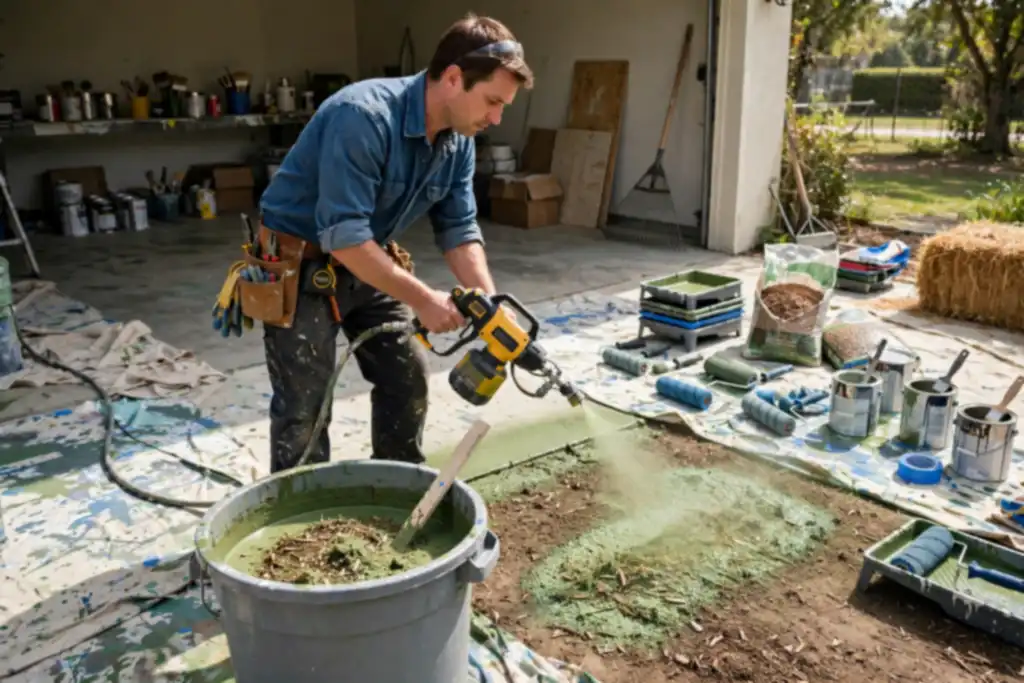

No, a paint sprayer is the wrong tool for hydroseed: the abrasive grit and mulch will wreck the pump, clog the nozzle, and leave you with an uneven, patchy lawn. Rent a hydroseeding machine instead.
You want a thick, even lawn without hauling a rented machine home, so the question is simple: can you use paint sprayer for hydroseeding? The short answer is no, and the reason is mechanical, not cosmetic. A paint sprayer is built to move smooth, thin coatings through a nozzle, a device that controls fluid flow. Hydroseed is a slurry of seed, mulch, fertilizer, and water, and that mix is abrasive, meaning rough material that grinds metal by friction.
What you get here is a clear picture of what fails, where it fails, and how to protect your equipment and your lawn budget. You will see why an airless sprayer or HVLP sprayer cannot handle the viscosity, a fluid’s resistance to flow, of a mulch-heavy slurry, plus the cleanup and safety steps that matter if you insist on trying. Read this before you mix a batch and ruin a pump.
Can You Use Paint Sprayer for Hydroseeding? What You Need to Know
Hydroseed is a wet slurry of seed, mulch, fertilizer, and water, and a paint sprayer is built for fine coatings, not heavy solids. The mismatch creates real clogging, wear, and cleanup problems, so check the risks before you load a hopper.
| Situation | What it means | What to do |
|---|---|---|
| Airless sprayer with hydroseed | Pump and nozzle clog fast | Rent a hydroseeding machine |
| HVLP sprayer with hydroseed | Too thin for mulch solids | Use it for paint only |
| Small patch, light seed mix | Still risks abrasive wear | Use a pump sprayer or hose-end |
| Leftover slurry in the rig | Hardens inside pump and lines | Flush with water right away |
| Nozzle tip size | Too small for seed and mulch | Skip the experiment entirely |
| Cleanup after a trial | Hours of flushing and picking | Budget 1 to 3 hours |
| Warranty and repairs | Misuse can void coverage | Read the manufacturer manual |
Recommended for this job
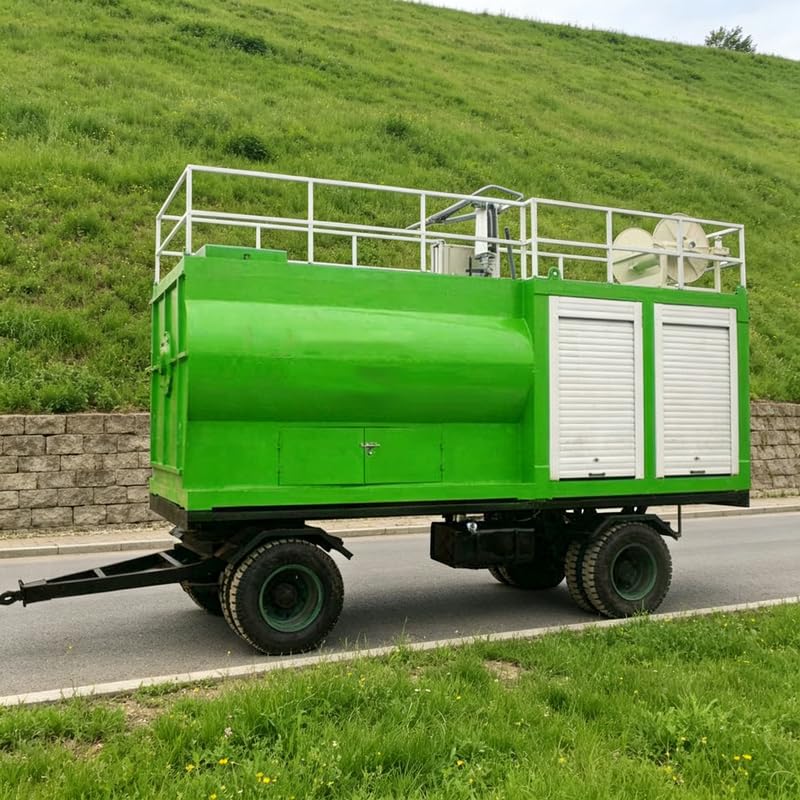
Hydroseeding Machine
Purpose-built hydroseeding machine mixes seed and slurry correctly, unlike a paint sprayer.
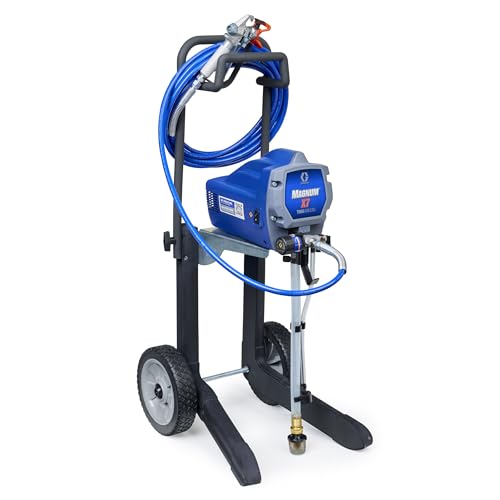
Graco Magnum X7 Cart Airless Paint
Airless paint sprayer handles thin coatings, not fibrous hydroseed slurry with mulch.

CHAPIN SureSpray 1-Gallon Pump Sprayer
Pump sprayer suits light lawn liquids but clogs on thick hydroseed mulch mixtures.
What Hydroseeding Actually is (and Why It’s Not Paint)
Hydroseeding sprays a blended slurry of seed, mulch, fertilizer, and water onto bare soil so grass establishes evenly. That mulch is a layer of material applied to the surface of soil, and it stays chunky, not smooth like paint.
Paint sprayers move thin, uniform coatings at a set viscosity, which is how easily a fluid flows. Hydroseed is thick, gritty, and abrasive, meaning rough material that wears parts down by friction. Different job, different machine.
The Short Answer: No, Not Without Serious Risks
No, a paint sprayer is not made for hydroseed, and forcing it invites clogging, pump wear, and a messy cleanup. The nozzle, the device that controls fluid flow, simply was not sized for seed and mulch solids.
An airless sprayer pushes material at high pressure, so grit grinds the pump and tip. An HVLP sprayer lacks the volume to move slurry at all. Either way, you risk a repair bill that beats renting a hydroseeding machine.
What Happens If You Try It Anyway?
Expect the tip to block within minutes and the pump to strain against solids. Slurry left sitting hardens inside lines, turning cleanup into an afternoon of flushing.
Check your manufacturer manual first, because misuse can void warranty coverage. If you need a small patch, a hose-end or pump sprayer handles light seed mixes with far less risk.
Three Hydroseeding Myths That Wreck Paint Sprayers
Myth: ‘Hydroseed is Just Watery Paint, so Any Sprayer Works’
It is not. A paint sprayer moves thin, uniform coatings at 1,000 to 3,000 PSI, while hydroseed is a thick slurry of seed, mulch, fertilizer, and water with the consistency of wet oatmeal. That high viscosity stalls an airless sprayer or HVLP sprayer almost immediately.
Expect clogging at the nozzle within 30 to 90 seconds and abrasive mulch grinding seals, valves, and the pump. A hydroseeding machine uses a mechanical agitator and a high-flow pump built for solids, which is why rental yards stock them for $75 to $150 per day.
Myth: ‘a Bigger Nozzle Solves Everything’
No. Upsizing from a 0.015 inch to a 0.035 inch nozzle may pass slurry for a few seconds, but the restriction moves to the 1/4 inch hose and pump intake. Pressure spikes past 3,000 PSI, clogs return, and you risk a burst line or a burned-out pump.
Nozzle swaps cannot fix a machine never designed for grit. Damage shows up as uneven spray patterns and $200 to $500 repair bills for pump replacement.
Myth: ‘If It Sprays, It Can Handle Mulch’
Spraying liquid and spraying mulch are different jobs. Mulch fibers mat and bridge inside passages under 3/8 inch, and abrasive grit wears the nozzle orifice and pump piston with every pass.
Cleanup is worse: dried slurry sets like concrete inside the unit, requiring a 2 to 4 hour teardown. Rent a hydroseeding machine for the lawn and keep your sprayer for coatings.
How to Test Your Paint Sprayer with Hydroseed (Without Ruining It)
Start with a Small Batch and the Coarsest Nozzle You Have
Fit the largest nozzle in your kit, typically a 0.019 to 0.021 inch tip on an airless sprayer, and mix no more than 1 quart of slurry. A fine 0.013 tip will clog within seconds once seed and mulch hit it. An HVLP sprayer usually can’t push this slurry at all.
Run Plain Water First to Check Flow and Pressure
Water alone confirms the pump and nozzle work before anything abrasive touches them. Run 1 to 2 gallons at your normal setting, watch for a steady fan pattern, and log the pressure reading on your unit’s gauge so you can compare it later.
Test a Thin Slurry Without Mulch, Then Add Mulch Gradually
Seed and fertilizer in water pass through most pumps. Mulch is the real test: add it one handful at a time and stop when viscosity visibly slows the spray.
Stop Immediately If Pressure Drops or the Spray Pattern Breaks
Pressure loss or a spitting pattern means clogging has started. Shut down, flush with clean water, and plan on a hydroseeding machine for full coverage. Budget 20 to 30 minutes for cleanup.
Test with a small, cheap batch before committing your equipment or your seed to a full lawn application.
When a Paint Sprayer Absolutely Won't Work for Hydroseed
HVLP and Handheld Units: Too Low Pressure, Too Small Passages
HVLP sprayers can’t move hydroseed: low pressure and small passages can’t handle gritty seed, fertilizer, and water slurry, causing weak spray or burned-out motors, and grit wears seals and nozzles fast.
Airless Sprayers with Fine Nozzles: Instant Clog
Fine nozzles clog within seconds since seed and fertilizer particles exceed the opening. High pressure stresses pumps and damages packings; larger nozzles only delay clogging, and slurry viscosity exceeds pump capacity.
Any Mix with More Than a Pinch of Mulch
Mulch fibers mat and bridge passages, jamming pump and nozzle, potentially cracking housings or seizing the pump. Rent a hydroseeding machine instead.
Can I Use My Paint Sprayer to Spray Hydroseed?
What ‘Spray Hydroseed’ Really Means for Your Equipment
Pushing a thick, gritty slurry through passages built for thin coatings is what it means. A paint sprayer is designed for paint, stain, or clearcoat, not seed, fertilizer, and mulch. The abrasive solids wear pumps and nozzles fast. Airless and HVLP models both fail due to tight clearances and small orifices: seed hulls bridge at the nozzle, fertilizer grit scratches the pump. Expect clogging within minutes plus costly cleanup.
The One Exception: Very Thin Seed Slurries with No Mulch
Only a slurry with no mulch and near-water viscosity has any chance, and even then it’s a gamble. Without mulch you lose the moisture cover that makes hydroseed work, so the tradeoff rarely pays. If you insist, use a coarse nozzle and strain the mix. A dedicated hydroseeding machine with an agitator handles thick mixtures properly; a paint sprayer cannot.
Why ‘Spray’ is the Wrong Verb for Hydroseed
Hydroseed is applied as a sprayed slurry under agitation, not a fine coating. Your equipment atomizes liquids, not wet fiber and seed. Use the paint sprayer for paint and rent or buy the right tool for the lawn.
Your Step-by-Step Decision Plan: Paint Sprayer vs. Hydroseeding
Decide with a clear head before you risk a pump on a slurry it was never built to move. Work these four steps in order, and the right call usually makes itself obvious.
| Action | Why it helps | How to start |
|---|---|---|
| Check sprayer type | Airless and HVLP units choke on grit | Read your manual's fluid section |
| Measure lawn area | Square footage sets machine size | Sketch beds, then pace the lawn |
| Note mulch load | Heavy mulch strains small pumps | Check the seed bag's coverage rate |
| Price a repair | Nozzle and pump fixes add up | Ask a shop for a typical quote |
| Compare rental rates | A hydroseeder rents for a day | Call two local equipment yards |
| Price a pro quote | Service bundles seed, mulch, labor | Get two written estimates |
| Budget your weekend | Cleanup eats hours either way | Plan a full day for mixing |
| Pick your fallback | Pump sprayers handle thin mixes | Rent or buy a dedicated unit |
Start by confirming your sprayer type. Airless sprayer and HVLP sprayer models push thick coatings, not wet mulch, and grit is abrasive on their innards.
Step 1: Identify Your Sprayer Type (Airless, HVLP, Handheld)
Airless and HVLP units are the wrong tools for a seed slurry. Their narrow passages invite clogging, and gritty mix wears the pump.
Step 2: Estimate the Area and Mulch Content
Square footage and mulch load decide whether any sprayer can cope. Thin mixes move; heavy mulch stalls small nozzles.
Step 3: Calculate the Hidden Cost of Ruining Your Sprayer
Compare a repair bill or rental fee against a pro quote before you commit. A wrecked pump often costs more than a day’s hydroseeding machine rental.
Step 4: Choose: Rent a Hydroseeder, Hire a Pro, or DIY with a Pump Sprayer
Rent a hydroseeder for larger lawns, hire a pro for steep or tricky sites, and use a pump sprayer only for small patches with thin mixes. Whatever you pick, plan cleanup time, because dried seed and fertilizer set like concrete.
How Weather and Season Change the Hydroseed Sprayer Answer
Spring and Fall: Best Time to Hydroseed, but Not with a Paint Sprayer
Spring and fall give seed the best shot at germination, but that timing does not make a paint sprayer the right tool. The slurry still contains abrasive mulch and fertilizer that wear on a pump and nozzle built for coatings. Rent a hydroseeding machine for the job and keep your sprayer for paint.
Hot Summer: Slurry Dries Too Fast and Clogs Worse
Summer heat thickens the mix fast, so seed, mulch, and fertilizer set up inside the nozzle and pump. A paint sprayer cannot handle that viscosity, and clogging gets worse as the slurry dries. If you must seed in heat, work early, keep the mix moving, and use a dedicated machine.
Rainy Days: Risk of Washing Out and Equipment Damage
Rain washes fresh hydroseed off slopes and pushes water into a sprayer not sealed for wet, gritty work. Skip application before heavy rain and never run an airless sprayer or HVLP sprayer in the wet. For safety, wear eye protection and gloves, and follow the manufacturer’s cleanup steps.
The Hidden Cost of Ruining a Paint Sprayer: Repair Bills vs. Renting a Hydroseeder
Typical Repair Costs for Clogged Pumps and Valves
Expect $150 to $400 for a pro to clear a clogged pump or replace a valve on a piston or diaphragm unit. Airless sprayer repairs often land in the same range, and a burned-out motor can push past $500.
The abrasive grit in hydroseed, the seed itself, and thick mulch wear seals and pack valves fast. A paint sprayer’s nozzle and pump were never built for that slurry.
Rental Rates for a Hydroseeder
A dedicated hydroseeding machine rents for roughly $150 to $350 per day at many equipment yards, and weekend rates are often lower. That covers a tank, an agitator, and a wide nozzle made for the job.
Compare that to a repair bill plus downtime on your sprayer. For most DIY lawns, the rental is the cheaper, safer path.
When the Math Says ‘Rent, Don’t Risk’
Rent when your lawn project is bigger than a small patch, because repair costs plus cleanup time usually beat the rental fee. A hydroseeding service runs higher, often several hundred to over a thousand dollars depending on square footage.
Your paint sprayer stays clean for paint, and you avoid clogging, abrasive wear, and a costly pump failure.
Warranty Voiding and Safety: What Manufacturers Won't Tell You
Why Hydroseed Damage Voids Most Sprayer Warranties
Manufacturers write warranties around coatings, not slurries. Push mulch, seed, and fertilizer through a paint sprayer and you are outside the intended use, so most warranties will not cover the resulting damage.
A failed pump or scored nozzle from abrasive solids usually gets denied as misuse, and you pay for the repair yourself. Typical replacement pump and nozzle costs run from about $80 to $300 depending on the model.
Chemical and Biological Hazards of Hydroseed Mix
Hydroseed is not inert. Fertilizer dust and wet mulch carry irritants and possible mold, and a fine mist puts them in the air you breathe.
Confined spaces like garages make it worse. OSHA treats fertilizer dust as a respiratory irritant, so treat the mix like a chemical, not like paint.
Protective Gear and Ventilation You’ll Need
Wear nitrile gloves, safety glasses, and an N95 or better respirator, and work outdoors or with strong airflow. Skip the gear and you risk skin irritation and lung exposure.
Plan cleanup before you start: rinse the airless sprayer or HVLP sprayer outdoors, never down a drain, and dispose of slurry per local rules. A dedicated hydroseeding machine avoids all of this.
When It Works: the Narrow Conditions Where a Paint Sprayer Survives Hydroseed
Only with Airsprayers That Have Large Nozzle Options
An airless sprayer can sometimes pass a watery seed mix if you fit the largest nozzle the pump supports. Skip this unless your unit is rated for thick coatings and you accept that wear parts will take a beating.
Seed and fertilizer are abrasive, so they grind on the pump, valve, and nozzle. A hydroseeding machine is built for that grit; a paint sprayer is not. Check your manual first, because most manufacturers void coverage the moment you run anything outside the approved material list.
Only with Very Thin Seed Slurries (No Mulch, No Fertilizer)
Plain seed and water at low viscosity is the only mix with a real chance of moving through. Leave out mulch and fertilizer, since mulch fibers bridge at the nozzle and fertilizer granules settle and clog.
Even then, keep the slurry moving and strain it before pouring. Thin mixtures still separate fast, so a steady stir is your best defense against clogging.
Only for Tiny Touch-Ups, Not Full Lawns
Spot seeding a bare patch a few feet across is the realistic ceiling. For anything larger, rent a hydroseeding machine or use a hose-end sprayer, which handles seed without stressing a pump.
Dedicated equipment also saves cleanup time, since rinsing seed and grit out of a paint sprayer can take 30 to 60 minutes depending on how much dried inside.
Common Mistakes That Turn a Paint Sprayer into a Paperweight
Most failures trace back to four habits. Fix these and your equipment survives the attempt.
Mixing Mulch Too Thick
Keep the slurry thin, like heavy cream. Thick mulch (a soil-covering layer) stalls the pump and blocks flow before the nozzle.
Skipping the Water Flush After Use
Flush immediately with clean water. Dried seed and fertilizer harden into grit that ruins the next paint sprayer job.
Using the Wrong Nozzle Size
Oversized tips pass solids but lose pressure. Undersized tips clog fast; check your manual’s largest orifice.
Ignoring Pressure Drops
Watch the gauge. Falling pressure means a partial block or worn tip, so stop and clear it before the pump strains.
- Thin mix first: thick slurry kills flow.
- Flush with water right after use.
- Match nozzle size to solids.
- Stop at any pressure drop.
- Clean thoroughly, then inspect.
When to Call a Pro (or Rent a Hydroseeder) Instead of Risking Your Sprayer
You Have a Large Area (Over 1,000 Sq Ft)
Stop and rent a hydroseeding machine for anything beyond a small patch. A paint sprayer moves a thin coating, not heavy wet slurry, and a lawn-sized job will burn out the pump before you finish. Rental runs roughly $150 to $400 per day depending on tank size and location.
You Need Consistent, Even Coverage
Hire a pro when the result has to be uniform across the whole yard. A hydroseeding machine mixes and agitates the slurry continuously, while a paint sprayer settles and surges, leaving thin and heavy spots.
Your Sprayer is Expensive or Under Warranty
Do not risk a costly unit on a job it was never built for. The abrasive mulch and fertilizer wear the pump and nozzle fast, and most manufacturers void coverage on misuse.
You See Smoke, Strange Noises, or Persistent Clogs
Shut it down immediately and call a professional or rent proper equipment. Smoke, grinding, or clogs that return after cleanup mean the pump is being destroyed.
Can You Use Paint Sprayer for Hydroseeding: Frequently Asked Questions
?Can You Use Paint Sprayer for Hydroseeding at All, or is It Always a Hard No?
No, not as a normal practice. A paint sprayer is built for thin, smooth coatings, while hydroseed is a thick slurry of seed, mulch, fertilizer, and water. The mulch is abrasive and the mix is far above the viscosity a paint pump is designed to move, so clogging and pump wear start fast. A hydroseeding machine is the right tool.
?Can You Use Paint Sprayer for Hydroseeding Without Voiding the Warranty?
No, using a paint sprayer for hydroseeding typically voids the warranty. Manufacturers rate these tools for paints, stains, and similar coatings, not abrasive slurries. Running hydroseed through the pump, nozzle, and valves falls outside that rating, so damage from clogging or abrasion is usually excluded. Read your manual before risking a repair bill on a tool you still need for painting.
?How Do I Know If I Can Use a Paint Sprayer for Hydroseeding Without Clogging?
You can't reliably know in advance. Hydroseed carries mulch fibers and seed that settle and bridge inside lines, and a paint sprayer's small nozzle and high-pressure pump are not built for solids. A short test may look fine, then clogging hits mid-job. If you insist on trying, use a coarse tip and strain the mix, but expect rough cleanup.
?Why is Hydroseed so Abrasive on a Paint sprayer's Pump and Nozzle?
Because mulch and seed are rough solids moving at speed. A nozzle is a device that controls fluid flow through a narrow opening, and abrasive particles wear that opening and the pump's internal parts. Paint sprayers are tuned for smooth liquids, not grit. Once the nozzle wears, your spray pattern is uneven and your paint jobs suffer later.
?What Happens to Cleanup If I Use Paint Sprayer for Hydroseeding?
Cleanup turns into a fight. Hydroseed dries hard inside the pump, hose, and nozzle, and once it sets, flushing with water may not clear it. Cleanup means removing unwanted material, and this material bonds to surfaces. Leftover seed and fertilizer can also sprout or corrode parts. You risk turning a working sprayer into a paperweight for one lawn.
?When Should I Rent a Hydroseeding Machine Instead of Asking Can You Use Paint Sprayer for Hydroseeding?
Rent whenever the job is bigger than a tiny patch. A hydroseeding machine is built to mix and pump the slurry, with the tank size and agitation to keep mulch suspended. If your lawn is the priority and your sprayer matters for future painting, rent the right machine. It's cheaper than repairs and faster than unclogging.
?is an HVLP Sprayer a Safer Bet for Hydroseeding Than an Airless Sprayer?
No, it's worse. An HVLP sprayer moves low-pressure air for fine coatings, and hydroseed's mulch and seed will clog it almost immediately. Neither HVLP nor airless is designed for this slurry. If you want to establish a lawn, use a hydroseeding machine or hire a pro. Keep the paint sprayer for paint.
Our Thoughts
Skip the experiment. A paint sprayer is built for thin, smooth coatings, not a gritty slurry of seed, mulch, and fertilizer. The abrasive grit wears the pump, the thick mix fights the nozzle, and the uneven spray leaves bare patches you will reseed by hand. You want it done right once, so keep the two tools separate.
Your next step is renting a hydroseeding machine for the day, typically $100 to $300 depending on tank size and location, and mixing to the rental shop’s ratio. Keep your airless sprayer or HVLP sprayer for paint, and plan the cleanup right after, since dried mulch is far harder to remove than wet slurry.