
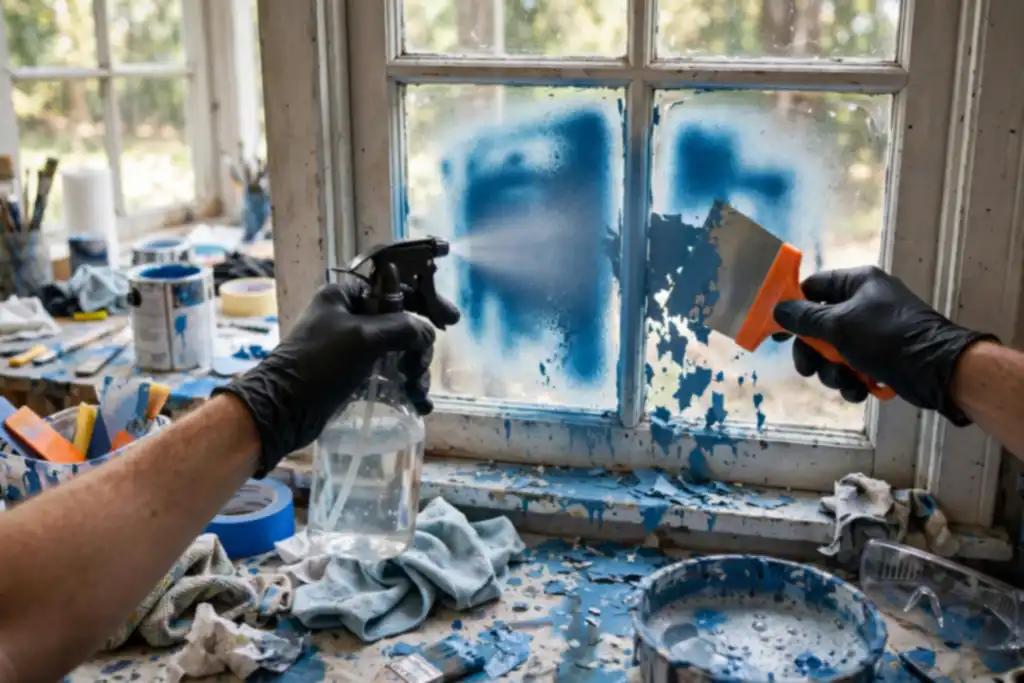
To remove spray paint from a window, start with a razor blade scraper for dried paint, then wipe with acetone or rubbing alcohol; always test solvents in a hidden spot and wear safety gear to avoid glass damage or injury.
The biggest myth about how to remove spray paint from a window is that you should attack it immediately with a razor blade and a strong solvent. The truth: dry paint on glass is best removed by softening it first, because scraping dry paint risks scratching the glass and spreading flakes onto surrounding surfaces.
You will get a step-by-step method that prioritizes safety and avoids common mistakes. Learn which tools to use, when a solvent like acetone or mineral spirits is appropriate, and how to protect the window frame and your skin. Expect a typical removal job to take 15 to 45 minutes depending on paint age and coverage.
- Soften paint with a heat gun or solvent before scraping.
- Use a plastic razor or scraper to avoid scratching glass.
- Test solvents like acetone or mineral spirits in a hidden spot.
- Wear safety goggles and gloves when using chemicals or heat.
- Clean the window with glass cleaner after paint removal.
How to Remove Spray Paint from a Window: the Quick Decision Before You Start
Before you touch the glass, make three quick calls: is the paint wet or dry, what kind of spray paint is it, and is your window plain glass or coated. Get those right and you avoid the two classic mistakes, smearing wet paint into a bigger mess and scratching a coated surface with the wrong tool.
| Your situation | What to do | Why |
|---|---|---|
| Paint is still wet | Wipe with soapy water and a cloth | Solvent spreads wet paint and makes a larger stain |
| Paint is dry, unknown type | Start with soap and water, then a plastic razor | Least aggressive method first protects the glass |
| Acrylic or water-based paint | Warm soapy water, then a plastic razor | Water-based paint softens without harsh chemicals |
| Enamel or lacquer, fully cured | Solvent such as acetone or mineral spirits | Cured hard paints need a solvent to dissolve them |
| Overspray haze on glass | Rubbing alcohol on a cloth | Light mist lifts without wetting the frame |
| Window has a coating or film | Skip the razor blade, use solvent only | Metal scrapers can strip factory coatings |
| Paint on the frame or seals | Mask edges, keep solvent off rubber | Solvents can soften and stain sealant |
| Working indoors | Ventilate, wear safety goggles and gloves | Solvent fumes and flakes are a real hazard |
Recommended for this job

Max Strip Spray Paint & Graffiti Remover
Gel remover lifts spray paint from glass without harsh scraping or damage.

DIYSELF Razor Blade Scraper
Razor scraper removes stubborn paint film from window glass with extra blades.

Sprayway Foaming Glass Cleaner
Foaming glass cleaner lifts paint residue and leaves windows streak-free after scraping.
Run these three checks before you touch the window. Each one changes your method, so don’t jump straight to the scraper.
Is It Wet or Dry?
Wet spray paint wipes off with a damp cloth and a drop of dish soap, so blot it now rather than spraying solvent, which smears it wider. Once the paint skins over, start with a plastic razor, then switch to a razor blade held at about a 30 degree angle to the glass.
What Type of Paint is It?
Water-based acrylic softens under warm, soapy water in 5 to 10 minutes, so try that first. Enamel and lacquer cure hard and typically need a solvent, a liquid that dissolves the paint, such as acetone or mineral spirits. Test any solvent on a 1 inch corner of the window and wait 10 minutes before going further.
Glass or Coated Glass?
Plain glass handles a razor blade at a shallow angle; coated or filmed glass does not, and a scraper can strip the coating permanently. On coated panes, stay with solvent and a cloth. Either way, wear safety goggles, open a window for airflow, and keep solvent off rubber seals and painted frames.
Safety goggles are protective eyewear that shield your eyes from flying paint flakes, glass chips, and solvent splashes.
5-Minute Diagnostic: Check These Before You Touch the Glass
First, run these quick checks so you remove the paint without wrecking the glass or the frame.
- Shine a flashlight at a low angle across the pane to spot any tint film or coating.
- Press a plastic razor gently at a corner to feel for a film edge lifting.
- Test acetone on a hidden corner and wait 10 minutes for clouding.
- Scratch a paint fleck with a fingernail to judge whether it is soft or hard.
- Tap the frame to confirm whether it is wood, vinyl, or aluminum before scraping.
- Wipe a test spot with mineral spirits and check the sill finish for dulling.
Test for Window Tint or Coatings
Any film or factory coating changes your method, so confirm it is there before you reach for a razor blade. Skip this and you can peel or scratch a layer that is not paint. Use a plastic razor to probe edges; a steel wool pad will haze uncoated glass in seconds.
Determine Paint Age and Hardness
Fresh overspray wipes off with solvent, while cured paint needs mechanical removal. Press a fingernail into a fleck: if it dents, start with rubbing alcohol or acetone. If it resists after 10 minutes, switch to a heat gun on low (under 200°F) to soften it.
Check Window Frame Material
Wood, vinyl, and aluminum each react differently to solvent and scrapers. Tape off the frame and test your solvent there, since acetone can dull vinyl and strip wood finish. For metal frames, mineral spirits on a rag is safer than dripping acetone.
Run these quick checks first so you remove the paint without wrecking the glass or the frame.
How Spray Paint Removal Works: Soften, Lift, or Dissolve
Mechanical Removal (Scraping)
A razor blade or plastic razor lifts dried paint off flat glass without chemicals. Keep the blade at a shallow 30-45° angle and push in one direction. Wear safety goggles; never scrape dry paint across a dry pane, as grit can scratch glass. Lubricate first with soapy water or glass cleaner. A scraper handle improves control. Avoid on tempered glass edges, tinted film, or etched surfaces.
Glass cleaner is a spray or liquid product that lifts dust, grease, and residue from glass and similar surfaces.
Chemical Removal (Solvents)
A solvent dissolves another substance into a wipeable solution. Start mild with rubbing alcohol, then acetone or mineral spirits. Test a corner and ventilate. Apply with a cloth, let sit 5 to 10 minutes, then wipe. Keep acetone off painted frames and plastic trim.
Heat Softening
A heat gun softens stubborn paint for peeling or scraping. Hold 6-12 inches away and keep it moving to avoid cracking glass from uneven heat. Work in short passes and scrape as paint softens. Never use near flammable solvents or on insulated window units.
Before You Start: Tools, Materials, and Safety Precautions
Safety Gear You Shouldn’t Skip
Put on safety goggles before you touch a scraper, since flakes of paint and glass fly. Nitrile gloves protect your skin from solvent and acetone, which is a chemical compound that dries and irritates skin fast.
Gather Your Tools
You need a plastic razor first, then a metal razor blade only if the film is stubborn. A plastic razor is a scraper with a soft edge that lifts paint without biting the glass, which is an amorphous solid that scratches easily.
- Solvents: acetone, rubbing alcohol, mineral spirits, and glass cleaner cover most paint types.
- Backup: steel wool is a last resort and only on tempered glass, never on coated panes.
Set up for Ventilation and Protection
Open the window and run a fan pulling air outside, because solvent fumes build up in a closed room. Tape plastic sheeting under the sill and lay drop cloths to catch drips before you spray or scrape.
Step-by-Step: How to Remove Spray Paint from a Window (Least Aggressive First)
Step 1: Clean the Glass with Soap and Water
Use warm water with a few drops of dish soap and a microfiber cloth to remove dust and grit, preventing scratches during scraping.
Step 2: Try a Plastic Razor Blade
A plastic razor has a soft edge that lifts fresh paint without cutting glass. Hold it at a shallow angle and push one direction; if paint won’t budge, use a solvent.
Step 3: Apply a Solvent (Test First)
Dampen a rag with acetone, rubbing alcohol, or mineral spirits and test a corner. Wait 60 seconds, then check for lifting and glass damage.
Step 4: Scrape with a Metal Razor Blade (If Needed)
Wear safety goggles, keep the blade at about 30 degrees, and work in one direction. Replace the blade when it drags.
Step 5: Use a Heat Gun for Stubborn Paint
Hold it 6 to 12 inches from the glass on low for 10 to 20 seconds, then scrape. Wipe with glass cleaner and bag residue for disposal.
Work from the gentlest method upward so you never scratch glass you could have simply wiped clean.
Second Path: Removing Paint from Frames, Sills, and Car Windows
Wood and Vinyl Frames: Gentle Solvents
Testing the mildest solvent that lifts the paint comes first. Mineral spirits usually softens fresh overspray on wood and vinyl within minutes. Dab it on with a cloth, wait 5 to 10 minutes, then lift the paint with a plastic razor. Wipe residue with a damp cloth and dry the frame right away so moisture does not soak into wood.
Metal Frames: Avoid Abrasives
Keep steel wool and coarse pads away from metal frames, because they scratch the finish. A plastic scraper plus a cloth dampened with rubbing alcohol handles most light overspray. For heavier spots, try acetone on a rag in a ventilated area, keeping it off rubber seals. Stop as soon as the paint releases.
Car Windows: Extra Care with Tint and Defrosters
Never scrape tinted film or defroster lines with a razor blade, since one pass can cut the film or break a grid line. Start with glass cleaner and a soft cloth, then move to a plastic razor only on bare glass. If paint sits near the edges, warm it briefly with a heat gun on low, held about 6 inches away and kept moving. Wipe with rubbing alcohol, then finish with glass cleaner.
Once the glass itself is clean, the surrounding trim and vehicle glazing need a slower, more careful approach.
Myths vs Facts: What Really Works (and What Doesn't)
Myth: Razor Blades Always Scratch Glass
Kept flat and lubricated, a razor blade won’t scratch glass; damage comes from tipping the corner or scraping dry. Flood with glass cleaner, hold at a shallow angle, push one direction. Use a plastic razor for tinted or coated panes, and wear goggles.
Myth: Stronger Solvents Are Always Better
Match the solvent to the paint, not strength, harsh choices can cloud glass or wreck trim. Start mild: rubbing alcohol, then mineral spirits, then acetone for cured paint. Test acetone on a hidden corner; ventilate and keep rags from ignition sources.
Myth: Natural Remedies Work on All Paints
Vinegar and baking soda lift fresh overspray and light residue but won’t cut cured enamel or lacquer. For stubborn coats, warm paint with a low heat gun, then scrape. Skip steel wool on glass; finish with glass cleaner and a clean cloth.
Troubleshooting: When the Paint Won't Budge
When a stubborn patch refuses to lift, match the symptom to the cause before you reach for a harsher tool. Most damage on glass comes from impatience, not from the paint itself.
| Problem | Likely cause | Fix |
|---|---|---|
| Paint feels rock hard | Old or thick spray paint | Soften with heat gun, then scrape |
| Paint sits in corners | Razor blade can't reach | Use plastic razor or scraper edge |
| Film smears instead of lifting | Solvent too weak | Switch to acetone or mineral spirits |
| Glass scratches after scraping | Dry blade or wrong angle | Lubricate with glass cleaner, keep blade flat |
| Tint or coating discolors | Acetone or steel wool | Stop, use rubbing alcohol only |
| Residue returns after cleaning | Paint pushed into frame | Wipe frame, re-clean glass |
Dried or Old Spray Paint
Hardened paint needs softening before any blade touches the glass. Warm it with a heat gun on low, keeping the nozzle moving, then lift it with a razor blade held nearly flat.
Work in small sections over a few minutes. Skip the heat and you risk chips flying or scratches from forcing the scraper.
Paint in Window Corners
A standard razor blade cannot reach tight corners, so switch to a plastic razor or the corner of a scraper. Lubricate with glass cleaner first to reduce friction.
Steel wool works on residue but dulls glass over time, so keep it for frames only.
Paint on Tinted Windows
Tinted glass and factory coatings react badly to acetone and mineral spirits. Use rubbing alcohol on a cloth and let it sit briefly.
If the film softens or clouds, stop and call a window professional. Wear safety goggles throughout.
Doing It on a Budget: Natural Remedies and Cheap Alternatives
Vinegar and Baking Soda Paste
Skip for cured paint. A thick paste of vinegar and baking soda lifts fresh overspray but rarely dried paint; dab on for 10-15 minutes before wiping. Keep it off metal frames and painted trim (vinegar is mildly acidic), but it’s safe and cheap on glass. If paint won’t budge after two tries, move on.
Rubbing Alcohol and Dish Soap
Works well on light, fresh mist and costs little. Dilute with a few drops of dish soap in warm water; wipe with a non-abrasive cloth. It’s a mild solvent, so test a corner first. It won’t cut heavy coats, step up to acetone or mineral spirits with safety goggles, ventilate, and keep rags from ignition sources.
DIY vs Commercial Products
Commercial removers like Goo Gone or Krud Kutter save time on stubborn paint but cost more, often $10 to $20 versus a few dollars for alcohol or baking soda. Cheapest path: plastic razor and glass cleaner for light overspray. Buy commercial solvent only when paint has cured and budget methods fail. Finish with glass cleaner and a clean cloth.
Cost: DIY vs Professional Removal (Typical Ranges)
Most spray paint removal on glass is a cheap DIY job with a razor blade and a solvent you already own. The math changes only when the window is large, high up, or coated with something delicate.
| Option | Upfront cost | Ongoing cost | Notes |
|---|---|---|---|
| Razor blade and glass cleaner | $5 to $15 | Near zero | Cheapest for fresh overspray on flat glass |
| Plastic razor and rubbing alcohol | $5 to $20 | Near zero | Best on tinted or coated windows |
| Solvent kit (acetone, mineral spirits) | $15 to $40 | Replacement cost only | Ventilate; test a corner first |
| Heat gun plus scrapers | $30 to $80 | Electricity only | For thick, cured paint layers |
| Professional glass shop | $75 to $250 | Per visit | Typical for one to a few windows |
| Mobile specialist or detailer | $100 to $400 | Per visit | Common for cars and storefronts |
| Window replacement | $200 to $800 | None after install | Only if the glass is etched or scratched |
Ranges are typical US retail and service prices for one to a few standard windows, assuming you already own basic tools. Pro quotes vary by region, access, and paint type; get two written estimates before committing.
DIY Cost Breakdown
Expect $5 to $40 in supplies for a typical window: a razor blade or plastic razor, a scraper, and one solvent such as acetone, rubbing alcohol, or mineral spirits. Glass cleaner and safety goggles usually cost $5 to $15. Buy the mildest option first and add a solvent only if the paint resists.
Professional Removal Costs
A glass shop or mobile specialist typically charges $75 to $400 per visit, depending on window count, height, and paint type. That price buys speed, insurance, and no risk of scratching glass you cannot replace cheaply. Ask what happens if the glass is damaged.
When DIY Saves Money (and When It Doesn’t)
DIY wins on ground-floor, flat, untinted glass with light overspray, where a blade and solvent finish the job in under an hour. Call a pro when the window is high, tempered, tinted, or etched, or when a heat gun near the frame feels risky. A scratched pane costs more than the visit.
Common Mistakes That Scratch Glass or Damage Frames
Skipping the Test Spot
Always test your solvent in a corner first. A solvent is a substance that dissolves another material, and some can cloud glass or lift frame paint. Apply a drop, wait a minute, then wipe.
Using the Wrong Scraper
Start with a plastic razor, not a metal razor blade. A razor blade is a thin, sharp-edged blade, and metal can gouge glass if you tilt it wrong. Plastic scrapers remove most overspray without risk.
Letting Solvents Sit Too Long
Wipe solvent off within a minute or two. Acetone and mineral spirits can creep under seals and soften frame finishes. Keep the product on the paint, not the surrounding trim.
When to Ask for Help: Store Experts, Manufacturers, or a Local Pro
Consulting a Paint Store or Glass Shop
Staff at a paint store or glass shop can match a solvent to the coating and warn you off products that haze glass. Ask which commercial product they recommend, such as Goo Gone or Krud Kutter, and request the label’s dwell time and surface warnings.
Checking Manufacturer Guidelines
The window or glass manufacturer’s care instructions outrank any general advice. Ask whether acetone, mineral spirits, or a scraper is approved for your specific glass, and get the answer in writing if the pane is under warranty.
Hiring a Professional Window Cleaner
A pro is worth the call when the paint is cured hard, covers a large pane, or sits near seals and frames you can’t risk. Ask for a fixed quote and confirm they carry insurance before they touch the glass.
When to ask for help:
- Ask a paint store or glass shop expert when the paint is cured hard or covers a large area and you are unsure which solvent is safe.
- Contact the window or glass manufacturer when the pane is under warranty or the label warns against acetone, mineral spirits, or scraping.
- Call a local professional window cleaner when paint sits near seals, frames, or tinted film you cannot risk damaging.
- Ask a store expert for the recommended commercial product, such as Goo Gone or Krud Kutter, and its dwell time and surface warnings.
How to Remove Spray Paint from a Window: Frequently Asked Questions
?Can I Remove Spray Paint from a Window with Acetone Without Wrecking the Glass?
Yes, you can remove spray paint from a window with acetone, but use it carefully because it is aggressive. Acetone dissolves many cured paints quickly, so test a corner first, ventilate the room, and keep it off painted frames and plastic trim. Wipe with a clean rag and follow with glass cleaner to remove residue.
?How Do I Remove Spray Paint from a Window When the Paint is Fresh?
Act fast and start mild to remove spray paint from a window while it is fresh. Fresh overspray usually lifts with rubbing alcohol or glass cleaner on a rag, then a plastic razor. A plastic razor is a scraper with a soft edge that won't gouge glass. Skip steel wool and strong solvents until you see what the mild pass leaves behind.
?What is the Safest Way to Remove Spray Paint from a Window Near Painted Frames?
Mask the frame first and keep solvent off it when you remove spray paint from a window. Solvent is a substance that dissolves another material, and it will eat paint and some plastics just as fast as overspray. Use a razor blade flat against the glass at a shallow angle, wipe with mineral spirits on a rag, and finish with glass cleaner.
?Does a Heat Gun Help Remove Spray Paint from a Window?
Sometimes, but it is risky on glass. A heat gun is a hand-held appliance that blows heated air at a controlled temperature. Uneven or excessive heat can stress glass and crack it, especially in cold weather. Warm the paint gently, keep the nozzle moving, and wear safety goggles. If the paint is thin overspray, a solvent is safer.
?Why Did Steel Wool Scratch My Glass When I Tried to Remove Spray Paint from a Window?
Because steel wool is harder than glass in the wrong hands. It leaves dull scuffs that no glass cleaner fixes. For future jobs, use a razor blade or plastic razor at a shallow angle with lubricant, and keep the blade flat. If a scratch is already there, a pro may need to polish it.
?When Should I Stop and Call a Pro to Remove Spray Paint from a Window?
Stop when the glass is scratched, the frame is softening, or the paint is thick and cured. Also stop on tempered or coated glass, where a razor blade can catch an edge. A local glass shop can assess it. Guessing with stronger solvent usually costs more than the pro visit.
?How Much Solvent Do I Need to Remove Spray Paint from a Window, and Which One Works?
Start with rubbing alcohol, move to mineral spirits, and save acetone for stubborn spots. Mineral spirits is a chemical substance that thins and lifts oil-based paint. Use a small amount on a rag, not a flood. Ventilate, wear safety goggles, and finish with glass cleaner to remove residue.
Conclusion
Work slowly and the job stays simple. A razor blade or plastic razor handles dried paint, and a solvent like acetone or rubbing alcohol lifts the residue, but test it on a hidden corner of the glass first. Keep safety goggles on, ventilate the room, and never scrape dry with heavy pressure, since that is how chips and scratches happen.
Your best next step: gather your scraper, solvent, and glass cleaner before you start, then work one small section at a time so you can stop the moment the glass looks clean.