
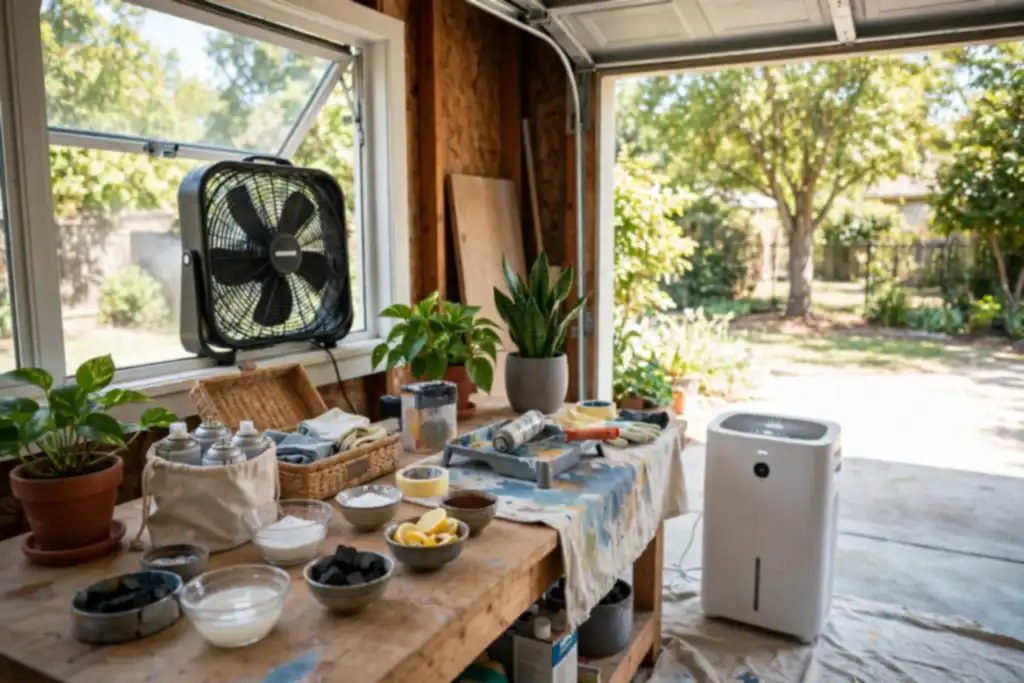

Ventilate first, then absorb what's left: you can get spray paint smell out of a house by flushing the air with fans and open windows, then using activated charcoal, baking soda, or an air purifier to pull remaining VOCs from the air and surfaces.
Here is a clear, practical look at how to get spray paint smell out of house.
You walk into the garage after spraying a cabinet door and the smell hits you before you even see the paint. The odor has crept into the hallway, and you need a plan that actually clears the air instead of just masking it. Here is how to get spray paint smell out of your house without making the problem worse.
You will learn the right order of operations for spray paint odor removal: ventilate first, then absorb, then filter. We cover the mistakes that spread VOCs into your HVAC system, when activated charcoal and baking soda help, and why an air purifier or ozone generator is not a shortcut. Safety comes first, so you can finish the job right the first time.
- Open windows and use fans to exhaust air before anything else.
- Activated charcoal and baking soda absorb lingering VOCs from surfaces.
- Run an air purifier with a carbon filter after ventilating.
- Avoid ozone generators; they can irritate lungs and damage materials.
- Seal off the garage and HVAC returns to keep odors out of the house.
How to Get Spray Paint Smell Out of House: the Quick Decision Before You Start
Before you haul out fans or buy anything, match your situation to the right move. The wrong first step can spread solvent fumes through the house or push you into a bigger cleanup.
| Your situation | What to do | Why |
|---|---|---|
| Faint odor, one room | Open windows, run fans | Dilutes VOCs fast |
| Strong smell, whole floor | Isolate room, ventilate out | Stops spread through HVAC system |
| Smell from attached garage | Seal door, vent garage outside | Keeps fumes out of living space |
| Headache, dizziness, nausea | Leave, get fresh air | Fume exposure symptom, not a chore |
| Asthma or breathing trouble | Evacuate, call for advice | Safety comes before odor removal |
| Spray paint still wet | Let it cure elsewhere | Curing releases most VOCs early |
| Odor past several days | Add activated charcoal, air purifier | Adsorbs what ventilation misses |
Recommended for this job

Activated Charcoal Odor Absorber
Activated charcoal bags passively absorb lingering spray paint fumes in enclosed rooms.
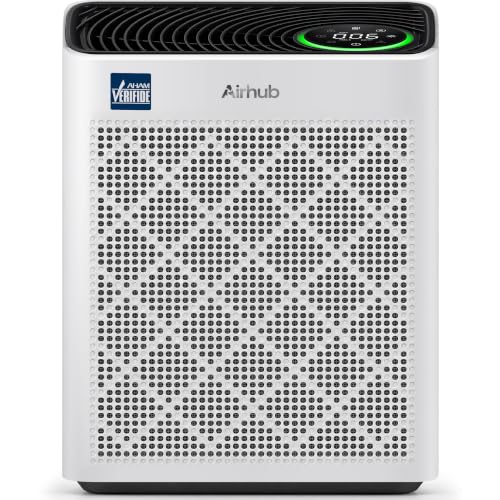
Air Purifiers
HEPA and carbon filtration actively pull paint odor particles from room air.

Ozone Generator 48
Ozone generator oxidizes stubborn paint solvent odors throughout vacant rooms.
Spray paint smells strong because it contains VOCs, organic chemicals that evaporate at room temperature and carry solvent odor into your air. Inhaling fumes in a closed space can cause headaches, dizziness, and nausea, and is worse for anyone with asthma or other breathing conditions.
Smell Strength and Symptoms: Ventilate, Absorb, or Evacuate?
Faint odor means ventilate. Strong odor with symptoms means evacuate first, then ventilate. How long spray paint smell lasts depends on airflow and curing, which can off-gas for days to a couple of weeks in a poorly vented space.
The Safety-First Decision Rule for Spray Paint Odor
If you can smell it in rooms away from the source, stop and fix ventilation first. Open windows, run exhaust fans, and keep HVAC from pulling garage air inside. Then add activated charcoal, baking soda, or white vinegar for residual odor, and an air purifier with a carbon filter for living areas.
Skip the ozone generator; it is a respiratory irritant, and OSHA and EPA caution against using it in occupied spaces. Change HVAC filters after the smell clears, and never mask solvent odor with fragrance.
The 5-Minute Diagnostic: Check These Before You Touch a Fan or a Box of Baking Soda
Five minutes of checking tells you whether you are chasing wet paint or stale solvent. Skip this and you will ventilate the wrong room for hours.
Where is the Smell Coming from? Source vs. Lingering VOCs
Find the source first, because a wet can or freshly painted object will keep releasing VOCs no matter how long you air the room. Check the can, the object, and the air separately. If the smell fades near an open window but returns at the object, the source is the paint itself.
Is the Paint Still Wet, Curing, or Fully Dry?
Wet paint needs time, not tricks. Curing can take days to weeks depending on coat thickness and airflow. A tacky surface means you are still in the solvent phase. Wait until it is hard to the touch before judging odor removal progress.
Who is in the House? Pets, Kids, Asthma, Pregnancy
Anyone sensitive needs distance from the source during odor removal. Inhaling spray paint fumes can cause headaches, dizziness, and throat irritation, and pets and small children react faster. Keep anyone pregnant or asthmatic out until the smell is gone.
Run this quick check before you set up a fan or open a box of baking soda, because the right fix depends on what you find.
Why Spray Paint Smells so Strong: Solvents, VOCs, and Off-Gassing
What Actually Evaporates (and Why It Lingers)
Solvent vapors (VOCs) evaporate first. Slower release comes from paint soaked into porous surfaces like drywall, wood, or fabric, which off-gasses for days. Curing can take a week or more depending on thickness and humidity.
How Long Does Spray Paint Smell Last?
Expect odor for 3 to 7 days with good ventilation, up to 2 weeks in closed rooms or garages. Thick coats, cold weather, and poor airflow extend it. If smell persists past two weeks, it’s absorbed residue, treat the surface.
Why Masking Agents Don’t VOCs
Air fresheners and candles cover the smell while VOCs keep circulating, a safety problem since you lose your nose’s warning signal. Instead use fans, activated charcoal, carbon purifiers, or baking soda. Skip ozone generators; OSHA and EPA flag them as health risks.
Before You Start: Fans, Filters, Absorbers, and Safety Gear
Tools and Materials That Actually Work
Gather two box fans, an air purifier with an activated carbon filter, a few pounds of activated charcoal (carbon with tiny pores that trap solvent molecules), baking soda, white vinegar, and spare HVAC filters before starting.
Safety Gear and Ventilation Setup
Ventilate first, gear up second, never reverse that order. Position one fan to push air out, another to pull fresh air in, and keep the exhaust path clear of intake vents.
- Wear a VOC-rated respirator, nitrile gloves, and eye protection.
- Open windows on opposite sides for cross-flow; run fans on high for the first hour.
- Keep pets and kids out until the odor is gone, not just reduced.
What to Move Out of the Room First
Clear porous items before treatment, fabric and cardboard soak up solvent and re-release it for days. Move cushions, curtains, clothing, and boxes to a ventilated space away from sleeping areas.
- Check the garage: items stored there during spraying likely picked up odor.
- Shut off HVAC or set it to fan-only with fresh-air intake closed to prevent duct spread.
Step-by-Step
Work through these steps in order, and fix the source before you try to mask the smell.
- Stop spraying and move freshly painted items to a well-ventilated area or outside to finish curing, the process of hardening into a solid film.
- Open windows and doors on opposite sides of the house for 15 to 20 minutes to create cross-ventilation and push solvent vapors out.
- Shut off the HVAC system or set it to fan-only with the intake closed so VOCs (organic chemicals that evaporate at room temperature) don’t spread through the ducts.
- Wipe hard surfaces near the project with a 50/50 white vinegar and water solution, then dry them to remove settled residue.
- Set out shallow trays of baking soda or activated charcoal, a porous carbon that traps odor molecules, in the affected room and the attached garage.
- Run a HEPA and carbon air purifier in the smelliest room continuously for 24 to 48 hours with the door closed.
- Replace the HVAC filters once the odor fades, and check the garage-to-house door seal for gaps that let fumes creep in.
- Skip an ozone generator: it is a respiratory irritant, and ventilation plus adsorption does the job without the safety risk.
Work through these steps in order, and fix the source before you try to mask the smell.
Follow-Up Care: Curing Time, Rechecking, and the Second Pass
Most spray paint odor clears in 3 to 7 days with steady ventilation; a slow-curing coat or a closed attached garage can stretch that to two weeks. Judge nothing before 24 hours.
Let the Paint Fully Cure Before Judging the Smell
Fresh paint off-gasses VOCs (organic chemicals that evaporate at room temperature) long after it feels dry. Give it 24 to 72 hours, then compare day to day.
Second-Pass Absorbers: Coffee Grounds and Cat Litter
Set out shallow trays of coffee grounds or plain clay cat litter for 24 to 48 hours, then replace them. Both are cheap and safe; neither replaces ventilation.
When to Repeat Ventilation vs. Escalate
If the smell weakens, keep ventilating another 2 to 3 days with fresh filters in the HVAC system. If it holds steady, add a carbon air purifier and recheck seals.
Once the heavy solvent smell is down, the last trace is usually curing paint, not fresh overspray. Work through these checks before you repeat anything.
Troubleshooting: When the Smell Won't Budge
When odor lingers past a week of steady airing out, the cause is usually a hidden reservoir, not bad luck. Diagnose it before you buy another gadget.
| Problem | Likely cause | Fix |
|---|---|---|
| Smell returns hours after airing | Off-gassing from uncured paint or porous surfaces | Extend curing time, keep ventilation running |
| Odor worsens when HVAC runs | Contaminated filters or ducts recirculating VOCs | Replace filters, run fan on low |
| Sharp smell in attached garage | Fumes seeping through door gaps | Seal gaps, ventilate garage directly outdoors |
| Musty chemical smell in car | Trapped solvent in upholstery and carpet | Air out daily, use activated charcoal |
| Headaches or eye irritation | VOC levels still elevated indoors | Leave the area, ventilate, see a doctor if severe |
| Smell returns after cleaning | Porous surfaces still holding solvent | Repeat baking soda treatment, wait longer |
The Smell is Coming Back After You Stop Ventilating
Returning odor means solvent is still curing or soaked into porous surfaces. Keep ventilation going for days, not hours, and set out baking soda or activated charcoal to absorb what airing misses.
Ozone Generators: Safe Use and Real Risks
An ozone generator is a device that produces ozone, which reacts with VOCs, and it is not a casual fix. It can irritate lungs and damage rubber and plastics, so use it only in an empty, unoccupied space, follow the manufacturer’s limits, and ventilate fully afterward.
Spray Paint Smell in Attached Garages: Specific Steps
Park the car outside with windows down for several days and skip recirculated air. Wipe hard surfaces with white vinegar, sprinkle baking soda on carpet, and replace the cabin air filter, since curing paint in a closed car traps VOCs fast.
Odor Removal for Artists Working in Home Studios
Move spray paint work to a ventilated space away from living areas and let pieces cure fully before bringing them inside. An air purifier with activated charcoal helps, but it cannot replace ventilation, and skipping that step is the most common mistake.
Quick Checklist Before You Start or Decide
Ventilation and PPE Check
Open windows on opposite sides and run box fans pushing air out for cross-flow to drop VOCs (organic chemicals that evaporate at room temperature). Wear a respirator rated for organic vapors, not a dust mask.
- Seal the room: close interior doors and tape vents so fumes don’t spread through the HVAC system.
- Swap filters: a fresh furnace filter traps particles but won’t remove solvent vapor, so ventilate first.
Source and Surface Check
Find the wet or tacky source before treating the air. Move project materials to the garage or outdoors to finish curing.
- Wipe hard surfaces with diluted white vinegar, then rinse.
- Vacuum baking soda into carpets and upholstery, let sit 2 to 4 hours, then vacuum out.
- Set out activated charcoal in shallow trays near the source.
People and Pets Check
Keep children, pregnant occupants, and pets out until the smell is gone. Solvent exposure hits small bodies harder; safety comes before speed.
- Relocate birds and small pets, whose respiratory systems are sensitive to solvent vapor.
- Skip ozone generator use in occupied spaces; ozone is a lung irritant. Run an air purifier with a carbon filter instead.
- Ventilation check: open windows on opposite walls and run fans blowing air out, not in, to flush solvent vapor fast.
- HVAC check: close interior doors and tape off vents so fumes don't spread through the whole house.
- Filter check: replace the furnace filter for particles, but rely on ventilation, not filters, for vapor.
- Source check: move wet rags, cardboard, and overspray outdoors or to the garage so they stop off-gassing.
- Surface check: wipe hard surfaces with diluted white vinegar and work baking soda into carpets and fabric.
- People and pets check: keep kids, pregnant occupants, birds, and pets out until the odor clears.
- Air treatment check: use activated charcoal trays and a carbon-filter air purifier, and avoid ozone generators in occupied rooms.
Cost: DIY Odor Removal vs. Professional Ozone Treatment
Budget for the job before you buy anything, because the cheapest fix is often the one you can do yourself. Typical ranges below assume a single room or attached garage with lingering solvent odor, not a fresh spill.
| Option | Upfront cost | Ongoing cost | Notes |
|---|---|---|---|
| DIY absorbers (baking soda, activated charcoal) | $10 to $40 | Replacement every 1 to 3 months | Cheap, slow, best for mild odor |
| Air purifier with activated carbon filter | $100 to $400 | Filters $30 to $100 yearly | Carbon handles VOCs; HEPA alone won't |
| Box fans and window ventilation | $20 to $60 | Electricity only | Fastest free fix; run 24 to 72 hours |
| White vinegar cleaning supplies | $5 to $15 | Minimal | Wipe hard surfaces; don't soak drywall |
| HVAC filter replacement | $15 to $50 per filter | Every 1 to 3 months during curing | Use MERV 13 or higher if system allows |
| Professional HVAC cleaning | $300 to $800 | None if odor is gone | Only if odor spread through ducts |
| Professional ozone treatment | $400 to $1,500 | Possible repeat visit | Space must be empty; never stay during treatment |
Ranges reflect typical U.S. homeowner costs for one room or attached garage, mild to moderate odor, and DIY labor. Severe contamination, large homes, or multiple HVAC zones push costs higher. Ozone pricing varies by square footage and local labor.
DIY Absorbers, Filters, and Fan Costs
Expect $50 to $200 total for a solid DIY setup: baking soda and activated charcoal for absorption, a carbon-filter air purifier for VOCs, and fans for ventilation. Replace carbon filters every few months while curing finishes.
Professional Ozone Treatment and HVAC Cleaning
Professional ozone treatment runs roughly $400 to $1,200, and HVAC cleaning adds $300 to $800. An ozone generator is a device that must run in an empty space, per OSHA and EPA warnings, never with people or pets inside.
Hidden Costs People Forget
Budget for replacement HVAC filters during curing, extra carbon filters, and possibly a hotel night if ozone treatment is used. Skipping these is how odor returns and you pay twice.
Doing It on a Budget Without Cutting Corners
Cheap Absorbers That Actually Work
Plain baking soda, which you likely already own, pulls odors from the air for pennies. Spread it in shallow trays around the room and replace it every few days. Coffee grounds and cat litter work the same way: cheap, porous, and surprisingly effective in a closed space.
Activated charcoal is the stronger option. It is a form of carbon processed to have tiny pores that trap odor molecules, and a bulk bag costs little compared with commercial sprays. Set bowls near the source and let it sit for a week or two.
Natural vs Commercial Odor Removers
White vinegar and baking soda handle light lingering smells; commercial removers earn their price on heavy solvent odor. A diluted white vinegar wipe-down neutralizes surface residue, while enzyme or charcoal-based commercial products target airborne VOCs, the organic compounds that evaporate from paint and carry the smell.
Where Not to Save Money (Filters and Safety)
Do not cheap out on filters or safety gear. A proper respirator and quality HVAC filters protect your lungs and keep solvent particles out of your HVAC system. Skip bargain ozone generators entirely: they are a health risk, not a shortcut.
Common Mistakes That Make the Spray Paint Smell Worse
Attempting to cover the smell instead of clearing the VOCs (organic chemicals that evaporate at room temperature) from your air causes spray paint odor removal to fail. These three missteps are the usual culprits.
Masking Agents and Air Fresheners Don’t Remove VOCs
Air fresheners add fragrance on top of solvent vapor, so the smell lingers and your headache doesn’t. Skip them. Baking soda and white vinegar absorb or neutralize some surface odor, but neither clears VOCs from the air.
Using an Ozone Generator Incorrectly
An ozone generator is a device that releases ozone gas to break down odors, and it is dangerous when misused. Run it only in an empty, unoccupied room with windows shut, then ventilate for 1 to 2 hours before anyone returns. Never stay in the space during treatment.
Skipping the HVAC and Porous Surfaces
Your HVAC system (heating, cooling, and ventilation equipment) recirculates solvent vapor through the whole house. Change the filters, then wipe hard surfaces and let porous items air out. A quality air purifier with activated charcoal (carbon with tiny pores that trap chemicals) helps between cleanings.
- Air fresheners mask spray paint smell without removing VOCs
- Baking soda and white vinegar neutralize surface odor, not airborne vapor
- Run an ozone generator only in an empty room, then ventilate 1 to 2 hours
- Never occupy a room during ozone treatment
- Replace HVAC filters after a spray paint project
- Wipe hard surfaces and air out porous items
- Use an activated charcoal air purifier between cleanings
When to Call a Pro: Warning Signs You Shouldn't Ignore
Headaches, Dizziness, or Breathing Trouble
If anyone in the house develops headaches, dizziness, nausea, or trouble breathing after a spray paint project, get them into fresh air immediately and call a doctor or poison control. These are signs of VOC exposure, meaning solvent vapors are still circulating at levels your body can’t handle. Don’t tough it out and don’t wait for symptoms to pass on their own.
Severe Cases and Whole-House Contamination
Call a pro when the smell has spread through your HVAC system or lingers in multiple rooms after 48 to 72 hours of ventilation. An ozone generator is not a DIY fix: ozone is a respiratory irritant, and misuse can damage lungs and materials. Professional remediation typically runs $500 to $2,500 depending on square footage and whether duct cleaning is needed, versus $50 to $200 for DIY supplies.
Preventing Spray Paint Smell in the Future
Spray outdoors or in a detached garage with the door open, and never in an attached garage without strong cross-ventilation. Let pieces finish curing, the hardening process that stops solvent release, before bringing them inside. Keep baking soda or activated charcoal nearby for small touch-ups, and run an air purifier with a carbon filter during and after any indoor work.
Stop and call a professional if:
- Stop and call a doctor or poison control if anyone experiences headaches, dizziness, nausea, or breathing difficulty after spray paint use.
- Call a professional if the odor has spread through your HVAC system or persists in multiple rooms after 48 to 72 hours of ventilation.
- Do not use an ozone generator yourself; hire a professional for ozone treatment because ozone is a respiratory irritant.
- Call a pro if the project was large, the space was poorly ventilated, or the smell has not noticeably improved within three days.
- Seek professional help if anyone in the home has asthma, COPD, or another respiratory condition and symptoms appear.
- Contact your HVAC technician if you suspect ductwork is contaminated and standard filter changes have not cleared the smell.
How to Get Spray Paint Smell Out of House: Frequently Asked Questions
?Can You Really Get Spray Paint Smell Out of House Air Without Replacing Furniture or Carpet?
Yes, in most cases you can get spray paint smell out of house air without replacing furniture or carpet, because the odor fades as VOCs evaporate. Ventilate aggressively, run an air purifier with activated charcoal, and give it time. Only porous items soaked in heavy overspray may need replacement. Test a small hidden spot before discarding anything.
?How Long Does It Take to Get Spray Paint Smell Out of House After an Indoor Project?
Expect 24 to 72 hours to get spray paint smell out of house with strong ventilation, longer if you sprayed in a closed room or attached garage. The smell drops fast in the first day, then lingers during curing. If odor is still sharp after 72 hours of airing out, improve your ventilation plan rather than waiting longer.
?Does Baking Soda or White Vinegar Get Spray Paint Smell Out of House Rooms?
Partly. Baking soda and white vinegar can help get spray paint smell out of house rooms by absorbing or neutralizing some odor molecules, but neither removes VOCs from the air. They are helpers, not the fix. Ventilation and activated charcoal do the heavy lifting. Skip vinegar bowls near sensitive surfaces, and never mix vinegar with bleach-based cleaners.
?How Do I Get Spray Paint Smell Out of House HVAC System and Filters?
Change the filters first, then run the fan on low with windows open for a few hours. Filters trap particles, not solvent vapor, so a dirty filter just recycles odor. If the smell returns every time the system kicks on, call an HVAC tech. Duct cleaning is a last resort, not a first step.
?When Should You Skip DIY and Call a Pro to Get Spray Paint Smell Out of House Spaces?
Call a pro when the smell persists past a week, causes headaches or breathing trouble, or came from a large spill or fire. Those are safety signals, not inconvenience. A pro can test air quality and decide whether ozone treatment is justified. Never run an ozone generator, a strong oxidizing gas, in an occupied home.
?is an Ozone Generator the Fastest Way to Get Spray Paint Smell Out of House?
No, and it is the riskiest shortcut. Ozone generators are not for occupied spaces; they can irritate lungs and damage rubber and plastics. Ventilation, activated charcoal, and an air purifier, a device that removes contaminants from air, handle most cases safely. Reserve ozone for vacant spaces run by trained pros.
?What Mistakes Make It Harder to Get Spray Paint Smell Out of House Garages and Rooms?
Closing windows to 'contain' the smell, running fans without fresh air intake, and painting in an attached garage without sealing the door to the house. Also spraying in cold, humid conditions slows curing and stretches out the off-gassing. Fix airflow first, then add absorbers, and keep the garage-to-house door sealed until odor clears.
Conclusion
Chase the air out first, then let activated charcoal, baking soda, or an air purifier handle what lingers. That order matters, and skipping ventilation just traps VOCs, the solvent vapors that keep off-gassing, in your rooms longer.
Two mistakes to avoid: don’t rush curing (the hardening process) in a closed space, and never run an ozone generator, a device that produces ozone gas, around people or pets. Your next step is simple: confirm the odor is fading before you close windows, and keep the HVAC system running with fresh filters so the garage smell doesn’t migrate inside.
Sources and further reading: guidance from EPA, OSHA, CDC, American Lung Association.