
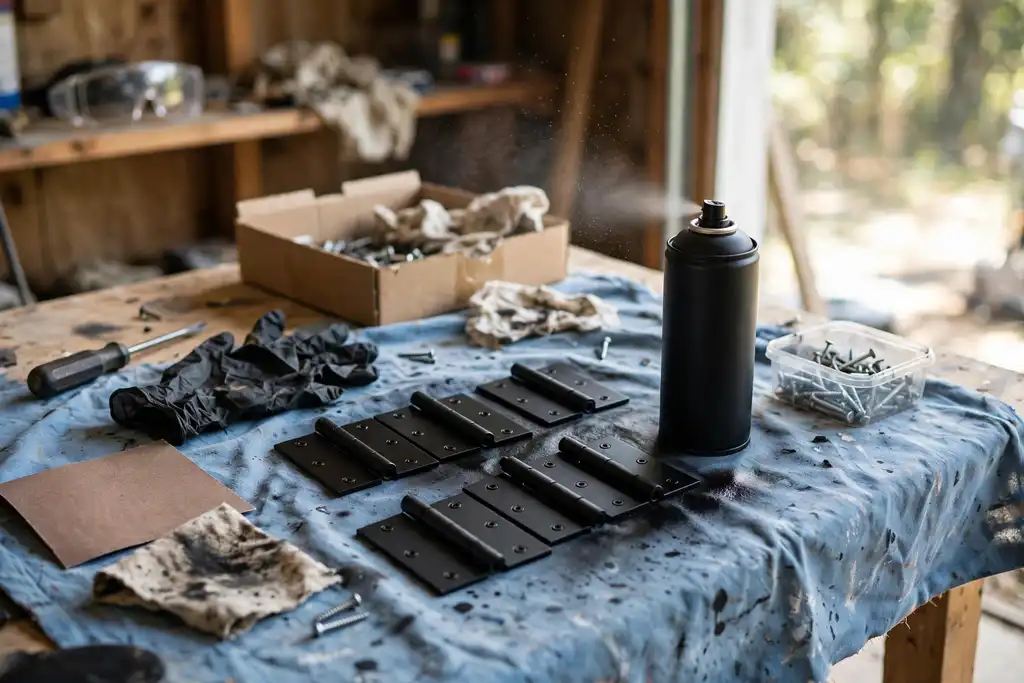

It depends on the hinge and how you prep it. Yes, you can spray paint door hinges, but only if you clean, sand, and prime them first, or the paint will flake off and gum up the hinge pin.
Spray paint adheres to metal hinges only when the surface is free of grease and rust, yet most failed jobs skip the degreasing step entirely. So, can you spray paint door hinges without removing them? You can, but the safer route is removing hinges, cleaning them, and spraying them flat to avoid drips and sealed hinge pins.
You will learn the exact prep sequence, from sanding and priming to masking with painter’s tape, plus how to protect the hinge pin and avoid paint adhesion failures. Expect realistic drying time and lubrication steps that keep the hinge swinging smoothly after a metallic finish.
Can You Spray Paint Door Hinges? the Short Answer
Yes, you can spray paint door hinges, and the job holds up well when you prep correctly. Skip the prep and you will deal with flaking paint and stiff hinges within a season.
| Situation | What it means | What to do |
|---|---|---|
| Hinges still installed | Overspray hits the door and frame | Mask with painter's tape before spraying |
| Grease or grime on hinges | Paint adhesion fails fast | Degreasing comes before anything else |
| Light surface rust | Paint can seal and hide it | Sand it back, then apply primer |
| Heavy rust or pitting | Paint will not fix weak metal | Replace the hinge instead |
| Painted shut or jammed pin | Hinge stops working | Pull the hinge pin, keep paint off it |
| Cold or damp weather | Slow drying time, poor adhesion | Spray in mild, dry conditions |
| New color on old hardware | Metallic finish shows flaws | Use light coats, not one heavy pass |
Recommended for this job

Rust-Oleum Painter's Touch 2X Ultra Cover
Oil-based flat black spray covers metal hinges evenly and dries fast.
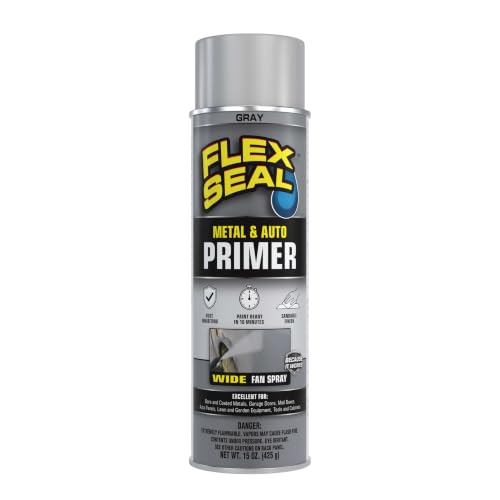
Flex Seal Metal & Auto Primer Spray
Rust-inhibiting primer preps bare metal hinges before spray paint topcoat.

4 Rolls Premium Painters Tape
Blue tape masks hinge pins and surrounding door areas during spray painting.
Yes, with the Right Prep and Paint
You can spray paint door hinges, but only after degreasing with a solvent like mineral spirits and scuffing the surface with 220-grit sandpaper so paint adhesion holds. Skip either step and the coating flakes off within months. Keep spray paint off the hinge pin and the moving joint.
When It’s a Quick Fix vs a Lasting Solution
A light refresh on solid hinges takes about 2 to 4 hours including drying time and holds for years. Hinges with deep rust, stripped screws, or a bent knuckle need replacing, not painting. Mask the door and frame with painter’s tape, and plan on removing hinges only when you need full coverage.
- Degrease, sand, then prime bare or rusty spots.
- Spray 2 to 3 thin coats, letting each flash off 10 to 15 minutes.
- Add lubrication after the paint cures.
- Reinstall hinges and check swing before touching up.
When Spray Painting Door Hinges is a Bad Idea
High-Moisture Areas That Invite Rust
Skip spray paint in bathrooms, laundry rooms, and anywhere near a pool or exterior door that sees driving rain. In those spots, moisture works under any coating you apply, and rust returns fast. A factory finish or stainless hardware holds up better.
If you still want to paint, plan on redoing it every year or so, and check the hinge pin for sticking before you commit.
Hinges with Deep Rust or Structural Damage
Do not paint a hinge that is pitted, cracked, or loose at the screw holes. Paint will not fix weakened metal, and the door can sag or fail. Replace that hardware instead.
Light surface rust is fine after sanding and degreasing. Deep rust that flakes off in chunks means the hinge is done, so save your spray paint for sound metal.
Doors That Get Heavy Daily Use
Rethink painting hinges on main entry doors, garage doors, or any door that swings dozens of times a day. Coating buildup on the knuckles and hinge pin wears through quickly and can make the door bind.
If you proceed, use thin coats, keep paint off the pin, and add lubrication after drying time. Otherwise, leave those hinges alone.
Is It Okay to Spray Paint Your Door Hinges?
What ‘Okay’ Means for Function and Looks
Yes, you can spray paint door hinges, and it works when you prep correctly. Keep total coating thickness under about 2 mils, or the knuckle will bind and the door will drag. Two light coats beat one heavy pass every time.
Prep in this order: sand off loose rust with 220-grit paper, wipe every surface with a degreaser, then apply a metal-specific primer. Mask the surrounding door and frame with painter’s tape before you spray. Let primer dry 30 to 60 minutes before color.
Signs You Should Replace Instead of Paint
Skip the spray can if the hinge is bent, cracked, or the screw holes are stripped. Rust pitting deeper than the surface won’t hold paint adhesion and keeps corroding under the coat. New hinges typically run $3 to $10 each, cheaper than redoing the job.
Replace any hinge that still squeaks after lubrication or sags enough to rub the frame. Pull the hinge pin and check for wobble before painting. If the plate flexes, paint only delays failure. Otherwise, remove hinges, paint, let them dry 24 hours, then reinstall and add a drop of lubrication.
Myths vs Facts About Spray Painting Door Hinges
Myth: Paint Will Always Gum up the Hinge
Not true if you keep paint out of the moving parts. Gumming comes from overspray at the knuckle and pin, not spray paint itself. Wipe the pin clean, mask the knuckle edges with painter’s tape, and spray light coats, letting each flash off before the next so paint bonds instead of pooling.
Myth: Any Spray Paint Works on Metal
Wrong. Craft paint flakes off handled metal. Use spray paint labeled for metal, with built-in or separate primer on bare or rusty spots. Sand and degrease first, since adhesion depends on a clean surface. A metallic finish made for metal holds up better than all-purpose color.
Myth: You Must Remove Hinges to Paint Them
No, painting in place works for a color refresh. Removing and reinstalling gives a cleaner job with no overspray, but it is optional. If leaving them on, tape surrounding surfaces, keep paint off the pin, and lubricate after drying. Do not close the door until fully cured.
How to Spray Paint Door Hinges Step by Step
Work through these steps in order and your hardware will look factory-fresh without gumming up the mechanism.
Clean and Degrease the Hinges
Wipe every plate with a degreaser and a stiff brush, then dry it fully. Skip this and paint adhesion fails fast.
Sanding and Rust Removal
Scuff the surface with 220-grit paper until rust and shine are gone. Feather edges smooth so the new coat sits flat.
Mask the Door and Jamb
Tape off the door and jamb with painter’s tape, exposing only the hinge plates. Press edges tight to stop overspray.
Apply Thin Coats and Let Dry
Mist on two to three thin coats, respecting the label’s recoat window. Heavy passes cause drips and stiff hinge pins.
Reinstall and Touch up Screw Heads
Reinstall the hinges after 24 to 48 hours of drying time, then dab paint on the screw heads. Add a drop of lubrication to each hinge pin.
Follow these steps in order and your hardware will look factory-fresh without gumming up the mechanism.
When Spray Painting Door Hinges Works Best
Door hinges can indeed be spray painted, but only under the right conditions. Get those conditions wrong and you will deal with flaking paint, sticky hinges, or hardware that fails to close cleanly.
Interior Doors with Light Wear
Interior hinges with light wear are the safest bet. The paint takes well to clean metal, and the lower traffic means less friction on the finish. Plan on a few thin coats rather than one heavy pass, with drying time between each.
Hinges with Minor Rust or Color Mismatch
Minor surface rust or a mismatched finish can be fixed with spray paint, provided you remove the rust first. Sanding down to bare metal, then degreasing and applying primer, gives paint adhesion a real chance. Skip those steps and the rust will creep back through the new coat.
Doors You Can Take off Their Hinges
Taking the door down is the best way to do this job right. Removing hinges lets you paint flat, avoid overspray on the door and frame, and protect the hinge pin and screw holes with painter’s tape. Reinstalling hinges afterward is quick, and a little lubrication keeps them swinging smoothly.
When is it a bad idea? Exterior hinges exposed to weather, heavy doors, and hinges already loose at the pin. Replace those instead of painting them.
Choosing the Right Spray Paint for Metal Hinges
Look for Rust-Preventive Metal Paint
Buy an aerosol labeled for metal and specifically for exterior use if the hinge sees weather. Look for rust-preventive wording on the can, since bare steel and older hinges are prone to corrosion.
Skip general-purpose craft paint. It chips at the hinge pin and along the knuckle where metal rubs metal, and touch-ups get old fast.
Primer for Adhesion
Use a metal-specific primer before color, especially on bare spots left by sanding or on hinges with existing rust. Primer is what keeps paint adhesion solid through opening and closing cycles.
Self-etching primer works well on bare metal, while a bonding primer suits painted or factory-finished surfaces. One light coat is enough, and let it cure fully before color.
Sheen and Color Matching
Match the finish to your other door hardware so the hinge disappears into the door instead of standing out. Satin or semi-gloss reads closest to typical brushed metal, while flat looks chalky on moving parts.
A metallic finish in a matching tone gets you close to factory hardware. Test the color on scrap metal first, and check the can for recoat windows so the finish lays down evenly.
Your Action Plan for Spray Painting Door Hinges
Spray painting door hinges works, but only if you treat prep and cure as seriously as the color coat. Skip a step and you get peeling paint, sticky pins, or hinges that grind instead of swing.
| Action | Why it helps | How to start |
|---|---|---|
| Removing hinges vs painting in place | Cleaner coverage, no overspray on the door | Pull the hinge pin and label each hinge |
| Sanding and degreasing | Paint adhesion starts with a clean, dull surface | Scuff with fine grit, then wipe with a degreaser |
| Primer for bare or rusty spots | Seals rust and gives spray paint a base | Use a rust-inhibiting primer on exposed metal |
| Painter's tape around the hinge | Keeps spray paint off the door and frame | Mask edges and the screw slots before spraying |
| Thin coats, short passes | Prevents drips and keeps the hinge swinging | Spray light layers, let each one flash off |
| Drying time before reinstalling hinges | Soft paint smears and glues the pin | Wait until the surface is dry to the touch |
| Curing time before heavy use | Full hardness takes days, not hours | Give it several days of light use first |
| Lubrication after painting | Keeps the hinge pin moving freely | Add a drop of lubricant to the pin and work it in |
Decide: Remove or Paint in Place
Removing hinges gives the cleanest result and keeps spray paint off your door. Painting in place is faster but risks overspray and a gummed-up pin. For exterior doors, removal is the safer call.
Gather Supplies and Prep the Area
You need spray paint, primer, sanding pads, degreaser, painter’s tape, and a drop cloth. Scuff the metal, wipe off grease and grime, then tape off the surrounding surfaces.
Paint, Dry, and Reinstall
Apply thin coats rather than one heavy pass, and let each coat flash off before the next. Reinstall hinges only after the paint is dry to the touch, usually after 24 hours depending on humidity.
Cure and Lubricate
Full hardness takes several days, so go easy on the door at first. Once cured, add a drop of lubricant to each hinge pin and work the door back and forth.
A Real-Life Scenario: Painting Interior Door Hinges
Assess the Hinges and Door Type
Decide whether to paint in place or remove hardware. Hollow-core doors with flush hinges and free swing can be painted in place; solid doors with tight clearances are easier with hinges removed. Check for rust, loose screws, and sagging, fix binding or squeaking hinges before painting.
Prep and Paint in Place or Remove
Scrub hinges with degreaser, rinse, and dry fully. Lightly sand for adhesion and apply rust-inhibiting primer to bare or rusty spots. Mask surrounding wood with painter’s tape. Apply two or three thin spray coats, keeping hinge pins and knuckle edges free of buildup. Let each coat flash 10-15 minutes; allow 24 hours full drying.
Reinstall and Test the Door
Wait the full drying time before reinstalling hinges or closing the door to avoid smearing finish or gluing plates shut. Reinstall screws snug, add a drop of lubricant at the hinge pin, and open and close several times, watching for rubbing or sticking. Touch up thin spots once the door swings clean.
Exterior Hinges: Weather Exposure and Paint Choice
Rust Prevention for Outdoor Hinges
Sand the hinge to bare metal, feather rust edges, and wipe with degreaser before painting. Apply a rust-inhibiting metal primer in two thin coats, letting each dry fully, skipping this causes early failure.
Paint and Primer for Weather
Use exterior-grade spray paint for metal, ideally with built-in rust-inhibiting primer. Spray light passes from 8-10 inches. Keep painter’s tape on surrounding surfaces and allow 24-48 hours drying time before heavy use.
When to Replace Instead of Paint
Replace if the hinge is bent, the hinge pin wobbles, rust has eaten into the metal, or it grinds when swinging. Paint fixes appearance, not structure. New exterior hinges cost $5, $15 each, safer than reinstalling hinges already failing.
Common Mistakes to Avoid When Spray Painting Hinges
Drips and Overspray
Thin coats beat heavy ones every time. Hold the can 8 to 10 inches away and sweep in short passes, letting each coat flash before the next. Mask the surrounding door and frame with painter’s tape to catch overspray.
Paint in the Hinge Knuckle
Keep spray paint out of the hinge knuckle and pin or the hinge will bind. Tape off the knuckle or pull the hinge pin before spraying. If paint slips in, wipe it out before it cures and add a drop of lubrication after reinstalling hinges.
Skipping Primer or Degreasing
Skipping primer or degreasing is the fastest route to peeling. Degreasing and light sanding first, then a bonding primer, sets up paint adhesion and a durable metallic finish. Respect drying time between coats and before reinstalling hinges.
- Drips and overspray: thin coats, 8 to 10 inches away, short passes.
- Mask surrounding surfaces: painter's tape protects the door and frame.
- Paint in the hinge knuckle: tape it off or pull the hinge pin first.
- Stuck hinges: wipe wet paint from the knuckle and add lubrication later.
- Skipping primer: degrease and sand, then use a bonding primer.
- Drying time: let each coat flash and cure fully before reinstalling hinges.
When to Ask for Help with Door Hinge Painting
Consult a Store Expert for Paint and Primer
Ask a paint counter pro when you are unsure which primer bonds to a factory-coated hinge or which topcoat resists handling wear. Bring the hinge itself or a clear photo, plus your door’s material and location. Request a specific primer and spray paint pairing, and confirm the solvent and respirator type needed for safe ventilation.
Ask them to compare the cost of spray paint plus primer against replacement hinges for your door count. For a few doors, refinishing usually runs a few dollars per hinge; new hardware often costs more.
Check Manufacturer Guidelines for Warranties
Contact the hinge or door manufacturer before coating hardware on a newer door or one under warranty. Ask whether painting voids coverage and which products they approve. Also ask about lubrication needs after paint cures, since some finishes trap grit in the hinge pin.
Call a Pro for Tricky Doors or Heavy Rust
Hire a local painting or carpentry pro when hinges sit on heavy exterior doors, sit in deep rust, or bind after sanding and degreasing. Ask for a written plan covering removing hinges, drying time between coats, and reinstalling hinges with proper alignment and lubrication.
When to ask for help:
- Your hinges are on a heavy exterior or security door and you are unsure the door can be safely supported during removing hinges.
- Rust has eaten into the hinge metal or the hinge pin will not move, so ask a local pro to assess whether refinishing is safe.
- The door is new or under warranty, so ask the manufacturer whether spray paint voids coverage before you start.
- You cannot confirm a compatible primer and topcoat for a metallic finish, so ask a store expert for a specific pairing.
- Your workspace lacks ventilation for solvent-based spray paint, so ask a pro or store expert about safer product and respirator options.
Can You Spray Paint Door Hinges: Frequently Asked Questions
?Can You Spray Paint Door Hinges Without Removing Them?
Yes, but expect a worse result. Painting hinges in place means overspray on the door and frame, paint clogging the hinge pin gap, and uneven coverage on hidden sides. If you want it done right once, remove the hinges. It takes minutes with a screwdriver and saves you cleanup and stuck-hinge headaches later.
?Can You Spray Paint Door Hinges so the Paint Actually Sticks, or Will It Flake off?
Yes, spray paint sticks to door hinges when you prep correctly. Adhesion depends on sanding the surface, degreasing thoroughly, and using a primer made for metal. Skip any of those steps and the coating will chip at the knuckles where the hinge flexes. Prepped right, a metallic finish can last years on interior hinges.
?Can You Spray Paint Door Hinges That Are Already Rusted?
Yes, but only after you remove the rust first. Sand the rust down to bare metal, wipe it clean, then prime. Spray paint over active rust traps moisture and the corrosion keeps spreading under the paint. If pitting is deep or the hinge pin is seized, replace the hinge instead of painting it.
?How Long Should Spray Paint Dry on Door Hinges Before Reinstalling Them?
Wait at least 24 hours, and 48 is safer. Drying time depends on the paint and humidity, but most aerosol metal paints feel dry in an hour while still being soft underneath. Reinstall too early and the paint smears at the screw holes and sticks to the hinge pin. Let them cure fully.
?Why Do Spray Painted Door Hinges Stick or Squeak After Painting?
Paint got into the moving parts. Spray paint on the hinge pin and knuckle surfaces adds thickness that binds the joint. Fix it by working the hinge, then adding a drop of lubrication at the pin. Prevent it next time with painter's tape over the knuckles or by pulling the hinge pin before you spray.
?What Spray Paint Should I Use on Door Hinges for a Metallic Finish?
Use a spray paint labeled for metal, and pair it with a metal primer. Rust-inhibiting enamel or epoxy-based aerosols hold up best, especially on exterior hinges. Avoid cheap general-purpose paint. Satin or semi-gloss metallic finishes hide imperfections better than high gloss, which shows every sanding scratch.
?When is It Smarter to Replace Door Hinges Instead of Painting Them?
Replace them when the hinge is bent, the pin is loose, rust has eaten into the metal, or the hinge won't hold the door true. Spray paint fixes color and light wear, not structural problems. New hinges cost a few dollars each and outlast any paint job on failing hardware.
Our Thoughts
Yes, you can spray paint door hinges, and the opening answer holds: prep is everything. Skip the sanding, degreasing, and primer, and the coating will chip at the hinge pin and look worse than the rust you started with. Do the full sequence once and the finish can last for years.
The single most useful next step is a quick test fit before you commit. Spray one spare hinge, let it cure for the full drying time on the can, then reinstall it and work the pin through a few cycles. If it binds or the paint scrapes, adjust your coats and add lubrication before touching the rest of the doors.