
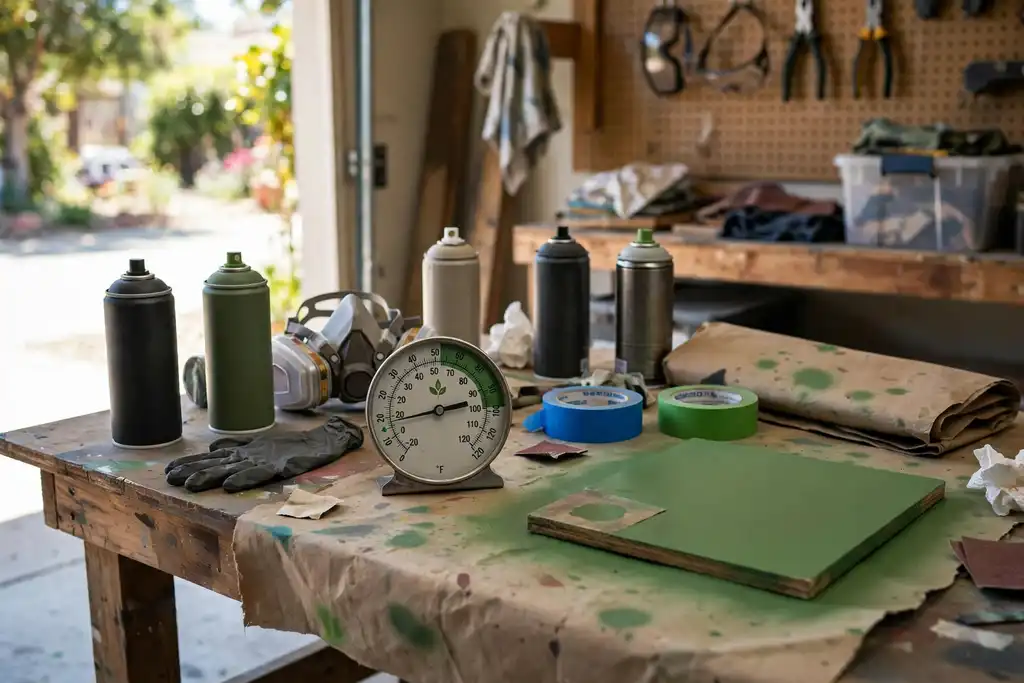

Spray paint needs an ambient temperature of at least 50°F to 60°F, and the surface should be within 5°F of that range. Below these minimums, curing and adhesion fail, causing runs, peeling, or a wrinkled finish.
What temperature is safe for your spray paint project? The short answer to how warm does it need to be to spray paint is that both the air and the surface must stay above the product’s minimum, typically 50°F to 60°F, and within its ideal temperature range, often 70°F to 80°F. Humidity and dew point matter too, because moisture interferes with curing and adhesion.
You will learn how ambient temperature and surface temperature interact, why primer and clear coat demand the same care, and how to time your coats within the recoat window. The goal is a finish that sticks and hardens correctly the first time, without sanding off mistakes. Check the label, measure the surface, and plan around the weather instead of fighting it.
How Warm Does It Need to Be to Spray Paint? the Simple Answer
Spray paint needs the air and the surface to sit in a safe temperature band before you shake the can. Get that wrong and you risk poor adhesion, blotchy coverage, or a finish that never cures hard.
| Situation | What it means | What to do |
|---|---|---|
| Ambient temperature below the label minimum | Solvent flashes off too slowly or unevenly | Wait for a warmer day or move indoors with ventilation |
| Surface temperature too cold | Paint skins over and adhesion fails | Let the surface warm up, then retest with a touch |
| Surface temperature too hot | Paint dries before it levels, causing texture | Spray in early morning or shade the surface |
| Humidity near the dew point | Moisture traps under the film and clouds the finish | Pick a drier day and check the dew point |
| Coating a cold metal or car panel | Metal holds cold longer than air | Bring the part inside overnight before spraying |
| Recoating too soon in cool weather | Solvent stays trapped and wrinkles the coat | Extend the recoat window and test a hidden spot |
Recommended for this job

Etekcity Infrared Thermometer Laser Temperature Gun
Measures surface temperature so you can confirm it's within spray paint's recommended range.

Rust-Oleum Painter's Touch 2X Ultra Cover
Its label specifies the temperature range needed for proper spraying and adhesion.

Odor/Particulate Multipurpose Respirator
Respirator protects you while spraying, but does not indicate required temperature conditions.
Most aerosol cans list a safe ambient temperature band of roughly 50 to 90°F. Below that, solvents flash off too slowly and the film may never fully harden through curing, the process that turns the coating into a tough, cross-linked polymer.
The Ideal Temperature Range for Spray Paint
Aim for the middle, around 65 to 80°F, for smoothest results. Cooler air stretches drying time and can hurt adhesion, the bond that keeps paint stuck to the surface. Hotter air speeds flash-off and may leave a grainy finish.
Why Surface Temperature Matters More Than Air Temperature
Surface temperature, the warmth right at the material itself, drives how paint levels and sticks, and metal, concrete, or a car panel can run well below the surrounding air. Touch the surface and let it sit in the work area before starting.
Check the Can Label for the Specific Product’s Range
Every manufacturer sets its own numbers, so read the label before buying. It also lists recoat window and drying time, which shift with humidity and dew point, the temperature where air becomes saturated and moisture condenses. Work with ventilation and skip spraying near the dew point.
How Weather, Season, and Climate Change the Answer
Spray Painting in Cold Weather: What to Expect
Below 50°F ambient temperature (the surrounding air), most spray paints thicken and stop flowing evenly from the nozzle. Adhesion, the bond where the coating grips the surface, weakens, and curing, the chemical hardening into a stable film, can stall for days. Warm both the can and the surface above 60°F before you spray, and add 2 to 4 hours to typical drying time.
Spray Painting in Hot Weather: What to Expect
Above 90°F, the paint skins over before it levels, leaving a grainy finish. Keep passes light and work in shade. A surface in direct sun can run 20 to 30°F above the air, pushing you past the ideal temperature range of 60 to 80°F.
How Humidity Affects Spray Paint
High humidity slows curing and can trap moisture under the film, causing blush or weak adhesion. Check the dew point, the temperature where air becomes saturated with water vapor. If surface temperature sits within 5°F of it, condensation forms, so wait.
Best Time of Day to Spray Paint
Mid-morning to early afternoon gives rising temperatures and falling humidity. Spray with the surface in shade, calm air, and good ventilation, then respect the recoat window and full drying time before evening cool-down.
The Hidden Risk of Low Humidity: Static Electricity and Fast Drying
Why Dry Air Can Cause Orange Peel
Low humidity speeds up the flash-off of solvents, so the coating skins over before it can flow out flat. That trapped unevenness shows up as orange peel, a bumpy texture you cannot sand out of a thin coat. Keep ambient temperature steady and watch the hygrometer, not just the thermometer.
How Static Electricity Attracts Dust
Dry air builds static charge on plastic, metal, and your clothes, and that charge pulls airborne dust straight onto the wet film. Once dust lands, adhesion suffers and you get nibs you will chase forever. Ground the part, wipe with a tack cloth, and mist the booth floor lightly before you spray.
Balancing Humidity for a Smooth Finish
Aim for roughly 40 to 60 percent relative humidity, and confirm your surface temperature sits above the dew point by at least 5 degrees Fahrenheit. Below that margin, moisture can condense and ruin curing. Above 65 percent, drying time stretches and blushing becomes likely, so add ventilation and give each coat a longer recoat window.
What Temperature is Too Cold to Spray Paint?
Minimum Temperature for Spray Paint
An ambient temperature of at least 50°F is needed by most aerosol paints, with 60°F+ safer; many brands list 55°F as the floor. Surface temperature matters equally, the object should be in that range or warmer. Ideal range is roughly 70-85°F. Below minimum, propellant and solvents don’t atomize properly and adhesion suffers.
What Happens If You Spray Paint When It’s Too Cold
Cold causes thin, splotchy coverage and poor adhesion, so paint never bonds firmly. Coating stays tacky longer and curing stalls. You may see blushing (milky haze from trapped moisture), especially in high humidity or near the dew point. Recoating outside the drying window can wrinkle the finish. Primer and clear coat behave the same.
Cold Weather Spray Painting Tips
Warm cans and workpiece first: store paint indoors overnight, work in a heated, ventilated garage, or wait for a mild afternoon.
- Bring parts inside to room temperature.
- Watch humidity and dew point, not just temperature.
- Apply light coats and respect the recoat window.
- Cure indoors after initial flash-off.
How to Measure Surface Temperature (Not Just Air Temperature)
Tools for Measuring Surface Temperature
Use an infrared thermometer to read surface temperature directly, point it at the actual panel, board, or metal you plan to coat, not the air beside it. A cheap stick thermometer taped flat against the material works as a backup check.
Compare that reading to ambient temperature, the surrounding air. A gap of 10 to 20 degrees Fahrenheit is common and it changes your plan. Trust the surface number, because that is what the paint touches.
Why the Sun Can Make Surfaces Much Hotter Than Air
Direct sun can push dark metal or asphalt 30 to 50 degrees Fahrenheit above the air reading. That surface may be far past your ideal temperature range while the air still feels mild.
Shade the piece and recheck before spraying. Overheated surfaces flash off solvent too fast, hurting adhesion, the bond between paint and material, and leaving a rough finish.
Accounting for Wind Chill on Surfaces
Wind lowers surface temperature below the air reading, especially on thin metal. Even a light breeze can pull a panel under the minimum temperature and stall curing, the chemical hardening process.
Measure on the downwind side and out of gusts. If the surface sits near the minimum temperature, move the work into a garage with ventilation and wait for warmer conditions.
Myths vs. Facts: 3 Common Misconceptions About Spray Paint Temperature
Myth: You Can Spray Paint as Long as It’s Above Freezing
No. Above 32°F, most spray paint still won’t flow or bond correctly. Check the label for the minimum temperature, which is often 50°F to 60°F for ambient temperature.
Surface temperature matters just as much. Cold metal or wood pulls heat from the coating, slowing curing and weakening adhesion. If the surface reads below the label minimum, wait.
Myth: Warming the Can with Hot Water or a Flame is Safe
Hot water is fine, a flame is not. Set the can in a bowl of warm tap water for a few minutes to loosen the propellant and improve flow.
Never use boiling water, a stove, or a lighter. Pressurized cans can rupture, and OSHA treats that as a serious hazard. Keep the can within its labeled ideal temperature range instead.
Myth: Humidity Doesn’t Matter If It’s Warm Enough
Warm air can still ruin a finish. High humidity slows drying time and can trap moisture, causing blushing or poor adhesion.
Watch the dew point. If the surface temperature sits close to it, water can condense under the primer, spray paint, or clear coat. Aim for moderate humidity and good ventilation, and respect the recoat window.
When It Doesn't Work: Exceptions and Limits
What Happens If You Spray Paint When It’s Too Hot
Above roughly 90°F ambient temperature, spray paint can skin over before solvents flash off, causing solvent pop, pinholes, and rough blistering that’s hard to sand out. Surface temperature matters more than air temperature: dark metal or asphalt in summer sun can run 20 to 30°F hotter than the air. Check with an infrared thermometer before spraying.
Spray Painting in Direct Sunlight
Direct sun heats surfaces unevenly, so one panel flashes off while another stays wet, ruining flow-out and leaving lap marks. Move the piece into shade or spray early morning or late afternoon. If you can’t move it, wet the ground nearby to cool the air and keep sun off the surface until curing begins.
Spray Painting in Windy Conditions
Wind above about 10 mph carries overspray onto nearby surfaces and dries droplets mid-air, giving a gritty texture. It also wrecks adhesion by blowing dust onto the wet film. Spray with the wind at your back in a sheltered spot, and never spray near open flames or pilot lights. Good ventilation matters, but moving air across wet paint is not the same thing.
When It Works: Conditions Where the Answer Holds
Ideal Temperature Range for Spray Paint
Ambient temperature between 50°F and 90°F is wanted by most brands, with 70°F to 80°F being ideal. This keeps solvent evaporating steadily so coating flows and bonds without runs or dry spray.
Surface temperature matters equally. Metal, concrete, or car panels can run hotter or colder than air, so check with an infrared thermometer. A surface outside 50°F to 90°F will fight you regardless of weather.
Using Primer in Different Temperatures
Primer needs the same 50°F to 90°F window and is less forgiving below 50°F because adhesion suffers on cold substrates. Failed primer takes your topcoat down with it.
Above 90°F, primer can skin over before leveling, leaving a rough base. Work early, control humidity, and allow extra drying time in cool conditions before sanding or topcoating.
Using Clear Coat in Different Temperatures
Clear coat follows the same 50°F to 90°F range but is most sensitive to humidity and dew point. Spray when surface stays at least 5°F above dew point to prevent moisture clouding the finish.
Cold slows curing and stretches recoat windows; heat speeds solvent flash and can trap bubbles. Plan ventilation and shade, and expect drying time to shift with temperature.
Action Plan: Your Step-by-Step Temperature Strategy
A spray paint job succeeds or fails before you pull the trigger. Check conditions first, prep the surface and can, watch the weather while you work, then give the coating time to harden.
| Action | Why it helps | How to start |
|---|---|---|
| Check ambient temperature | Governs flow and adhesion | Stay in the ideal temperature range on the label |
| Measure surface temperature | Cold or hot surfaces ruin adhesion | Use an infrared thermometer on the actual panel |
| Watch humidity and dew point | Moisture causes blushing and poor bonding | Spray when surface stays above dew point |
| Prep and prime the surface | Clean, scuffed surfaces hold paint | Wipe, sand, and apply primer in range |
| Warm the can | Thins paint for smoother atomization | Soak in warm water a few minutes |
| Spray in the best window | Mid-morning to early afternoon is steadiest | Start once dew has dried and temps climb |
| Respect drying and curing times | Cold slows hardening, heat speeds it | Give extra time below ideal temperature range |
| Plan the recoat window | Mistimed coats wrinkle or lift | Recoat within the label window or after full cure |
Start with the forecast, then verify with a surface reading. Air that feels warm can hide a cold panel, and cold kills adhesion.
Check the Forecast and Surface Temperature
Pick a day inside the ideal temperature range on the label, usually mild and dry. Point an infrared thermometer at the panel and confirm it sits above the minimum temperature.
Prepare the Surface and the Can
Clean and scuff the surface, then apply primer within the same range. Warm the can in a bowl of warm water so the paint atomizes evenly.
Monitor Conditions During Application
Spray mid-morning to early afternoon, once dew has dried. Stop if humidity climbs or the surface nears the dew point, and keep ventilation strong.
Plan for Drying and Curing Times
Cooler air stretches drying time and curing, the hardening into a durable film. Wait longer before clear coat, and respect the recoat window printed on the can.
How to Tell If It's Warm Enough and What to Do
Measure the surface, not the air, and warm the can only in water you can comfortably touch.
Measure Surface Temperature with an Infrared Thermometer
An infrared thermometer gives you a real reading in seconds. Point it at the panel, wait for the number to settle, and confirm it clears the minimum on the label, usually 50°F. Cold metal in shade often runs well below the ambient temperature.
Warm the Can in Warm Water (Not Hot)
Stand the can in a bucket of tap water around 80°F to 100°F for 5 to 10 minutes. Warm paint atomizes better and lays down smoother. Never use boiling water or a flame, and dry the can before shaking.
Adjust Your Technique for Borderline Temperatures
Near the minimum, thin coats and extra flash time protect adhesion. Keep the surface above the dew point, allow longer drying time, and stay inside the recoat window. Skip the job if humidity is high or rain is coming.
Check the conditions before you shake the can, because a few degrees can be the difference between a clean finish and a do-over.
Common Mistakes: Temperature-Related Spray Paint Problems
Spraying Too Close or Too Far in Hot Weather
Heat thins the coating, so your usual distance can cause runs or a gritty finish. Move closer when the air is cool and back off when it is hot, and keep the can moving at a steady pace.
Not Accounting for Wind Chill
Wind pulls heat off the panel and off the can, so the surface temperature, the temperature at the surface of a body, can sit well below the ambient temperature, the air temperature around you. Check the panel with a touch or a thermometer before you start, because a cold surface kills adhesion, the bond between coating and material.
Using the Wrong Primer or Clear Coat for the Temperature
Primer, the preparatory coating under your color, and clear coat each have their own minimum temperature and recoat window, the time frame for adding another layer. Read the label, pick products rated for your conditions, and never rush a recoat in the cold.
- Spraying too close in heat causes runs; too far causes dry, gritty overspray.
- Wind chill drops surface temperature below ambient temperature and hurts adhesion.
- A cold panel can reject paint even when the air feels warm.
- Primer and clear coat have their own minimum temperature ratings.
- Respect the recoat window; cold weather stretches drying time.
- Check the dew point and humidity before spraying to avoid blushing.
- Keep ventilation strong and avoid spraying in direct sun on hot days.
When to Call a Pro: Warning Signs and Safety First
Automotive Spray Paint: Temperature Considerations
Car paint and clear coat need warmer conditions than general-purpose cans. Keep ambient temperature between 70 and 80°F and surface temperature at least 60°F before you spray.
Cold panels kill adhesion, and cool air slows curing. If your garage sits below 60°F, wait or heat the space properly. Check the can label for the manufacturer’s minimum temperature and recoat window.
Artistic Spray Paint: Temperature Considerations
Most craft and art sprays want ambient temperature between 50 and 90°F. Below the minimum temperature, paint can blush, crackle, or refuse to bond to the surface.
Watch humidity and dew point too. High moisture in the air traps water under the film, which shows up as a milky haze once it dries. Bring pieces indoors to cure if the evening turns cold.
Safety Precautions When Spray Painting
Spray in a ventilated area and keep ignition sources away, because aerosol propellants are flammable. Wear a respirator rated for organic vapors, not a dust mask.
Cold weather tempts people to spray in closed garages, which concentrates fumes fast. OSHA treats solvent exposure as a real hazard, so open doors, use fans, and step out between coats.
Stop and call a professional if:
- You notice blistering, lifting, or a milky haze that will not clear after the paint dries.
- The only space warm enough to spray is a closed garage with no ventilation.
- You are spraying a vehicle panel that needs blending into an adjacent factory finish.
- The label warns the product is flammable and your work area has a pilot light or heater nearby.
- You feel dizzy, get a headache, or smell strong solvent fumes while spraying.
- Surface temperature stays below the product minimum even after you heat the room.
How Warm Does It Need to Be to Spray Paint: Frequently Asked Questions
?How Warm Does It Need to Be to Spray Paint for the Coating to Cure Properly?
Most spray paints want ambient temperature at or above 50°F, with 70-80°F being the ideal temperature range. Below that, curing (the process of hardening the coating into a durable film) slows or stalls, and you risk a soft finish that never fully hardens. Check the can's label first, since some formulas demand 60°F or higher.
?How Warm Does It Need to Be to Spray Paint If the Surface Feels Warm?
It still needs to be within the product's recommended range, typically above 50°F (10°C). A surface that feels warm to the touch can be misleading, because cold air and cold substrates pull heat from the paint and disrupt curing. Always measure the actual surface temperature with an infrared thermometer, not just your hand, and confirm it stays above the minimum before you spray.
?Does Humidity Change How Warm It Needs to Be to Spray Paint?
Yes. High humidity slows drying time and can trap moisture under the film, so you want ambient temperature comfortably inside the ideal temperature range and humidity under roughly 60-70%. Watch the dew point (the temperature at which air becomes saturated with water vapor): if the surface is near it, condensation ruins adhesion. Warm and dry beats warm and muggy every time.
?How Warm Does It Need to Be to Spray Paint Primer and Clear Coat?
Treat primer and clear coat like the topcoat: 50°F minimum ambient temperature, 70-80°F ideal, and a surface temperature inside the same range. Primer is a preparatory coating that bonds to the material and gives paint something to grip, so cold surfaces hurt it most. Clear coat needs warmth to flow out and cure without clouding.
?Why Does Spray Paint Need Warm Weather for Proper Adhesion?
Because adhesion (the bond where the coating sticks to the surface) forms best when the paint can flow into the microscopic texture of the material. Cold makes the paint thicker and the surface less receptive, so you get a weak bond. Warmth also keeps the propellant behaving predictably, which means an even coat instead of spits and blotches.
?What Happens If You Spray Paint Below the Minimum Temperature?
You get defects: poor adhesion, a chalky or powdery finish, runs that never level out, and curing that drags on for days. Cold also stretches the recoat window (the time frame for applying another coat), so your second pass may wrinkle the first. One cold job often costs more in sanding and repainting than waiting a day for warmth.
?When is It Warm Enough to Spray Paint Outside, and What Should I Check First?
Check three things: ambient temperature at 50°F or higher and rising, surface temperature in the same range, and humidity and dew point with a safe margin. Then confirm ventilation (fresh airflow to carry away fumes) and that the forecast holds for the full drying time. If any number is marginal, wait, one good job beats two rushed ones.
Our Thoughts
Below 50°F to 60°F ambient temperature, spray paint will not cure properly, meaning it won’t harden into a durable film, and adhesion, the bond between coating and surface, suffers. Watch humidity and dew point too, the temperature where air becomes saturated. High moisture slows drying time and can cloud the finish.
Your next step: check the forecast and measure surface temperature with an infrared thermometer before you tape off anything. Confirm the surface sits within 5°F of the air and stays above the minimum temperature through the full recoat window. If it fails, wait. A failed coat costs more time than a delayed start.
Sources and further reading: guidance from EPA, OSHA.