
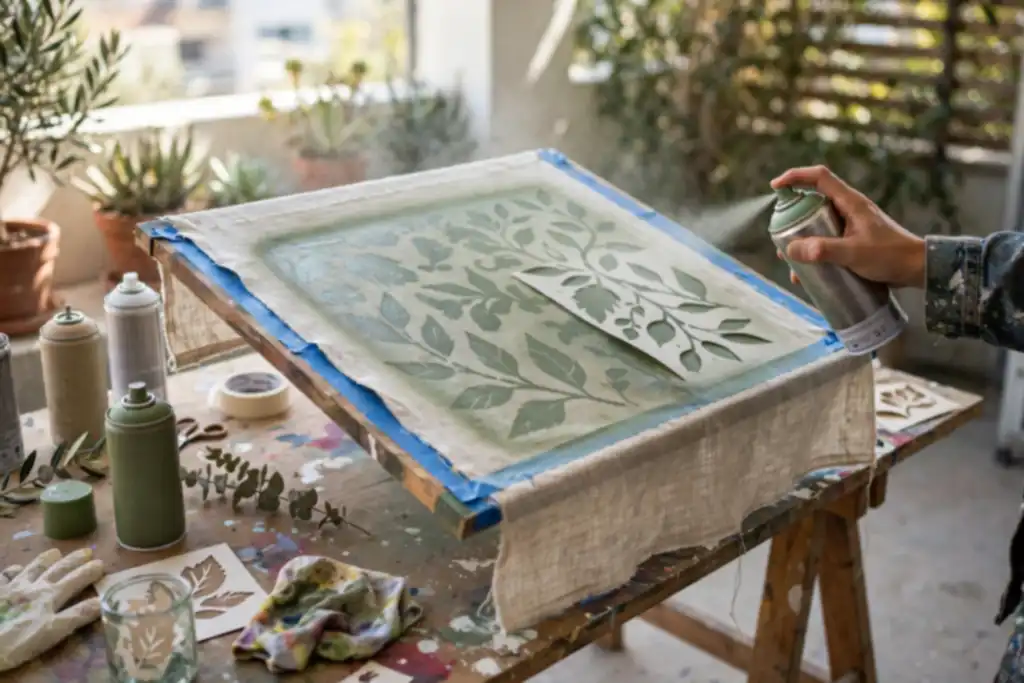
Yes, you can paint fabric with spray paint, but only if you use a flexible paint and apply light coats, because standard spray paint will crack and flake as the fabric moves.
Replacing a stained cushion costs more than a can of spray paint, but grabbing any aerosol from the garage can ruin the fabric. So can you paint fabric with spray paint without turning upholstery or clothing into a stiff, cracked mess? Only when you choose a flexible paint or mix in fabric medium, and only when you prep and cure the surface correctly.
This article gives you the safety checks and step-by-step method to avoid the common failures: poor adhesion, stiffness, and cracking. You will learn which paints work on fabric, how to prep and prime, how to apply light coats, and how to heat set and cure for a finish that moves with the material.
Can You Paint Fabric with Spray Paint? Yes, but Only with the Right Paint Type
Yes, you can spray paint fabric, but only with a flexible paint made for textiles. Regular aerosol paint dries rigid and will flake off anything that bends or stretches.
| Situation | What it means | What to do |
|---|---|---|
| Upholstery that gets sat on | Constant flexing stresses the coating | Use flexible paint, thin light coats |
| Curtains and drapes | Sunlight and washing wear the finish | Heat set and cure fully first |
| Clothing you plan to wear | Skin contact and laundering | Use fabric medium mixed per label |
| Outdoor cushions | Moisture and UV exposure | Add a UV-resistant flexible coating |
| Small decorative accents | Low wear, minimal bending | Regular spray paint may hold |
| Anything that must stay soft | Rigid paint causes stiffness | Skip paint, use dye instead |
Recommended for this job

Tulip ColorShot Fabric Spray Paint
Black fabric spray paint made for direct spray-on coloring of clothing and accessories.

Tulip ColorShot Fabric Spray Paint
Red fabric spray paint designed to spray color directly onto fabric and garments.

Nicpro Professional Effects Fabric Medium
Fabric medium helps acrylic paint adhere softly and resist fading on textiles.
What “Spray Paint” Actually Means on Fabric
On fabric, which is any fiber-based material, spray paint is a thin aerosol coating that sits on top of the fibers instead of soaking in like dye. That surface bond, called adhesion, is what keeps the coating from peeling off. When the film can’t flex with the material, you get stiffness and later cracking, where the coating splits from internal stress.
Stiffness is when the dried paint bonds fibers together so the fabric loses its natural softness and drape.
Ventilation is non-negotiable: work outdoors or with a fan moving air across your work area, and wear an NIOSH-rated respirator for anything beyond a quick touch-up. A single 12 oz aerosol can covers roughly 6 to 8 square feet of upholstery in light coats.
Light coats are thin, even passes of spray paint that build coverage gradually without soaking the fabric.
The One Rule That Decides Everything: Paint Type
Use fabric spray paint or a flexible paint, never standard hardware-store aerosol on anything that bends. Regular spray paint is formulated for rigid surfaces like metal and wood, so it dries hard and cracks on upholstery or clothing that flexes.
Flexible paint, or any paint cut with fabric medium at roughly 2 parts paint to 1 part medium, stays pliable. Apply a primer only if the label specifies it, then build 3 to 4 light coats instead of one heavy pass. Heat setting with an iron (no steam, 300 to 350 F) and full curing over 24 to 72 hours depending on humidity is what makes the finish survive washing and wear.
Curing is the final drying period in which the paint film hardens and bonds fully to the fibers.
Is It Okay to Spray Paint Fabric, or Will It Ruin It?
What ‘Okay’ Looks Like in Practice
Yes, you can spray paint fabric, but only with flexible paint or paint mixed with fabric medium. Standard aerosol lays down a hard film that sits on the fibers rather than soaking in, so adhesion is weak and wear shows fast. Check the label for flexibility before you buy.
The Stiffness Trade-Off Explained
Expect stiffness, especially on clothing or anything that drapes. The coating bonds fibers together, so the cloth loses its natural movement. Thin the paint with fabric medium, and apply light coats from 8 to 12 inches away to keep the film thin and reduce cracking.
When the Answer Flips to No
Skip spray paint on anything washed weekly, worn against skin, or needing to stay soft. Clothing and daily-use upholstery are poor candidates because curing never makes the coating launder-proof, so use fabric dye instead. On decor pieces, work in ventilation, add a fabric primer, and heat set per the label.
Three Spray Paint Fabric Myths That Need Correcting
Myth: Any Spray Paint Works on Fabric
No. Regular spray paint is made for hard surfaces and dries rigid, while flexible paint and fabric medium are formulated to bend with fibers. Check the label for fabric use before you buy, or mix fabric medium into acrylic paint. A primer made for textiles improves adhesion, the bond that keeps coating from flaking off.
Myth: Spray Paint Always Washes Out
Not always, but washability depends on the product and your prep. True fabric spray paint holds up to gentle hand washing after curing; hardware-store cans on upholstery should stay spot-clean only. Heat setting with an iron or dryer, following the manufacturer’s directions, locks color in better than air drying alone.
Myth: Painted Fabric is Always Crunchy and Unwearable
Stiffness comes from heavy coats, not the idea itself. Light coats keep fabric supple and reduce cracking, the splitting that happens when a thick film flexes. Clothing takes the most abuse, so test a hidden hem first. Upholstery and curtains tolerate more coating than something you wear and wash weekly.
How to Prepare Fabric Before Spraying (Skipping This Ruins the Finish)
Wash, Dry, and De-Wrinkle
Start clean. Wash the item per its care label to strip oils and sizing, then dry it fully and iron or steam out wrinkles. Any crease left now will lock in once the coating cures.
Before you commit, test on a hidden area such as a hem or the back of a cushion. Spray a light pass, let it cure, then check for adhesion and flexibility. If it flakes or feels like cardboard, stop and switch to flexible paint cut with fabric medium.
Mask off What You Don’t Want Painted
Tape off seams, trim, buttons, and hardware with painter’s tape, pressing edges down firmly. Overspray travels farther than you think, so drape plastic over anything nearby.
Stuff or Stretch the Fabric so It Stays Flat
Slip cardboard or foam inside clothing and cushions so the surface stays taut and paint can’t bleed through. For upholstery, pin or clamp the fabric flat, then work in a ventilated space and apply light coats to prevent stiffness and cracking.
Step-by-Step Spraying Technique That Avoids Stiffness and Cracking
Distance, Passes, and Overlap
Hold the can 8 to 12 inches from the surface and move in steady, parallel passes. Keep the can moving before and after each pass so you never stop mid-stroke and dump wet paint in one spot. Overlap each pass by about half to build even coverage.
Work in a well-ventilated area, ideally outdoors or with fans pulling air away from you. Thin, moving passes protect adhesion, which is how the paint sticks to the fibers instead of sitting on top.
Thin Coats vs One Heavy Coat
Build coverage with several light coats rather than one heavy coat. A heavy coat soaks deep into the fabric, dries stiff, and starts cracking as soon as the material flexes. Wait 10 to 15 minutes between light coats.
Flexible paint made for fabric, or regular paint cut with fabric medium, keeps the finish pliable. Test on a hidden area of upholstery or clothing first.
Heat Setting for Washability
Heat setting locks the paint in so it survives washing. Let the piece dry fully, typically 24 to 72 hours, then press with an iron or run a dryer on low heat for 20 to 30 minutes.
Full curing takes 24 to 72 hours before the first wash. Check the manufacturer’s label for exact times.
Your Spray-Paint-a-Fabric Action Plan
Spray paint can work on fabric, but only with the right product and technique. Skip a step and you get stiff, cracking upholstery or clothing that fails its first wash. Follow this plan in order and you get it right once.
| Action | Why it helps | How to start |
|---|---|---|
| Decide spray paint vs dye vs replace | Paint adds a coating; dye soaks in | Dye for clothing, paint for decor |
| Choose a flexible paint | Rigid paint cracks when fabric flexes | Fabric or upholstery spray, not general-purpose |
| Test a hidden area | Reveals stiffness and color shift | Spray, dry, flex, check |
| Prep the surface | Dirt blocks adhesion | Vacuum, wipe, mask surroundings |
| Spray light coats | Heavy coats soak in and stiffen | Several thin passes, 6 to 12 inches away |
| Cure fully | Curing locks adhesion | Wait 24 to 72 hours |
| Heat set if allowed | Improves wash resistance | Follow the can, test first |
| Set wash expectations | Painted fabric is spot-clean | Hand wash cold, air dry |
Step 1: Decide Spray Paint vs Dye vs Replace
Dye is the right call for clothing, since it keeps the fabric soft and washable. Spray paint suits upholstery, curtains, and decorative pieces that rarely get washed. Replace anything with heavy wear or deep stains, because paint hides color, not damage.
Step 2: Pick the Right Paint and Test a Hidden Area
Look for flexible paint labeled for fabric or upholstery; general-purpose cans dry rigid and crack. Spray a hidden patch, let it cure, then flex it. If it feels like cardboard or flakes, stop and switch products.
Step 3: Prep, Spray Thin Coats, Cure, and Heat Set
Clean and dry the fabric first so adhesion holds, then mask off what you are not painting. Work in a ventilated space, following OSHA guidance on aerosol fumes, and build several light coats instead of one wet pass. Let it cure 24 to 72 hours, then heat set per the manufacturer's directions if the fabric allows.
Step 4: Set Washability Expectations Before You Commit
Painted fabric is spot-clean only in most cases. Machine washing usually causes cracking and peeling, so plan on hand washing cold and air drying, or dry cleaning for upholstery.
When Spray Painting Fabric Actually Works
Upholstery, Furniture, and Outdoor Fabric
Aerosol paint can refresh upholstery and furniture, but only with a flexible paint made for fabric. Standard cans dry rigid and will flake where cushions bend. Look for cans labeled for textiles, or mix fabric medium into the paint first.
Outdoor fabric like canvas or sling chairs takes paint well if you clean it and apply thin coats. Heavy soaking kills adhesion and causes stiffness. Keep coats light and let each one dry fully before the next.
Clothing, T-Shirts, and Stenciled Designs
Spray paint works on clothing for graphics and stencils, not for full coverage you plan to wash often. Stencils give the cleanest result on t-shirts and totes. Mask the surrounding area, spray light coats, then heat set with an iron per the can’s instructions.
Expect some stiffness and fading after repeated washing. For wearable pieces, flexible paint plus fabric medium keeps the print from cracking.
Cost Comparison with Fabric Dye
Spray paint usually costs less upfront for small projects, often $8 to $15 per can, and one can covers a chair seat or a few shirts. Fabric dye runs $5 to $20 per box but needs hot water and a large pot or machine.
For big yardage, dye wins on cost per square foot. For spot refreshes or stencils, paint is cheaper and faster. Always work with ventilation, as OSHA advises for aerosol products.
When It Doesn't Work: Fabric Types and Situations to Skip
Stretchy, Silky, and High-Wear Garments
Skip spray paint on anything that stretches, shines, or rubs against skin all day. Aerosol coatings bond to the surface but can’t move with spandex or flex through elbow and knee bends, so cracking (breaking from internal pressure) shows up fast. Silky fabrics also reject adhesion, the sticking of paint to fiber, and flake at the seams.
Anything That Needs Frequent Hot Washing
If the item goes in hot water weekly, don’t coat it. Even a flexible paint film wears thin after repeated agitation and detergent, and most aerosol formulas aren’t built for machine washing. Spot clean only, or expect patchy wear within a few months.
When Dye or Replacement is the Smarter Call
Use this rule: paint changes color on surfaces that stay put, dye changes color on fabric that moves and washes. For clothing (the habit of wearing clothes) and daily-use upholstery, dye or a replacement cover wins on durability every time.
Alternatives to Spray Paint for Fabric
- Fabric medium mixed into acrylic paint keeps the film flexible for brush work.
- Fabric dye penetrates fibers and survives laundering far better.
- Slipcovers or new cushions cost more but skip the curing and wear risk entirely.
Care and Maintenance After You Spray Paint Fabric
Washing and Drying Rules
Wait until the paint is fully cured, typically 24 to 72 hours, before the first wash, since most flexible paint needs that long to fully cure. After that, turn the item inside out and wash cold on a gentle cycle.
Skip fabric softener and bleach, which break down the paint film. Air dry whenever possible; if you must machine dry, use the lowest heat setting.
Touch-Ups and Wear Over Time
Expect some wear at high-flex points like seat edges and elbows, even with proper adhesion. Keep leftover paint for small touch-ups.
Clean spots with a damp cloth and mild soap instead of scrubbing. Recoat worn areas in light coats, and redo heat setting on clothing after each touch-up.
Long-Term Durability You Should Expect
Painted fabric holds up for months to a couple of years on low-traffic items, less on daily-use upholstery or clothing. Cracking and stiffness return if you skip curing time.
Check the manufacturer’s label for wash ratings before you commit.
How to Tell If Your Fabric is Spray-Paint Ready, and What to Do Next
Test on a hidden area first. Spray a small patch on the underside of the upholstery or clothing hem, then wait a full 24 hours before judging adhesion.
Test on a Hidden Area First
Spray a small patch on the underside of the upholstery or clothing hem and wait a full 24 hours. Check that the finish grips without soaking through to the front.
Check Flexibility After Curing
Press and bend the dry patch to confirm the flexible paint moves with the fibers. Flaking or cracking means you need fabric medium or a different product.
Heat Set Before the First Wash
Iron the cured piece on low with a pressing cloth for 3 to 5 minutes. Heat setting locks the coating so washing does not lift it.
Work in a ventilated space, follow the manufacturer’s recoat window, and apply light coats from 8 to 10 inches away. Skipping primer on slick fibers is the mistake that causes peeling later.
Run these checks before you commit a whole can to a chair, curtain, or jacket.
Common Mistakes and How to Avoid Them
Most failures come down to technique, not the product. Fix these four habits and your fabric finish will hold up far better.
Spraying Too Close or Too Heavy
Hold the can 8 to 12 inches away and build thin layers. Heavy coats soak the fibers, which causes stiffness and later cracking as the paint flexes.
Skipping Prep and Heat Setting
Clean and dry the fabric first, then test adhesion on a hidden spot. After spraying, heat set with an iron per the flexible paint label to lock the coating in.
Using Regular Spray Paint on Wearables
Standard cans dry rigid and crack when bent, so they suit display pieces only. For clothing, use flexible paint mixed with fabric medium.
Ignoring Ventilation and Safety
Spray outdoors or in a well-ventilated space with a respirator, following OSHA and EPA guidance on aerosols. Keep primer and overspray away from skin and pets.
- Hold the can 8 to 12 inches away and apply light coats to prevent stiffness and cracking.
- Clean and dry fabric, then test adhesion on a hidden spot before full coverage.
- Heat set flexible paint with an iron per the label to lock the finish.
- Use flexible paint with fabric medium on clothing, not standard spray paint.
- Spray outdoors or ventilated areas with a respirator, following OSHA and EPA guidance.
- Keep primer and overspray off skin, pets, and nearby surfaces.
When to Call a Pro (or Walk Away) Instead of Spraying
Valuable Upholstery and Antique Furniture
Stop if the piece is an antique, an heirloom, or worth more than a few hundred dollars. Aerosol paint can soak unevenly into older upholstery and leave stiffness or cracking that no cleaner fixes.
Call a pro who specializes in textile restoration. They can match a flexible paint or dye system to the fiber, and you keep the furniture’s value intact.
Large Outdoor Fabric Installations
Walk away from awnings, boat covers, and big shade sails. Sun and rain demand a coating with real adhesion and UV resistance, and a rattle can rarely delivers that on a large surface.
Hire a marine or awning shop that preps and seals the fabric correctly. Replacing a failed cover costs far more than the job done right once.
Any Project Where Fumes or Safety Are a Concern
If you cannot spray outdoors or in strong ventilation, do not start. Aerosol solvents build up fast in closed rooms and can ignite near pilot lights or heaters.
Indoor jobs on clothing or cushions belong to a pro with a spray booth. Follow OSHA guidance on respiratory protection, and leave enclosed spaces to trained hands.
Stop and call a professional if:
- The item is an antique, an heirloom, or worth more than a few hundred dollars.
- The fabric is part of a large outdoor installation like an awning, boat cover, or shade sail.
- You cannot spray outdoors or with strong ventilation.
- The project involves clothing or cushions that must be finished indoors.
- The material is a specialty fiber you cannot identify, such as silk or coated synthetic.
Can You Paint Fabric with Spray Paint: Frequently Asked Questions
?Can You Paint Fabric with Spray Paint and Still Keep It Soft?
Yes, if you use flexible paint and thin coats. Standard aerosol paint dries rigid and makes fabric feel like cardboard. Look for paint labeled for fabric or mix flexible paint with fabric medium, a liquid additive that keeps the coating bendable. Build up light coats instead of one heavy pass, and the fabric will flex instead of cracking.
?Why Does Spray Paint Crack or Flake off Fabric?
Cracking happens when a thick, rigid coating can't move with the fabric underneath. Fabric flexes constantly, and hard paint breaks from that internal pressure. Heavy coats, no primer, and skipping heat setting all make it worse. Fix it with light coats, a proper primer for adhesion, and heat setting where the label allows.
?How Do You Spray Paint Fabric so It Actually Sticks?
Prep and thin coats do the work. Clean the fabric, let it dry completely, and apply primer made for fabric so the paint has something to grip. Hold the can 8 to 12 inches away and spray light, even passes, letting each coat dry before the next. That's how you get real adhesion instead of a coating that peels.
?Can You Paint Fabric with Spray Paint on Upholstery or Clothing?
Yes, but pick your target carefully. Upholstery and clothing get touched, washed, and stretched, so the paint must stay flexible and fully cured. Flat, low-contact items like curtains or canvas hold up best. For clothing, expect a stiffer hand feel, and test a hidden spot first. Anything machine-washed regularly is a gamble.
?What Safety Steps Matter When You Spray Paint Fabric?
Ventilation and a respirator are non-negotiable. Aerosol paint puts fine particles and solvents in the air, so spray outdoors or in a garage with doors open and airflow moving. Wear a mask rated for organic vapors, cover skin and eyes, and keep the area clear of ignition sources. Let the fabric cure fully before bringing it inside.
?Does Heat Setting Make Spray Paint on Fabric Last Longer?
Yes, when the paint label says it's safe. Heat setting means applying gentle heat, usually with an iron or dryer, so the coating bonds better to the fibers. Use a pressing cloth, keep the iron on low, and never exceed the fabric's tolerance. Skip it on synthetics that melt, and always check the paint can first.
?Can You Paint Fabric with Spray Paint Without Primer or Fabric Medium?
No, not if you want it to last. Skipping primer weakens adhesion, and skipping fabric medium leaves the paint stiff and prone to cracking. Plain aerosol paint is built for hard surfaces, not fiber-based materials. If you can't use the right prep products, use fabric dye or fabric spray instead and save yourself the redo.
Our Thoughts
Yes, spray paint on fabric works, but only with a flexible paint and light coats. Standard formulas lack the give that fabric, those fiber-based materials, needs, so they crack, a break from internal pressure, as the material moves. Skip the primer on soft goods; it adds stiffness and poor adhesion, the bond between surfaces, without helping.
Your next step: before touching upholstery or clothing, test a hidden patch and let it cure fully, typically 24 to 72 hours depending on humidity. Work outside or with strong ventilation, and keep heat setting and fabric medium on hand for anything that will be washed. Done right once, it holds.
Sources and further reading: guidance from EPA, OSHA.