
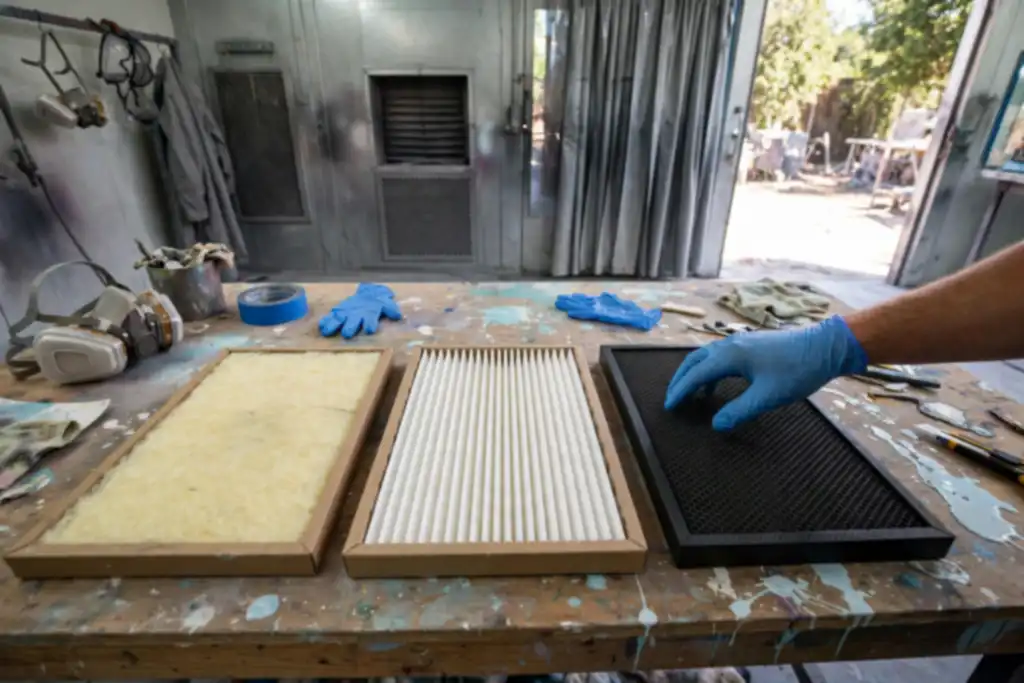

For most booth setups, a fiberglass exhaust filter with a MERV 8 to 13 rating is the safe, practical choice. Upgrade to a higher-efficiency or specialty filter only if your paint type, airflow, or local safety rules demand it.
What is the one choice that protects your lungs, your finish, and your booth all at once? Learning how to choose a filter in a paint spray booth means matching the filter to your paint type, airflow, and safety needs so you get it right the first time.
You will get clear guidance on filter types, ratings like MERV, and placement for intake and exhaust. We focus on avoiding common mistakes that compromise safety or ruin a finish, so your booth maintenance and filter replacement routine becomes straightforward.
- Match filter type to paint: fiberglass for most, polyester for waterborne.
- Check MERV rating; 8 to 13 suits most booth exhaust setups.
- Verify airflow compatibility to avoid pressure drop.
- Place intake and exhaust filters correctly for safety.
- Replace filters on schedule to maintain efficiency.
How to Choose a Filter in a Paint Spray Booth: a Decision Table Based on Airflow and Paint Type
Match the filter to what your booth actually moves and what you actually spray. Get those two right and the rest of the decision falls into place.
| Your situation | Best option | Why |
|---|---|---|
| Low-airflow hobby booth, waterborne paint | Polyester intake pad, mid MERV range | Catches dust without choking weak airflow |
| Low-airflow booth, solvent paint | Fiberglass exhaust filter, coarse to mid rating | Handles overspray load with low pressure drop |
| High-airflow production booth, any coating | Pleated intake plus graded exhaust pads | Staged capture keeps airflow steady |
| Waterborne paint, any booth | Synthetic media rated for moisture | Wet overspray won't collapse the pad |
| Solvent or enamel spraying | Fiberglass exhaust filter, higher rating | Tacky overspray needs denser capture |
| Visible paint drift past the filter | Step up one filter rating | Undersized capture means breakthrough |
| Filters loading fast, airflow dropping | Check pad depth and change schedule | Right pad, wrong maintenance interval |
Recommended for this job
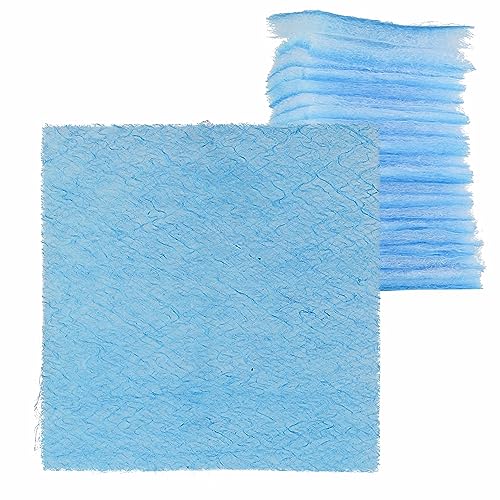
Master Elite Paint Spray Booth Exhaust
Compare 18-gram fiberglass arrestor weight to match overspray volume in your booth.

AUC Paint Booth Exhaust Filters
Check actual dimensions and 15-gram weight when sizing exhaust filter fit.

FilterAUC Paint Spray Booth Tacky Intake
Consider tacky intake pads separately to capture dust before exhaust filtration.
What Airflow and Paint Type Tell You About Filter Selection
Measure your fan’s rated CFM, then check the filter’s pressure drop at that flow. A fiberglass filter pad runs about 0.05 to 0.15 inches water gauge; a high-efficiency pad can add 0.3 or more and starve a weak fan.
Solvent-based paints throw sticky overspray, so use a tacky polyester exhaust filter rated MERV 8 to 13. Waterborne coatings shed drier particles, so a plain fiberglass filter at MERV 8 to 13 usually holds them.
Quick-Reference Table: Match Filter to Booth Airflow and Coating
Shortlist your paint spray booth filter by fan CFM first, then paint type, then confirm against the manufacturer’s airflow spec sheet.
A paint spray booth filter is a medium that captures overspray, dust, and fumes to protect the booth, environment, and operator.
- Under 1,000 CFM: low-density fiberglass, MERV 6 to 8
- 1,000 to 3,000 CFM: polyester pad, MERV 8 to 11
- Above 3,000 CFM: pleated or bag exhaust filter, MERV 11 to 13
Why This Rule Simplifies the Choice
Airflow decides the filter rating; paint type decides the media. That two-step order stops you from overspending on a dense pad your fan can’t pull through.
Swap intake and exhaust filter pads every 40 to 60 spray hours, and write the date on each pad so booth maintenance stays on schedule.
Intake Filters: the First Line of Defense
What It Is
An intake filter is the pad that cleans air entering your booth, catching dust and particles before they reach wet paint. It sits in the plenum or ceiling grid and works with your exhaust filter to keep the system balanced. For example, a 20×20 inch fiberglass filter in a ceiling grid stops coarse dust from settling on fresh paint.
Most intake pads are fiberglass or polyester. Fiberglass is cheap and handles coarse dust; polyester lasts longer and holds finer particles. Cardboard frames hold the media in place and are common on ceiling and floor grids. Choose a filter pad with a MERV rating of 8 to 13 for intake duty, depending on your paint type and finish requirements.
Best for
Intake pads suit the upstream side of any downdraft or crossdraft booth where you need clean incoming air without choking airflow. They are the right pick for homeowners and artists running smaller booths, and for car painters who want a clean finish on a budget. For instance, a crossdraft booth with a 24×24 inch grid works well with a MERV 8 fiberglass filter.
Match the filter rating to your booth. A MERV 8 to MERV 13 pad is typical for intake duty, depending on paint type and how fine your finish must be. If you spray solvent-based paints, go with a higher MERV to capture finer overspray particles.
Pros and Cons
- Pros: Low cost (typically $5 to $15 per pad), easy to swap, protects the exhaust filter and keeps overspray from fouling your booth.
- Cons: Fiberglass sheds fibers, cheap pads load fast, and a wrong rating starves airflow. A MERV 13 pad on a low-CFM booth can reduce airflow by 20 to 30 percent.
Size and count matter. Measure the grid opening, multiply length by width for each pad, then count slots. Buy a few spares so booth maintenance never waits on a shipment. Replace intake filters every 20 to 50 hours of spraying, or sooner if you see visible loading.
Exhaust Filters: Trapping Overspray Before It Escapes
What It Is
The pad that catches overspray (airborne paint landing where you don’t want it) before it leaves the booth is an exhaust filter. It sits in the exhaust wall or floor plenum and loads up so your fan and ductwork stay clean.
Most setups use a fiberglass filter or cardboard-style exhaust filter. Match the filter rating to your coating: high-solids and clear coats clog pads faster than lacquers.
Best for
Exhaust pads suit any booth where air exits through a filtered wall, which covers most crossdraft and downdraft builds. Choose a coarse fiberglass filter for heavy overspray and a finer pad when finish quality matters.
Check the MERV number, which rates how well a filter captures particles, and the micron rating if the maker lists it. Higher efficiency means more capture but more pressure drop.
Pros and Cons
- Pros: Cheap, easy to swap, protects the fan and keeps neighbors happy. A fresh pad keeps airflow steady.
- Cons: Loads fast, so check it every few spray sessions. A clogged pad starves airflow and pushes fumes back at you.
Track filter replacement on a schedule tied to paint type and hours sprayed. Safety depends on it.
Filter replacement is the scheduled swapping of spent intake and exhaust pads so airflow, capture, and safety stay steady.
Ceiling Filters: Clean Air from Above
What It Is
A ceiling filter is the intake pad mounted in the booth ceiling that cleans the air coming in before it reaches your wet paint. It usually comes as a fiberglass filter pad or a polyester media, held in a frame above the workspace.
This pad protects your finish first. Dust and debris that slip past it land on wet paint, and that means sanding and rework. It also keeps your exhaust filter from loading up too fast.
Best for
Ceiling intake pads suit any downdraft or crossdraft booth where incoming air must be clean. They are the right call for automotive refinishing, cabinet work, and any job where a dust-free finish matters.
Match the pad to your airflow and paint type. A coarse pad on a high-airflow booth lets particles through; too fine a pad starves the fan and throws off your balance. Check the filter rating (MERV or micron) against what your booth was designed to pull.
Pros and Cons
- Pros: Cheap protection for expensive work, easy to inspect, quick to swap.
- Cons: Clogs quietly and cuts airflow, so track booth maintenance and replace on schedule, typically every 40 to 60 hours of spraying depending on paint volume.
Buy a few spares and change them before the pad looks loaded. Your safety and your finish both depend on steady airflow.
Floor Filters: Managing Overspray and Debris
What It Is
Laid across the booth floor (or in a floor grate) to catch paint solids before they reach the exhaust is a floor filter, a filter pad. Air moves down and out, so this pad takes the heaviest overspray load, meaning the airborne paint that lands where you did not aim it.
Most floor media is cardboard or fiberglass. Cardboard is cheap and rigid; fiberglass is more absorbent and holds more solids per square foot.
Best for
Down-draft and semi-down-draft booths benefit most, since their airflow pulls paint toward the floor by design. If your booth vents through the floor, this is not optional.
Choose fiberglass when you spray high-solids or heavy volume, and cardboard for light touch-up work. Match the pad’s filter rating to your blower so you do not choke airflow.
Pros and Cons
- Pros: Protects the exhaust filter and ductwork, easy to swap, cheap insurance.
- Cons: Saturates fast, and a loaded pad restricts airflow and raises safety risk.
Check it before every session. Replace when you see visible buildup or the surface stays tacky, typically every few spray cycles or 1 to 3 weeks of regular use. Keep spares on the shelf so booth maintenance never waits.
Cardboard Filters: Eco-Friendly and Cost-Effective
What It Is
Trapping overspray, the airborne paint that lands where you did not aim it, before it reaches your exhaust is a cardboard filter pad, a rigid, pleated media. These pads typically combine cardboard framing with a fiberglass or polyester facing, so you get structure plus capture in one unit.
Unlike loose fiberglass filter rolls, cardboard pads slide into a frame and hold their shape under airflow. That makes them a practical choice for exhaust filter positions in smaller booths.
Best for
Cardboard pads suit low to medium overspray loads, such as hobby booths, spot repairs, and waterborne or latex paint jobs. They work well as a first-stage exhaust filter ahead of a finer final filter.
Skip them for heavy solvent-based production spraying, where a high-capacity fiberglass filter pad holds up longer between changes.
Pros and Cons
- Pros: Low cost, often a few dollars per pad, and easy disposal since many are designed to be incinerated or landfilled after use.
- Cons: Lower holding capacity than fiberglass, so filter replacement comes sooner under heavy paint type loads.
- Budget note: Track cost per change, not cost per pad. A cheap pad changed twice as often can cost more than a pricier fiberglass filter.
Check your local disposal rules for paint-soaked media before you toss it. Some areas classify used overspray filters as hazardous waste.
What Do Spray Booth Filters Really Cost?
Filter costs split into what you pay at the counter and what the wrong pad quietly takes from your power bill and finish quality. Here is the realistic range, plus the costs most buyers miss.
| Option | Upfront cost | Ongoing cost | Notes |
|---|---|---|---|
| Fiberglass pad (intake) | $1 to $4 each | Low, frequent swaps | Cheap, coarse, poor fine dust capture |
| Polyester pad (intake) | $3 to $10 each | Moderate | Better efficiency, holds shape longer |
| Pleated intake filter | $10 to $30 each | Moderate, less frequent | Higher MERV, more airflow resistance |
| Cardboard exhaust filter | $5 to $15 each | Low to moderate | Standard overspray catch, check rating |
| Fiberglass exhaust media roll | $20 to $60 per roll | Low per pad | Cut to size, watch overspray saturation |
| Carbon or VOC media | $25 to $80 per set | High | Fumes only, not a dust filter |
| Full booth filter kit | $50 to $200 per change | Predictable | Matches intake and exhaust together |
Ranges reflect typical US retail pricing for common pad sizes and assume a hobby to small professional booth changed every 20 to 60 hours of spraying. Energy and downtime figures depend on your blower, filter rating, and paint type.
Typical Price Ranges for Common Filter Types
Expect $1 to $4 for a basic fiberglass pad and $10 to $30 for a pleated intake with a higher filter rating. Exhaust media and kits run $50 to $200 per full change. Cheap pads cost less upfront but load faster.
Hidden Costs: Energy, Downtime, and Finish Defects
A clogged or mismatched pad strains your blower, raising energy use and cutting airflow. That means slower clearing, more overspray settling on fresh paint, and rework. The wrong filter rating can also let fine dust through, and each defect costs paint and hours.
Budgeting for Replacement Cycles
Plan filter replacement by spraying hours, not calendar dates. Track pressure drop or visible loading, then buy in bulk to cut per-pad cost. Set aside roughly 10 to 20 percent of your paint budget for booth maintenance so safety and finish quality never slip.
How Weather and Climate Affect Filter Choice
Humidity and Filter Performance
High humidity softens fiberglass filter pads and can swell cardboard frames, so they sag and let overspray (airborne paint landing where you don’t want it) slip past the edges. In damp climates, choose a synthetic or polyester pad that holds its shape and check the fit weekly.
Moisture also raises pressure drop across the pad, which starves your airflow. Watch the gauge and swap pads sooner than the label suggests when the air feels heavy.
Temperature Effects on Paint and Filtration
Cold air thickens paint and stiffens filter media, so overspray sticks to the surface instead of loading evenly. Below roughly 60°F, expect faster pressure drop and plan on shorter filter replacement intervals.
Heat works the other way: thin paint travels deeper into the pad, so a higher filter rating or a tackified exhaust filter catches more. Match your intake filter and exhaust filter to the temperature you actually spray at, not the shop’s best day.
Seasonal Maintenance Adjustments
Your booth maintenance schedule should shift with the seasons, not stay fixed year round. In humid summers, inspect pads every few days; in dry winters, static pulls dust, so vacuum intake filters more often.
Log pressure drop weekly and replace when it climbs about 0.5 inches of water above baseline, a typical trigger for most pads. That habit keeps airflow steady and safety intact.
Pre-Flight Checklist: Before You Buy a Filter
Verify Booth Airflow and Pressure Drop
Match the filter rating to your booth’s fan capacity so airflow stays strong. A filter too dense chokes the fan and slows capture of overspray, the airborne paint that lands where you don’t want it. Check your booth manual for the recommended pressure drop range.
Confirm Paint Type and Compatibility
Your coating decides the filter. Solvent-based paints and high solids need different media than waterborne or powder. Confirm the pad won’t shed fibers onto wet surfaces and works with your spray gun setup.
Check Safety and Regulatory Requirements
Follow OSHA and NFPA guidance for booth ventilation and fire safety. The wrong filter can clog fast, raise fumes, and create a fire risk. Keep documentation for inspections and filter replacement.
- Airflow check: confirm fan capacity and the manual’s pressure drop range before buying.
- Paint match: verify the pad suits your coating, solvent or waterborne.
- Gun compatibility: make sure the filter won’t shed fibers onto wet paint.
- OSHA and NFPA: follow ventilation and fire safety rules for your booth.
- Rating sense: pick a MERV level that captures overspray without choking airflow.
- Replacement plan: note typical change intervals, often weekly to monthly in busy booths.
Common Mistakes in Filter Selection (and How to Avoid Them)
Using the Wrong MERV Rating for Your Booth
Your paint type should determine the filter rating, not the other way around. A MERV rating tells you how well a filter catches particles, and overshooting it on a standard booth chokes airflow and overheats the fan.
Ignoring Pressure Drop and Airflow
Every filter pad adds resistance, and stacking mismatched layers kills your exhaust. Check the gauge before and after a change so you catch a sagging airflow early.
Skipping Maintenance and Replacement Schedules
Loaded filters stop capturing overspray and start passing it through. Log your filter replacement dates and swap intake and exhaust media on a set interval.
- Match MERV to paint type: a too-high rating starves airflow and strains the fan.
- Check pressure drop: read the gauge before and after every filter change.
- Replace intake and exhaust media on a logged schedule, not when you remember.
- Troubleshoot weak airflow by checking for clogged or mismatched filter pads first.
- Keep spare fiberglass filters on hand so a swap never waits.
- Watch for overspray passing through: it means the filter is spent.
When to Call a Pro for Filter Selection
Warning Signs You Need Expert Help
Stop and call a pro if your booth’s airflow drops noticeably after a filter change, if overspray (airborne paint landing where you don’t want it) coats the walls or floor, or if you smell solvent outside the booth. These point to a mismatched filter rating or a failing exhaust filter.
Safety First: Fire Risk and Toxic Exposure
Wrong filter media can raise fire risk and boost your exposure to toxic fumes. A filter pad that loads too fast or clogs restricts airflow, letting solvent vapors build up. If you feel headaches, dizziness, or eye irritation while spraying, shut down and get professional advice before you keep painting.
Professional Testing and Upgrades
An expert can measure airflow and pressure drop to confirm your filter setup actually works. They’ll also recommend upgrades, like higher-efficiency intake filters or a better-matched exhaust filter, that improve booth maintenance and safety without choking airflow. Typical testing runs a few hundred dollars, depending on booth size.
Stop and call a professional if:
- Call a professional if you smell solvent outside the booth or overspray coats the walls and floor.
- Shut down and get expert help if you feel headaches, dizziness, or eye irritation while spraying.
- Bring in an expert if your filter rating doesn't match your paint type or booth airflow specs.
- Call a pro before upgrading filters if you can't confirm pressure drop and airflow stay within safe limits.
How to Choose a Filter in a Paint Spray Booth: Frequently Asked Questions
?What Filter Rating Should I Choose for a Paint Spray Booth Filter?
Match the filter rating to your paint type and airflow, not to the highest MERV you can find. MERV is a rating of how well a filter captures particles. For most solvent and waterborne overspray, a mid-range exhaust filter pad traps paint solids without choking airflow. Too high a rating starves the booth and pushes overspray past the filter.
?How to Choose a Filter in a Paint Spray Booth If I Spray Different Paint Types?
Choose based on the heaviest overspray you produce, then verify airflow stays within the booth's spec. Overspray is airborne paint landing where you don't want it. Sticky, high-solids paints need denser fiberglass or polyester pads; light coatings can use cheaper pads. When in doubt, step up one grade on the exhaust side and check the gauge.
?Can I Choose One Filter Type for Both Intake and Exhaust in a Paint Spray Booth?
No, intake and exhaust filters do different jobs and should be chosen separately. The intake filter cleans incoming air and protects the booth and your finish; the exhaust filter catches overspray before it leaves. Using exhaust-style pads on the intake can reduce airflow, so pick each for its role.
?How Does Airflow Affect How to Choose a Filter in a Paint Spray Booth?
Airflow decides everything: the filter must pass enough air to keep the booth under negative pressure while still catching overspray. Check your booth's rated cubic feet per minute and pick a filter pad with matching resistance. If airflow drops after install, the filter is too dense. Measure with a gauge, don't guess.
?Why Does Paint Type Matter When I Choose a Filter for a Spray Booth?
Paint type sets the particle size and stickiness of the overspray, which determines what the filter must catch. Enamels and high-solids coatings load filters fast and need denser media; lacquers and thin stains pass through coarser pads. Choosing for the wrong paint means clogged filters, poor finish, and more booth maintenance.
?When Should I Replace the Paint Spray Booth Filter to Stay Safe?
Replace it when the pressure gauge shows a set rise above baseline, or at the manufacturer's interval, whichever comes first. A loaded filter cuts airflow, lets overspray escape, and raises fire and health risk. Keep a log, check daily, and never wait for visible paint buildup as your only signal.
?is How to Choose a Filter in a Paint Spray Booth Different for a Home Setup?
Yes, home booths need the same logic with more caution: choose a filter that matches your fan's real airflow and your paint type, and confirm the rating suits your exhaust setup. Don't oversize the filter for a small fan, and vent safely. If fumes or overspray escape, stop and call a pro.
Conclusion
Match the filter to your paint type and airflow, not to whatever is on sale. A fiberglass pad rated MERV 8 to 13 handles most water-based jobs and keeps costs sane, while solvent paints and tight safety rules call for polyester or carbon. Get the rating wrong and you either choke airflow or let overspray, that airborne paint landing where you don’t want it, drift past.
Next step: check your booth manual for the specified filter rating and pad size, then buy a spare set so replacement never waits on a shipment.
Sources and further reading: guidance from OSHA, NFPA, EPA.