
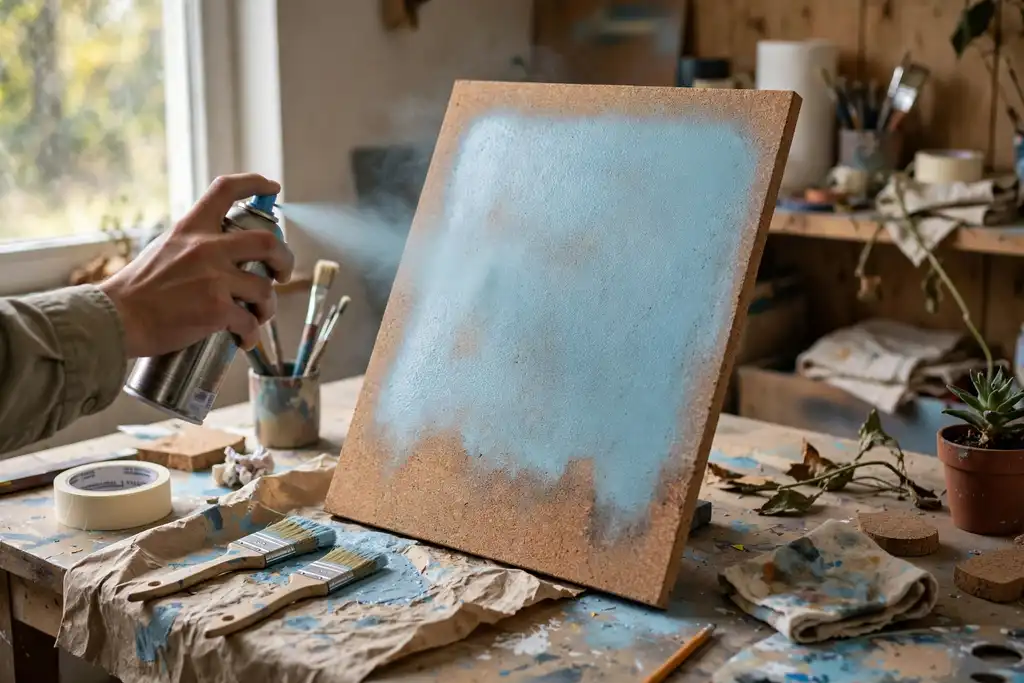

Yes, you can spray paint a cork board, but only if you seal the porous cork surface first, or the paint will soak in unevenly and flake off.
Here is a clear, practical look at can you spray paint a cork board.
You have probably heard that spray paint will just soak into a cork board and ruin it. The truth is that with the right prep, it can work well, but skipping steps leads to peeling and blotchy color. So, can you spray paint a cork board? Yes, but you need to control the cork surface first.
This article gives you the safety basics and the mistakes to avoid so you get a finish that sticks the first time. You will learn how to prep the cork surface, use primer to improve adhesion, protect the frame with painter’s tape, and choose a sealant for durability. We also cover ventilation, drying time, and coverage so your project stays safe and successful.
Can You Spray Paint a Cork Board? Yes, but Read This First
Yes, you can spray paint a cork board, but cork is porous and absorbs paint unevenly, so a primer and the right technique decide whether it looks good or blotchy.
| Situation | What it means | What to do |
|---|---|---|
| Bare cork, no primer | Paint soaks in unevenly | Apply primer first |
| Cork with old finish or grime | Poor adhesion, peeling | Sand lightly, wipe clean |
| Frame left unmasked | Overspray on trim or wall | Use painter's tape and drop cloth |
| Spraying indoors, no airflow | Fumes build up fast | Work outside or ventilate well |
| Thin single coat | Patchy, see-through color | Build 2 to 3 light coats |
| Coats applied too fast | Tacky, runs, longer drying time | Respect recoat window on label |
| Painted board in heavy use | Surface scuffs and wears | Add a compatible sealant |
Recommended for this job

Krylon COLORmaxx Spray Paint and Primer
Gloss spray paint bonds to cork, giving a smooth colored finish.

Rust-Oleum Chalkboard Spray Paint
Chalkboard spray turns cork into a writable, erasable black surface.

Rust-Oleum Painter's Touch 2X Ultra Cover
Flat white primer prepares cork for even topcoat adhesion and coverage.
The Short Answer: It Works, with Caveats
Yes, you can spray paint a cork board to recolor the cork and frame. But cork is porous, so paint alone dries patchy and thin. Use a primer first for a consistent base and better adhesion, preventing flaking.
What Changes When You Spray Paint Cork
Cork absorbs paint like a sponge, so coverage takes more product. Apply light coats, building color gradually and checking drying time between passes. Mask frame edges with painter’s tape, lay a drop cloth, wear a dust mask, and spray outside or with strong ventilation per OSHA guidance. Lightly scuff glossy or sealed cork so paint can bite. For daily-use boards, finish with a compatible sealant.
Drying time is the period you must wait before applying another coat or handling the painted surface.
A dust mask is a face covering worn while spraying to keep paint mist and dust out of your lungs.
A drop cloth is a protective sheet laid under the board to catch overspray and keep paint off floors and furniture.
Is It Worth the Effort?
For most people, yes, if the board is plain cork and you want a color change. Skip boards with sentimental value or heavy daily pinning, where wear shows fast. Budget roughly 1 to 3 hours plus drying time and a few cans depending on size. Done right once, it saves a repaint.
Can I Spray Paint a Corkboard? (Same Question, Different Spelling)
Corkboard vs. Cork Board: No Difference for Painting
Yes, you can spray paint a cork board, and the one-word or two-word spelling changes nothing. The cork surface and the process stay identical either way.
Cork is porous and soft, so aerosol paint soaks in instead of sitting on top like it would on wood or metal. Expect two to three thin coats for even coverage, not one heavy pass.
What You Need to Know Before You Start
Spray paint bonds to cork only with proper prep. A primer (a preparatory coating applied before paint) fills the open pores and gives the color something to grip, which improves adhesion, the bond between paint and cork.
Scuff the cork surface with 220-grit sandpaper to knock down fuzz, then wipe away dust with a tack cloth. Mask the frame (the decorative edging) with painter’s tape, removable pressure-sensitive tape, and lay a drop cloth to catch overspray.
- Work outdoors or in a garage with cross-ventilation, and wear an N95 dust mask.
- Apply thin coats and respect the label’s drying time between them, often 15 to 30 minutes per coat.
- Finish with a clear sealant (a coating that blocks moisture) so pins and thumbtacks do not chip the paint.
How Spray Paint Changes Cork's Texture and Pin-Holding Ability
Will Pins Still Stick After Painting?
Grip does drop noticeably, though.
How Many Coats Before Cork Gets Too Hard?
Two thin coats are the practical ceiling for usable cork. A third coat usually pushes the surface past the point where pins bite in reliably, as each layer fills the natural pores pins rely on. Keep coats under 1 mil thickness each, measured with a wet film gauge if you want precision. For a deep color shift, tint a light coat rather than stacking heavy ones.
- One coat: color change with most texture intact
- Two coats: solid coverage, moderate grip loss
- Three or more: hard, sealed surface with poor pin hold
Testing Pin Grip on a Scrap Piece
Test before committing to the whole board. Apply your planned primer and coats to a scrap of cork, let it cure fully, then push in a few pins. Follow the label drying time, typically 24 to 48 hours for full cure, since soft paint grabs pins and smears. Check grip with a weighted pin overnight; if it sags, add a thin sealant only if you accept reduced hold, or keep the board for lightweight use.
When Spray Painting a Cork Board Doesn't Work (and What to Do Instead)
Heavily Damaged or Crumbling Cork
Skip the aerosol route if the cork surface crumbles when you press a thumbtack into it. Paint adds weight and tension, and failing cork just sheds it. Replace the cork sheet instead, or you get a finish that flakes off within weeks.
Boards with a Delicate or Valuable Frame
Mask a fragile or antique frame with painter’s tape and paper rather than spraying near it. Overspray drifts farther than most people expect, and solvent can dull a finish you cannot restore. If the frame is the valuable part, remove the cork and paint it separately.
When You Need Maximum Pin Grip
Painted cork grips pins less aggressively than bare cork, because the coating fills the pores that give you bite. A light coat keeps most of the hold; heavy coverage turns the board slick. Test one hidden corner before committing to the whole face.
When Brush-On Paint or Fabric is a Better Choice
Brush-on paint gives you control near edges and works well on small boards where aerosol coverage is overkill. Stretched fabric is the cleaner option when you want a pattern or a softer look, and it leaves the cork intact underneath. Both avoid the ventilation and overspray demands of spray paint.
Caring for a Painted Cork Board so It Lasts
Cleaning Without Ruining the Finish
Dust with a dry microfiber cloth before anything wet touches the surface. For smudges, wipe gently with a barely damp cloth and mild soap, then dry immediately. Skip solvents and abrasive cleaners, since they cut through paint and weaken adhesion.
Keep the board out of steamy rooms and direct sun, both of which shorten the finish’s life.
Touching up Scuffs and Pin Holes
Small scuffs and pin holes are normal wear, so fix them early before moisture gets under the paint. Lightly scuff the spot with fine sandpaper, wipe off the dust, and apply a thin coat of the same spray paint.
Pin holes fill best with a dab of matching paint applied with a small brush. Let it cure fully before pressing pins back in, and expect typical drying time of 1 to 2 hours between coats.
When to Re-Seal or Repaint
Reapply a clear sealant every year or two, or sooner if the cork surface feels chalky or sheds color on your fingers. A fresh coat of sealant restores protection and keeps the finish wipeable.
Repaint once touch-ups stop blending in or the frame shows chips. Tape off the frame with painter’s tape, lay a drop cloth, and work in a ventilated space with a dust mask. Full recoat is a weekend job, and reusing a painted cork board is fine once the paint has cured.
How to Spray Paint a Cork Board: Step-by-Step
Follow these steps to get a smooth, durable finish on your cork board without damaging the cork.
Clean and Sand the Cork Surface
Start by vacuuming loose dust, then wipe the cork surface with a barely damp cloth and let it dry. Lightly scuff it with 220-grit sandpaper to improve adhesion, then dust again.
Prime for Better Adhesion
A thin coat of primer helps paint stick and blocks the cork from soaking up too much. Choose a primer made for porous surfaces and let it dry fully.
Choose the Right Spray Paint
Pick a spray paint labeled for cork or porous materials, such as an enamel or acrylic formula. Avoid glossy finishes if you plan to pin items often.
Apply Thin Coats in a Well-Ventilated Area
Work outdoors or in a garage with the door open, and wear a dust mask. Hold the can 8 to 10 inches away and spray thin, even coats, letting each dry 15 to 30 minutes.
Let It Dry and Cure Fully
Wait at least 24 hours before using the board. For extra protection, apply a clear sealant made for cork and let it cure completely.
Follow these steps to get a smooth, durable finish on your cork board without damaging the cork.
From Drab to Fab: a Real-Life Cork Board Makeover
Assessing the Board and Gathering Supplies
Check the board’s condition; replace crumbling or heavily stained cork. For a sound board, gather spray paint, primer, painter’s tape, a drop cloth, dust mask, and fine sandpaper. Work outdoors or in a ventilated garage, following the label’s guidance. Budget roughly $15, $35.
Prepping and Painting the Cork and Frame
Lightly sand the cork and frame, wipe off dust, and tape off unpainted areas. Apply a thin primer coat and let it dry (usually 30-60 minutes). Spray in light, sweeping passes from 8-10 inches away; two or three thin coats beat one heavy coat for even coverage and adhesion.
Drying, Sealing, and Hanging
Let the board cure 24-48 hours before hanging to avoid smudges and peeling. A clear sealant adds durability, especially on the frame. Hang only when completely dry and free of solvent smell.
The Final Result: Pin Grip Test
Painted cork holds pins less firmly than bare cork. Test with thumbtacks before loading; if pins slip, add a second thin coat or use wider-headed pushpins.
When Spray Painting a Cork Board Works Best
Ideal Cork and Frame Conditions
Spray paint bonds best to cork that is clean, dry, and free of loose material. Wipe with a damp cloth and let it dry fully. If glossy or peeling, scuff lightly with fine sandpaper for grip.
Old paint is fine if fully cured, not chalking, and stuck tight. Test a hidden spot, then apply a surface primer to lock adhesion.
Best Weather and Temperature for Spray Painting
Spray paint works best between roughly 50 and 90°F with low humidity. Cold slows curing; damp air leaves a hazy, weak finish. Check the can label for the manufacturer’s range.
Work outdoors or in a garage with the door open. Wear a dust mask and ensure strong ventilation; OSHA advises staying upwind. Avoid windy days that blow paint off target and add grit.
When You Want a Quick Color Refresh
A quick color change is where spray paint earns its keep. One or two light coats cover cork fast, with 15-30 minutes between coats. Mask the frame with painter’s tape and use a drop cloth for overspray.
Use a sealant for heavy-use boards, since pins and daily wear dull an unsealed finish. Skip spray if the board is crumbling or badly warped; coverage won’t fix structural damage.
Your Action Plan: Spray Paint or Replace?
Yes, you can spray paint a cork board, but do it right or you will get flaking paint and a ruined surface. The plan below keeps your project cheap, safe, and done in one pass.
| Action | Why it helps | How to start |
|---|---|---|
| Compare total cost | Paint plus supplies vs. new board | Add up spray paint, primer, tape, sealant |
| Check cork condition | Crumbly cork will not hold paint | Press a thumb into the surface |
| Test adhesion | Reveals peeling before full coverage | Spray a hidden corner, wait a day |
| Pick brush-on paint | Better for small boards and tight frames | Use a foam roller for even coverage |
| Try fabric wrap | No fumes, reversible, soft look | Staple fabric around the back edge |
| Set up ventilation | Keeps fumes out of your lungs | Work outdoors or use a fan and open windows |
| Mask the frame | Protects edges you want to keep | Run painter's tape along the inner border |
Calculate the Cost: Spray Painting vs. Buying New
Usually, spray painting costs less than a new board, often in the $15 to $40 range once you add primer and sealant.
Assess Your Board’s Condition and Your Needs
Healthy cork takes paint well; crumbling or stained cork will not. Press a thumb in: if it dents and springs back, it is sound. If it flakes, replace it. Also check the frame for cracks before you commit.
Choose Your Method and Get Started
Spray paint gives fast, even coverage on larger boards. Brush-on paint suits small boards and tight frames, and fabric wrap is a no-fume alternative. Whichever you pick, work in good ventilation with a dust mask, lay a drop cloth, mask the frame with painter’s tape, and scuff the cork surface lightly with fine sandpaper for better adhesion. Apply primer, then thin coats, and allow full drying time between passes. Finish with a sealant to lock the color and reduce shedding.
Best Spray Paint Brands for Cork (and How to Pick)
Top Brands for Adhesion and Coverage
Rust-Oleum and Krylon are the most reliable for cork boards, offering general-purpose enamel sprays that bite into porous cork and coat evenly. Choose cans labeled for wood or craft surfaces; avoid vague bargain cans whose weak binders flake off within weeks.
- Rust-Oleum Painter’s Touch 2X: solid coverage, forgiving on uneven cork
- Krylon Fusion All-In-One: bonds well to cork and frame, often without primer
- Montana Gold or MTN 94: artist-grade pigments for bold color on smaller boards
Matte vs. Gloss: Which Finish Works Best on Cork?
Matte or satin wins for most boards. Gloss reflects light, shows bumps, and turns slippery under pushpins, save it for the frame. Matte hides touch-ups and looks like cork, though flat matte scuffs faster; satin is the safer middle ground.
Specialty Paints for High-Use Boards
For daily pinning, use epoxy or appliance-grade enamel plus a clear sealant topcoat. These cost $12, $20 per can but resist chipping far better. Apply light coats and respect full drying time, often 24 hours, since skipping it is the top cause of peeling around pins.
Common Mistakes When Spray Painting a Cork Board
Skipping Primer and Sanding
Bare cork drinks paint unevenly, so a light scuff with sandpaper and a thin coat of primer give the spray paint something to grab. Skipping either step shows up later as patchy adhesion and peeling corners.
Spraying Too Thick and Causing Drips
Two or three light passes beat one heavy coat every time. Hold the can 8 to 10 inches away, keep moving, and let each pass flash off before adding more to avoid runs.
Painting Indoors Without Ventilation
Aerosol fumes build fast in a closed room, so move outside or into a garage with the door open. Wear a dust mask and lay a drop cloth, and follow the manufacturer’s safety directions on the can.
Not Allowing Full Cure Before Hanging
Dry to the touch is not cured. Wait the full drying time on the label, often 24 hours, before hanging anything, or pushpins will mar the finish. Tape off the frame with painter’s tape first, and add a sealant if you want extra durability.
- Scuff the cork surface with sandpaper and apply a thin primer coat for better adhesion.
- Use two or three light passes instead of one heavy coat to prevent drips.
- Spray outdoors or with strong ventilation and wear a dust mask.
- Lay a drop cloth and tape off the frame with painter's tape before spraying.
- Let the board cure for the full drying time, often 24 hours, before hanging.
- Troubleshoot uneven coverage with another light pass rather than a wet soak.
- Add a sealant after curing if the board gets heavy use.
When to Call a Pro (or Skip the DIY Altogether)
Valuable or Antique Frames
Stop if the frame is antique, carved, or worth real money. Spray paint can cut its value and is hard to reverse on ornate wood. Sell or reframe it instead, or hire a pro who restores finishes.
Structural Damage or Mold
Skip painting if the cork surface is crumbling, warped, or showing mold. Paint won’t fix weak adhesion or rot, and mold spreads. Toss it or call a mold pro before you touch a spray can.
Health Concerns with Fumes
Call it off if you can’t get strong ventilation or you have asthma or other breathing issues. A dust mask won’t stop solvent vapors; OSHA and the EPA both say to spray outdoors or in a fan-vented space. Otherwise, hire a pro with proper gear.
When Replacing is Safer and Cheaper
Do the math first. Primer, spray paint, sealant, painter’s tape, and a drop cloth often run $30 to $60, close to a basic new board. If the board is small or damaged, buying new is the safer, cheaper call.
Stop and call a professional if:
- Do the math first and compare supply costs to a new board.
Can You Spray Paint a Cork Board: Frequently Asked Questions
?Can You Spray Paint a Cork Board Without Sanding It First?
Yes, but only if the cork surface is already clean and smooth. Sandpaper is an abrasive material used for smoothing softer materials, so a light pass over rough or shiny spots gives the spray paint something to grip. Skip sanding on a glossy or sealed board and adhesion will fail. Wipe off dust before you spray.
?Does Spray Paint Peel off a Cork Board Over Time?
It can if you skip prep or spray too thick. Adhesion, which is how well dissimilar surfaces stick together, depends on a clean, lightly sanded cork surface and thin coats. Heavy wet coats dry brittle and flake when pins go in and out. A thin sealant over the finished face helps lock the color down.
?How Can You Spray Paint a Cork Board and Still Pin Things into It?
Keep the coats thin so the cork stays soft enough to take pins. Two or three light passes preserve the texture; flooding the surface fills the pores and makes it hard and crumbly. Let each coat dry fully per the can's drying time before adding the next. Test a hidden corner with a pin first.
?Can You Spray Paint a Cork Board That Has a Metal or Wood Frame?
Yes, but mask the frame first. Painter's tape is removable, tearable pressure-sensitive tape that protects edges, so run it along the frame seam and press it down firmly. Spray the cork surface, pull the tape while the paint is still slightly tacky, and touch up the frame separately if you want a color change there too.
?What Safety Steps Should You Take When You Spray Paint a Cork Board Indoors?
Spray outside or in a garage with the door open. Ventilation matters more than anything else because aerosol fumes build fast in a closed room. Wear a dust mask, lay a drop cloth, a protective sheet for floors and surfaces, and keep the can moving to avoid drips. Never spray near a pilot light or open flame.
?Why Does Spray Paint Crack or Look Blotchy on a Cork Board?
Usually too much paint, too fast, or no primer. Primer is a preparatory coating put on materials before painting, and on cork it evens out absorption so color lays down uniformly. Spray in thin coats from the distance on the can, and let each one flash off. Blotchy patches often mean the cork was dusty or damp.
?When Should You Use a Sealant Over Spray Paint on a Cork Board?
Add a sealant when the board gets heavy use or hangs in a humid spot. A sealant is a substance used to block the passage of fluids through the surface, so it guards against moisture and keeps the color from rubbing off. Use a clear, flexible product and apply it thin so pins still go in.
Our Thoughts
Yes, painting a cork board with spray paint works, but the porous cork surface has to be sealed first. Skip that step and the paint soaks in unevenly, adhesion suffers, and the finish flakes off within months. Sealing also cuts down how much spray paint you need for full coverage.
Your best next step: seal the cork surface, let it cure fully, then spray in thin coats with the frame masked off using painter’s tape. Work in a ventilated space with a dust mask and a drop cloth down, and respect the full drying time between coats.