
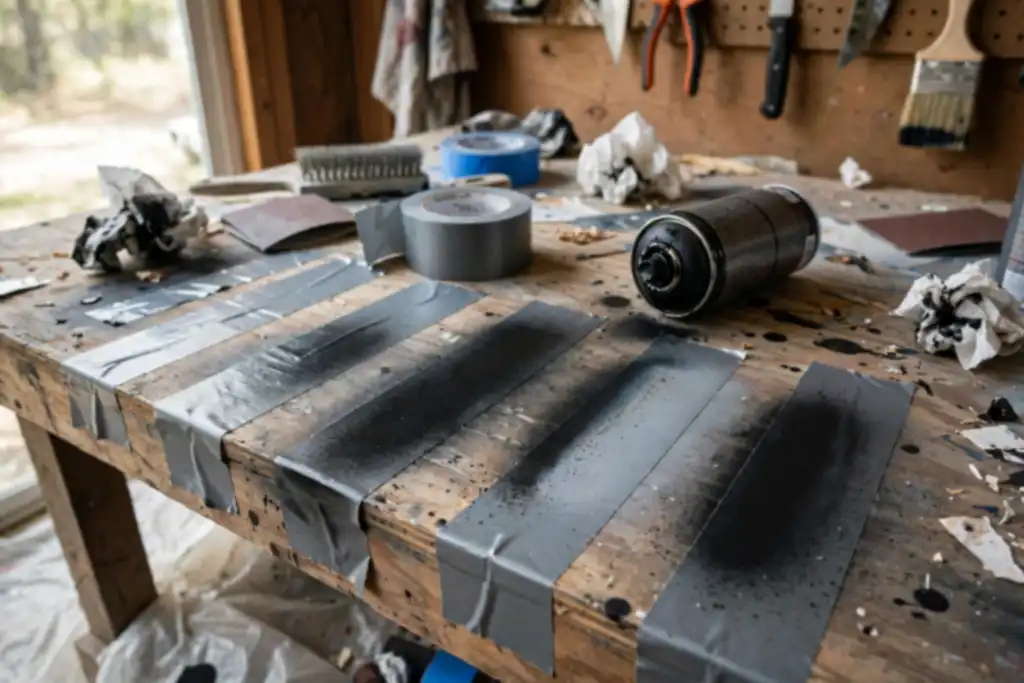
Yes, spray paint sticks to duct tape, but only if you scuff the tape and use a flexible paint, because the tape's slick surface and give cause poor adhesion and cracking.
The most common mistake is spraying straight onto shiny duct tape and expecting a permanent bond. That slick backing and rubber adhesive resist paint, so does spray paint stick to duct tape depends on surface preparation and paint type. You will learn how to avoid peeling, cracking, and sticky residue.
Clean the tape, scuff it lightly, and apply a primer made for plastics. Choose a flexible spray paint, keep temperature and humidity in range, and respect drying time before curing. Always run a test patch first. These steps protect your project from adhesion failure and keep your repair or artwork looking right the first time.
Does Spray Paint Stick to Duct Tape? the Honest Answer
Yes, spray paint can stick to duct tape, but only if you respect what the tape is made of. Skip the prep and you get flaking paint and a gummy mess.
| Situation | What it means | What to do |
|---|---|---|
| Brand-new tape, no prep | Slick backing resists paint | Wipe with mild soap, dry fully |
| Dusty or dirty tape | Poor adhesion, easy peel | Clean and let it dry |
| Flexible joints or curves | Rigid paint cracks | Use flexible paint type |
| Hot or humid workspace | Slow drying, weak bond | Work in moderate conditions |
| No test patch done | Unknown result on your roll | Spray a scrap piece first |
| Bare tape, no primer | Paint sits on top only | Apply primer made for plastics |
| Painting over old tape | Adhesive residue interferes | Remove residue, then recoat |
Recommended for this job

Rust-Oleum Painter's Touch 2X Ultra Cover
Oil-based spray paint bonds well to duct tape's slick plastic surface when applied lightly.

Duck Brand Max Strength Silver Duct
Provides a tough cloth-backed surface that accepts spray paint better than smooth plastics.

Rust-Oleum Painter's Touch 2X Ultra Cover
Primer improves adhesion on duct tape's slick surface before applying color coats.
Spray paint bonds to duct tape only when the surface is clean and the paint can flex with the cloth backing. Treat the tape like any tricky substrate and you avoid rework.
The Short Answer: Yes, but with Conditions
Paint will adhere to duct tape if you clean it, scuff the sheen, and give it enough drying time. Expect a bond that holds for light handling, not heavy wear.
Why the Cloth Backing Changes Everything
Duct tape is a cloth mesh coated in polyethylene, a slick plastic film that resists adhesion. Paint grips the plastic poorly, so surface preparation matters more than on wood or metal.
Flexing is the second problem. The tape bends, and stiff paint cracks along the weave. Choose a flexible paint type and add a primer designed for plastics.
What ‘Sticking’ Actually Means on Duct Tape
Real adhesion means the paint cures without lifting when the tape flexes. Test patch first: spray a scrap, let it cure a day or two, then bend it.
Temperature and humidity also shift results. Work in moderate conditions, keep the roll clean, and wipe off adhesive residue before you coat.
Humidity is the amount of moisture in the air, and high humidity slows drying and weakens the bond between spray paint and duct tape.
Temperature is the physical property that measures how hot or cold the workspace is, and it affects how fast spray paint dries and cures on duct tape.
A Weekend Craft Project, Start to Finish
Friday Night: Taping up a Storage Bin
Spray paint sticks to duct tape, but only as well as the tape’s surface. Wipe tape with a damp cloth and dry fully, dust and oils kill adhesion. Remove sticky adhesive residue at edges. Lightly sand glossy tape, then apply a thin primer for plastic to boost adhesion. Tape off only what you’ll paint and press edges flat.
Saturday Morning: Spraying and Waiting
Spray thin passes, letting each flash off. Check recoat windows (typically 1-2 hours); full curing takes 24-48 hours depending on temperature and humidity. Cool, damp air slows drying time and softens tape grip. Keep the bin dry and above 60°F; avoid handling while tacky.
Sunday: Checking the Finish and Touching up
Press a corner with your thumb; if it lifts, the surface was dirty or coats were too heavy. Scuff, clean, and respray lightly. Run a test patch where flexibility matters, bending cracks rigid coatings. Match paint type to tape and seal edges against moisture.
Three Things People Get Wrong About Painting Duct Tape
Myth: Duct Tape is Just Plastic, so Any Paint Works
Not true. Duct tape is a fabric mesh coated in polyethylene, a slick plastic that resists adhesion, which is the tendency of two different materials to stick together. A basic enamel may bead up or peel. Choose a spray paint labeled for plastic or a flexible paint type, and add a primer made for plastic if the tape will bend.
Myth: You Never Need to Clean Duct Tape First
You do. Factory oils and handling grime sit on the surface, and adhesive residue at the edges kills adhesion fast. Wipe the tape with isopropyl alcohol and let it dry fully. Cleanliness matters more than most people expect, so do a small test patch before committing to the whole project.
Myth: One Thick Coat Beats Several Thin Ones
Thin coats win every time. A heavy pass traps solvent, extends drying time, and cracks as the tape flexes. Apply two to three light coats, respecting the recoat window on the can. Full curing takes longer than touch-dry, often a day or more, and cool temperature or high humidity stretches that out.
Test Adhesion Before You Commit to a Full Coat
Testing adhesion on a small area takes minutes and saves you a ruined project. Do the prep right and you will know within a day whether the coating holds.
Clean the Tape with Isopropyl Alcohol and Let It Dry
Duct tape ships with a slick backing and handling oils that fight adhesion. Wipe it down and give it time to dry fully.
- Wipe the surface with 70 percent isopropyl alcohol on a lint-free cloth.
- Let it dry 5 to 10 minutes before spraying.
Spray a Small Hidden Patch and Wait the Full Cure Time
Dry to the touch is not cured. Curing is the process of hardening into a stable film, and it takes hours.
- Spray a hidden patch with your chosen spray paint from 8 to 10 inches away.
- Wait 24 to 48 hours, the typical label range, before testing.
Try the Tape-Pull and Fingernail Scratch Tests
Two cheap checks tell you if the bond is real. Do both, since one can pass while the other fails.
- Press fresh duct tape onto the patch and pull at 90 degrees.
- Scratch with a fingernail; flaking means weak adhesion.
Decide: Topcoat, Prime, or Switch Tapes
Failed tests mean the paint type and surface do not agree. Pick a fix rather than spraying the whole project.
- Reclean and recoat if the patch passed.
- Add a primer for slick surfaces, or switch to painter’s tape.
Run a quick adhesion check on a scrap of the same duct tape before you spray anything you care about.
Safety First: Fumes, Enclosed Spaces and Duct Tape
Why Duct Tape Plus Solvent Tape Adds up
Solvent-based spray paint releases VOCs while drying, and duct tape traps those vapors against the surface, keeping solvents concentrated where you work. This creates stronger fumes than either product alone.
Ventilation Rules for Garages and Basements
Move air through the space, not just into it. Open a window or door on one side and use a fan to push air out the other so fumes exit instead of pooling. Keep the fan behind you and the exhaust path clear of the wet piece.
- Work within 10 feet of an open exterior door or window when possible.
- Run ventilation for the full drying time and 1 to 2 hours after the last coat.
- Keep flames, pilot lights and sparks out of the airflow path.
Respirator or Open Window? a Simple Call
If you smell solvent strongly within a minute of spraying, ventilation is failing and you need a respirator rated for organic vapors. A cartridge respirator suits basements, small garages or spaces without cross-flow. An open window alone works only for brief touch-ups outdoors or in wide-open rooms.
Check the label for paint type and follow manufacturer ventilation guidance. OSHA sets workplace exposure limits; your home shop deserves the same respect. If headaches or dizziness start, stop, leave the area and let it air out before returning.
When Spray Paint Sticks and Stays Put
Clean, Matte Duct Tape with a Primer Layer
Yes, paint bonds reliably when the tape surface is clean, dull, and primed first. Wipe the tape with isopropyl alcohol and let it dry fully, since dust and oils kill adhesion between dissimilar surfaces.
Apply a thin primer made for plastics or flexible surfaces. This preparatory coating gives the paint something to grip, and it seals the tape’s slick backing so color lays down evenly instead of beading.
- Let primer dry per the can, typically 30 minutes to 2 hours.
- Build two light coats rather than one heavy pass.
Flexible Paints on Craft Projects That Won’t Bend Much
Choose a flexible paint type, such as a latex or enamel labeled for plastic, and keep the taped area mostly flat. Rigid bonds last longer because bending cracks the film and exposes bare tape.
Expect painted duct tape to hold up for months indoors on decorative pieces, though heavy flexing shortens that lifespan considerably.
Indoor, Low-Wear Surfaces with a Full Cure
Full curing matters more than touch-dry time, so give the coating 24 to 72 hours before handling. Moderate temperature and low humidity help the film harden into a durable layer.
Keep painted tape away from abrasion, moisture, and heat. Under those conditions, adhesion holds and the finish stays intact.
Primer on Duct Tape: Which One Actually Bonds?
Bonding Primers vs. General-Purpose Primers
Use a bonding primer, not a general-purpose wall primer. Bonding primers are formulated to grab slick, low-energy surfaces, and duct tape’s plastic backing is exactly that kind of surface. General-purpose primer tends to sit on top and flake off once the tape flexes.
Check the label for plastic or vinyl compatibility before you buy. If the can only lists drywall and wood, put it back.
How Many Coats Before Color Goes on
Two thin coats usually beat one heavy coat. A single thick pass stays soft longer and traps solvent, which weakens adhesion between the primer and the tape.
Apply the first coat, let it flash off per the label, then add the second. Typical recoat windows run 30 minutes to 2 hours depending on temperature and humidity. Stop at two unless bare spots still show.
Letting Primer Tack up Before Spraying
Wait until the primer feels dry to a light touch but still slightly tacky, then start your color coats. Spraying onto wet primer causes wrinkling and poor bite.
Full curing takes longer, often 24 hours or more at room temperature. Keep the piece dust-free and out of direct sun during that window, and run a small test patch first if the project matters.
When It Doesn't Work: Limits and Exceptions
High-Flex Spots Where Paint Cracks
Skip painting duct tape anywhere it will stretch, bend, or flex. Spray paint dries into a rigid film, while duct tape is designed to move. The paint will crack and flake off at the first sign of stress.
Corners, curved surfaces, and joints are the usual failure points. If your project needs a flexible finish, use a flexible coating made for plastics instead of standard spray paint.
Outdoor and Wet Conditions
Don’t expect a painted tape patch to survive weather. Standard duct tape already breaks down under UV light and moisture, and paint won’t stop that. Adhesion fails as the tape’s adhesive residue loosens underneath.
For exterior repairs, treat painted tape as temporary at best. Check it after rain and remove it once edges lift. A proper patch or sealant is the safer long-term fix.
Surfaces That Get Handled or Peeled Constantly
Avoid painting tape you’ll touch, rub, or peel soon. Handling wears the paint film fast, and peeling the tape takes the paint with it. The bond never fully holds on a slick backing.
Keep painted tape away from high-traffic edges, tool handles, and anything that gets pulled. If removal is planned, leave the tape unpainted so it peels cleanly.
Your Step-by-Step Action Plan
Follow this sequence to get reliable adhesion and a finish that lasts, without guesswork or rework.
| Action | Why it helps | How to start |
|---|---|---|
| Clean the duct tape | Removes oils and dust that block adhesion | Wipe with mild soap, rinse, dry fully |
| Scuff the surface | Gives spray paint a mechanical grip | Lightly sand with fine grit, then wipe |
| Apply primer | A preparatory coating that bonds to slick tape | Use a primer made for plastics or metal |
| Spray thin coats | Prevents drips and uneven adhesion | Hold 8 to 12 inches away, 2 to 3 passes |
| Respect drying time | Lets solvents flash off before the next coat | Wait 10 to 20 minutes between coats |
| Allow full curing | Hardens the paint for lasting flexibility | Let it sit 24 to 72 hours at room temperature |
| Test a patch first | Confirms adhesion before committing | Spray a small hidden area, check after curing |
| Touch up and label | Keeps the finish maintained and dated | Note the date, re-coat worn spots lightly |
Gather: Duct Tape, Cleaner, Primer, Spray Paint
Set out duct tape, a pH-neutral cleaner, a 220-grit sanding pad, a primer labeled for plastics and slick films, and a spray paint matched to the tape’s flexibility. Skip oil-based enamel on vinyl-backed tape; it stays tacky and cracks when the tape flexes.
Prep, Prime, Spray Thin Coats, Cure Fully
Wipe the tape with a damp cloth and let it dry 10 minutes, then scuff it lightly with 220-grit to give the adhesion a mechanical grip. Apply one thin coat of primer and let it flash off 15 to 30 minutes. Spray spray paint in 3 to 4 light passes from 8 to 12 inches, recoating every 10 to 20 minutes. Full curing takes 24 to 72 hours at 60 to 80°F and under 60% humidity.
Test, Touch up, and Label the Project Date
Spray a 1-inch test patch on a hidden section and check adhesion after 24 hours before committing to the whole surface. Clean any adhesive residue with isopropyl alcohol before touch-ups, then write the date on the back of the piece so you know when to inspect it.
Can You Spray Paint Over Duct Tape?
Over Existing Tape vs. Fresh Tape
Adhesion between spray paint and duct tape depends on surface condition. Fresh tape accepts paint more reliably; tape that has sat for weeks collects dust and oils that weaken the bond. Wipe the surface with a damp cloth, let it dry fully, then apply one thin primer coat for grip.
Painting Duct Tape Already Stuck on a Car
Paint sticks, but a tape patch is temporary, not a body fix. Duct tape flexes and shrinks with temperature swings of 20 to 30 degrees, cracking paint along the edges. Spray thin coats 8 to 10 inches away, allow 10 to 15 minutes drying time between passes, and keep humidity under 60 percent for proper curing.
What Changes When the Tape is a Masking Layer
Duct tape works as masking only within limits: adhesive residue and fabric texture can transfer, and paint seeps under loose edges. Press the tape firmly with a squeegee, run a test patch on scrap first, and pull it while the paint is slightly soft. Painter’s tape is safer for clean lines.
Common Mistakes When Spray Painting Duct Tape
Skipping the Degrease Step
Duct tape ships with a slick release coating and factory grime that fight adhesion, so wipe the surface with isopropyl alcohol and let it dry before you spray. Skipping this step is the fastest route to peeling paint.
Flooding the First Coat
Heavy first coats trap solvent and soften the tape’s adhesive, causing wrinkles and poor bonding. Lay down two or three thin passes instead, and expect a primer made for plastics to help the spray paint bite.
Spraying Too Close or in Humid Air
Hold the can 8 to 12 inches away and work in low humidity at moderate temperature, roughly 60 to 80 degrees Fahrenheit. Close passes or damp air cause blushing, runs, and weak adhesion.
Pulling Tape Before the Paint Cures
Full curing takes longer than touch-dry time, often 24 hours or more depending on paint type and conditions. Remove tape slowly at a low angle, and if paint already bonded, soften it with solvent or lift it with a plastic scraper rather than yanking.
- Degrease duct tape with isopropyl alcohol before spraying to remove release coating and grime
- Apply thin coats instead of flooding the first pass to protect the adhesive
- Use a plastics-friendly primer to improve adhesion
- Spray from 8 to 12 inches in moderate temperature and low humidity
- Let paint cure fully, often 24 hours or more, before removing tape
- Remove tape slowly at a low angle to avoid lifting paint
- Soften cured paint with solvent or a plastic scraper when removing it from duct tape
When to Ask a Store Expert or Local Pro
Automotive Tape Jobs That Need a Body Shop
If the tape sits on a panel you care about, stop and ask a body shop before you spray. Painters there know which tapes hold under heat and which leave adhesive residue on clearcoat. Ask what they use for trim masking and what removal time they trust.
Large Outdoor Projects and Weather Exposure
Big outdoor builds deserve a call to a local pro or the tape maker. Sun, rain and temperature swings stress adhesion and flexibility, and a failed patch is expensive to redo. Ask whether a different tape suits long exposure and what surface preparation they recommend.
Paint-And-Tape Compatibility Questions for Manufacturers
Call the manufacturer when paint type and tape brand must work together. Their tech line can confirm primer needs, drying time and curing behavior for your exact products. Ask about test patch results on similar jobs and the cost comparison against painter’s tape.
- Ask a store expert which alternative tapes for painting suit your surface.
- Ask the manufacturer about compatibility and a safe test patch.
- Ask a local pro about painting duct tape for crafts and removal timing.
Does Spray Paint Stick to Duct Tape: Frequently Asked Questions
?Does Spray Paint Stick to Duct Tape at All, or Does It Just Flake off?
Yes, it sticks, but usually not for long without help. The polyethylene backing on duct tape is slick and low-energy, so adhesion is weak out of the box. Expect the paint to scratch or peel under flexing and handling. Surface preparation and a primer made for plastics are what turn a shaky bond into a durable one.
?Does Spray Paint Stick to Duct Tape, and How Do I Get It to Stick Better?
Yes, spray paint can stick to duct tape, but only with proper prep. Clean the tape with isopropyl alcohol to remove oils, let it dry fully, then lightly scuff it with fine sandpaper so the spray paint has a mechanical grip. Apply a plastic-adhesion primer, then build thin coats instead of one heavy layer. Skipping prep is the most common reason paint peels, so test a small patch first.
?Why Does Spray Paint Peel off Duct Tape After a Few Days?
Because the tape's slick backing gives the paint almost nothing to grab. Add flexing, moisture, or heat and the film cracks and lifts. Paint type matters too; rigid paints crack on a flexible tape. If you need a lasting result, use a flexible paint and a primer, and keep the taped area out of direct sun and weather.
?Does Spray Paint Stick to Duct Tape in Cold or Humid Conditions?
No, not reliably. Temperature and humidity control how the paint flows, dries, and cures, and cold or damp air slows all three. Below roughly 50°F (10°C) or above 80% humidity, adhesion suffers and the finish can stay tacky. Paint indoors in a ventilated space at moderate temperature and let each coat dry fully.
?What Kind of Spray Paint Sticks to Duct Tape Best?
Flexible paints bond best. Look for paints labeled for plastic or vinyl, often enamel or specialized flexible coatings, and pair them with a plastic primer. Avoid rigid, high-gloss formulas that crack when the tape bends. Always run a test patch on scrap tape first so you know how your paint type behaves before committing to the real project.
?is It Safe to Spray Paint Duct Tape Indoors, or Should I Go Outside?
Go outside or use strong ventilation. Spray paint fumes are harmful, and duct tape projects often mean enclosed spaces like garages or basements where vapors build up. Wear a respirator rated for organic vapors, keep away from ignition sources, and let the piece cure outdoors or in a well-ventilated area before bringing it inside.
?When Should I Skip Spray Paint on Duct Tape and Use Something Else?
Skip it when the tape will flex, get wet, or face heat. Duct tape is a temporary fix, and paint on it is usually cosmetic. For anything structural or outdoor, use a tape made for painting, or remove the duct tape and paint the actual surface. Adhesive residue left behind also ruins paint adhesion, so clean it off first.
Our Thoughts
So yes, spray paint will stick to duct tape, but only after surface preparation and with the right paint type. Scuff the tape lightly, wipe off dust and adhesive residue, and lay down a primer made for flexible surfaces. Skip those steps and you get poor adhesion, cracking, or peeling once the tape flexes.
Your best next step is a test patch: spray a scrap of the same duct tape, let it cure fully, then bend and twist it. Watch temperature and humidity during drying time, since both affect curing. If the patch holds, proceed; if it cracks, switch to a flexible paint.