
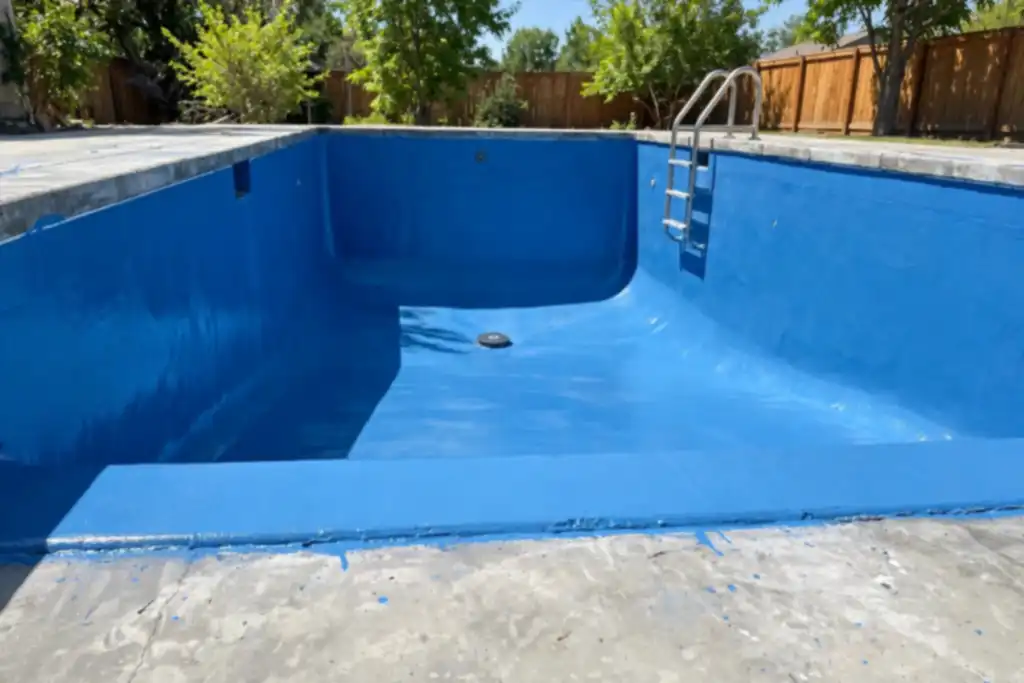

You need a coating that sticks to concrete and holds up under water. Best epoxy pool paint for concrete often points to Smart Seal by Olympic, a two part kit with a gallon of Bikini Blue base and a quart of catalyst. It covers roughly 125 to 150 square feet per gallon and must be mixed thoroughly and used within 30 minutes.
Smart Seal by Ice shares the same kit format and coverage, with its Blue Ice color as the main difference. Here are the best epoxy pool paint for concrete, with what each one does best.
Top Recommendation: Smart Seal by Olympic Zeron
Why We Recommend It: Smart Seal by Olympic combines a one gallon base, a quart of catalyst, and 125 to 150 square feet of coverage per gallon. Both kits come from Kelley Technical Coatings with the same mixing and 30 minute use window, so the real difference is color. Bikini Blue makes it the straightforward recommendation.
7 Best Epoxy Pool Paint for Concrete


1. Smart Seal by Olympic Zeron Bikini Blue

Smart Seal by Olympic is a two part epoxy pool paint kit supplied in Bikini Blue. The kit contains a one gallon can of base paint and a one quart can of catalyst. The gallon is deliberately short filled so the catalyst can be added and mixed without overflowing.
This product stands out because it can be used on concrete, plaster, gunite, aluminum, steel and fiberglass pools. That range makes it a flexible choice if your pool shell is concrete but the surrounding fittings are metal. The brand is also moving through a rebranding from Kelley Technical Coatings and Olympic Pool Paint to Smart Seal by Olympic. Stock may arrive with either label or both, and the paint formulas are staying the same.
Coverage is roughly 125 to 150 square feet per gallon, so measure your pool surface before you order. Mixing is the critical step. The base and catalyst must be thoroughly combined and the mixed paint used within 30 minutes, which means you should have your surface prepped and your roller ready before you open the cans.
Because the working time is short, plan to mix only what you can apply in that window. Work in sections and keep a steady pace so the paint does not start to set in the tray. Good surface preparation matters just as much as the mixing, since epoxy needs a clean, sound concrete surface to bond properly.
Color matching is one area where you should be careful. The maker states that results cannot be guaranteed and that digital screens may not show color accurately. A color card is available through the store link so you can confirm the shade before committing to a full kit.
Smart Seal by Olympic suits pool owners with concrete or plaster shells who want a two part epoxy coating and are prepared to work quickly after mixing. It also works for gunite, aluminum, steel and fiberglass pools. If you can measure your coverage, prep the surface well and mix in small batches, this kit covers a lot of ground.
2. Smart Seal by Olympic Zeron Blue Ice
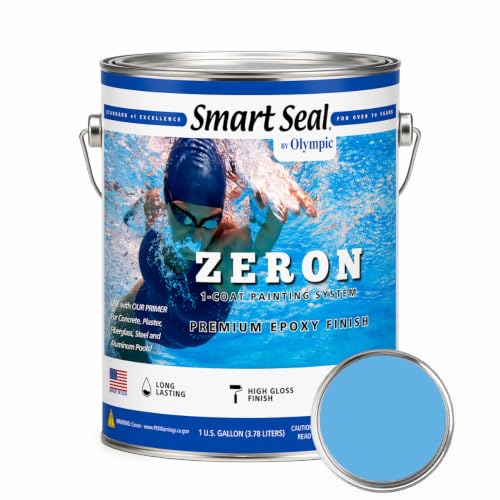
Smart Seal by Ice is a two part epoxy kit built around a gallon of base paint and a quart of catalyst. The two components have to be mixed thoroughly before use, and the mixed paint must be applied within 30 minutes. That short working window rewards a little planning before you open the cans.
The gallon can is deliberately short filled so there is room to stir the catalyst in without spilling. Once mixed, you end up with a full gallon of ready to use paint. Coverage runs roughly 125 to 150 square feet per gallon, which makes it easy to estimate how many kits a given pool surface will need.
This is a genuinely versatile coating. The manufacturer lists concrete, plaster, gunite, aluminum, steel and fiberglass as suitable surfaces, so it can serve pools that combine more than one material. For a concrete pool, that flexibility means you are not locked into a product made for one substrate only.
Color choice deserves a moment of care. The brand notes that results cannot be guaranteed and that digital screens may not show color accurately. It recommends ordering a color card through the store link so you can judge Blue Ice against your surroundings before committing to a full kit.
You may notice a branding change when your order arrives. Kelley Technical Coatings and Olympic Pool Paint are being rebranded to Smart Seal by Olympic, so packaging could carry one label, the other, or both during the transition. The formulas themselves are staying the same, so the paint inside should match what the name promises.
The physical kit is compact and easy to store, with dimensions of about 9 inches high, 12 inches long and 8 inches wide. It ships as a single item in a 128 fluid ounce size. For a concrete pool that needs a reliable epoxy coating and a straightforward mixing routine, this kit is a sensible option to weigh against the others.
3. Smart Seal by Olympic Zeron White
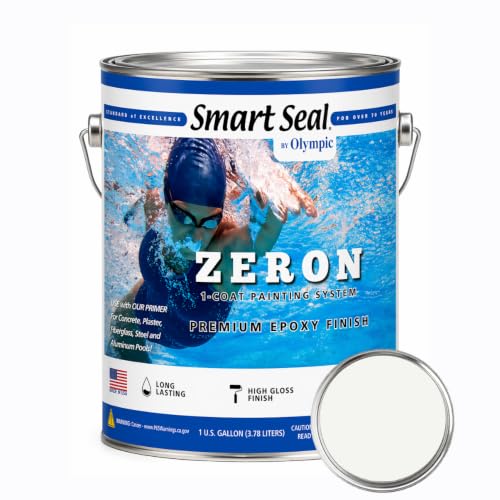
Smart Seal by White is a two part epoxy kit that comes with a gallon can of base paint and a quart of catalyst. The gallon is deliberately short filled so there is room to add the catalyst and end up with a full gallon of mixed paint. It is made by Kelley Technical Coatings, the company behind the Olympic Pool Paint line.
The main draw here is surface versatility. The same product is listed for concrete, plaster, gunite, aluminum, steel and fiberglass pools, which is unusual for a pool coating. That range makes it a practical choice if you are repainting a pool and are not completely sure what the underlying shell is made of. The color is white, so it gives a clean, bright finish once cured.
Coverage is listed at roughly 125 to 150 square feet per gallon, so a single gallon goes a reasonable distance on a typical pool interior. The kit has to be thoroughly mixed before use and then applied within 30 minutes, which means you need to work in manageable batches. Mixing more than you can roll out in that window is a waste, so plan the job in sections.
One thing to keep in mind is color accuracy. The maker states that results cannot be guaranteed and that digital screens may not show the color accurately, so they recommend buying a color card from the store link before committing. That is a sensible step for anyone matching an existing pool finish or trying to hit a specific shade of white. It is a small extra cost that avoids a disappointing surprise on application day.
There is also a labeling quirk to be aware of. Kelley Technical Coatings and Olympic Pool Paint are going through a rebranding to Smart Seal by Olympic, so stock may arrive with either label or both. The formulas are staying the same, so the branding on the can does not change what is inside. If you receive a can with an older label, it is still the same product.
This kit suits a DIY pool owner with a concrete or plaster shell who wants a straightforward white epoxy and is prepared to mix in small batches and work quickly. It also fits anyone recoating a fiberglass, aluminum or steel pool where a general purpose epoxy is needed. The 30 minute pot life and the short filled gallon are the two details to plan around before you start.
4. WOOLSEY Premium Epoxy Pool Paint High-Build Coating

WOOLSEY Premium Epoxy Pool is a high solids epoxy coating made for swimming pools and spas. It cures to a hard, tough, satin finish in Dawn Blue. The coating is designed to protect the surface against stains, chemicals and abrasions.
One of the practical benefits is how it builds up on the surface. Each coat goes on at up to 8 mils thick, which helps smooth out rough concrete. That makes it a useful choice for older pools with a gritty or uneven finish.
The product is not limited to concrete pools. It also works on plaster and fiberglass surfaces, along with spas and slides. That flexibility means it can cover several projects around the same property with one type of coating.
Application is described as easy, and the high build nature of the paint means fewer coats are needed to get a solid result. Two coats are the recommended approach for the full service life. The satin finish gives the water a clean look without a harsh gloss.
Durability is the main selling point here. Two coats can offer up to 8 years of service life according to the manufacturer. That translates to less time on maintenance and more time enjoying the pool.
This one suits concrete pool owners who want a long lasting finish and are dealing with a surface that needs smoothing. It is a sensible pick for anyone refinishing a plaster or fiberglass pool too. The 128 fl oz size comes as a single pack in Dawn Blue.
5. Smart Seal by Olympic Zeron Viking Blue
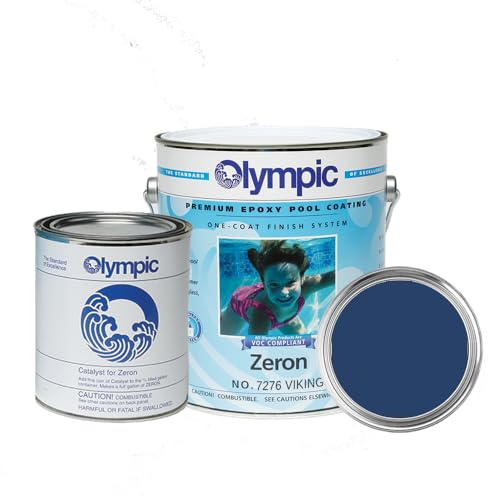
Smart Seal by Viking is a two-part epoxy kit sold as a gallon of base paint plus a quart of catalyst. You mix the two parts thoroughly and then use the paint within about 30 minutes, so the working time is short. The gallon can is deliberately short filled so there is room to stir in the catalyst and end up with a full gallon of mixed paint.
Coverage is listed at roughly 125 to 150 square feet per gallon, which makes it easy to estimate how much you need for a given pool. The product is described as usable on concrete, plaster, gunite, aluminum, steel and fiberglass pools, so it is not limited to one surface type. For a concrete pool, that broad compatibility means you are not hunting for a separate product if the shell has patched areas.
The color is Viking Blue, and the maker notes that digital screens may not show color accurately. They suggest buying a color card from the store link if you need an exact match before committing to a full kit. That is a sensible step for anyone repainting a pool where the shade really matters.
This is Kelley Technical Coatings stock, and the Olympic Pool Paint and Kelley brands are being rebranded to Smart Seal by Olympic. Because of that, you may receive packaging with one label, the other, or both. The company states the paint formulas are staying the same through the change.
The mixing requirement is the main thing to plan around. Once the catalyst goes in, you have a half hour to get the paint onto the surface, so set up your rollers, brushes and access before you start. Working in sections and mixing only what you can apply in that window keeps the job manageable.
This kit suits a DIY painter who is comfortable with two-part products and wants a single coating that covers concrete and other common pool shells. It is less suited to someone who wants a long open time or a simple one-can product. If you have a concrete pool and can move quickly after mixing, Smart Seal by Viking is a practical option to compare against the others here.
6. WOOLSEY Premium Epoxy Pool Paint High-Build Coating

WOOLSEY Premium Epoxy White is a high solids epoxy coating made for swimming pools and spas. It cures to a hard, satin finish that resists stains, chemicals and abrasion. The formula is designed for concrete, plaster and fiberglass surfaces, so it covers more than just a standard concrete pool.
One of the practical benefits here is the build. Each coat goes on up to 8 mils thick, which helps fill minor roughness and leaves a smoother surface. That smoothing quality matters on older concrete that has become chalky or pitted over time. You get a more even finish without needing a separate fairing coat.
The coverage extends to slides as well as pools and spas, which makes it a flexible option for a whole backyard setup. White 930 is the shade offered, and it comes as a single 128 fluid ounce container. The satin sheen keeps the surface looking clean without a harsh glare under strong sun.
Application is straightforward for a two part epoxy, and the high solids content means fewer thin coats are needed to reach the target film thickness. Two coats are the recommended approach to get the full protective layer. Once cured, the film is tough enough to handle normal pool chemistry and foot traffic.
Durability is the headline claim. Two coats can deliver up to 8 years of service life, according to the manufacturer. That longer interval between recoat jobs is the main reason to consider an epoxy over a basic paint. Less time spent draining and prepping means more time swimming.
This product suits concrete pools that need a durable white finish and a smoother feel underfoot. It also works for plaster and fiberglass, so it is a reasonable choice if your pool has mixed materials or you are unsure of the substrate. Anyone planning a long term coating rather than a quick cosmetic refresh should put it on the shortlist.
7. Smart Seal by Olympic Poxoprime II Primer

Smart Seal by Poxoprime is a conversion primer rather than a stand-alone finish coat. Its job is to prepare a pool that already has a rubber-base coating so an epoxy topcoat will bond properly. The kit ships as a gallon can of base paint plus a quart of catalyst.
The mixing routine is strict and worth planning around. The base and catalyst must be thoroughly combined and then used within 30 minutes, so you need your surface prepped and your roller or sprayer ready before you open the cans. The gallon is short filled on purpose, leaving room for the catalyst so you finish with a full gallon of mixed paint.
Coverage runs roughly 200 to 250 square feet per gallon. That figure is a guide, and porous or rough concrete will pull more material than a smooth, well-sealed surface. Measure your pool and buy accordingly rather than guessing at the register.
This primer is built for a specific job, converting a rubber-base coated pool over to an epoxy system. It is designed for use with Poxolon 2 or Zeron as the topcoat, so the primer and finish are meant to work as a pair. If your pool has no existing rubber-base coating, this is probably not the product you want.
Color matching needs a little care. The listing notes that results cannot be guaranteed and that digital screens may not show color accurately, so ordering a color card for an accurate selection is the sensible move. White is the listed color for this primer.
Kelley Technical Coatings and Olympic Pool Paint are rebranding to Smart Seal by Olympic, so stock may arrive with either label or both. The formulas are staying the same, though packaging and naming may look new. That is worth knowing if the box on your doorstep does not match the photo online.
Our Testing Process: Why These Rankings Are Different
The goal here is simple. We want to look past the marketing claims and focus on what actually matters when you choose epoxy pool paint. A bold label or a clever slogan tells you very little about how a coating holds up on a concrete pool surface.
Each product was evaluated on its specifications, its materials and build, and the patterns in owner feedback. We also weighed brand reputation and overall value, and we treated the practical details as what mattered most. That approach is how options like Smart Seal by Olympic and Smart Seal by Ice stood out from the rest of the field.
We compared products across a wide price range, from budget friendly cans to premium kits. A higher price does not always mean a better result, and some costly options offer little beyond a familiar name. The evaluation focused on what each product delivers for the money rather than the number on the label.
The aim is guidance you can trust, built on research and careful comparison rather than guesswork. We gathered the facts, weighed them against real owner experience, and ranked each option on that basis. What follows is a data driven view of epoxy pool paint, so you can choose with confidence.
Complete Buyer’s Guide: How to Choose Epoxy Pool Paint for Concrete
Understanding Why Concrete Pools Need a Dedicated Epoxy Coating
Bare concrete is porous, and water will work its way into those tiny pores over time. An epoxy pool paint seals the surface with a hard, bonded film that resists water penetration. This matters most in pools that see constant fill and drain cycles or heavy chemical use. Concrete also shifts slightly with temperature, so the coating needs to flex with the surface rather than crack away from it.
Key Features to Look For
Start with adhesion, because epoxy only performs if it grips the concrete tightly. Check the solids content too, since higher solids usually means a thicker, more protective film per coat. Review the recommended recoat window and cure time so the product fits your schedule. Chemical resistance matters if you run high chlorine or salt systems, and a compatible primer can make the difference on older, chalky concrete.
Types of Epoxy Pool Paint Compared
Most options fall into two groups: standard epoxy and epoxy with a primer system built in. Products like WOOLSEY Premium Epoxy Pool and WOOLSEY Premium Epoxy White are classic two-part epoxies that cure hard and smooth. Smart Seal by Olympic, Smart Seal by Ice, Smart Seal by White, Smart Seal by Viking and Smart Seal by Poxoprime sit in a family of related coatings, each tuned for different surface conditions. Two-part epoxy generally outlasts single-component paint, but it demands more careful mixing.
How to Apply Epoxy Pool Paint for Best Results
Surface prep decides the outcome more than anything else. The concrete must be clean, dry and free of old paint, oil and loose material, so plan on acid etching or light abrasion before you start. Mix the two parts exactly as directed and don’t stretch the pot life. Apply within the recoat window, and keep the pool out of water until the full cure time has passed.
What to Avoid
Don’t paint over damp concrete, because trapped moisture will push the epoxy off from below. Avoid skipping the primer on porous or previously painted surfaces, and never thin a two-part epoxy beyond what the maker allows. Poor surface preparation is the most common reason a coating fails early. Also avoid applying in direct sun or extreme heat, since the film can skin over before it bonds.
Matching Epoxy Pool Paint to Your Situation
A first-time coating on sound, bare concrete calls for a straightforward two-part epoxy with a good primer. If the pool has old paint, select a product rated for recoating over it, or strip it back first. For pools that sit empty part of the year, favor a coating with strong flexibility and UV stability. Budget and downtime matter too, since some systems need longer cure windows before refilling.
When to Expect Results and How to Maintain the Coating
Most epoxies need several days of cure before the pool can be filled, so check the data sheet for the exact window. Once cured, the finish should hold its color and gloss through normal chemical balance. Rinse the walls periodically, avoid abrasive scrubbing, and touch up any chips before they spread. With steady water chemistry and gentle cleaning, the coating can last for years.
Best Epoxy Pool Paint for Concrete FAQs
Are There Any Tips for Getting a Smooth Finish with Epoxy Pool Paint on Concrete?
Mix the two parts thoroughly but gently to avoid whipping in air bubbles. Stir for the full time stated on the instructions, scraping the sides and bottom of the container. Poor mixing leaves soft patches that never cure properly.
Apply with a roller for large areas and a brush for edges and corners. Work in thin, even coats rather than one heavy layer, and keep a wet edge to avoid lap marks. A second coat usually gives better coverage and durability.
Plan your work so you can finish a section without stopping. Once mixed, the pot life limits how long you have, so do not mix more than you can apply. Sanding lightly between coats can help the next layer grip.
Can I Apply Epoxy Pool Paint for Concrete Over an Old Painted Surface?
Can I apply epoxy pool paint for concrete over existing coatings? Sometimes, but only if the old coating is sound and well bonded. Loose, chalky or flaking paint has to come off first, because the new epoxy will fail with it. A small patch test is the safest way to check adhesion.
Epoxy will not stick reliably to rubber, silicone or many one part pool paints. If the old finish softens when you rub it with a solvent, it is probably not a suitable base. In that case, strip it back to bare concrete before you coat.
Bare concrete also needs the right profile for a mechanical grip. Acid etching or light grinding opens the surface so the epoxy can key in. Skipping this step is one of the most common reasons a coating lifts.
How Do I Prepare Concrete Before Applying Epoxy Pool Paint?
Start by draining the pool and letting the concrete dry completely. Remove algae, dirt and any loose material with a stiff brush and a suitable cleaner. Rinse well and allow the shell to dry for several days before you go further.
Next, open the surface so the epoxy pool paint for concrete can bond. Acid etching or light mechanical grinding gives the concrete a rough, grippy profile. Vacuum up all dust afterwards, because dust blocks adhesion.
Fill cracks and repair damaged areas with a suitable patching compound and let it cure. Check that the surface is dry, since trapped moisture can blister the coating. Apply the epoxy within the window stated on the product data sheet.
How Do You Clean and Store Leftover Epoxy Pool Paint for Concrete?
Mix only what you need, because once the two parts are combined the reaction cannot be stopped. Leftover mixed material should be left to harden in a well ventilated spot, then disposed of as your local rules require. Never pour it down a drain.
Unmixed Part A and Part B can be kept for future use if the containers are sealed tightly. Store them upright in a cool, dry place away from frost and direct sun. Keep lids clean so they do not stick shut.
Clean tools with the solvent recommended on the data sheet before the epoxy sets. Once cured, epoxy pool paint for concrete is very hard to remove from brushes and rollers. Check the shelf life on the cans before you rely on old stock.
How Long Does Epoxy Pool Paint for Concrete Need to Cure Before Filling the Pool?
Cure time depends on the product and the weather, so always check the data sheet. Most epoxy pool paint for concrete needs several days of curing before water goes in. Cool or damp conditions slow the process considerably.
A typical guide is to allow around five to seven days, but treat that as a starting point only. The coating should feel hard and not tacky before you refill. If in doubt, wait longer rather than risk a soft film.
Fill the pool slowly so the shell adjusts gradually to the weight of water. Rapid filling can stress fresh coatings and cause problems. Keep people and pets out of the pool until the cure is fully complete.
Is It Better to Use Epoxy Pool Paint or a Rubber Coating on Concrete?
Is it better to use epoxy pool paint on concrete or a rubber coating? It depends on the pool and how you use it. Epoxy gives a hard, glossy, chemical resistant finish that suits concrete shells in good condition. Rubber coatings stay flexible and handle movement better.
Concrete that is sound and stable usually takes epoxy well. If the shell has hairline cracks or tends to shift, a flexible coating may last longer. Epoxy is rigid, so movement can crack the film.
Consider your surface prep and budget too. Epoxy needs a dry, well profiled surface and careful mixing. Rubber products can be more forgiving in some situations, but check the data sheet for each option before deciding.
What Are the Best Epoxy Pool Paints for Concrete and What Features Should I Look For?
Look for a two part epoxy with clear mixing instructions and a stated pot life. Check the coverage figure so you buy enough for two coats. A product designed specifically for swimming pools will list resistance to chlorine and water.
Read the surface preparation requirements carefully. Some products need acid etching, others prefer grinding, and a few suit damp concrete. Match the product to the condition of your shell rather than picking on colour alone.
Also check cure time, recoat window and the temperature range for application. These details decide whether the job fits your schedule and weather. A slightly dearer kit that suits your conditions often works out better.
What is Epoxy Pool Paint for Concrete and How Does It Work?
Epoxy pool paint for concrete is a two part coating that cures into a hard, glossy film. The resin and hardener react chemically once mixed, so the finish bonds tightly to a prepared concrete surface. That film resists water, chlorine and normal pool chemicals far better than basic masonry paint.
The coating works by sealing the porous surface of the concrete. Water cannot soak in, so algae has fewer places to take hold and the shell is easier to brush clean. A good bond depends on the concrete being clean, dry and slightly rough.
Most kits come as Part A and Part B that you combine just before use. Once mixed, the pot life is short, so you need to apply it promptly. Coverage and recoat times are printed on the can, and you should follow them closely.
What Temperature Can I Apply Epoxy Pool Paint for Concrete In?
Temperature matters a lot with two part coatings. Most epoxy pool paint for concrete is designed for application when air and surface temperatures stay within a moderate range, often around 10 to 30 degrees Celsius. Always confirm the exact figures on the can.
Cold slows the chemical reaction, so the coating may stay tacky and cure poorly. Heat speeds it up, which shortens pot life and can leave brush marks. Aim for stable conditions during application and for the first day of curing.
Avoid applying in direct hot sun or in windy conditions that dry the surface too fast. Also check that rain is not forecast, since moisture on a fresh film causes defects. Surface temperature is just as important as air temperature.
Final Verdict
Based on our research and data analysis, epoxy pool paint gives concrete pools a hard, chemical-resistant finish that holds up well season after season. For anyone recoating a light-coloured pool who wants a bright, clean surface, WOOLSEY Premium Epoxy White is the one to beat, thanks to its tough gloss coat. If your priority is a straightforward recoat on a standard concrete pool, WOOLSEY Premium Epoxy Pool serves that need best.