
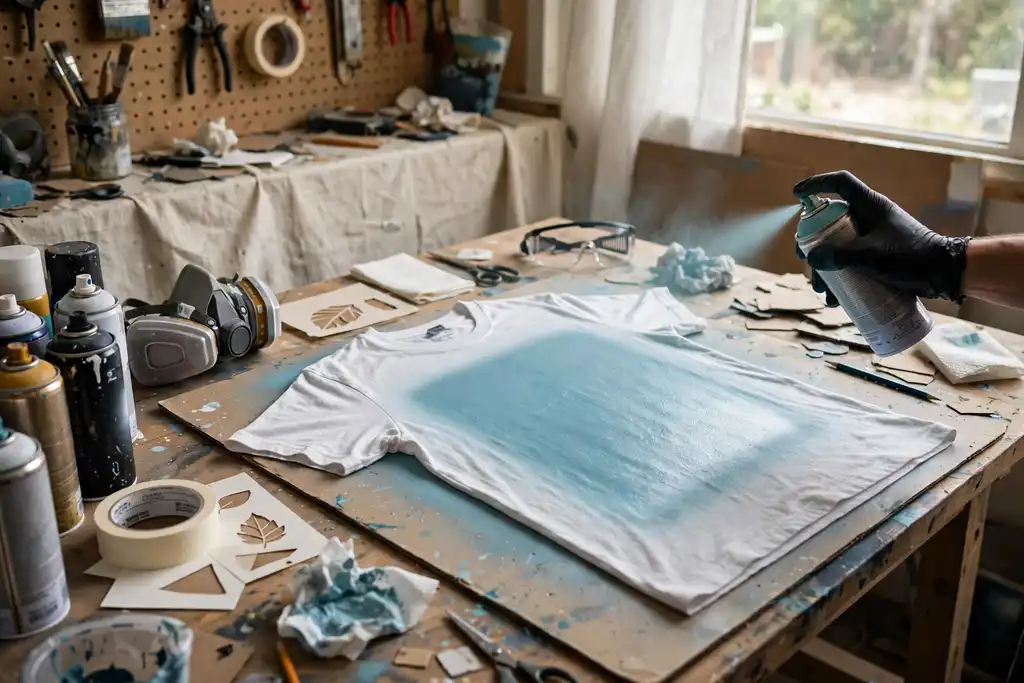
Yes, you can spray paint a shirt, but only if you use a fabric medium or fabric paint designed for textiles, because straight aerosol paint will crack, fade, and wash out fast.
You pull a plain white shirt from the drawer, picture it in a custom color, and reach for the nearest can of spray paint. Before you shake that can, know this: can you spray paint a shirt without it turning stiff and cracked after one wash? The short answer is yes, but only with the right products and process.
This article gives you the safety steps and mistake-proof method for spray painting shirts that stay soft and wash-durable. You will learn which paints actually bond to fabric, how to prep with cardboard insert and masking tape, why ventilation matters, and how heat setting locks in color so it survives the laundry.
Can You Spray Paint a Shirt? the Short Answer is Yes, with Caveats
Yes, you can spray paint a shirt, but only if you accept the trade-offs: stiffer fabric, limited wash durability, and a real need for ventilation. Treat it as a decorative method, not a dye replacement.
| Situation | What it means | What to do |
|---|---|---|
| Plain cotton shirt, light coat | Paint sits on top of fibers | Use fabric medium or fabric paint for softness |
| Synthetic or stretch fabric | Cracking and flaking likely | Avoid spray paint; use dye made for synthetics |
| Stencil design on front | Clean edges need masking | Use stencils, masking tape, and a cardboard insert |
| Full color change | Uneven coverage and stiffness | Choose fabric dye instead of spray paint |
| Wash durability needed | Fades after several washes | Heat setting helps but expect fading over time |
| Indoor spraying | Fumes and overspray risk | Work outside or use OSHA-rated ventilation |
| Airbrush with fabric paint | Softer, more controllable finish | Thin acrylic paint with fabric paint medium |
Recommended for this job

Shuttle Art Fabric Paint
Fabric paint bottles with brushes let you hand-paint shirts instead of spraying.

Tulip ColorShot Fabric Spray Paint
Spray-on fabric color designed for clothing, enabling direct spray painting on shirts.
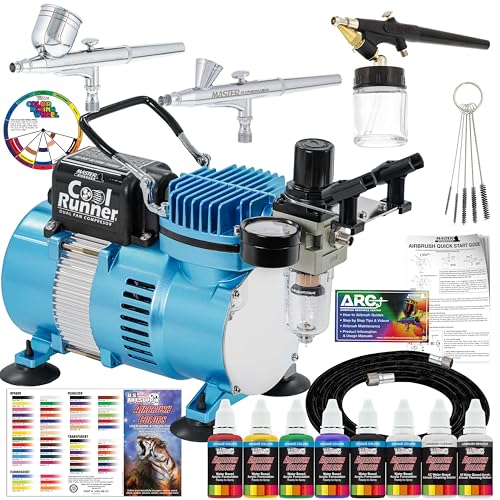
Master Airbrush Cool Runner II Air
Airbrush kit sprays acrylic color onto fabric for fine, controllable shirt designs.
What Spray Paint Actually Does to Fabric
Spray paint coats the surface of the shirt rather than bonding into the fibers. That means color sits on top, feels stiff, and can crack when the fabric flexes. It is not the same as fabric paint or dye.
The Two Conditions That Decide Success
Two things separate a wearable result from a ruined shirt: the fabric type and your prep. Natural fibers like cotton take spray paint better than synthetics, which tend to crack. Use stencils, masking tape, and a cardboard insert to control overspray and bleed.
Ventilation is non-negotiable. Spray outside or in a space with strong airflow, and follow the manufacturer’s safety instructions. Heat setting after drying improves wash durability, but color fading still happens over time.
What You Give up Compared to Fabric Dye
Choosing spray paint means accepting a stiffer hand, less wash durability, and more risk of cracking. Fabric dye penetrates the fibers for a softer, longer-lasting result. If you need a full color change, dye is the safer bet; spray paint works best for stenciled designs and accents.
Spray Paint vs Fabric Paint vs Fabric Dye: Which One Wins for Your Shirt?
When Spray Paint Beats Fabric Paint and Dye
Yes, you can color a shirt with spray paint, with caveats. Aerosol cans win on speed and stencil work, especially for bold graphics on cotton or canvas. Expect a stiff hand feel and less forgiveness than fabric paint.
Cost is often the deciding factor. A basic can runs about $8 to $15, while fabric paint sets and dye kits typically land in the $10 to $25 range depending on brand and color count. For a one-off design, spray paint is usually the cheaper entry point.
When Fabric Dye Beats Spray Paint
Choose dye when you need an even, all-over color with real wash durability. Dye bonds with fibers, so it will not crack or flake the way a surface coating can. Fabric paint is the safer pick for soft hand feel and detailed brushwork.
A Quick Decision Rule for Complex Designs vs Wash Durability
Use spray paint with stencils and masking tape for crisp graphics you plan to wear occasionally. For shirts headed into heavy rotation, pick dye or fabric paint mixed with fabric medium. Always heat setting per the manufacturer and spray outdoors or with strong ventilation, since aerosol fumes are a real health concern.
Prep, Mask, and Spray: Step-by-Step to a Shirt That Survives the Wash
Work through these steps in order and your painted shirt will hold color through repeated washing instead of flaking off in the dryer.
Wash and Dry the Shirt First
Wash the shirt without fabric softener and dry it fully. Sizing and oils block adhesion, so a clean surface is the difference between wash durability and early peeling.
Slide Cardboard Between the Layers
Cut a cardboard insert to the shirt’s width and slide it between the front and back. This stops bleed-through and gives you a firm surface to spray against.
Mask Edges with Painter’s Tape and Stencils
Tape off seams and edges with painter’s tape, then press stencils flat against the fabric. Burnish the tape edges with a fingernail so spray can’t creep underneath.
Spray in Light Coats from 8-12 Inches
Hold the can 8 to 12 inches away and mist on light coats, letting each pass dry 10 to 15 minutes. Heavy coats cause cracking and color fading, so build slowly.
Heat Set with an Iron or Dryer
Heat setting locks the pigment into the fibers. Iron on medium for 3 to 5 minutes through a cloth, or tumble dry on high for 30 minutes, then wash inside out.
Follow these steps in order and your painted shirt will hold color through repeated washing instead of flaking off in the dryer.
Three Spray-Paint-on-Shirt Myths That Need Correcting
Myth: Spray Paint Always Rubs off in the Wash
Not true. Cured aerosol color on fabric can survive normal washing, but only if you prep and set it properly. Skip those steps and you will see cracking, color fading, and a stiff, crusty hand-feel after a few cycles.
Work in thin passes, let each layer dry, then heat setting with an iron (medium heat, no steam, cloth barrier) locks the pigment into the fibers. Wash inside out in cold water and air dry to protect the finish.
Myth: You Need Special Fabric Spray Paint or Nothing
Regular spray paint works, but adding a fabric medium to acrylic paint gives you far better flexibility and wash durability. Straight aerosol is stiffer and more prone to cracking when the shirt bends.
For soft results, mix fabric medium into acrylic paint and apply it with an airbrush. Use stencils and masking tape for clean edges, and slide a cardboard insert inside the shirt so paint never bleeds through to the back.
Myth: More Coats Equal Better Coverage
Heavy coats are the fastest route to cracking, peeling, and a board-stiff shirt. Build color in thin, even layers instead, letting each one dry before the next.
Two to three light passes usually beat one soaked coat. Always spray outdoors or with strong ventilation, and follow the manufacturer’s safety instructions on the can.
When Spray Paint Doesn't Work on a Shirt
Stretch Fabrics That Crack When Flexed
Any knit that stretches will crack a rigid paint film when you move. Cotton jersey, blends, and athletic fabrics flex constantly, and aerosol coatings cannot follow that motion, causing spiderweb cracks at shoulders and elbows within a few wears. Fabric paint or acrylic mixed with fabric medium stays flexible and is better for wearable items.
Heavy Coats That Turn the Shirt into Cardboard
Layering too much product stiffens cloth and ruins drape. Build thin passes instead of wet coats, stopping when color reads evenly. Stencils and masking tape keep edges clean without soaking fabric; a cardboard insert prevents bleed-through and keeps the shirt flat.
Wash Expectations That Spray Paint Can’t Meet
Expect fading and poor wash durability regardless of careful application. Even with heat setting, aerosol films wear off after a handful of cycles, especially on high-friction areas. Turn the shirt inside out, use cold water, and skip the dryer to slow decline. If it must survive regular laundry, choose fabric paint.
Indoor Spraying Without Ventilation
Never spray indoors without strong airflow. Aerosol fumes and fine particles build up fast, and OSHA recommends spraying outdoors or in a booth with proper exhaust. If working inside, open windows, run a fan pulling air outward, and wear a respirator rated for organic vapors. An airbrush with water-based paint is safer indoors.
When Spray Paint Works Beautifully on Fabric
Cotton and Canvas Shirts with Light Coats
Natural fibers take aerosol color best. Cotton and canvas hold a light coat without turning stiff, and the paint bonds well for regular wear. Use spray formulated for fabric or flexible surfaces; hardware-store enamel works on cotton but dries harder and stiffer. On dark shirts, apply thin layers, color sits on the surface rather than reading true. Light shirts show color accurately and hide uneven passes.
Bold Graphic Designs and Stencil Art
Stencils and masking tape create crisp graphics. Tape the stencil flat, mist from 8 to 12 inches, and lift while tacky to avoid bleed. Slide cardboard between shirt layers so overspray never soaks through. Build color in two or three light passes instead of one wet coat to prevent cracking.
Costumes and One-Off Wear
Short-lived pieces are safest for this technique. Costume shirts worn a few times tolerate aerosol color well, especially without heat setting. Keep coating thin, heavy layers crack at shoulders and armpits where fabric flexes.
Outdoor Spraying in Good Weather
Spray outside on a calm, dry day between 60 and 80°F. Good ventilation protects from solvent fumes, and mild weather helps coating cure evenly. Hang the shirt or lay it flat on cardboard. Avoid humid afternoons, since moisture slows drying and dulls the finish.
Spray Painting a Shirt on a Budget Without Cutting Corners
Cheap Aerosol Cans vs Fabric Medium Additives
Mix fabric medium into acrylic paint for a cheaper, flexible coating than most cans of spray paint. Straight aerosol on cloth stays stiff and tends to crack at the folds. Medium costs a few dollars and turns paint you already own into something wearable.
Reusable Stencils from Cardstock
Cardstock works fine for stencils if you seal it first and keep the can moving. Mist light coats from about 8 to 12 inches, or the paper curls and bleeds. A coat of clear sealer on both sides lets you reuse the stencil several times.
Cost Comparison: Spray Paint vs Fabric Paint vs Dye
Plan on roughly $8 to $15 for a can, $5 to $10 per bottle of fabric paint, and $4 to $12 for dye, depending on brand and quantity. Aerosol looks cheapest until you buy several colors; dye covers a whole shirt for less. Fabric paint wins for small designs.
Where Not to Save (Mask, Ventilation, Scrap Test)
Skip the shortcuts on your respirator, airflow, and a scrap test on an old shirt. A proper mask rated for organic vapors and open outdoor air protect your lungs, per OSHA guidance. Test the full process on scrap first to check cracking, color fading, and wash durability before touching the real shirt.
Aerosol Cans vs Airbrush: Which Spray Method Fits Your Shirt?
When Aerosol Cans Are Enough
For solid color blocks or one-off stencil designs, a rattle can works with minimal setup. Use paint labeled for fabric, or mix in a fabric medium at roughly 1 part medium to 1 part paint. Hardware-store enamel will stiffen and crack after a few washes.
Work outdoors or in a garage with the door open, since aerosol fumes build fast in closed rooms. Tape edges with masking tape and slide a cardboard insert between the shirt layers to stop bleed-through.
When an Airbrush Wins for Gradients and Detail
An airbrush beats a rattle can for soft fades, fine lines, and tight control over paint volume. Thin acrylic paint with fabric medium at about 1:1 so it flows through a 0.3 to 0.5 mm nozzle without clogging.
Practice on scrap cloth first, since trigger control takes a few shirts to learn. Keep pressure around 15 to 25 psi for fabric work.
Layering Colors and Blending Gradients
Build color in thin coats rather than one heavy pass, letting each layer tack up for 5 to 10 minutes before the next. Keep the can or airbrush moving 8 to 12 inches from the surface to avoid pooling.
Overlap edges by about 50 percent for smooth transitions. Light to dark usually reads cleaner than the reverse.
Drying and Curing Times Between Coats
Most thin coats feel dry in 10 to 30 minutes, depending on humidity and airflow. Wait until touch-dry before recoating, then cure the finished shirt 24 hours before heat setting.
Iron at the fabric medium manufacturer’s temperature, usually 300 to 350 F, for 3 to 5 minutes per side. Wash inside out after 72 hours for better wash durability.
Is It Okay to Use Spray Paint on Clothes?
Shirts vs Other Garments
Thin knit fabric flexes constantly, so a stiff coating sits on the surface and flakes at seams and underarms, though you can indeed spray paint a shirt. Use fabric paint or an airbrush with textile colors instead of hardware-store cans for a shirt you plan to keep. Test on a scrap piece first to check adhesion.
Fabric Medium and Flexibility Additives
Mix fabric medium into acrylic paint when you spray, because straight acrylic dries rigid and leads to cracking. Thin roughly 1 part paint to 1 part medium, then test on scrap fabric first. A dedicated airbrush with a 0.5 mm nozzle gives you far better control than a rattle can.
Wash Durability Expectations
Expect a spray-painted shirt to survive only 3 to 5 gentle washes, and treat it as a display piece rather than daily wear. Turn it inside out, use cold water on a delicate cycle, and skip the dryer. Heat setting with an iron on medium over parchment paper for 30 to 60 seconds helps, but it cannot make a stiff film flexible.
Ventilation and Overspray Checklist Indoors vs Outdoors
- Outdoors: set a cardboard insert inside the shirt, tape stencils with masking tape, and stand upwind.
- Indoors: don’t. Aerosol fumes and overspray travel; OSHA-level ventilation means a spray booth, not an open window.
- Wear a respirator rated for organic vapors, and keep the area clear of ignition sources.
Your Action Plan: Test, Spray, Heat Set, Wash
Spray paint can work on a shirt, but only if you treat it like a controlled process, not a quick blast from a can. Follow these four steps in order and you will avoid the usual failures: cracking, fading, and a design that washes out.
| Action | Why it helps | How to start |
|---|---|---|
| Test on scrap fabric | Reveals cracking or stiffness early | Spray a spare shirt, let dry, wash |
| Choose fabric paint or additive | Improves flexibility and wash durability | Mix fabric medium into acrylic paint |
| Insert cardboard between layers | Stops bleed-through to the back | Slide a board inside the shirt |
| Mask edges with tape and stencils | Keeps lines crisp and overspray off | Press tape firmly before spraying |
| Spray light, even coats | Prevents pooling, drips, and cracking | Hold 8 to 12 inches away, mist lightly |
| Heat set the paint | Locks pigment into the fibers | Iron on reverse per manufacturer instructions |
| Wash inside out, cold | Protects the design from abrasion | Cold cycle, mild detergent, air dry |
| Work with ventilation | Limits inhalation of aerosol fumes | Spray outdoors or use a fan and mask |
Test on a Scrap Shirt First
Before touching your good one, spray a scrap shirt. It shows you how the paint settles, dries, and survives a wash, so mistakes stay cheap.
Pick the Right Paint and Prep the Shirt
Use fabric paint or acrylic paint cut with fabric medium, since straight aerosol cans stay stiff and crack. Slide a cardboard insert inside the shirt and mask edges with masking tape or stencils.
Spray Light Coats and Heat Set
Mist on thin coats from 8 to 12 inches away, letting each pass dry between layers. Heat setting follows the label, typically a few minutes with an iron on the reverse side.
Wash Inside Out in Cold Water
Turn the shirt inside out and wash cold with mild detergent, then air dry. Skip hot water and the dryer, which speed color fading and cracking.
Common Mistakes That Ruin Spray-Painted Shirts
Skipping the Cardboard Insert
Slide a rigid cardboard insert between the shirt layers before you spray. Without it, paint bleeds straight through to the back panel and the shirt sticks to itself.
Spraying Too Close and Too Heavy
Hold the can 8 to 12 inches away and build thin coats. Heavy passes soak the fibers, which causes stiffness and cracking once the paint cures.
Forgetting to Heat Set
Heat setting locks the pigment into the fabric and is what makes wash durability possible. Follow the manufacturer’s iron or dryer instructions, usually a few minutes on medium heat with a pressing cloth.
Washing Too Soon or Too Hot
Wait at least 72 hours, then wash cold and inside out. Hot water and harsh detergent speed color fading and break down the bond between the paint and the shirt.
When to Call a Pro (or Switch Methods Entirely)
Warning Signs: Fumes, Overspray, and Indoor Air Quality
Stop if fumes enter your living space. Aerosol solvents irritate lungs and eyes; OSHA expects real airflow, not an open window in a closed room. Move outdoors or to a garage with the door up and a fan pushing air out. Overspray settling on cars, walls, or plants means your setup is wrong, mask or relocate before ruining something.
Professional Airbrush Artists for Complex Designs
Hire an airbrush artist for gradients, portraits, or fine detail stencils can’t control. Airbrush gives smooth transitions rattle cans can’t match, and pros own the compressor and fabric medium setup. Rates run $40, $150 per shirt by complexity and location, cheaper than ruining three shirts learning yourself.
When Fabric Dye or Screen Printing is the Safer Choice
Use fabric dye for allover color changes with wash durability; it bonds with fibers instead of sitting on top, so it won’t crack or flake. Screen printing wins for repeated identical designs on many shirts. Both avoid solvent fumes entirely, important without outdoor space or with sensitive lungs at home.
Design Ideas Worth Handing to a Pro
Hand off photographic detail, multi-color blends, or text smaller than half an inch, cracking, fading, and bleeding under tape show up fast. Simple bold shapes and one-color stencils stay DIY. Complex work belongs with someone who heat sets and tests wash durability before delivery.
Stop and call a professional if:
- Stop if you cannot ventilate the workspace so fumes stay out of living areas.
- Stop if overspray is drifting onto cars, walls, or neighboring property.
- Stop and hire an airbrush artist if your design needs gradients, portraits, or fine detail.
- Stop and switch to fabric dye if you need an allover color change with wash durability.
- Stop and choose screen printing if you need many identical shirts with consistent results.
Can You Spray Paint a Shirt: Frequently Asked Questions
?Can You Spray Paint a Shirt Without It Cracking or Flaking off?
Yes, if you prep and heat set it properly. Cracking comes from spraying too thick, skipping the fabric medium, or never heat setting the paint. Light coats, a cardboard insert to stop bleed-through, and heat setting with an iron or dryer are what keep the paint flexible. Thin layers bond to the fibers; heavy layers sit on top and crack the first time you move.
?Can You Spray Paint a Shirt so It Survives the Wash?
Yes, you can spray paint a shirt so it survives the wash, but heat setting is essential. Let the paint cure completely, then heat set it following the product label. Wash the shirt inside out in cold water, skip fabric softener, and avoid high dryer heat. Even done correctly, spray paint fades faster than fabric paint, so expect gradual wear over time.
?Can You Spray Paint a Shirt with Regular Acrylic Paint Through an Airbrush?
Yes, but thin the acrylic paint and add fabric medium. Straight acrylic through an airbrush dries stiff and cracks on fabric. Fabric medium keeps the paint flexible and improves wash durability. This route gives you more color control than aerosol cans, but it needs a compressor, ventilation, and a test scrap before you commit to the shirt.
?Why Does Spray Paint Fade or Wash Out of a Shirt?
Because spray paint is not formulated to bond with fabric fibers the way fabric paint is. Without fabric medium and heat setting, the pigment sits on the surface and washes away or fades with each cycle. Color fading is normal even with good prep, so treat spray-painted shirts as decorative pieces, not everyday workhorses.
?What Safety Gear Do You Need When You Spray Paint a Shirt?
Ventilation and a respirator, at minimum. Aerosol spray paint puts fine particles and solvent fumes in the air, and you are working close to the fabric. Spray outdoors or in a garage with the door open, wear a NIOSH-rated mask, and keep the shirt off your skin until it is fully dry. Do not spray in a closed bedroom.
?When Should You Skip Spray Paint and Use Fabric Paint on a Shirt Instead?
Skip spray paint when the shirt needs to be soft, stretchy, or washed often. Fabric paint and fabric dye are built for fabric and hold up far better. Spray paint works for stencils, costumes, and display pieces. If the shirt is something you plan to wear weekly, use fabric paint and save yourself the wash durability headache.
?is Spray Paint on a Shirt Safe to Wear Against Your Skin?
Only after it is fully cured and heat set. Uncured aerosol paint can irritate skin and off-gas solvents. Once dry and set, a sprayed design on the outside of a shirt is generally fine, but avoid spraying areas that sit directly against sensitive skin. If you have respiratory sensitivity, use an airbrush with fabric medium instead of aerosol cans.
Our Thoughts
Yes, you can spray paint a shirt, but treat fabric paint or a fabric medium mixed with acrylic paint as your only real option. Straight aerosol spray paint will crack, fade, and wash out fast, so it is not worth the risk on something you plan to wear. If you skip that step, you will be repainting the shirt after a few washes.
Your single most useful next step is a test run on a scrap of similar fabric before touching the shirt. Spray a light coat, let it dry, heat set it with an iron according to the product label, then wash it and check for cracking or color fading. Work outside or with strong ventilation, use stencils and masking tape for clean edges, and slide a cardboard insert inside the shirt to stop bleed-through.