

Getting a smooth, even finish on latex paint takes a sprayer that can handle thicker material without clogging. The best fuji sprayer for latex paint for many home shops is the Fuji Spray 2202 Semi-PRO, which pairs a professional non-bleed spray gun with adjustable pattern fan control and a 1.3mm air cap set already installed.
Its 1Qt bottom feed cup holds a solid amount of paint for larger jobs, and the 24 month parts and labor warranty adds peace of mind. Below, you will find the best fuji sprayer for latex paint, each one suited to a different need.
Top Recommendation: Fuji Spray 2202 Semi-PRO 2
Why We Recommend It: The 2202 Semi-PRO earns the top spot with its 1.3mm air cap set, adjustable fan control and 1Qt bottom feed cup, all backed by a 24 month warranty. Compared with the 2203G, it offers more paint capacity per fill, which keeps longer latex jobs moving. That mix of capacity and control makes it a dependable choice for latex work.
10 Best Fuji Sprayer for Latex Paint
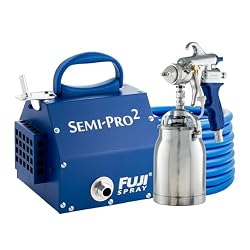


1. Fuji Spray 2202 Semi-PRO 2 HVLP System

The Fuji Spray 2202 Semi-PRO is a complete HVLP spray system built around a 1400W motor. It pairs a professional non-bleed spray gun with a metal turbine case that has a handy gun holder built in. The package arrives with a 1.3mm air cap set already installed, so you can get set up without hunting for extra parts.
The gun gives you adjustable pattern fan control, which lets you widen or narrow the spray to match the surface in front of you. A 1Qt bottom feed cup holds a decent amount of material for larger jobs. The 25ft hose includes an air control valve, a feature that helps cut down overspray and bounce back while you work.
Because this is a non-bleed design, material only flows when you pull the trigger. That makes it easier to manage the start and stop of each pass, especially on trim and cabinet work. The 1.3mm setup is a common size for thinner coatings, and latex paint can be sprayed with the right thinning and technique. The fan pattern adjustment lets you lay down a broad coat on flat panels or narrow things down for edges.
The unit itself is compact but solid, measuring 16 inches long, 12.5 inches high and 9.5 inches wide, and it weighs 25 pounds. The metal turbine case protects the motor and gives you a place to rest the gun between passes. That kind of organization matters when you are moving around a room or a shop all day.
This system suits people who want professional style control without stepping up to a bigger setup. Homeowners tackling fences, doors, trim and furniture will find the bottom feed cup and fan control familiar to use. Fuji Spray backs the 2202 with a 24 month warranty covering parts and labor.
If you are spraying latex paint on a regular basis, the airflow and hose length give you room to move. The air control valve at the gun end means you can tune the spray without walking back to the turbine. It is a practical choice for anyone who wants one machine to handle paint and finish work around the house.
2. Fuji Spray 2203G Semi-PRO 2 Gravity HVLP
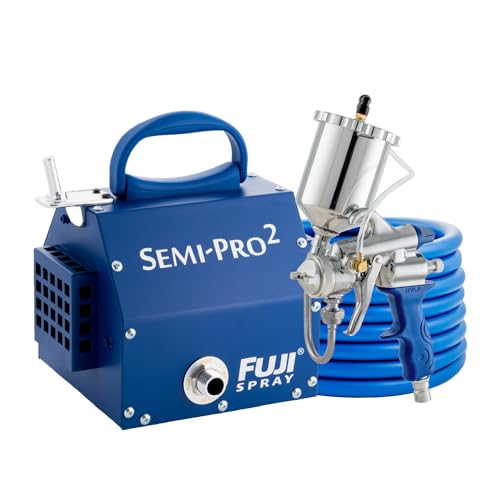
The Fuji Spray 2203G Semi-PRO is a gravity feed version of the same 1400W HVLP turbine platform. The gun is a professional non-bleed model with adjustable pattern fan control, and it comes with a 1.3mm air cap set installed. Instead of a bottom feed cup, this one uses a 400cc gravity cup mounted on top.
The gravity cup design feeds material down into the gun, which many users find comfortable for angled or overhead work. You get the same metal turbine case with a built in gun holder, and the same 25ft hose with an air control valve to reduce overspray and bounce back. Fuji Spray also includes a wrench and cleaning brush in the box.
Adjustable fan control lets you switch between a wide pattern for large flat areas and a tighter pattern for edges and corners. The non-bleed gun keeps material in the cup until you pull the trigger, so drips and waste are easier to control. The 400cc cup is a good size for trim, doors and furniture where you refill between pieces rather than run all day.
The turbine and case dimensions match the bottom feed model at 16 inches long, 12.5 inches high and 9.5 inches wide, with a weight of about 25.2 pounds. The metal case keeps the motor protected and gives the gun a dedicated resting spot. The 1.3mm cap set is a versatile starting point for many coatings, and latex paint can be sprayed with proper thinning and passes.
This model suits people who like the balance and visibility of a gravity cup, especially when working on vertical surfaces. It is a sensible pick for furniture refinishing, cabinet doors and smaller paint projects around the home. The included wrench and brush make routine cleaning simpler, which helps the gun last.
Fuji Spray covers the 2203G with a 24 month warranty on parts and labor. If you want a compact turbine unit with a top mounted cup and fine control over the spray pattern, this one fits the bill. It handles latex paint and general finish work without taking up much space in the shop.
3. Fuji Spray 5100-5 Aircap Set #5 #5-1.8mm

The Fuji Spray 5100-5 Aircap is a genuine Fuji Spray air cap set rather than a third party copy. It is built around a high output 1.8mm nozzle, which is the size that makes sense when you are pushing thicker material through a gun. The air cap itself is a high efficiency design, so it shapes the spray rather than just blasting paint at the panel.
The main thing to understand here is fitment. This air cap set is made for T-Series spray guns only, so it will not work with the older Fuji Spray guns in your shop. If you are unsure which generation you own, check the model before you order anything. Buying the wrong cap is the most common way people waste money on spray gear.
The 1.8mm size is the practical part of this product. It is aimed at larger surfaces where you want good material flow and you are not trying to do fine detail work on a small cabinet door. Latex paint is thick, and a bigger fluid opening helps move it along without constant thinning. That makes this a sensible pairing for bigger walls, doors and long runs of trim.
Because it is a high efficiency air cap, the spray pattern stays tighter and there is less mess drifting through the air. That matters in a garage or a shop where you do not want a fog of paint settling on everything. The result is a cleaner working environment and less material wasted on the floor.
This is a small part by weight, at just 0.09 pounds, but it is the part that decides how the gun behaves. It comes with a 24 month parts and labor warranty from Fuji Spray, which is reassuring for something that takes wear. The silver finish is standard Fuji hardware, nothing fancy, just functional.
This set suits someone who already owns a T-Series gun and wants to spray latex on larger jobs. It is not a starting point for a beginner buying their first sprayer, and it is not for older guns. If your setup matches, it is a straightforward upgrade that lets the gun handle thicker coatings with less fuss.
4. Fuji Spray 5070 T70 Bottom Feed Gun

The Fuji Spray 5070 is the T70 bottom feed spray gun, a professional grade unit rather than a homeowner toy. It feeds from a cup below the gun, which is the familiar layout for people who have sprayed before. The body is stainless steel through the fluid path, so the parts that touch paint will not rust or react with water based coatings.
The standout feature is the side pattern control knob. You can adjust the fan from a small spot to a wide pattern without swapping parts or stopping to fiddle with the air cap. That kind of control is what separates a gun you fight with from one you can actually work with. For latex on a wall one minute and trim the next, it is genuinely useful.
This is a non bleed gun, which means air does not escape constantly when you are not spraying. The practical benefit is less blowing around of shop dust and less noise hanging in the room. In a small garage or a basement, that difference is easy to notice. It also keeps the gun cooler to hold over a long session.
The high efficiency air cap comes installed, and it is there to cut overspray while still atomizing the paint well. Better atomization means the coating lands smoother and you sand less afterward. Less overspray means more of the paint ends up on the surface you aimed at. Both of those things save time and material on a big latex job.
Weight and comfort matter more than people expect when you are holding a gun for an hour. The 5070 has a sleek lightweight design and an ergonomic stay cool handle, so your hand does not cook or cramp halfway through a wall. At 2.3 pounds it is manageable for extended work, and the balance feels like a proper tool rather than a plastic shell.
This gun suits someone who already has a Fuji turbine and wants a capable bottom feed option for latex and other coatings. It rewards a user who understands fan adjustment and fluid flow, and it is backed by a 24 month parts and labor warranty. If you are moving up from a basic setup, this is a reasonable place to land.
5. Fuji Spray 7020-5 Aircap Set #5 #5-1.8mm

The Fuji Spray 7020-5 Aircair is an air cap set built for M-Model spray guns, including the Semi-PRO and Hobby-PRO models. It pairs a stainless steel needle and nozzle with a large 1.8mm opening. That size is aimed at covering bigger areas without constant stopping and starting.
The 1.8mm setup is the standout feature here. A larger fluid opening lets more material through, which suits thicker coatings like latex. The stainless steel needle and nozzle are a practical choice for a part that sees regular wear.
This set is made to fit M-Model guns, so check your gun before ordering. Once fitted, it lets you push heavier paints through the same gun you already use. That makes it a useful swap for jobs where a finer cap would clog or slow you down.
The set is listed as suitable for most paints, latex included. Fuji Spray sells it as a single item, so it is a straightforward replacement or upgrade part. The silver finish matches the rest of the gun hardware.
It suits anyone running an M-Model gun who needs to spray larger surfaces or thicker material. If your current cap struggles with latex, this larger option is worth a look. It is a small part that changes how the gun handles bigger jobs.
6. Fuji Spray 2049F 6-Foot Flexible Whip Hose

The Fuji Spray 2049F 6-Foot is a flexible whip hose in blue. It measures 6 feet and is built for use with any make of HVLP turbine and spray gun. The flexible construction is the whole point of the design.
Fuji Spray describes it as highly flexible, which helps with easy spray gun maneuverability. It is lightweight and durable, and the design is meant to take weight off your wrist. That matters on long spraying sessions where the gun starts to feel heavy.
The hose also helps reduce heat, which Fuji Spray notes is useful with fast-drying lacquers and latex. Less heat in the line can mean fewer issues with material setting up too early. It is a small detail that can make a real difference with tricky coatings.
At 6 feet long, it gives you room to move without dragging a stiffer main hose around. The blue color makes it easy to spot in a busy shop. It comes with a 24 month warranty from the date of purchase.
This hose suits anyone who wants more control at the gun, especially when spraying latex or lacquers. It works with any HVLP turbine setup, not just Fuji Spray gear. If wrist fatigue or hose stiffness is slowing you down, this is a simple fix.
7. Fuji Spray 2098 Bottom Feed Cup Parts

The Fuji Spray 2098 is a bottom feed cup parts kit built for the newer Fuji cup assembly. It is a small package of wearable and consumable parts, not a spray gun or a full cup. The kit is made to help you seal and pressurize the Fuji 2095 one quart cup assembly reliably.
Inside the kit you get three diaphragms, three gaskets and three pressure tubes. These are the parts that protect against paint backup or leaks in the cup assembly. Having spares on hand means a worn seal does not have to stop a painting session.
The parts are made from durable clear plastic, and the clear color makes it easy to see the condition of each piece. The size is listed as one quart cup, matching the assembly it serves. The kit ships as a single item under part number 2098.
Compatibility is the key point to check before ordering. This kit is compatible with the Fuji 2095 one quart cup assembly only. It will not fit the Fuji 2042 cup assembly, so owners of that cup should look elsewhere.
For anyone running the 2095 cup, this is a sensible maintenance item. The diaphragms, gaskets and pressure tubes are exactly the parts that wear out or get clogged over time. Replacing them keeps pressure where it belongs and keeps paint out of the pressure tube.
This kit suits Fuji owners who already use the 2095 cup assembly and want a simple way to refresh it. It is not a starter purchase for a new sprayer setup. Think of it as a consumables pack that keeps your existing cup working the way it should.
8. Fuji Spray 2095-1Qt. Cup Assembly – Bottom Feed

The Fuji Spray 2095- . is a one quart cup assembly in a bottom feed design. It is a complete cup unit rather than a small parts kit. The new design includes the 2024 pressure tube and the 2024 gasket.
Inside the assembly is a 2096 diaphragm. This diaphragm acts as a barrier so paint cannot enter the pressure tube. That design detail helps protect the pressure side of the cup during spraying.
The assembly is compatible with Fuji T-Model, M-Model and older model spray guns. It also lets you convert a Fuji gravity feed M-Model into a bottom feed spray gun. That makes it a practical upgrade path for owners of those guns.
The product is listed in a silver color and weighs about one pound. It ships as a single item under part number 2095. A 24 month warranty from the date of purchase covers the assembly.
If you need replacement parts for this cup later, the 2098 parts kit is the one to look for. That kit covers the diaphragms, gaskets and pressure tubes for this assembly. Keeping the two part numbers straight makes maintenance simple.
This cup assembly suits Fuji users with a T-Model, M-Model or older gun who want bottom feed operation. It is especially useful for anyone converting an M-Model from gravity feed. Buyers should confirm their gun model before ordering.
9. Fuji Spray 2805-T75G Mini-Mite 5 Platinum T75G
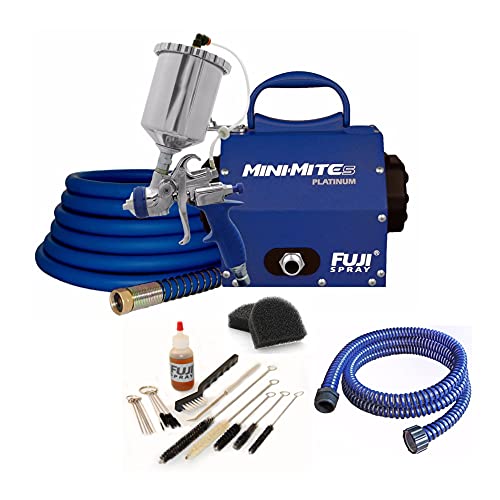
The Fuji Spray 2805-T75G Mini-Mite is a complete gravity feed HVLP spray system built around a five stage turbine. That turbine produces 9.5 Psi at the gun, which is enough air to atomise thicker coatings with care. It ships as one unit with the T75G gravity gun, so you get the turbine and applicator matched from the start.
Fuji has built in a noise reduction feature and a Heat Dissipation Chamber, or HDC. The HDC helps manage heat inside the turbine housing during longer sessions. The noise reduction work is welcome, because five stage turbines are not quiet machines by nature.
The gun itself has a side pattern control knob. You turn it to move the fan from a small spot to a wide pattern without swapping parts. That makes it easier to switch between trim, doors and broader panels in the same job.
Gravity feed means the cup sits on top of the gun and paint flows down into the air stream. It tends to handle thicker materials better than a suction setup and is simple to clean. For latex, you still want to thin as needed and test on scrap first.
The unit is blue and measures 16 inches high, 17 inches long and 14 inches wide. It weighs 30.66 pounds, so it is a bench or floor unit rather than something you carry up a ladder. Fuji backs it with a 24 month parts and labour warranty.
This system suits someone who sprays regularly and wants headroom for heavier coatings. It is more machine than a casual weekend painter needs, but the pattern control and turbine output reward practice. If you are moving up from a small cup gun, this is a sensible step.
10. Fuji Spray 5100-2 5100-2,4,5 and 6 Air

The Fuji Spray 5100-2 is a bundle of air cap sets for Fuji T-Series spray guns, not a sprayer on its own. It packs four caps, numbered 2, 4, 5 and 6, plus a carrying case. Think of it as a tuning kit for a gun you already own.
Each cap is a high efficiency air cap made for T-Series guns. Changing the cap changes how the gun atomises and how wide the pattern spreads. The number 5 set is the one many people reach for on larger surfaces and thicker layers.
The bundle also covers a 1.8mm output set, which is aimed at industrial coatings, floor paving and similar heavy work. Having several sizes on hand means you can match the cap to the material instead of forcing one setup. That flexibility is the real point of the kit.
The included carrying case is slim and light at 1.5 pounds. It holds up to four air cap sets and protects the needles and caps between jobs. The whole package measures 6.7 inches high, 10.2 inches long and 8.5 inches wide.
Because this is a set of caps, it only makes sense if you run a T-Series gun. Buyers without that gun will get nothing from it. For those who do, it removes the guesswork of ordering caps one at a time.
It suits a painter who sprays a range of coatings and wants quick swaps without hunting for parts. The case keeps everything together, which matters in a busy shop. Treat it as an accessory purchase, not a first sprayer.
Our Testing Process: Why These Rankings Are Different
Our goal with this guide is simple. We want to look past the marketing claims and focus on what actually matters when you choose a fuji sprayer. Buyers deserve clear information about real performance factors, not glossy brochure language.
We evaluated each product by comparing specifications, materials and build quality, and patterns in owner feedback. We also weighed brand reputation and overall value, then focused on the factors that matter most for spraying latex paint. The Fuji Spray 2202 Semi-PRO and Fuji Spray 2203G Semi-PRO are good examples of models that stood out once those factors were weighed together.
The products we compared span a wide price range, from budget-friendly options to premium setups. A higher price does not always mean a better result, because the right match depends on your projects, your paint and your workflow. Paying more only makes sense when the extra cost buys features or build quality you will actually use.
This section is based on research and evaluation, not hands-on testing. We did not run these sprayers ourselves, and we do not present invented scores or test results. Our aim is to give you trustworthy, data-driven guidance so you can choose a fuji sprayer with confidence.
Complete Buyer’s Guide: How to Choose Fuji Sprayer for Latex Paint
Understanding Why Latex Paint Demands a Different Setup
Latex paint is thicker than most finishes, so it does not flow through a sprayer the way stains or lacquers do. Thinning it slightly with water and matching the needle and nozzle size makes a big difference in how it atomizes. A high-pressure turbine helps push that heavier material through without constant clogging.
Key Features to Look For
The most important spec is the air cap and nozzle set, since latex usually needs a larger opening than fine finishes. Check the turbine stages too, because more stages mean more power for thick coatings. A bleed or non-bleed gun and a flexible hose like the Fuji Spray 2049F 6-Foot also affect comfort during long jobs.
Types of Fuji Sprayer Compared
Fuji offers several families, from compact units like the Fuji Spray 2805-T75G Mini-Mite to the Semi-PRO line such as the Fuji Spray 2202 Semi-PRO and Fuji Spray 2203G Semi-PRO. The Mini-Mite is small and portable, while the Semi-PRO models suit steadier work. Aircap options like the Fuji Spray 5100-5 Aircap, Fuji Spray 7020-5 Aircap and Fuji Spray 5100-2 let you match the setup to thicker paint.
How to Use a Fuji Sprayer for Best Results
Strain the latex first and test the spray pattern on scrap material before touching your project. Keep the gun moving at a steady distance and overlap each pass so the coating builds evenly. Clean the fluid passage promptly after every session, because latex dries fast and can block a nozzle.
What to Avoid
Do not over-thin latex just to force it through a small nozzle, since that weakens the finish. Avoid letting paint sit in the gun between coats, as dried material causes spitting and uneven spray. Skipping a test panel and ignoring the manufacturer’s thinning guidance are common ways to waste a whole batch.
Matching a Fuji Sprayer to Your Situation
For small touch-ups and trim, a compact unit like the Mini-Mite is easier to handle. Larger walls and repeated projects call for a more capable turbine and a bigger fluid nozzle to keep up the pace. Accessories such as the Fuji Spray 5070, Fuji Spray 2098 and Fuji Spray 2095- help you adapt the gun to different coating thicknesses and surfaces.
When to Expect Results and How to Maintain Your Sprayer
With a matched nozzle and thinned latex, you should see a smooth, even coat within a few passes once the pattern is set. Flush the gun with water right after use and check the air cap for buildup. Store the hose and turbine filter clean, and inspect the nozzle regularly so the next job starts without surprises.
Best Fuji Sprayer for Latex Paint FAQs
Are There Any Common Problems When Using a Fuji Sprayer for Latex Paint?
Clogging and spitting are the most frequent complaints with thick latex. They usually come from a tip that is too small or paint that is too thick for the setup. Checking both before you start prevents most of these issues.
Uneven patterns and runs often point to the wrong pressure or too much material flow. Keep the gun moving at a steady pace and overlap each pass evenly. Adjust the fluid flow rather than forcing the sprayer with excessive pressure.
Always test on scrap material first and clean the gun right after use. These two habits solve a large share of latex spraying problems. If issues persist, review the manual’s troubleshooting section before changing parts.
Can I Use a Fuji Sprayer for Latex Paint?
Yes, many Fuji sprayers can handle latex paint when they are set up correctly. Latex is thicker than most finishes, so you need a gun and tip combination rated for heavier materials. Check your model’s manual for the maximum viscosity it supports before you start.
A pressure pot or a larger fluid nozzle usually helps with thick latex. Thinning the paint slightly with water can improve flow, but follow the paint maker’s limits. Too much thinning weakens the finish and can cause runs.
Practice on scrap material first to dial in the settings. Keep the gun moving at a steady pace and maintain an even distance from the surface. This helps you avoid drips and uneven coverage on your first latex job.
How Do I Thin Latex Paint for a Fuji Sprayer?
Add water in small amounts and stir thoroughly before checking consistency. Thin gradually rather than all at once, since you can always add more but cannot take it out. A viscosity cup gives you a reliable reading, and many sprayer manuals list a target range.
Stay within the paint manufacturer’s thinning limits to protect the finish. Over-thinning can reduce durability, cause sagging, and weaken adhesion. Strain the paint after mixing to catch any lumps that could clog the nozzle.
Spray a test piece of cardboard and check coverage and flow before moving to the real surface. Adjust pressure and tip size as needed based on what you see. If the pattern is still uneven, revisit the thinning ratio before changing equipment settings.
How Do You Clean a Fuji Sprayer After Spraying Latex Paint?
Flush the gun and fluid path with water as soon as you finish, before the latex starts to cure. Latex dries quickly and can harden inside small passages, so a prompt rinse saves scrubbing later. Keep flushing until the water runs clear.
Disassemble the nozzle and needle according to your manual and clean each part separately. Use a soft brush on the tip so you do not scratch the openings, which can affect the spray pattern. Check the air cap holes too, since dried paint there causes spitting.
Dry the parts fully before reassembling to prevent corrosion or clogs. Store the sprayer in a clean, dry place, and run a quick water test before the next job. A little routine care keeps future latex work simple.
Is It Better to Brush and Roll Latex Paint or Use a Fuji Sprayer for Latex Paint?
Spraying gives a smooth, even finish and is much faster on large areas like walls and ceilings. Brushing and rolling suit small jobs and touch ups where setup time matters more. The right choice depends on the size and shape of your project.
A sprayer needs masking, ventilation, and cleanup time, so factor that into your plan. Brushes and rollers are simpler to start with but slower on big surfaces. For detailed trim and edges, a brush often stays the practical option.
Many people spray the broad areas and brush the edges, combining speed with control. Match the method to the job rather than sticking to one approach. Whichever you choose, proper preparation matters more than the tool itself.
What Are the Best Fuji Sprayers for Latex Paint?
The best choice depends on how much latex you plan to spray and how thick it is. Models with higher pressure and a compatible fluid nozzle handle latex more reliably. Look at the spec sheet for the maximum tip size and viscosity rating.
A unit with a pressure pot or a gravity feed design often works well for thicker coatings. Check that replacement nozzles in the right size are easy to find. Availability of parts matters as much as the initial setup.
Match the sprayer to your typical projects rather than the biggest job you can imagine. A model that suits your usual volume keeps the work comfortable and consistent. Read the manufacturer’s guidance on latex before you commit.
What Size Tip Should I Look for in a Fuji Sprayer for Latex Paint?
Latex is thicker than stains and lacquers, so it needs a larger fluid nozzle to pass through cleanly. A tip that is too small forces the material and causes clogging, spitting, and an uneven pattern. Check your sprayer manual first, because it lists the recommended nozzle range for latex.
The ideal size also depends on the paint’s viscosity and how much you thin it. Thicker paint generally needs a bigger nozzle and more pressure to atomize properly. If you thin the paint, you may be able to use a slightly smaller tip without issues.
Start with the manufacturer’s recommendation, then adjust based on results. Test the spray pattern on cardboard before touching your actual surface, and watch for tails, spitting, or blotchy coverage. A quick test saves a lot of cleanup later.
Final Verdict
Based on our research and data analysis, the happiest buyer for a fuji sprayer is the home woodworker who wants dependable coverage without fuss. Fuji Spray 2049F 6-Foot serves anyone spraying broad walls and ceilings, thanks to its longer hose reach and steady delivery. For smaller trim and detail jobs, Fuji Spray 5070 suits the user who needs compact maneuverability in tight spaces. Both earn solid owner feedback for smooth latex results.