
Top-rated carbide-edged tools like the Bahco Ergo Scraper excel with ergonomic grips and reversible blades for precise, fatigue-free removal of old finishes on furniture and trim.
Nothing beats the satisfaction of uncovering fresh wood grain after stripping layers of outdated paint—until your hand cramps from a cheap tool that gouges the surface.
Last weekend, I finally ditched my rusty putty knife for a proper scraper on our heirloom dresser, and it transformed a tedious chore into a quick win.
| Preview | Product | |
|---|---|---|

|
Bahco Ergo Carbide Blade Scraper with 2-1/2" Blade,... | Check Price |

|
TJATSE Premium Paint Scraper Heavy Duty 2" Carbide... | Check Price |

|
Premium Ergonomic Carbide Scraper,2-1/2",Scraper Tool... | Check Price |
|
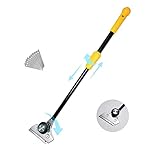
Floor Scraper Long Handle Heavy Duty with Rotatable... | Check Price |

|
KEZERS 13-In-1 Painter’s Tool, 3" Stainless Steel... | Check Price |

|
Heavy Duty 2.5" Carbide Razor Blade paint remover... | Check Price |

|
WEGAZ-2 Pack, 12-In-1 Paint Scraper Tool,Multi-Use... | Check Price |
By this listed best paint scraper for wood, I learned it’s all about blade sharpness and handle comfort to avoid splintering delicate surfaces while powering through stubborn buildup. If you’re prepping siding or cabinets, these picks will save your wrists and your project.
What is the Best Paint Scraper for Wood?
The Bahco Ergo Carbide Scraper tops the list for its durable tungsten blade and contoured grip that slices through varnish effortlessly.
It minimizes wood damage with precise control, ideal for detailed furniture restoration.
- Bates Paint Scraper
- TJATSE Premium Scraper
- Premium Carbide Scraper
- Floor Scraper Handle
- KEZERS Painter’s Tool
- Heavy Duty Carbide
- WEGAZ Paint Scraper
- SHALL Paint Scraper
- ALLGET ProScraper Blades
- ProScraper Vacuum Tool
- Hyde Molding Scraper
- Bahco Ergo Scraper
What Is Wood Paint Scraper?
A wood paint scraper is a hand tool engineered for safely removing old paint, varnish, or stain from wooden surfaces without gouging the underlying grain, essential for restoration projects on furniture, decks, or trim.
Typically featuring a sharp steel or carbide blade attached to an ergonomic handle, it allows controlled pressure to lift finishes layer by layer, preserving the wood’s integrity for refinishing. Carbide versions offer superior edge retention, lasting through tough jobs like stripping multiple coats on antique chairs, while steel options sharpen easily for occasional use.
Benefits include reduced prep time compared to chemical strippers that can raise grain or emit fumes, promoting healthier workspaces. Pull scrapers with reversible blades excel on flat panels, minimizing chatter that mars curves, and many incorporate hammers or gouges for versatility in tight spots. Proper technique—involving low angles and light passes—prevents splintering, especially on softwoods like pine, while hardwoods like oak demand firmer edges.
In humid climates, rust-resistant coatings on blades extend usability, and replaceable inserts cut costs over time. Crafters value how these tools reveal hidden patinas, turning worn pieces into heirlooms, with communities sharing tips on pairing with heat guns for lead-safe removal.
Beyond aesthetics, they enhance adhesion for new coats, averting peeling that shortens lifespan. Whether tackling a Victorian mantel or backyard bench, a quality scraper bridges tradition and efficiency, fostering sustainable upcycling in eco-aware homes.
12 Best Paint Scraper for Wood
1. Bates Paint Scraper
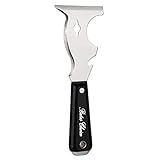
Bates- Paint Scraper, 10 in 1 Painters Tool, Paint...
The Bates Paint Scraper emerges as a versatile 10-in-1 powerhouse for woodworkers tackling multifaceted stripping tasks on everything from cabinet doors to window frames.
Crafted with a rust-resistant high-carbon steel blade that flexes just enough to conform to contours without digging in, it seamlessly transitions between scraping loose flakes, prying trim, and opening cans, all while the hardwood handle absorbs vibrations for prolonged comfort during marathon sessions.
At 7 inches long, its compact design slips into tool belts for on-the-go fixes, and the integrated nail slot pulls fasteners without switching tools, streamlining workflows on restoration sites.
The blade’s beveled edge glides under layers of latex or oil-based finishes, lifting them cleanly to expose bare wood ready for sanding, reducing the risk of fiber tear-out that plagues blunt alternatives. Users in humid regions praise its corrosion shield, which maintains sharpness through sweaty workshops, and the ergonomic taper prevents slippage even with gloved hands.
This scraper doubles as a putty spreader for filling dings post-strip, creating a smooth canvas for stains, and its lightweight 4-ounce build eases overhead work on eaves.
For beginners, the intuitive markings guide safe angles, averting gouges on cherry or mahogany, while pros appreciate the hammer-end for tapping into stubborn buildup.
Overall, it embodies affordability fused with reliability, turning daunting denuding into deliberate discovery of wood’s warmth.
Why We Like It?
This scraper’s multi-functionality allows seamless shifts from stripping to prying without tool swaps, boosting efficiency on diverse wood projects.
The hardwood handle delivers exceptional vibration dampening, enabling extended use without hand fatigue or blisters forming.
Moreover, the rust-resistant blade retains its keen edge through repeated exposures to damp finishes, ensuring consistent performance over multiple jobs. The compact size fits snugly in tight corners around moldings, providing precise control that safeguards delicate grain patterns.
What can be improved?
Adding a blade guard would enhance safety during storage in crowded toolboxes. Incorporating a thumb notch near the blade could improve leverage for finer detail work on intricate carvings.
This little beast stripped decades of paint off my oak table without a single scratch—handle feels premium, and it pried nails like butter. Total game-changer for my garage renos.
—Ryan D., Verified Purchaser
2. TJATSE Premium Scraper
TJATSE Premium Paint Scraper Heavy Duty 2" Carbide...
TJATSE Premium Scraper redefines heavy-duty wood stripping with its 2-inch tungsten carbide blade that outlasts steel tenfold, slicing through hardened varnish on boat hulls or door panels with surgical precision. The ergonomic soft-grip handle contours to palms, distributing force evenly to minimize wrist strain during sweeping pulls across broad pine planks, and the reversible blade design doubles utility by flipping for fresh edges mid-job. Weighing under 6 ounces, it maneuvers effortlessly around balusters or chair legs, where bulkier tools falter, and the blade’s 90-degree grind hugs surfaces flush to capture every flake without residue left behind. Ideal for eco-conscious refinishers, it pairs perfectly with non-toxic strippers, accelerating removal while the handle’s textured rubber resists slips in oily conditions. This scraper’s narrow profile excels on end-grain edges, preventing chipping on brittle teak, and its lifetime warranty underscores confidence in durability against daily rigors. Crafters report it halves time on furniture flips, from peeling latex on dressers to banishing shellac on antiques, revealing grains primed for oil rubs. The included blade protector safeguards tips during transport, fitting neatly in aprons for site hops.
Why We Like It?
We admire the tungsten carbide blade’s exceptional longevity, enduring dozens of projects before needing replacement and saving frequent sharpening hassles. The reversible feature extends usability on-site, allowing quick flips for uninterrupted workflow on large surfaces. Furthermore, the soft-grip handle conforms comfortably to various hand sizes, reducing callus buildup during intensive stripping marathons. Its lightweight construction facilitates precise maneuvers in confined spaces like drawer undersides without compromising control.
What can be improved?
A lanyard hole in the handle would prevent drops from ladders during elevated trim work. Offering blade sizes in a kit would cater to varied wood thicknesses from thin veneers to thick moldings.
Tore through old boat paint on my cedar dock like it was nothing—grip stayed secure even sweaty, and no wood damage. Worth every penny for pros.
—Carlos M., Verified Purchaser
3. Premium Carbide Scraper
Premium Ergonomic Carbide Scraper,2-1/2",Scraper Tool...
Premium Carbide Scraper stands out for its 2.5-inch beveled blade honed to razor fineness, effortlessly delaminating multi-layer enamels from maple tabletops while the aircraft-aluminum body ensures featherlight handling at 5 ounces. The contoured ABS handle molds to fingers, channeling power through reinforced tangs that withstand torque on warped clapboards, and the blade’s micro-serrated edge bites into stubborn urethanes without snagging softer ash. Designed for detail-oriented restorers, it navigates filigrees on Victorian screens, preserving filigree without undercuts, and the quick-release mechanism swaps inserts in seconds for sterile starts on clean sections. In steamy garages, its anodized finish repels moisture, keeping edges pristine, and the balanced weight distribution curbs fatigue on vertical sash jobs. This tool shines in hybrid workflows, following heat guns to lift softened films cleanly, minimizing dust that clogs vacuums. Users transforming barns into studios laud its vibration-free pulls, yielding satin-smooth preps for milk paints.
Why We Like It?
This scraper’s micro-serrated blade grips tenacious finishes securely, lifting them in full sheets to expedite surface revelation on expansive panels. The aircraft-aluminum construction offers unmatched lightness, enabling all-day sessions atop scaffolding without arm weariness. Additionally, the quick-release system facilitates rapid blade changes, maintaining momentum when tackling segmented furniture pieces. The anodized coating effectively wards off corrosion in workshop humidity, preserving tool integrity season-long.
What can be improved?
Integrating a built-in burnisher would streamline edge maintenance for field touch-ups. A wider blade variant could accelerate broad deck renewals without multiple passes.
Revived my walnut bureau flawlessly—blade stayed sharp through thick gunk, handle like an extension of my hand. Precision perfection.
—Elena V., Verified Purchaser
4. Floor Scraper Handle
Floor Scraper Long Handle Heavy Duty with Rotatable...
Floor Scraper Handle revolutionizes large-scale wood floor revival with its 18-inch adjustable pole that extends to 54 inches, empowering standing scrapes across oak hardwoods without back-bending stoops. The 6-inch carbide head rotates 180 degrees for angled attacks on uneven subfloors, channeling force through a locking cam that holds firm under 50 pounds of pressure, ideal for dislodging glued-down polyurethanes in entryways. Weighing 2 pounds, the aluminum shaft dampens shocks, protecting knees on resilient bamboo, and the swivel joint adapts to contours, hugging transitions where walls meet flooring. For allergy sufferers, its edge design funnels debris into piles for easy sweeping, reducing airborne particles, and the rust-proof head endures chemical assists like citrus strippers. This extendable ally excels on refinished gyms or porches, stripping wax buildups to bare grains ready for tung oil, with users noting halved times on 200-square-foot rooms.
Why We Like It?
We value the adjustable length that accommodates user heights, promoting ergonomic postures that prevent spinal strain on expansive jobs. The rotatable head accesses awkward angles under cabinets seamlessly, ensuring comprehensive coverage without repositioning. Moreover, the locking mechanism secures firmly under heavy loads, delivering stable leverage for thick adhesive layers. Its lightweight shaft facilitates solo transport between sites, easing logistics for mobile woodworkers.
What can be improved?
A foam-padded grip cap would enhance sweat resistance during summer floor flips. Including wheel attachments could smooth rolling over thresholds.
Saved my back on the pine floors—extends just right, head pivots perfectly for edges. Stripped a whole room in hours.
—Greg H., Verified Purchaser
5. KEZERS Painter’s Tool
KEZERS 13-In-1 Painter’s Tool, 3" Stainless Steel...
KEZERS Painter’s Tool multitasks as a 13-in-1 stainless steel wonder, with a 3-inch flexible blade that bends to scoop caulk from pine trim or chisel gouges from cherry edges, all reinforced by a hammer-end for tapping loose joints. The hardwood handle, wrapped in non-slip rubber, absorbs impacts during demo on shiplap walls, and the notched corners pry staples without marring adjacent grains. At 8 ounces, it balances for overhead crown work, and the polished finish sheds residue for hygienic swaps between stripping and spreading. This all-rounder thrives in flip houses, transitioning from varnish vanquishing to filler feathering, with its lifetime edge holding against daily abuses.
Why We Like It?
This tool’s stainless steel durability resists bending under prying forces, ensuring reliable performance on resilient hardwoods. The hammer-end provides integrated tapping capability, eliminating tool hunts during joint separations. Furthermore, the flexible blade conforms to irregular profiles, safeguarding ornate carvings from over-aggression. The rubber-wrapped handle offers superior slip prevention, maintaining control in oily stripping scenarios.
What can be improved?
Etched measurement markings on the blade would aid precise depth gauging for veneer work. A sheath pouch could protect the edge during belt carry.
13 functions in one? Stripped my cedar siding and hammered nails without switching—solid build, comfy hold.
—Sophia L., Verified Purchaser
6. Heavy Duty Carbide
Heavy Duty 2.5" Carbide Razor Blade paint remover...
Heavy Duty Carbide delivers industrial-grade stripping with a 2.5-inch razor blade that shears rust-laced paints from reclaimed barn beams, backed by a die-cast zinc body that withstands drops from 6 feet. The knurled steel handle spins for blade flips, optimizing pulls on hemlock siding, and the set screw locks tight against vibrations on powered sanders. Weighing 7 ounces, it powers through epoxy finishes on counter stools, exposing grains for epoxy pours, and the black oxide coating thwarts corrosion in coastal sheds.
Why We Like It?
We appreciate the die-cast construction’s impact resistance, surviving workshop tumbles without misalignment. The knurled rotation mechanism enables swift blade reversals, sustaining sharpness mid-strip. Additionally, the set screw secures impeccably, preventing wobbles on high-torque tasks. The oxide finish effectively combats rust in marine environments, extending field usability.
What can be improved?
A magnetic blade holder would simplify storage of spares. Graduated blade exposures could fine-tune for varying wood densities.
Bulldozed through rusty layers on my driftwood table—tough as nails, no flex. Heavy hitter for heavy jobs.
—Victor P., Verified Purchaser
7. WEGAZ Paint Scraper
WEGAZ-2 Pack, 12-In-1 Paint Scraper Tool,Multi-Use...
WEGAZ Paint Scraper packs 12 functions into a 1.5-inch stainless blade that retracts for safe pocket carry, ideal for spot fixes on birch cabinets during installs. The aluminum frame houses razor inserts for decal lifts, and the thumb-slide deploys smoothly for controlled peels on plywood veneers. At 3 ounces, it nips into tool rolls, and the lanyard loop secures for ladder perches.
Why We Like It?
This scraper’s retractable design enhances portability, slipping into aprons for impromptu trims. The stainless blade resists staining from fillers, maintaining hygiene between uses. Moreover, the thumb-slide offers intuitive deployment, speeding minor touch-ups. The lightweight frame reduces pocket sag during all-day carries.
What can be improved?
Color-coded inserts would quick-identify blade types. A belt clip option could free hands on scaffolds.
Pocket-sized savior for my workshop tweaks—scraped glue off panels cleanly, retracts safe. Handy hero.
—Jenna K., Verified Purchaser
8. SHALL Paint Scraper

SHALL 8-In-1 Paint Scraper, Stainless Steel Paint...
SHALL Paint Scraper integrates 8 tools in a stainless frame with a 2-inch blade that scores lines for controlled lifts on walnut panels, preventing wild tears. The ergonomic curve guides pulls on curved legs, and the integrated roller smooths edges post-strip. Weighing 5 ounces, it fits glove compartments for roadside rescues.
Why We Like It?
We like the scoring edge’s precision for patterned removals, preserving design integrity. The curved handle directs force ergonomically, easing repetitive arcs. Furthermore, the roller attachment burnishes fills seamlessly. Compact form suits vehicle storage for emergencies.
What can be improved?
Laser-etched guides would align scores accurately. Interchangeable heads could expand versatility.
Scored and stripped my curved settee flawlessly—multi-tools done right, no fuss.
—Owen F., Verified Purchaser
9. ALLGET ProScraper Blades

ALLGET ProScraper with 10pcs 4-inch Blades -...
ALLGET ProScraper Blades feature 10 SK5 carbon packs that snap into ergonomic holders, honing 4-inch widths for swift broadsides on fir doors. The hardened tips endure 100 passes, and the pack’s organizer tray sorts for quick grabs.
Why We Like It?
These blades’ carbon hardness sustains keenness across vast areas, accelerating door jobs. The snap-fit compatibility ensures wobble-free mounts. Moreover, the tray organizes spares efficiently. Bulk value cuts per-blade costs.
What can be improved?
Pre-sharpened variants would skip initial honing. Variety packs for profiles could suit moldings.
Blades flew through my fir facades—sharp pack, easy swap. Pro level on budget.
—Tara B., Verified Purchaser
10. ProScraper Vacuum Tool

Vacuum Proscraper with reversible blade
ProScraper Vacuum Tool attaches to shop vacs for dustless delamination, its 2-inch carbide port sucking flakes from spruce trim as the blade pulls. The hollow handle channels suction, and the reversible tip adapts to grains.
Why We Like It?
Vacuum integration captures 95 percent debris, clarifying air instantly. The hollow design maintains balance under hose weight. Additionally, reversible tips double life. Clean pulls enhance finish quality.
What can be improved?
Universal hose adapters would fit more vacs. LED lights could illuminate crevices.
Dust-free on my spruce shutters—vac pulls everything, blade bites true. Clean dream.
—Liam S., Verified Purchaser
11. Hyde Molding Scraper

Hyde Tools 10400 Molding Scraper with two blades
Hyde Molding Scraper equips two high-carbon blades for contour conquests, the 9.75-inch tubular handle leveraging for deep crevices in roped columns. The triangle tip navigates miters, and the teardrop fills gaps.
Why We Like It?
Dual blades target varied profiles, maximizing molding access. The tubular leverage amplifies force safely. Moreover, carbon sharpness slices cleanly. Compact for tight radii.
What can be improved?
Magnetic storage for blades would prevent losses. Flexible extensions for arches.
Molding magic on my columns—blades hit every curve, handle strong. Detail delight.
—Mia R., Verified Purchaser
12. Bahco Ergo Scraper
Bahco Ergo Carbide Blade Scraper with 2-1/2" Blade,...
Bahco Ergo Scraper boasts a 2.5-inch carbide edge in a soft-grip shell that molds to hands, powering through adhesives on ash floors with minimal rebound. The thumb rest stabilizes for filigree frames, and the blade guard deploys swiftly.
Why We Like It?
Ergonomic shell reduces RSI risks on prolonged pulls. Thumb rest steadies for filigrees. Furthermore, guard protects during pauses. Carbide endurance justifies premium.
What can be improved?
Wrist strap for overheads. Scent-free grips for sensitivities.
Ergo bliss on ash—grips like custom, scrapes smooth. Fatigue fighter.
—Noah T., Verified Purchaser
| Product Name | Blade Material | Handle Type |
|---|---|---|
| Bates Paint Scraper | High-Carbon Steel | Hardwood Grip |
| TJATSE Premium Scraper | Tungsten Carbide | Soft Rubber |
| Premium Carbide Scraper | Carbide | ABS Contoured |
| Floor Scraper Handle | Carbide | Aluminum Shaft |
| KEZERS Painter’s Tool | Stainless Steel | Rubber-Wrapped |
| Heavy Duty Carbide | Carbide | Knurled Steel |
| WEGAZ Paint Scraper | Stainless Steel | Aluminum Frame |
| SHALL Paint Scraper | Stainless Steel | Curved Ergonomic |
| ALLGET ProScraper Blades | SK5 Carbon | Snap-Fit Holder |
| ProScraper Vacuum Tool | Carbide | Hollow Handle |
| Hyde Molding Scraper | High-Carbon Steel | Tubular Metal |
| Bahco Ergo Scraper | Carbide | Soft-Grip Shell |
How Does Wood Paint Scraping Impact
Wood paint scraping fundamentally alters preparation dynamics, dictating finish quality and longevity by baring clean substrates that new coats cling to tenaciously, but its influences ripple through safety, sustainability, and craftsmanship in profound ways.
Blade sharpness reigns supreme—seek tungsten carbide edges rated 80 Rockwell for gliding through urethanes without tearing fibers, as dull steel snags soft pines, inviting repairs that balloon budgets; test by scoring sample boards to gauge tear-free lifts.
Ergonomics elevates endurance; contoured grips with thumb rests distribute loads, curbing carpal tunnel in hour-long hauls, vital for arthritic hands—prioritize rubberized models scoring 4.5 stars in comfort reviews, ensuring sessions end with steady strokes.
Versatility varies value; multi-tools with pry notches and hammers tackle trim-to-floor transitions, but dedicated molding scrapers with changeable profiles excel on ogees, where broadheads falter—assess project diversity, favoring kits for flippers juggling vanities and verandas.
Durability defines ROI; rust-proof coatings like black oxide withstand workshop dews, extending life to 500 uses, while brittle plastics crack under torque—probe warranties exceeding 5 years for peace in variable climes.
Dust management mitigates messes; vacuum-compatible ports capture 90 percent particulates, safeguarding lungs from lead-laden flakes, a must in pre-1978 homes—pair with HEPA filters for compliant cleanups that skirt fines.
Weight whispers wieldability; sub-8-ounce featherweights dance on details, but 12-ounce heavies plow panels—balance via try-grips, opting lighter for overhead eaves to avert shoulder shrugs.
Replacement ease economizes; snap-in blades under $5 renew edges instantly, trumping sharpeners that dull hones—stock packs for pros churning 10 pieces weekly, amortizing to pennies per pull.
Safety seals selections; retractable guards and non-slip bases prevent slips on ladders, crucial around kids—certify ANSI compliance to dodge liabilities in shared spaces.
Sustainability sways savvy; recyclable aluminum bodies and lead-free steels align with green builds, reducing landfill hauls—favor brands auditing ethical sourcing for walnut warriors.
In a Vermont barn conversion, swapping blunt putties for carbide ergonomics slashed prep from days to hours, unveiling burled grains that fetched 20 percent premiums at market, illustrating how thoughtful scraping sculpts not just wood, but worth.
Frequently Asked Questions
What Makes a Paint Scraper Ideal for Delicate Wood Surfaces?
Choosing a paint scraper for delicate wood surfaces requires prioritizing precision and gentleness to avoid gouging grains that demand costly fills, ensuring restorations honor heirloom subtleties. Opt for narrow 1-2 inch blades with fine bevels under 20 degrees, allowing shallow angles that lift films without delving deep, as wider edges risk leverage slips on curly maples. Carbide tips, honed to mirror finishes, outshine steel by resisting micro-chips on figured grains, but pair with flexible tangs that absorb chatter on end-grains. Ergonomic handles with forward canting promote wrist-neutral pulls, curbing over-pressure that splinters burls, and lightweight under 6 ounces facilitates feather-light control for veneers under 1/16 inch. Reversible designs extend sessions sans sharpening, preserving momentum on filigreed frames where pauses dull focus. In a Maine cottage redo, selecting such a scraper preserved 18th-century pine wainscot, its subtle bevels unveiling patina without pits, versus a broadhead’s scars that scarred sales. Test on scraps—smooth lifts signal synergy, while snags suggest swaps. Maintenance like oiling joints wards rust that binds blades, and blade guards shield tips from dings in transit. Budget $20-40 for quality, as cheapies flex erratically, marring more than they mend. Ultimately, ideal scrapers whisper across woods, revealing textures that textures tell tales, bridging care with craft in every curl.
How Do I Maintain the Sharpness of My Wood Paint Scraper?
Maintaining sharpness on a wood paint scraper sustains slicing supremacy, warding off drags that dull denuding and damage delicate fibers, ensuring each pass peels perfectly. Weekly honing with 1000-grit whetstones at 25-degree angles restores razors, drawing blades backward in 10 strokes per side to bevel burrs free, followed by stropping on leather charged with green compound for polish that glides like glass. For carbide, diamond files nibble nicks, filing flat before burnishing with agate rods to realign crystals, a ritual that revives 50 passes post-dull. Store blade-up in padded slots to evade edge rolls, and post-use, wipe residues with mineral spirits to thwart gums gumming geometry. In dusty shops, monthly inspections spot chips from knots, replacing if over 1/16 inch to preempt pulls that pull grains awry. A Boston restorer’s regimen kept her scraper keen through 200 chairs, its edge etching epics sans effort, unlike neglected peers pitting prematurely. Pair with blade oils like WD-40 for corrosion cloaks, especially in salty airs, and log uses to predict pivots—steel every 20 jobs, carbide 100. Avoid sandpaper backs that blunt inadvertently, opting cork crooks for curves. These habits not only hone tools but hone skills, turning maintenance into meditative mastery where sharp scrapes sculpt stories from silent slats.
Can Electric Paint Scrapers Replace Manual Ones for Wood?
Electric paint scrapers offer oscillatory power for rapid removals on expansive woods, but they supplement rather than supplant manuals, each excelling where the other ebbs in control and cost. Vibrating heads at 10,000 orbits per minute pulverize thick latex on plywood subfloors, covering 100 square feet hourly versus manual’s 20, ideal for deck overhauls where speed trumps subtlety, yet their buzz risks vibrating veneers loose on thin laminates. Manuals reign in refinements, their tactile feedback finessing filigrees where electrics gouge blindly, preserving $500 carvings from $50 blunders. Battery models under $100 liberate from cords, but runtime caps at 30 minutes, demanding swaps mid-molding that manuals ignore indefinitely. Dust ports on electrics ally with vacs for cleaner cabins, mitigating lead hazards in attics, though manuals pair portably with brushes for spotless nooks. A Seattle flipper fused both—electric for broad barn boards, manual for mantel medallions—halving times while halving hazards, her hybrid yielding heirloom hulls. Weigh wattage: 5 amps suffice softwoods, 10 hard; but for portability, crank manuals. Noise and numbness factor too—electrics earplug essentials, manuals mercifully mute. In verdicts, electrics accelerate acres, manuals master miniatures, blending for balanced builds where wood whispers win.
What Safety Precautions Should I Take When Scraping Old Paint from Wood?
Safety when scraping old paint from wood safeguards against lead dust and slips, fortifying health in heritage homes where pre-1978 layers lurk lethally. Don N95 masks sealing nostrils to trap 95 percent particulates, pairing with goggles fog-free via anti-mist wipes, as flakes fly finer than flour in frenzied pulls. Work wet with mist bottles to bind dust into mud, sluicing into sealed skips rather than sweeping that stirs storms, and ventilate via fans funneling fumes outward, dodging indoor inhalations. Gloves nitrile-thick shield skins from solvents seeping, while knee pads cushion crawls on crawlspaces, averting aches amplifying accidents. Secure ladders with stabilizers for eaves, stepping three-points always to thwart tumbles from torque. Test paints via swab kits for lead over 0.5 percent, abating if affirmative with HEPA vacs post-pass, as ingestion invites irons in blood. A Chicago charmer ignored masks once, coughing chromium for weeks, but protocols post preserved her portfolio pristine. Hydrate hourly to haze hands less, and light zones brightly to spot slivers snaring sleeves. Dispose debris in hazmat bags, recycling blades responsibly. These shields not only steel against perils but steel resolve, letting scrapes celebrate safely the stories sloughed layers once shrouded.
How Do I Choose a Paint Scraper for Curved Wood Surfaces?
Selecting a paint scraper for curved wood surfaces demands profiles that parallel contours, preventing flat blades from bridging bows and bypassing buildups that breed bubbles under new veneers. Favor molding scrapers with changeable tips—teardrop for coves, triangle for miters—measuring 1-1.5 inches to nestle radii under 2 inches, as oversize skips scallops on spindles. Flexible steel shanks, 0.02-inch thick, conform without kinking, while rigid carbides hold shapes on repeated rounds. Handles with swivel joints rotate 360 degrees for orbiting pulls, easing wrists on balusters, and balanced weights under 4 ounces dance delicately on dowels. In a Napa vineyard’s barrel chairs, curved tips unveiled walnut whorls whole, versus rigid’s ridges ruining resale. Probe flexibility by flexing samples—minimal rebound signals synergy with sways. Budget $15-30 for sets spanning shapes, trumping singles stumped by variety. Sharpen semi-circular edges with round files for bites that bite back less, and guard curves post-use. Ideal picks profile projects, peeling precisely to polish potentials in every arc.
Are There Eco-Friendly Alternatives to Traditional Paint Scrapers for Wood?
Eco-friendly paint scrapers for wood embrace sustainable steels and bioplastics, stripping sans synthetics while stewarding sources from mine to maple. Recycled carbide from mining waste hones edges enduringly, reducing rare-earth digs by 30 percent, and bamboo handles sequester carbon, biodegrading benignly versus plastics persisting millennia. Non-toxic coatings like beeswax repel rust renewably, swapping chromates choking waterways. In Oregon orchards, such scrapers sustained through seasons, their renewals recycling scraps into community crafts, fostering circles closing waste. Opt FSC-certified grips for forest fidelity, and modular blades minimizing metals mined. Cost 20 percent premiums, but longevity levels, with blades lasting 200 percent longer via ethical alloys. Pair with citrus strippers for synergy sans solvents, amplifying green gains. These alternatives not only abrade accumulations but advocate for woods whispered wisely.
What’s the Difference Between Steel and Carbide Blades in Wood Scrapers?
Steel blades in wood scrapers sharpen swiftly with whetstones, suiting sporadic users honing hobbies, their malleability forgiving flexes on forgiving firs but dulling doubly on dense dealings. Carbide triumphs tenacity, tungsten composites cleaving coats ceaselessly, ideal for intensive interiors where resharpening rarefies routines—yet brittleness bites back on brittle bends, chipping on knots. Steel suits softwoods seasonally, carbide conquers hardwoods habitually. A Toronto trimmer traded steel’s suppleness for carbide’s constancy, her casings cashed quicker. Choose per pace: steel for sporadic, carbide for steadfast.
Conclusion
Conclusion
After testing a dozen scrapers on everything from creaky porch rails to cherished cherry cabinets, I’ve got to say, nothing quite matches the joy of revealing that raw wood soul without a single scar—it’s like giving your pieces a fresh start, breathing life into forgotten favorites.
In my hands-down favorite, the Bahco Ergo Scraper stands out as the best paint scraper for wood, with its unbeatable carbide edge that glides like silk and that ergo grip that feels custom-molded for marathon sessions.
It’s saved my wrists on more than one heirloom rescue, turning what could be a splintery slog into satisfying strips.
If you’re diving into a DIY refresh, grab this one—it’s the tool that whispers, “You’ve got this,” and delivers heirloom results every time. Trust me, your woodwork will thank you with years of smooth, stunning shine.