
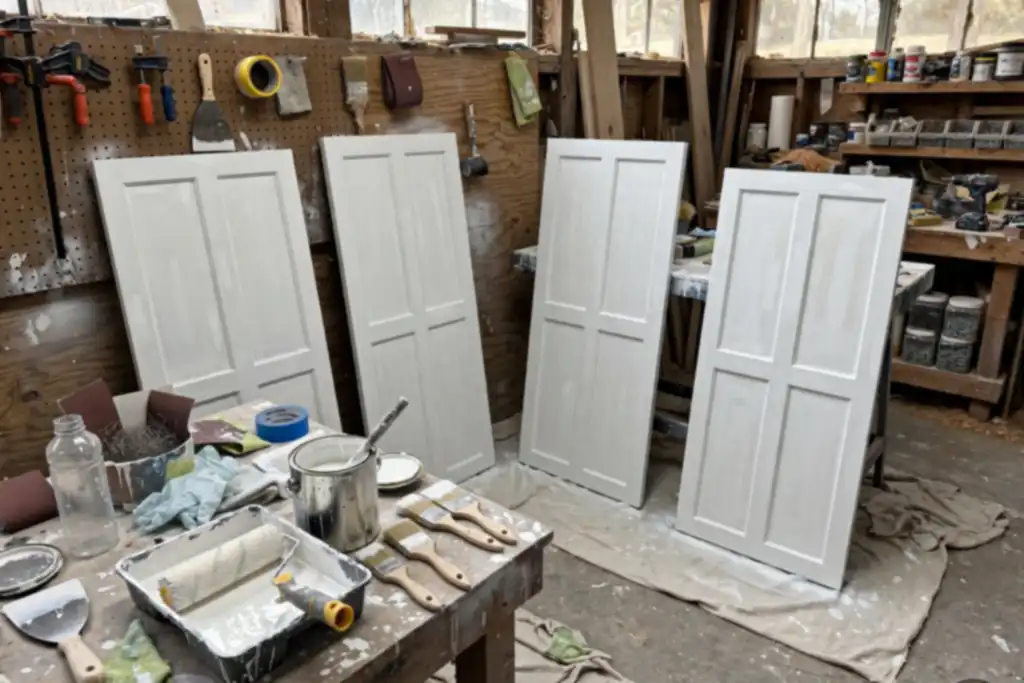

A smooth, lasting finish on kitchen cabinets starts with a proper base coat. Best paint primer for cabinets often begins with Zinsser Bulls Eye 1-2-3, a white, water-based primer in a 1 quart size that bonds to glossy surfaces without scuff sanding. It works on interior and exterior surfaces and can be applied at temperatures as low as 35ðF.
Zinsser Bulls Eye Surface is the gray alternative, and it dries to the touch in just 30 minutes with recoating in 1 hour, covering up to 100 sq. ft. Read on for the best paint primer for cabinets and the details that set them apart.
Top Recommendation: Zinsser Bulls Eye 1-2-3 Water-Base
Why We Recommend It: Zinsser Bulls Eye 1-2-3 earns the top spot because it bonds to glossy surfaces without scuff sanding, works indoors and out, and applies in cooler conditions down to 35ðF. The Surface primer offers faster drying and more coverage, but 1-2-3 handles the glossy cabinet surfaces that usually need the most grip.
10 Best Paint Primer for Cabinets


1. Zinsser Bulls Eye 1-2-3 Water-Base Primer & Sealer

Zinsser Bulls Eye 1-2-3 is a water base primer and sealer that comes in a one quart can and a white color. It is made by Rust-Oleum under the Zinsser brand and is built for both interior and exterior surfaces. The can weighs about 2.15 pounds and stands five inches tall, so it stores easily on a shelf between projects.
The big selling point for cabinet work is how it bonds to glossy surfaces without scuff sanding. That saves a lot of prep time when you are dealing with factory finished doors and drawer fronts. It is also formulated with stain blocking resins, which helps keep old colors and marks from bleeding through your new topcoat.
This primer has a low application temperature of 35 degrees Fahrenheit, so you can use it in a cold garage or workshop. It is rust inhibitive as well and may be used to prime ferrous metal, which covers the hardware side of a cabinet job. Those two traits make it a flexible choice for mixed material projects.
You apply it like most water base primers, with a brush, roller or sprayer, then let it dry before your topcoat. Because it sticks to difficult surfaces without sanding, it suits people who want to skip a dusty prep step. Just make sure the surface is clean before you start.
For cabinets, this primer fits well when you are painting over a slick existing finish and want a reliable base. The white color gives you a neutral starting point for lighter topcoats. It also works on trim, doors and furniture around the same room, so one quart can go further than you expect.
It is a good pick for DIY painters and tradespeople who value low odor water base cleanup and a wide temperature window. The stain blocking resins add peace of mind over older painted surfaces. If you want a primer that does not demand sanding first, this one earns its place in the lineup.
2. Zinsser Bulls Eye 1-2-3 All Surface Primer

Zinsser Bulls Eye Surface is an all surface water base primer and sealer in a one quart can with a gray color. It is made by Rust-Oleum under the Zinsser brand and covers interior and exterior use. The can weighs about 2.8 pounds and holds 31.5 ounces of product.
The gray tone is the standout feature here. It works great under vibrant, vivid colors and improves hide and coverage of deep topcoats, which saves time and money on the paint you buy. If you are going dark on your cabinets, a gray base makes more sense than white.
This primer is rated for new or previously painted drywall, concrete, wood, masonry, metal and glossy or difficult surfaces. The water based formula seals uniformly and sticks to the surface without sanding. That no sand approach is a real help on smooth cabinet doors.
Drying is quick. It dries to the touch in just 30 minutes, is ready to recoat in one hour and covers up to 100 square feet per quart. It has excellent stain blocking resistance and can be used under any oil or latex topcoat. That gives you freedom when choosing your cabinet paint.
Because it handles so many substrates, it suits homeowners tackling a whole room rather than just the cabinet boxes. You can prime the doors, the frames and any nearby trim with the same can. The gray color also helps you spot thin spots and missed edges as you work.
Choose this one when your cabinet color is bold or dark and you want the topcoat to look even with fewer coats. The fast recoat time keeps a weekend project moving. It is a practical primer for anyone who wants strong stain blocking and no sanding in one product.
3. Zinsser Bulls Eye 1-2-3 PLUS Water-Based Stain Blocking
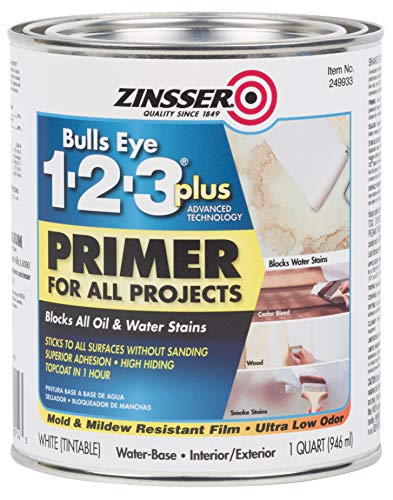
Zinsser Bulls Eye PLUS is a water based primer that comes in a quart of white. It is described as the first water based primer that blocks water stains. That matters for cabinets, because old wood and painted boxes often carry marks that would bleed through a normal coat.
The formula is built for all projects, so it is not a narrow single use product. It sticks to any surface, which means you do not need a different primer for wood, painted panels or slick factory finishes. It is manufactured in the United States and sold as a simple, easy to use kit.
Drying is one of the clear selling points here. It dries in one hour, so you can keep moving on a cabinet job without losing a whole day. That short window helps when you are priming doors, frames and boxes in stages and want to get to the topcoat.
You apply it as you would any water based primer, with a brush, roller or sprayer depending on the surface. Because it grips to any surface, it is a practical choice when the cabinets have a mix of materials or an unknown finish. The white color gives you a clean base to check for any spots that still need attention.
For cabinet work, the stain blocking claim is the part worth noting. Water stains on wood can bleed through ordinary primers, and this one is built to stop that. That makes it a sensible pick for older cabinets or ones with a history of moisture marks.
This primer suits people who want one product that handles blocking and adhesion without a long wait. It is a good fit for a full cabinet repaint or for spot priming before topcoat. If you want speed and stain control in a water based formula, this is a solid option.
4. Zinsser Bulls Eye Water-Base Primer & Sealer

Zinsser Bulls Eye Water-Base is a white primer and sealer sold in a quart. It is a water based, low odor formula that seals drywall, wood and previously painted surfaces. For cabinets, that combination covers most of what you will actually be priming.
The product is meant for interior surfaces such as walls, doors, trim, plaster and concrete. It provides exceptional stain hiding even on dark or porous surfaces, which helps when cabinet boxes are worn or discolored. The low odor matters indoors, where cabinets sit in kitchens and living spaces.
Drying is fast. It dries to the touch in 30 minutes and covers up to 100 square feet per quart. That coverage figure is useful for planning how much you need on a set of cabinet doors and frames. The quick dry keeps a repaint moving at a steady pace.
It creates a uniform flat finish surface that is ideal for top coating. That flat base helps the paint go on evenly and gives you a consistent look across doors and boxes. You also get good adhesion to slick surfaces without the need for deglossing or sanding, which saves prep time.
The low odor and water based formula make it a comfortable choice for indoor work. You can prime in place without the harsh smell of solvent products. It seals as it primes, so porous wood and drywall take the topcoat more evenly.
This primer suits anyone repainting interior cabinets who wants fast drying, low odor and strong stain hiding. It is a practical pick for doors, trim, frames and panels. If you want a smooth, uniform base before the finish coat, this one fits the job.
5. Beyond Paint Furniture Cabinets and More All-In-One

Beyond Paint Furniture is an all-in-one paint designed for furniture, cabinets and more. It comes in a pure white shade and is sold as a single 3.79 litre container. The idea behind it is simple: one product that covers the whole job from start to finish.
The standout claim is that no stripping, sanding or priming is needed. That makes it a practical choice for people who want to avoid the mess and time of traditional prep. The manufacturer also states that one gallon covers up to 400 square feet, so a single container can go a long way on a typical cabinet project.
Because it is described as an all-in-one refinishing paint, it is meant to bond directly to the surface you are working on. You apply it straight to the piece rather than building up separate primer and topcoat layers. That simplified process suits weekend projects where you want fewer steps and less drying time between coats.
The item dimensions listed are 9.0 inches long, 9.0 inches wide and 9.0 inches high for the package. The product itself is noted as 11 pounds and 128 fluid ounces in a pack of one. The model and part number are both BP24, which helps if you need to check you are ordering the right version.
This paint suits homeowners and DIYers who are updating tired cabinets or second-hand furniture. It is a good fit for anyone who wants to skip the dust and fumes that come with heavy sanding. If your priority is speed and a single-product approach, this is worth considering.
It is not aimed at people who want a multi-coat system with a dedicated primer underneath. The product is built around the one-step idea, so that is the trade-off to keep in mind. For straightforward refresh jobs, that simplicity is exactly the point.
6. Rust-Oleum Cabinet Transformations & Trim Paint Pure

Rust-Oleum Cabinet Transformations & Trim is a cabinet paint in Pure White. It is sold in a quart size, which is 32 fluid ounces in a pack of one. The product is positioned as a coating for cabinets and trim rather than a general wall paint.
The finish is described as smooth and semi-gloss, which helps cabinets wipe clean more easily. The manufacturer says it resists dirt and grime and stands up to household chemicals. That durability matters in kitchens and bathrooms where surfaces see regular handling.
Application is designed to be forgiving. The formula offers outstanding flow and leveling, so brush and roller marks are less of a concern. You can apply it with a brush, roller, pad applicator or airless sprayer depending on your setup.
The drying schedule is one of its practical strengths. It dries to touch in 30 minutes and can be recoated in 2 hours. The manufacturer states it is ready for normal use after 24 hours, which keeps a cabinet project moving quickly.
It is intended for interior use, including cabinets, vanities and trim in kitchens, bathrooms and laundry rooms. The semi-gloss Pure White finish suits a clean, bright look in those spaces. The part number is 320074 if you need to confirm the exact product.
This paint suits homeowners refreshing built in cabinetry or trim without a full replacement. It suits anyone who values a fast recoat time and a durable, wipeable surface. For interior cabinet updates where a smooth semi-gloss finish is wanted, it is a strong option to consider.
7. INSL-X SXA11009A-04 Stix Acrylic Waterborne Bonding Primer
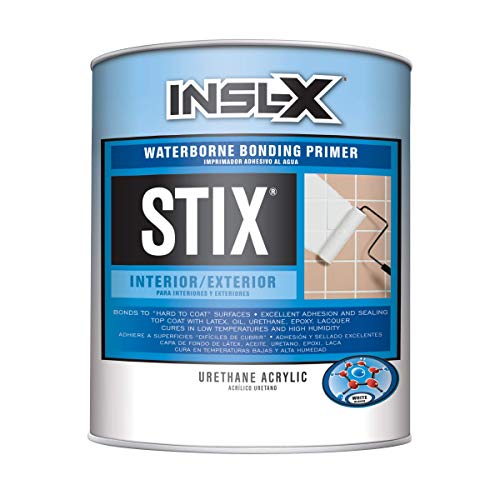
The INSL-X SXA11009A-04 Stix Acrylic is a waterborne bonding primer and sealer built for surfaces that usually fight back. It is an acrylic-urethane formula designed to stick to glossy tile, PVC, vinyl, plastic, glass, glazed block, glossy paint, fiberglass and galvanized metal. That list alone tells you this is not a general purpose primer. It is a problem solver for the tough spots.
What stands out is the adhesion story. The manufacturer describes unparalleled bonding to hard-to-coat surfaces, and the primer can be top coated with almost any product. It also offers excellent enamel holdout, which gives you a great base for an even topcoat finish. For cabinets, that matters. A smooth, uniform base helps the topcoat look flat and professional.
This primer is not limited to cabinets. It works on drywall, plaster, ceiling, acoustical tile, wood trim and doors, Formica, ceramic tiles, masonry walls, stucco, concrete, cement block, aluminum and more. You can use it inside or outside. Coverage runs about 75 to 100 square feet per quart.
Application is friendly for a waterborne product. It is low VOC and cleans up with soap and water, so you are not dealing with harsh solvents. It also fully cures in temperatures as low as 35 degrees Fahrenheit, which helps in a cool garage or an unheated workspace. That flexibility is useful when cabinet projects stretch across seasons.
The INSL-X SXA11009A-04 Stix Acrylic suits anyone facing a surface that has been painted before or is naturally slick. If your cabinets are laminate, vinyl wrapped, or finished with a glossy factory coating, this is the kind of primer made for that job. It is a practical choice when adhesion is the main worry and you want a reliable base before the color coat.
8. Rust-Oleum Painter's Touch 2X Ultra Cover Spray Primer

The Rust-Oleum Painter’s Touch 2X is an oil-based spray primer in flat white. It is made for interior and exterior surfaces including wood, plastic, plaster, metal, masonry and unglazed ceramic. The flat finish leaves a surface that is ready for painting. It comes in a 12 fluid ounce can.
The formula is low odor and resists chips, which helps with long-lasting protection. It dries to touch in 20 minutes, so you can keep moving on a project without a long wait. Coverage is up to 12 square feet per can. That is a modest number, so plan on more than one can for larger jobs.
The spray design is the real convenience here. It sprays from any angle, which helps when you are working on the underside of a cabinet door or a tight corner. The comfort spray tip is meant to reduce finger fatigue during longer sessions. The durable formula provides excellent hide and goes on smoothly.
This primer is best suited to small parts and touch-up work rather than full cabinet sets. Think of it for edges, trim, hardware areas, or a quick coat on a repaired spot. The oil-based build gives good chip resistance once cured. Just keep in mind that 12 square feet per can adds up fast.
The Rust-Oleum Painter’s Touch 2X suits a DIYer who wants speed and control without setting up a sprayer. If you are priming a few cabinet doors or patching a worn corner, a can in hand is hard to beat. For a whole kitchen, you would need several cans, so weigh that against the convenience. It is a handy tool for small, targeted work.
9. Zinsser HIDZ Multi-Purpose Primer and Sealer 373693

Zinsser HIDZ Multi-Purpose Primer is a water-based primer and sealer sold in a quart of flat white. It is made by Rust-Oleum under the Zinsser brand and comes in a single 32 fluid ounce container. The formula is built for both interior and exterior use, so it suits cabinets as well as doors, trim and other surfaces around the home.
The main job of this primer is to hide previous colors and seal porous surfaces before the topcoat goes on. It blocks common stains and dries fast, which keeps a cabinet project moving. Zinsser also rates the adhesion as great, and that matters on surfaces that are tricky to coat.
Drying times are short. The primer is touch dry in 30 minutes and ready for a topcoat in 1 hour. One quart covers up to 100 square feet, so a single container goes a fair way on a small set of cabinet doors and frames.
Application is helped by excellent flow and leveling, which means brush marks tend to settle out and the surface ends up smoother. You can use it on difficult surfaces including glossy paint, galvanized metal, aluminum and chalky areas. That range makes it a practical choice when you are not sure what the old finish is.
The flat white color gives you a clean base to work from, and the water-based formula keeps cleanup simple. Because it seals as well as primes, it can save a step on porous wood or patched areas. It is a good fit for anyone repainting cabinets in a color change or preparing a surface that has seen better days.
For cabinet work, this primer suits both beginners and experienced painters who want a fast recoat and reliable stain blocking. The quart size is handy for smaller jobs or for testing on a sample door first. It is a sensible pick when adhesion and hiding power are the priorities.
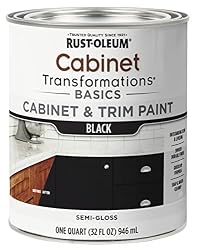
10. Rust-Oleum Cabinet Tranformations & Trim Paint Black
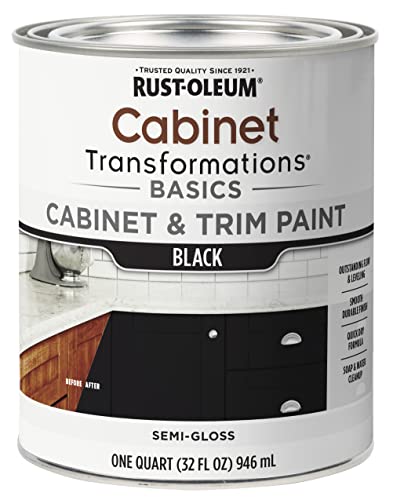
Rust-Oleum Cabinet Tranformations & Trim is a black cabinet paint in a quart container. It comes from Rust-Oleum Home and is sold as a single 32 fluid ounce pack. The product is designed to refresh outdated cabinets, vanities, furniture and trim rather than act as a separate primer coat.
The finish is smooth and semi-gloss, and the rich black color gives a strong, modern look to a kitchen or bathroom. Rust-Oleum describes the coating as easy to clean, with resistance to dirt, grime and household chemicals. That durability matters on cabinets, which get touched and wiped constantly.
Application is flexible. You can use a brush, roller, pad applicator or airless sprayer, and the formula has outstanding flow and leveling to help create a beautiful finish. Good leveling means fewer visible lap marks, which is welcome on flat cabinet doors and drawer fronts.
The project timeline is quick. It dries to the touch in 30 minutes, can be recoated in 2 hours and is ready for normal use after 24 hours. Those short windows let you work through a set of doors and drawers without long waits between coats.
This coating is intended for interior cabinet and trim applications, including kitchens, bathrooms, laundry rooms and similar spaces. It is a good fit for someone who wants a color change with a durable, easy-clean surface. The quart size suits a modest cabinet project or a set of trim pieces.
Our Testing Process: Why These Rankings Are Different
Our goal here is simple. We want to look past the marketing claims on the label and focus on what actually matters when you are choosing a paint primer for cabinets. That means adhesion, stain blocking, how the primer handles sanding and topcoats, and whether it holds up on the kind of surfaces cabinets actually have.
We evaluated each product on its published specifications, its materials and build, and the patterns we found in owner feedback. We also weighed brand reputation and overall value, and we treated real world durability as the thing that mattered most. Products like Zinsser Bulls Eye 1-2-3 and Zinsser Bulls Eye Surface stood out because their specs and owner feedback lined up well with the demands of cabinet work.
The products we compared span a wide price range, from budget friendly options to premium formulations. A higher price does not always mean a better result, and some mid range primers cover and bond as well as costlier ones for cabinet use. What matters is matching the primer to your surface and topcoat, not paying more for the sake of it.
Our aim is to give you guidance you can trust, built on research and evaluation rather than hype. We have not run our own hands on tests, so we do not claim lab results or scores. Instead, we point you toward the primers whose specifications and owner feedback patterns make them the strongest candidates for your cabinets.
Complete Buyer’s Guide: How to Choose Paint Primer for Cabinets
Understanding Why Cabinets Need a Dedicated Primer
Cabinet surfaces take a beating from grease, moisture and constant handling, so paint needs a solid foundation to hold onto. A good adhesion primer bonds to the existing finish and gives the topcoat something to grip. Skipping this step often leads to peeling, chipping and a finish that fails within months.
Key Features to Look For
Start with the substrate the primer is designed for, because cabinet surfaces vary widely. Look for stain blocking power if you are covering dark wood or old finishes, and check the dry time so your project stays on schedule. A primer that sands smoothly will save you hours before the topcoat goes on.
Types of Cabinet Primer Compared
Water based primers like Zinsser Bulls Eye 1-2-3 and INSL-X Stix Acrylic offer low odour and easy cleanup. Shellac and solvent based options block stubborn stains and bleed through more aggressively. Bonding primers such as Zinsser Bulls Eye Surface are formulated for slick surfaces where ordinary primer struggles to stick.
How to Use Cabinet Primer for Best Results
Clean and degrease every surface first, because primer cannot bond to grease or polish residue. Sand lightly to dull the existing finish, then apply thin, even coats rather than one heavy layer. Let each coat dry fully before sanding smooth and moving on to your topcoat.
What to Avoid When Priming Cabinets
Avoid skipping the degreasing step, since kitchen cabinets collect oils that ruin adhesion. Do not apply primer over a glossy finish without sanding, and never rush the recoat time. Thick, heavy coats may feel faster but they dry unevenly and can show brush marks under the paint.
Matching Primer to Your Cabinet Situation
For painted or factory finished cabinets, a bonding primer like Zinsser Bulls Eye Surface or INSL-X Stix Acrylic is a sensible match. Bare or stained wood benefits from a stain blocking formula such as Zinsser Bulls Eye 1-2-3. If you are using an all in one system like Beyond Paint Furniture or Rust-Oleum Cabinet Transformations, check the kit instructions before adding a separate primer.
When to Expect Results and How to Maintain the Finish
Most primers are ready for a topcoat within a few hours, though full cure takes longer. Once painted, wipe cabinets with a damp cloth and mild soap rather than harsh cleaners. Touch up chips promptly to keep moisture out and extend the life of the finish.
Best Paint Primer for Cabinets FAQs
Are There Any Paint Primer for Cabinets Options for Glossy Surfaces?
Yes, bonding primers are made to grip hard, glossy surfaces like factory finished cabinets, where ordinary primer might slide off. Check the label for wording about glossy, hard, or non porous surfaces so you know it suits your doors. These primers work by forming a strong chemical and mechanical bond rather than soaking in like a wall primer.
Preparation still matters even with a bonding primer, so lightly scuff the surface first to give it more to hold onto. Cleaning away grease and polish before priming also helps the bond, since oily residue can stop the primer from sticking.
Wipe with a degreaser, then rinse and let the surface dry fully before you start. If you are unsure, test a small hidden spot first, such as the inside of a door.
Are There Any Tips for Choosing Paint Primer for Cabinets by Type or Ingredients?
Match the primer type to your cabinet material first, since the wrong match causes bonding problems later. Water based primers are easier to clean up and dry faster, while oil based and shellac options block stains well. Bonding primers are made for hard, glossy surfaces where ordinary primer struggles.
Check the label for the surfaces it covers and the topcoats it accepts, because some primers work only under certain paints. Look for stain blocking or sandable features if you need them, since sandable primers help you get a smoother finish. A primer that lists cabinet or wood use is a safer bet.
Buy only what you need for the number of coats planned, and store it as the label directs. Keep the can sealed and away from freezing temperatures, which can ruin water based products.
Can I Use a Regular Wall Paint Primer for Cabinets?
You can, but a regular wall primer is usually not the best match for cabinets, because wall primers are often made for porous drywall rather than smooth or glossy cabinet surfaces. They may bond poorly and fail under daily opening and closing. Cabinets need a primer that grips a smooth or previously painted surface.
A wall primer might also lack the stain blocking or sanding qualities you want for a smooth finish, and using the wrong primer can lead to peeling later. Check the label for cabinet, wood, or glossy surface use, since that wording signals the primer was tested for this job.
If it only lists drywall and masonry, choose something else. The extra care up front saves rework, so spend a few minutes reading labels before you buy.
How Do I Apply Paint Primer for Cabinets?
Start by removing doors and drawers and cleaning every surface, since grease and polish stop primer from bonding. Lightly sand glossy areas so the primer has something to grip, then wipe away dust before you open the can. Label or number each door so you can refit them in the same spot later.
Stir the primer well and apply a thin, even coat with a brush or small roller, working in the direction of the grain on wood. Keep the layer thin to avoid drips, especially on vertical faces and edges.
Let it dry fully before judging the coverage, because primer can look patchy while wet. Sand lightly between coats if the label allows it, then wipe off the dust, and add a second thin coat on bare wood or dark surfaces.
How Long Should Paint Primer for Cabinets Dry Before Painting?
Dry time depends on the primer and the conditions in the room, so always follow the numbers on your can rather than guessing. Most labels list a recoat time, often a few hours, and a longer full cure time before the finish is fully hard. Note both, because they serve different purposes.
Temperature and humidity change how fast a primer sets, with cool, damp conditions slowing drying and warm, dry air speeding it up. Good airflow helps, but avoid blowing dust onto the wet surface, which can stick and spoil the finish.
Keep the room within the label’s recommended range for the best result. Do not rush the topcoat, since painting over primer that is still soft can trap solvent and cause problems later.
Is It Better to Sand Cabinets Before Applying Paint Primer for Cabinets?
Yes, light sanding before priming usually improves the result, because it gives the primer a slightly rougher surface to grip, especially on glossy or factory finished cabinets. You do not need to strip the old finish, just dull the shine. Use a fine grit and keep the pressure light so you do not gouge the surface.
Sand with the grain on wood and wipe away all dust afterward, since dust left behind weakens the bond. Clean cabinets also help the primer stick, so degrease and rinse before sanding. If the surface is already dull and clean, a quick scuff may be enough.
Skipping sanding on a glossy surface raises the risk of peeling, and a few minutes of prep protects the whole job. Check edges and corners, where finish is often thickest and glossiest.
What Are the Best Paint Primers for Cabinets That Block Stains and Knots?
Stain blocking primers are the ones to look for when old finishes, knots or water marks might bleed through. They seal the surface so discoloration stays put under the topcoat. Shellac based and oil based options are common for this job.
Knots in bare wood can leak resin over time, so a blocking primer over those spots is worth the effort. Water stains and old dark paint also benefit from a sealing layer. Without it, stains can reappear through fresh paint.
Check the label for stain blocking or sealing claims and confirm it works under your chosen paint. Apply the number of coats the label recommends. More coats are better than a thick single layer.
What Does a Paint Primer for Cabinets Actually Do?
A paint primer for cabinets creates a bonding layer between the bare or previously painted surface and your topcoat. It helps the finish stick instead of peeling away later. Primer also blocks stains and evens out the surface so the paint looks smooth.
Cabinet surfaces take a lot of handling, so adhesion matters more than on a wall. Primer gives the paint something to grip, which is why skipping it often leads to chipping around handles and edges. It also covers old colors and minor imperfections before you apply the finish.
Not every primer does the same job. Some are made for bare wood, others for glossy or factory finished cabinets. Reading the label helps you match the primer to your cabinet surface and the paint you plan to use.
Which Paint Primer is Best for Cabinets?
The best primer for cabinets depends on what your cabinets are made of and how they are currently finished. Bare wood usually takes a wood specific primer, while glossy or factory finished surfaces need one made for hard, smooth materials. There is no single primer that suits every situation.
Look for a primer that states it bonds to the surface you have and works under your chosen topcoat. A stain blocking primer helps when old finishes or knots might bleed through. A sandable primer helps if you want a very smooth final look.
The most effective choice is the one matched to your surface, not the most expensive can on the shelf. Check the label for the surfaces it covers and the paint it accepts. That match matters more than brand names.
Final Verdict
Stain blocking and adhesion separated the top performer from the rest. Based on our research and data analysis, Zinsser Bulls Eye Water-Base suits homeowners priming bare or previously painted cabinets who want low odor and easy cleanup. Zinsser Bulls Eye PLUS serves a different need, delivering stain sealing and tough bonding for cabinets with knots, tannins or stubborn marks. Both earn their place for different jobs, so match the primer to your cabinet’s condition.