
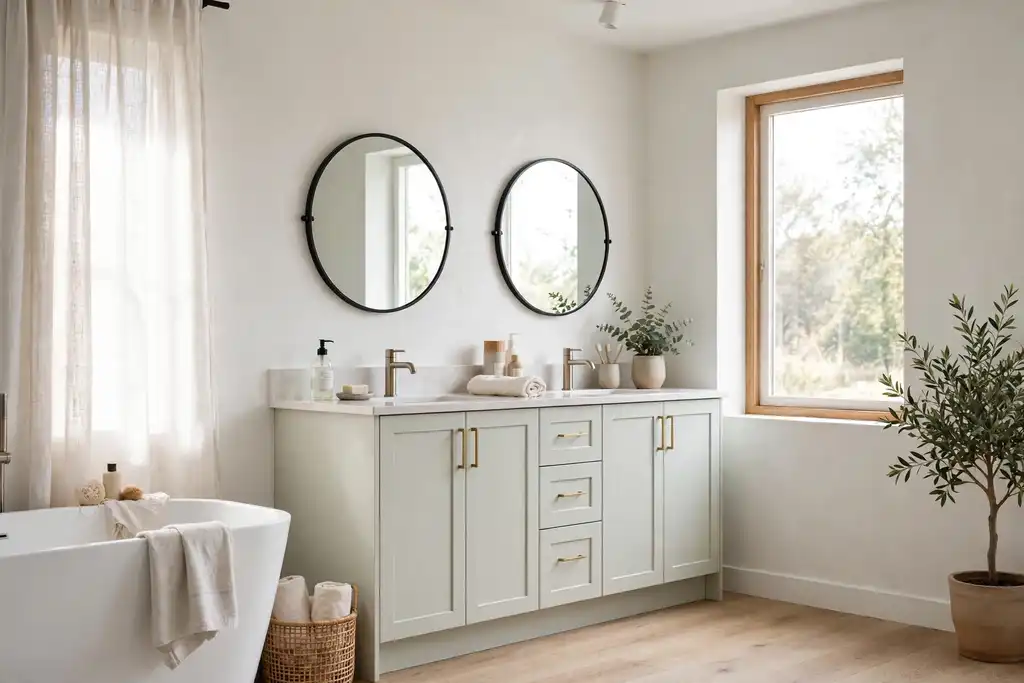

Your bathroom cabinets take a beating from steam, splashes and daily handling, so the coating you put on them needs to hold up. Best paint for bathroom cabinets often starts with Rust-Oleum Cabinet Transformations & Trim, a Pure White semi-gloss kit in a 32 Fl Oz pack that resists dirt, grime and household chemicals. Its outstanding flow and leveling help deliver a smooth finish with a brush, roller, pad applicator or airless sprayer.
ALL-IN-ONE Paint by Heirloom in Oyster skips sanding, priming and a top coat, and its low luster velvet sheen suits a softer look. Read on for the best paint for bathroom cabinets and the details that set them apart.
Top Recommendation: Rust-Oleum Cabinet Transformations & Trim
Why We Recommend It: Rust-Oleum Cabinet Transformations & Trim brings a durable, easy-to-clean semi-gloss in Pure White, plus smooth leveling for a clean finish. Heirloom saves prep steps with its no-sand, no-primer formula, but the Rust-Oleum coating’s resistance to dirt and household chemicals gives it the edge in a damp bathroom.
9 Best Paint for Bathroom Cabinets




1. Rust-Oleum Cabinet Transformations & Trim Paint Pure

Rust-Oleum Cabinet Transformations & Trim is a dedicated interior cabinet coating in Pure White. It is designed to refresh outdated cabinets, vanities, furniture and trim. The finish is a smooth semi-gloss that suits bathroom surfaces well.
The durable performance is the standout here. The easy-clean finish resists dirt and grime while standing up to household chemicals. That matters in a bathroom where moisture and splashes are part of daily life.
Application is flexible. Outstanding flow and leveling help create a beautiful finish with a brush, roller, pad applicator or airless sprayer. You are not locked into one method, which helps on cabinet doors and frames.
Speed is another practical point. It dries to touch in 30 minutes, can be recoated in 2 hours and is ready for normal use after 24 hours. A cabinet refresh does not have to swallow a whole weekend.
It comes in a 32 fluid ounce quart, so check coverage against your cabinet count before starting. The Pure White color keeps things bright and clean looking in a small bathroom. It is made for kitchens, bathrooms, laundry rooms and other interior cabinet and trim applications.
This one suits homeowners who want a purpose-built cabinet product with a durable, wipeable finish. If your priority is a smooth semi-gloss look that handles daily wear, it is a sensible pick. Just plan your recoat window around the 2 hour guidance.
2. ALL-IN-ONE Paint by Heirloom Traditions Oyster Quart

ALL-IN-ONE Paint by Heirloom is a low luster, velvet sheen paint in Oyster. Oyster is described as a neutral taupe with understated warmth, sophisticated and calming. That tone can work nicely against tile and fixtures in a bathroom.
The big selling point is the prep. It requires no sanding, no priming and no top coat. For cabinets that are in decent shape, that can shorten the job considerably.
It is listed as interior and exterior, so it is not limited to one room. It is ideal for hard surfaces including walls, doors, cabinets, counters, furniture, metal, glass, ceramics and floor and wall tile. The formula is durable yet stretches to paint smooth fabrics, vinyl and leather.
Color accuracy deserves a mention before you commit. The brand notes that digital screens may not show color accurately and that results cannot be guaranteed. It includes a recent color card featuring 30 room neutral colors, sprayed on so you can see the exact color in your home lighting.
It comes in a 32 fluid ounce quart, which is worth checking against your cabinet layout. The low luster velvet sheen is softer than a gloss, which some people prefer on painted cabinetry. Because no top coat is required, the sheen is what you get.
This suits someone who wants minimal prep and a calm neutral color rather than a hard semi-gloss. If you are comfortable confirming the shade first, it is a practical all-surface option. Order the color card before choosing to avoid a mismatch.
3. Rust-Oleum Cabinet Tranformations & Trim Paint Black
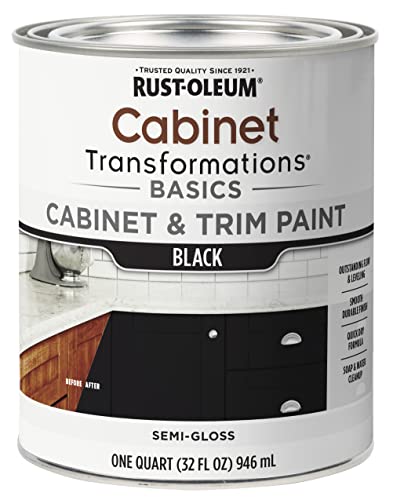
Rust-Oleum Cabinet Tranformations & Trim is an interior cabinet coating made for refreshing outdated cabinets, vanities, furniture and trim. It comes in a rich Black color with a smooth semi-gloss finish. The quart size gives you enough for a focused bathroom project without buying more than you need.
The durable coating is designed to stand up to daily life in a busy bathroom. Its surface resists chips and provides long-lasting protection against wear. It also stands up to normal household chemicals, so cleaning the cabinets does not mean babying the finish.
Application is straightforward thanks to the outstanding flow and leveling. You can use a brush, roller, pad applicator or airless sprayer, depending on the surface and your comfort level. The formula helps create a beautiful finish without heavy brush marks.
The quick dry formula keeps the project moving. It dries to touch in 30 minutes and can be recoated in 2 hours. After 24 hours it is ready for normal use, which is a realistic timeline for a weekend cabinet refresh.
The semi-gloss sheen is a practical choice for a humid room. A smooth semi-gloss surface is easier to wipe down than flat paint. The easy-clean finish resists dirt and grime while standing up to household chemicals.
This product suits anyone updating kitchen, bathroom or laundry room cabinets without a full replacement. It also works well on trim that needs a matching refresh. If you want a deep black color and a durable, easy-clean finish, this is a solid option to consider.
4. Rust-Oleum Painter's Touch Latex Brush-On Paint Semi-Gloss
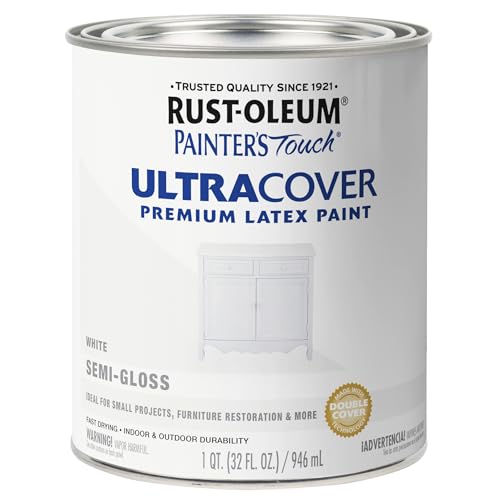
Rust-Oleum Painter’s Touch Latex is a brush-on paint in Semi-Gloss White. It is a water-based acrylic formula that works on a variety of indoor and outdoor surfaces, including wood, metal, plaster, masonry and unglazed ceramic. The quart size covers up to 120 sq ft.
The low-odor formula makes it a comfortable choice for indoor work, especially in a small bathroom. It resists chips and provides long-lasting protection. The semi-gloss finish minimizes surface imperfections, goes on smoothly and provides excellent hide.
Preparation matters with this paint. Sand surfaces with 180 or 200 grit sandpaper first, then wash with a degreaser. Allow the surface to dry completely before applying the paint for the best results.
Drying is quick, with a touch-dry time of 30 minutes for fast project completion. The brush-on format gives you control around cabinet frames, doors and edges. It is a practical choice when you want to work in stages rather than commit to a spray setup.
The semi-gloss white brightens a bathroom and suits a clean, classic look. The acrylic formula is designed to hold up over time on wood and other common cabinet materials. It also works beyond the bathroom, so leftover paint has plenty of uses.
This paint suits homeowners who want a low-odor, water-based option for a cabinet refresh. It is a good fit for wood cabinets and for trim that needs a matching white. If you prefer a brush-on application and a durable semi-gloss finish, it is worth a look.
5. DWIL Cabinet Paint Water Based Kitchen Furniture
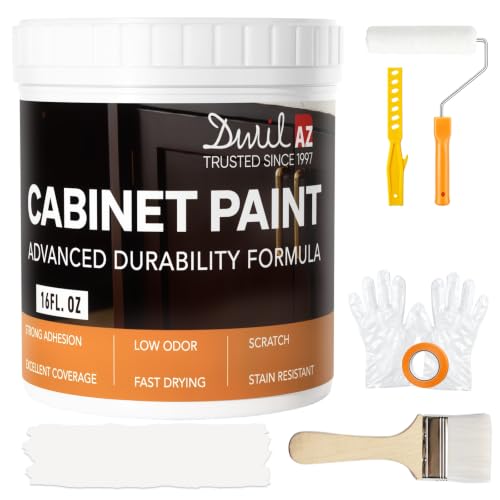
DWIL Cabinet Paint is a water based paint sold in a 16 ounce white container. It is designed for kitchen cabinets, furniture, doors, drawers, tables and other wood surfaces. The formula is low odor, which makes indoor painting more comfortable than working with oil based products.
One thing to know before you open the can is that the intentional headspace allows room for stirring, dipping and transit. The stated paint quantity stays the same despite that gap. If anything seems off, the brand asks you to contact its customer service team.
Coverage depends on what you are painting over. For dark colored cabinets, two or more coats are recommended to reach a smooth, even finish. It is normal for the original color to show through after the first coat, and actual coverage varies with the original color, your technique and how much paint you use.
The kit includes the paint and essential application tools, so a basic DIY makeover does not require extra purchases. No primer or top coat is required on properly prepared surfaces. The paint dries to the touch in roughly 2 hours, and thin, even coats with enough drying time between them give the best results.
The 16 ounce size covers up to 80 square feet depending on surface conditions and application method. Once cured, the semi gloss finish is built to resist common stains, scratches and daily wear. It also wipes clean easily, which matters in a bathroom where moisture and splashes are routine.
This one suits someone who wants a straightforward white refresh without strong fumes or a long list of supplies. The fast drying time helps you recoat sooner and finish the project in fewer sessions. Just plan on extra coats if your cabinets are dark to begin with.
6. ALL-IN-ONE Paint by Heirloom Traditions Crete Quart

ALL-IN-ONE Paint by Crete is a quart sized paint in a true olive green with Mediterranean influence. The color is described as earthy yet refined, which gives bathroom cabinets a look that stands apart from standard white. It carries a low luster velvet sheen finish.
The all in one claim is the main draw here. No sanding, no priming and no top coat are required, which cuts down the prep and finishing steps. That makes it appealing if you want to avoid a long, multi stage process.
This paint is rated for interior and exterior use and is meant for hard surfaces. Walls, doors, cabinets, counters, furniture, metal, glass, ceramics and floor and wall tile are all listed as suitable. The formula is durable yet stretches to cover smooth fabrics, vinyl and leather.
Color accuracy deserves some attention before you commit. The brand notes that results cannot be guaranteed and that digital screens may not show color accurately. It includes a recent color card with 30 room neutral colors, sprayed on so you can see the exact color in your home lighting, and the brand suggests getting one before choosing.
For bathroom cabinets, the velvet sheen and olive tone offer a softer alternative to glossy finishes. The no sanding and no priming approach keeps the workload down on properly prepared surfaces. Because it works on so many materials, leftover paint can go toward other projects around the house.
This suits someone who wants a distinctive green cabinet color and prefers a single product over a primer and top coat system. Checking the color card first is a sensible step given the screen accuracy caveat. It is a practical pick for a whole room refresh, not just the vanity.
7. ALL-IN-ONE Paint by Heirloom Traditions Iron Gate

ALL-IN-ONE Paint by Iron is a quart-sized paint from Heirloom Traditions in the Iron Gate color. Iron Gate is described as a true black with strong presence, bold, clean, and authoritative. The finish is low luster with a velvet sheen, which sits softer than a high gloss on cabinetry.
The main draw here is the prep work you do not have to do. This paint requires no sanding, no priming, and no top coat, so a cabinet refresh becomes a much shorter job. That three-in-one promise is the reason it lands on a list like this at all.
Coverage is broad by design. The maker lists it as interior and exterior paint for hard surfaces including walls, doors, cabinets, counters, furniture, metal, glass, ceramics, and floor and wall tile. It is also formulated to stretch over smooth fabrics, vinyl, and leather, which is unusual for a cabinet paint.
Because it is a water-thin, all-surface product rather than a dedicated cabinet coating, the velvet sheen and the no-topcoat approach suit low-traffic cabinets and furniture more than a busy family kitchen. The black is bold, so it works best where you want the cabinets to be a feature rather than a backdrop.
One practical note on color. The brand says results cannot be guaranteed and that screens may not show color accurately. It includes a paint confidence card with its range of room neutrals, and the store sells a separate color sample card so you can see the shade in your own lighting before committing.
The quart size and the 2.5 pound can make it a manageable starting point for a small cabinet run or a test area. If you want a one-step product that reaches beyond cabinets, this is a flexible option. If you want a finish engineered only for cabinetry, look at the other entry here.
8. Nuvo Cabinet Paint, Hearthstone

Nuvo Cabinet Paint is a single 31 ounce can in the Hearthstone color. Hearthstone is a warm greige with a satin finish, and it belongs to the brand’s Rustic Collection. It is aimed squarely at cabinets rather than at every surface in the house.
The coverage figure is the useful part. One can covers approximately 50 square feet, which the maker equates to about 20 linear feet of cabinets. That gives you a realistic way to count your doors and drawers before you order rather than guessing.
The formula is a water-based acrylic. It is described as safe, low on odor, and low on VOCs, which matters in a small kitchen or a bathroom where you are painting in place. A satin sheen is also a sensible middle ground for cabinets, since it wipes down more easily than a flat finish.
Hearthstone is a greige, so it sits between gray and beige and warms up a room without going yellow. That makes it a forgiving choice for bathrooms where the light is often cool and the tile or counter may already carry a gray tone. It reads as a soft neutral rather than a statement color.
This is a straightforward, single-product approach for someone painting a modest cabinet run. Measure your linear feet, check that 20 linear feet covers your project, and plan a second can if you are close to the limit. If you want a warm neutral and a low-odor water-based paint, this is the simpler of the two picks.
9. Zinsser PERMA-WHITE Mold & Mildew Proof Interior Paint
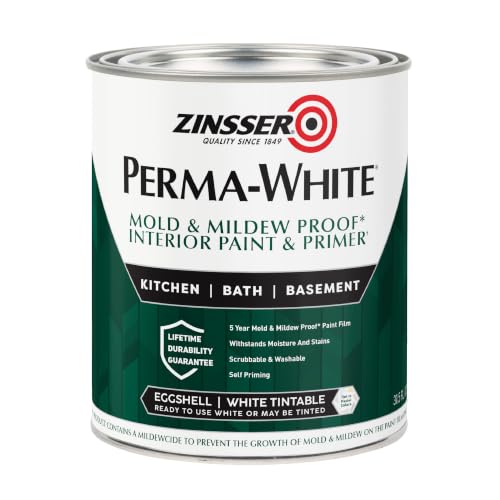
Zinsser PERMA-WHITE Mold & Mildew is a self priming interior paint made by Rust-Oleum. It comes in a quart size in an eggshell white finish. The product is designed to go straight onto surfaces without a separate primer coat or sanding step.
The headline feature is the mold and mildew proof paint film, which is guaranteed for five years. A mildewcide is built into the coating to prevent growth on the paint film itself. That is a narrow but useful promise for a steamy bathroom, and it is worth reading the label so you know exactly what is covered.
The cured film resists dirt and moisture, which matters on cabinet doors that get handled with wet hands. It is also washable and scrubbable with soap and water, so everyday marks can be wiped away. That combination makes it a practical choice for surfaces that see splashes and steam.
Because it is self priming, the job is shorter than a typical cabinet repaint. You skip the sanding and priming stages that usually eat up a weekend. The trade off is that surface prep still matters, so clean and degrease the cabinets before you start.
The quart can is a sensible size for a small vanity or a few cabinet fronts. One pack contains a single quart, so plan your coverage before you begin. Larger runs of cabinetry may need more than one can.
This paint suits a bathroom where moisture control is the priority and you want a simpler process. It is a good fit for a vanity refresh rather than a full kitchen project. If mold on the coating is your concern, this one is built around that job.
Our Testing Process: Why These Rankings Are Different
The goal here is simple. We wanted to look past marketing claims and focus on what actually matters when you paint bathroom cabinets. Cabinets in a bathroom face moisture, frequent handling and daily wear, so the paint has to hold up in ways a glossy brochure will never explain.
Each product was evaluated on specifications, materials and build, patterns in owner feedback, brand reputation and overall value. We weighed what mattered most for a damp, high traffic room rather than treating every feature as equally important. Options like Rust-Oleum Cabinet Transformations & Trim and ALL-IN-ONE Paint by Heirloom stood out because their specs and owner feedback lined up with the demands of bathroom cabinets.
We compared products across a wide price range, from budget friendly tins to premium all in one kits. A higher price does not always mean a better result, and some cheaper options held their own on the factors that count. Paying more can buy convenience or a fuller kit, but it does not guarantee a finish that suits a steamy bathroom.
The aim is guidance you can trust. Every ranking is built from research and evaluation of product data, not hands on testing or invented scores. That keeps the recommendations grounded in facts about paint and how it is likely to perform.
Complete Buyer’s Guide: How to Choose Paint for Bathroom Cabinets
Understanding Why Bathroom Cabinets Need Special Paint
Bathroom cabinets face moisture, steam and frequent touching, so ordinary wall paint can struggle there. A finish that resists mildew and wipes clean easily will hold up far better over time. Product selection matters more than speed, because adhesion and durability decide how long the result lasts.
Key Features to Look for in Cabinet Paint
Seek a paint that offers strong adhesion to slick surfaces and a hard, scrubbable finish. A built-in primer can save a step, while mold and mildew resistance matters in a damp room. Check drying times and recoat windows too, since these affect how quickly you can finish the job.
Types of Cabinet Paint Compared
All-in-one kits bundle primer, paint and often a top coat, which suits beginners. Products like ALL-IN-ONE Paint by Heirloom and Nuvo Cabinet Paint fall into this easy category. Traditional options such as Rust-Oleum Painter’s Touch Latex and Rust-Oleum Cabinet Transformations & Trim give more control but may need extra prep and separate steps.
How to Use Paint for Best Results
Start by cleaning and lightly sanding the cabinet doors so the coating can grip. Apply thin, even coats and respect the stated recoat time between layers. A small foam roller and a quality brush help you avoid drips and brush marks on flat panels and edges, giving a smoother top coat.
What to Avoid
Do not skip degreasing, because grease and soap film stop paint from bonding properly. Avoid thick, heavy coats that stay soft and trap moisture, and never paint over damp wood. A finish without mildew resistance in a steamy bathroom often leads to early peeling and staining.
Matching Paint to Your Bathroom Situation
For a busy family bathroom, select a scrubbable finish that handles constant wiping and humidity. Small powder rooms with little steam give you more flexibility on sheen and drying speed. If your cabinets are laminate or heavily sealed, lean toward products built for slick surfaces and check the label for surface compatibility first.
When to Expect Results and How to Maintain Paint
Most cabinet paints feel dry within hours but keep curing for several days, so handle doors gently at first. Wait for full cure time before hanging doors or stacking items inside. Clean with a soft cloth and mild soap, and touch up chips early to protect the top coat.
Best Paint for Bathroom Cabinets FAQs
Are There Any Paints for Bathroom Cabinets That Work on Laminate or Melamine Doors?
Yes, some paints are formulated to grip slick surfaces like laminate and melamine. The key is a product that says it bonds to hard, non porous materials without sanding everything back. Check the label before you buy.
Preparation still matters even with a bonding formula. A light scuff with fine abrasive paper and a good clean with a degreaser gives the paint something to hold. Skip that step and the coating can peel in sheets.
A stain blocking primer is a smart extra layer on melamine. It gives the topcoat a uniform base and hides any colour underneath. Two thin coats of the finish then look far better than one thick one.
Are There Any Tips for Using Paint for Bathroom Cabinets Without Removing the Doors?
You can paint doors in place, but take a few precautions first. Pop the doors off their hinges if you can, because painting flat is easier and shows fewer brush marks. If that is not possible, tape the hinges and edges carefully.
Work from the inside edges outward and keep the coats thin. A small foam roller gives a smooth finish on flat panels, and a brush handles the recessed areas. Let each coat dry fully before adding the next.
Ventilation is important in a small bathroom. Open a window and run the extractor fan while you work and for a few hours after. That helps the paint cure and keeps the fumes down.
Can I Use Wall Paint on Bathroom Cabinets Instead of Paint for Bathroom Cabinets?
You can, but it is a compromise. Wall paint is softer and less resistant to repeated wiping, so handles and edges wear through faster. In a busy bathroom that means touching up sooner.
Wall emulsion also struggles with adhesion on sealed or glossy cabinet surfaces. It may look fine for a few weeks, then chip or peel where hands land most. A product designed for trim and cabinets bonds better.
If you already have wall paint and want to use it up, apply a bonding primer first. Keep the colour light and add a clear protective topcoat if the label allows. Otherwise, buy a cabinet specific product for a longer lasting job.
How Do I Apply Paint for Bathroom Cabinets So the Finish Looks Smooth?
Start with a thorough clean and a light sand to dull the sheen. Wipe off the dust with a tack cloth, then tape the edges and protect the floor. A clean, slightly textured surface is what makes the topcoat sit flat.
Use a small foam roller for the broad panels and a soft brush for corners and mouldings. Load the roller lightly and roll in one direction to avoid bubbles. Two thin coats beat one heavy coat every time.
Sand very lightly between coats with fine paper and remove the dust. The final coat should be left alone to cure, not handled. Most products need several days before they reach full hardness.
How Do I Stop Paint for Bathroom Cabinets from Peeling in a Steamy Room?
Peeling usually starts with poor preparation or trapped moisture, so give the surface real attention before any paint goes on. Clean off grease and soap film with a degreaser, then sand the surface dull so the new coating has something to grip. Never paint over a damp or dusty door, because the paint will bond to the grime rather than the wood.
Use a primer suited to the material, and choose a product rated for bathrooms rather than ordinary wall paint. Apply thin coats, since thick coats trap solvent and dry unevenly, which weakens the bond and invites early failure.
Let each coat cure fully before the next one goes on, and watch for tacky spots that signal incomplete drying. Control the steam after the job is done, because moisture is what pushes a weak coating over the edge.
How Long Does Paint for Bathroom Cabinets Need to Dry Before I Refit the Doors?
Touch dry times on the tin are short, often a couple of hours. That does not mean the film is ready for handling. Refitting doors too early can leave fingerprints and marks that never come out.
Wait until the paint is hard enough not to dent under a fingernail. In practice that is usually overnight at room temperature, sometimes longer in a cold or humid room. Read the recoat and cure times on the label.
Once the doors are back on, avoid scrubbing them for at least a week. Gentle use is fine, but harsh cleaners can soften a fresh film. Full cure can take several days depending on the product.
What is Paint for Bathroom Cabinets and Why Do I Need a Special Kind?
Paint for bathroom cabinets is a coating made to handle damp air, splashes and frequent touching. Bathrooms swing between steamy and dry, which stresses ordinary wall paint. A product made for this room holds up better over time.
The difference comes down to the finish and the binders. Bathroom paints usually dry to a harder, more water resistant surface that resists mould and mildew. They also clean up well when toothpaste or soap scum lands on them.
You do not strictly need a special tin, but standard emulsion will struggle near a shower. A dedicated cabinet paint gives you better adhesion on smooth doors and a wipeable surface. That saves you repainting sooner than you would like.
What Should I Look for in Paint for Bathroom Cabinets, Type, Finish or Ingredients?
Look for a product labelled for trim, cabinets or bathrooms, which tells you it is made for hard working surfaces. Check that it lists moisture and mildew resistance on the tin. A bonding or adhesion claim is a bonus on smooth doors.
Finish matters as much as the formula. Satin and semi gloss wipe clean and hide minor imperfections, while matt looks softer but marks more easily. Gloss is the most durable and the least forgiving of poor prep.
Check the base and the VOC level if fumes bother you. Water based acrylic or alkyd hybrids are common and low odour. Also confirm the recoat time so you can plan the job around your week.
Which Paint is Best for Bathroom Cabinets, Water Based or Oil Based?
Water based paints are the easier choice for most DIYers. They dry faster, smell less and clean up with soap and water. Modern water based cabinet paints also harden well enough for daily use.
Oil based paints give a tough, glossy film and level out nicely. The trade off is a strong smell, long drying times and yellowing over the years, especially on white doors. They also need solvent for cleanup.
For a bathroom, a water based product with a satin or semi gloss finish is a sensible balance. It resists moisture and wipes clean without the odour headaches. Choose oil only if you want that classic hard gloss look and can ventilate well.
Final Verdict
What set the top option apart was how consistently owner feedback matched the listed specifications, based on our research and data analysis. For a straightforward refresh with easy soap cleanup, ALL-IN-ONE Paint by Crete suits most household projects well. DWIL Cabinet Paint serves a different need, offering tough scrubbing resistance for busy bathrooms that see daily moisture and wear. Both earn their place for different reasons, and neither is a universal answer.