
Your underbody takes a beating from road salt, water and gravel, so a durable coating matters. Rust-Oleum Rubberized Black Undercoating stands out as the best undercarriage paint for bare or primed metal underbodies on cars, trucks, trailers and RVs. Its rubberized formula protects against corrosion and damage from water, salt and other chemicals, dries to the touch in 30 minutes and covers up to 10-12 sq. ft. per can.
Rust-Oleum Stops Rust Pro uses a professional-grade formula for superior protection against corrosion and damage, and it covers up to 10-15 sq. ft. per can. Here are the best undercarriage paint, with what each one does best.
Top Recommendation: Rust-Oleum Rubberized Black Undercoating Rust
Why We Recommend It: Rust-Oleum Rubberized Black Undercoating earns the recommendation for its rubberized protection, 30 minute dry time and 10-12 sq. ft. coverage per can. The Pro formula offers more square footage per can, but the faster dry time and rubberized protection give the top choice the edge for typical underbody work.
10 Best Undercarriage Paint


1. Rust-Oleum Rubberized Black Undercoating Rust Resistant Spray Paint
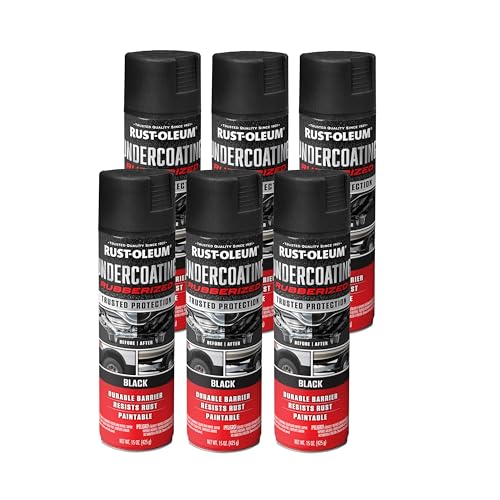
Rust-Oleum Rubberized Black Undercoating is a spray-on coating made for the bare or primed metal underbodies of cars, trucks, trailers and RVs. The rubberized formula is built to protect against corrosion and damage from water, salt and other chemicals. It comes in a pack of six 15 ounce cans, so you have enough product on hand for a full underbody job.
One of the practical strengths here is the drying time. The coating dries to the touch in 30 minutes, which keeps a project moving without long waits between coats. Each can covers up to 10 to 12 square feet, so you can plan your coverage before you start spraying. The black finish is paintable if you ever want to top it with another color.
The formula does more than seal metal. It helps deaden sound and reduce damage to parts, which is a useful bonus on older vehicles that rattle and drone on the road. The wide, comfort spray tip is designed to be easy on the hand during longer sessions. Any-angle spray technology means the can keeps working even when you hold it upside down.
That upside-down capability matters more than it sounds. Much of an underbody sits above you while you work, and a can that sprays at any angle saves awkward repositioning. The comfort tip helps when you are reaching into wheel wells and along frame rails. Together these features make the job less fiddly for someone working on a driveway or in a home garage.
This product suits people who want a straightforward rubberized undercoating without a lot of fuss. The six pack makes sense for anyone coating a full vehicle or keeping a spare can for touch-ups later. It is a sensible pick for routine protection on cars, trucks, trailers and RVs that see water, salt and road chemicals.
If speed and convenience are high on your list, the 30 minute dry time and any-angle spray are the details to note. The coverage figure of 10 to 12 square feet per can helps you buy the right amount up front. For a fast, paintable, sound-deadening coating on bare or primed metal, this is a solid option to compare against the rest of the field.
2. Rust-Oleum Stops Rust Pro Grade Rubberized Black Undercoating
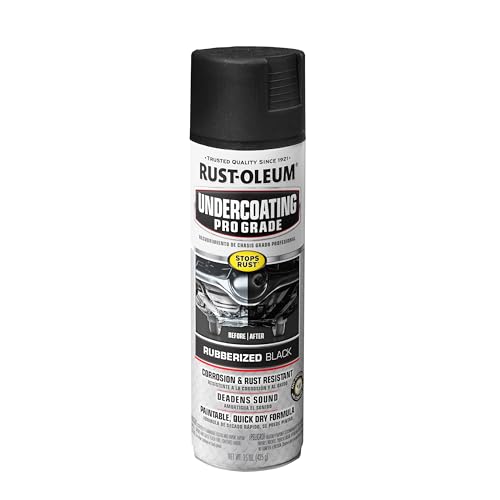
Rust-Oleum Stops Rust Pro is a professional-grade rubberized black undercoating spray for bare or primed metal underbodies. It is intended for cars, trucks, trailers, RVs and similar vehicles. The single 15 ounce can is a good fit for smaller jobs or for trying the product before committing to a larger quantity.
The headline difference is the formula. This professional-grade version is described as providing superior protection against corrosion and damage from water, salt and other chemicals. That makes it worth a look if your vehicle faces harsh conditions or you simply want a heavier-duty coating. It carries a satisfaction guarantee from the manufacturer as well.
Drying time is one hour to the touch, which is slower than some fast-dry options but still reasonable for this type of coating. Each can covers up to 10 to 15 square feet, giving a bit more spread per can than you might expect. The black finish is paintable, so you can top it later if you want a different look.
Like the rest of the range, it helps deaden sound and reduce damage to parts. The wide, comfort spray tip is built for extended use without tiring your hand. Any-angle spray technology lets the can work even when held upside down, which is handy for the overhead sections of an underbody.
This one suits buyers who prioritize protection over speed. The professional-grade formula and the satisfaction guarantee are the main reasons to choose it. It also works well for anyone coating a single vehicle who does not need a multi-can pack sitting on the shelf.
Compare it against faster-drying options if time is tight, since the one hour touch dry is the trade-off here. The coverage of 10 to 15 square feet per can helps you estimate how many cans a full underbody will need. For a professional-grade, paintable, sound-deadening coating on bare or primed metal, it is a strong candidate.
3. 1 Rust Converter & Metal Primer 2

1 Rust Converter & Metal is a two in one rust converter and metal primer from Meuvcol. It comes as a single component, ready to use black coating in a 35 ounce container. The formula is designed to seal metal surfaces and protect them from water, chemicals and salt.
What stands out is how it handles rust instead of just covering it. Meuvcol describes it as a rust encapsulator and inhibitor that locks out water and air to prevent further oxidation. It creates a durable flat finish on both rusted and bare metal, which keeps the surface looking tidy as well as protected.
The product is built for a wide range of jobs. It suits automotive work, truck frames, farm equipment, industrial settings, marine use and construction projects. Because it tolerates surfaces well, it offers a permanent and cost effective answer to rust and corrosion across those industries.
Application is straightforward and does not demand special equipment. You remove grease, oil and other foreign substances from the metal, wipe it dry, then apply the converter with a brush. Thin coats work best, and the brand recommends at least two coats with 24 hours of drying time to form the protective film.
It is positioned for both DIY users and professionals, and the brand notes it is trusted for chassis and tractor work. The black colour and flat finish mean it can act as a base before a topcoat or stand on its own. Anyone dealing with rusted frames or bare metal panels will find it a practical first step.
The pack contains one 35 ounce item, model USRUST-01. It is a heat resistant neutralizer that converts and primes in a single pass. For a buying guide on undercarriage paint, it earns its place as a solid converter and primer option.
4. Rust-Oleum 248657 Rubberized Undercoating Spray, 15 Oz, Black
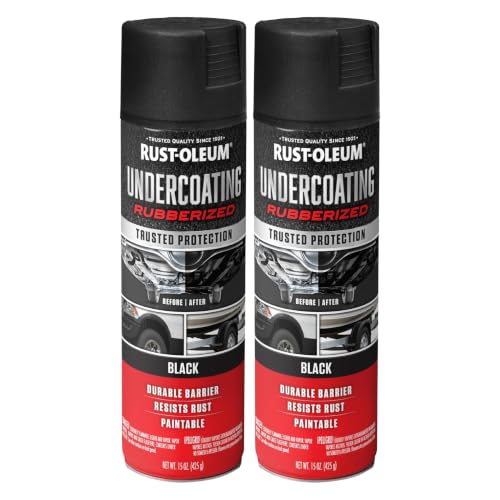
Rust-Oleum Rubberized Undercoating Spray is an aerosol undercoating in a 15 ounce can, sold here as a pack of two. It is made for bare or primed metal underbodies on cars, trucks, trailers, RVs and similar vehicles. The black rubberized formula goes on as a protective layer over the chassis and lower panels.
The main draw is the rubberized formula, which guards against corrosion and damage from water, salt and other chemicals. It also helps deaden sound and reduce damage to parts, so the coating does more than block rust. That combination makes it useful for anyone who drives in wet or salty conditions.
Coverage and drying times are clearly stated by the brand. It dries to the touch in 30 minutes and covers up to 10 to 12 square feet per can. With two cans in the pack, that is enough for a decent sized section of underbody in a single session.
Using it is simple thanks to the wide comfort spray tip and any angle spray technology. The can works even upside down, which matters when you are reaching awkward spots under a vehicle. You do not need brushes or extra equipment, just a clean surface and some time.
It suits home mechanics and anyone doing routine underside protection on a truck, trailer or RV. The spray format makes touch ups quick, and the rubberized finish adds a layer of sound dampening along the way. For a straightforward undercarriage paint option in aerosol form, it is a practical pick.
5. Eastwood Extreme Chassis Black Satin Aerosol Spray Paint

Eastwood Extreme Chassis Black is a satin aerosol spray paint made for car and truck chassis and frame work. It comes as a two pack of 14 ounce cans in black. The formula is built to improve corrosion resistance on the parts that take the worst of the road.
The finish sits at 25 to 35 percent gloss, which gives a satin look rather than a deep shine. Eastwood says it matches OEM automotive paint, so it blends well with factory finishes. It also helps seal rust and improves resistance against chips and scratches.
One useful trait is that you can apply multiple coats without lifting the earlier layers. That makes it easier to build up coverage on awkward frame rails and crossmembers. You are not forced to stop at a single pass if a area needs more protection.
The two pack size suits a project that needs more than one can, such as a full frame refresh or several smaller chassis parts. Each can weighs 1.13 pounds and the part number is 98065. The black color keeps the look consistent across the underside.
This paint suits someone restoring a car or truck who cares about an OEM style appearance. It works well on frames and chassis parts that are visible or that need a neat satin black finish. The corrosion and chip resistance make it a sensible choice for a long term project.
It is a good fit for the buyer who wants a rattle can product with a factory look and the freedom to layer coats. If a glossy finish is not what you want underneath, the satin sheen keeps things subtle. Eastwood positions it as a chassis specific product rather than a general purpose paint.
6. Rust-Oleum Stops Rust Pro Grade Rubberized Black Undercoating
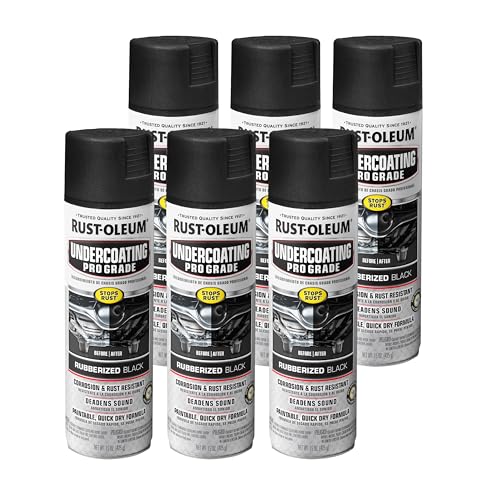
Rust-Oleum Stops Rust Pro Grade Rubberized Black Undercoating Spray is a multi purpose automotive coating in a six pack of 15 ounce cans. It is designed as a rust and corrosion preventive for underbody work. The rubberized formula gives a different kind of protection than a standard paint.
The professional grade formula is made to defend against corrosion and damage from water, salt and other chemicals. It is intended for bare or primed metal underbodies of cars, trucks, trailers, RVs and similar vehicles. That makes it a practical option for the parts that see the most road spray.
Coverage is listed at up to 10 to 15 square feet per can, and it dries to the touch in one hour. The wide comfort spray tip and any angle spray technology help with painting even upside down. That matters when you are working above your head on a frame or wheel well.
Beyond protection, the undercoating helps deaden sound and reduce damage to parts. That combination of sound damping and physical barrier is useful on older vehicles with thin factory coatings. The black color keeps the underside looking uniform once it is applied.
This product suits owners of cars, trucks, trailers and RVs who want a rubberized barrier rather than a satin paint finish. It is a good match for bare or primed metal that needs protection from salt and water. The six pack gives enough cans for a larger underbody job.
The fast dry time and any angle spray make it friendly for driveway work without a lift. If you want a coating that deadens sound and shields against chips from road debris, this is the type of product to consider. Rust-Oleum builds it for long lasting durability on multi purpose automotive use.
7. Rust-Oleum Stops Rust 2-in-1 Rust Reform & Seal
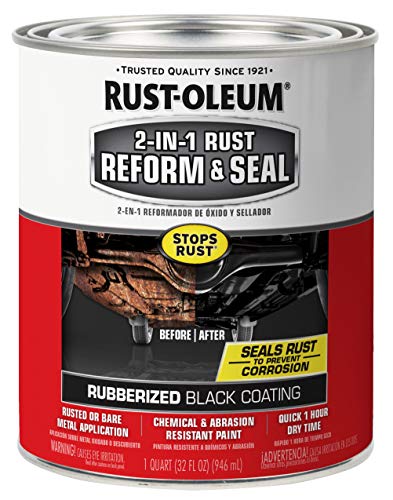
Rust-Oleum Stops Rust 2-in-1 is a reform and seal coating that comes in a quart can of black finish. It is designed to treat existing rust problems while also preventing future corrosion on metal surfaces. The formula works as a multi-purpose durable automotive coating for undercarriage paint work and similar jobs.
What stands out is the flexible, rubberized nature of the coating. That flexibility gives it strong chemical and abrasion resistance, which matters on a frame that takes a beating from grit and debris. It dries to the touch in one to two hours and covers between 85 and 175 square feet per quart.
You can apply it by brush, roller or spray, so it fits different working conditions under a vehicle. The finish is flat with no shine, which suits a frame or floor pan where appearance is not the priority. It seals and protects metal from corrosion and moisture once cured.
The product is built for rusted or bare metal, and it creates a protective layer over the surface. That makes it a practical choice when you want to stop rust from spreading rather than simply cover it. The black color keeps the look uniform across a chassis.
This one suits DIY owners and hobbyists working on older trucks, trailers or project cars. It is also a reasonable option for anyone who prefers a brush or roller over a spray can for control. The quart size gives enough material for larger sections of the underbody.
8. Ultra 2-in-1 Rust Converter Paint & Metal Primer
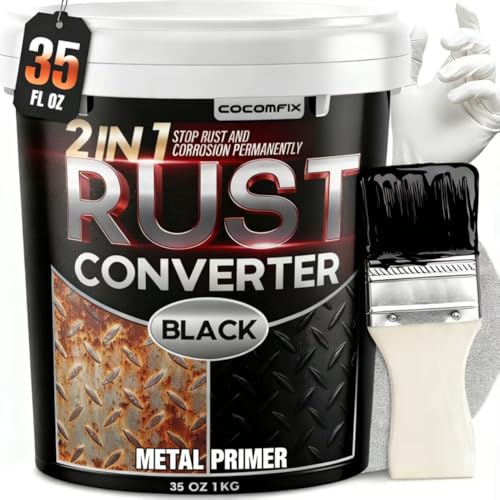
Ultra 2-in-1 Rust Converter is a paint and metal primer in one, sold as a 35 fluid ounce container in matte black. It is a reformer aimed at car frames and similar metal structures. The idea is to convert rust into a coating rather than remove it first.
The main selling point is direct-to-rust application with no primer, topcoat or sanding needed. One coat is claimed to convert 50μm of rust with peel-proof adhesion. It also forms a heat-stable, impact-resistant barrier that seals out moisture and salt.
The coating is rated to withstand 350°F heat along with salt, UV and corrosion. That thermal shock resistance matters on frames and components that see temperature swings. The manufacturer describes it as a rust encapsulator that bonds to lock out corrosion.
It is positioned for heavy-duty trucks, trailers, frames, industrial and marine equipment and outdoor structures. The permanent protection angle is aimed at people who want to stop rust from cutting short the life of their equipment. It converts rust into a tough, smooth, black coating as it cures.
The brand backs it with a return or replacement promise if the product does not meet expectations. That gives buyers a fallback if the result is not what they wanted. For undercarriage paint on a rusted frame, it offers a one-step approach that skips surface prep.
9. Rust-Oleum Stops Rust 2-in-1 Rust Reform & Seal

Rust-Oleum Stops Rust Spray is a two in one rust reform and seal coating in a flat black finish. It comes in a 12 fluid ounce can that sprays directly onto metal surfaces. The formula is designed to both repair existing rust problems and prevent future corrosion.
The rubberized coating is the standout feature here. It stays flexible and provides strong chemical and abrasion resistance, which matters on an undercarriage that takes a beating from road debris. You get a flat, no shine finish that looks clean on rusted or bare metal.
Application is simple because it is a spray can. It dries to the touch in about one hour and covers roughly 12 to 13 square feet per can. Rust-Oleum recommends two coats for the best results, so plan on a little extra time and product for full protection.
The spray seals and protects metal from moisture and corrosion, making it a practical choice for chassis work and general automotive touch ups. It works on rusted or bare metal and leaves a protective layer behind. The compact can size suits smaller jobs or spot treatment rather than full frame coverage.
This one suits someone who wants a quick, forgiving spray with a rubberized feel and no mixing or brushing. If you are sealing rusted spots or coating bare metal underneath a vehicle, it is a straightforward option. The flat black finish keeps things looking tidy once it dries.
10. 1 Rust Converter & Metal Primer 2
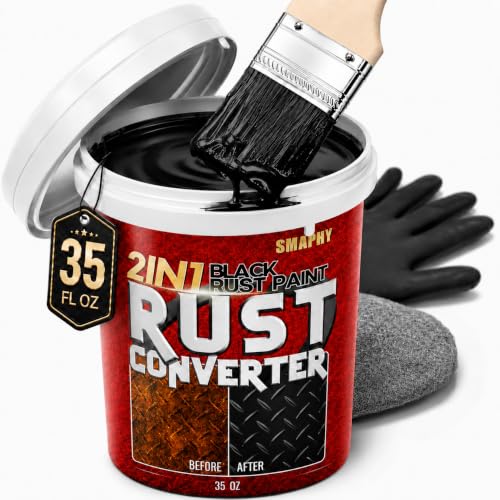
1 Rust Converter Rusty is a two in one rust converter and metal primer in a matte black finish. It comes in a 35 fluid ounce can, which is a generous size for bigger jobs. The water based formula is described as non toxic and works as both a converter and a primer.
The main appeal is that it converts rust in one coat. You paint directly over rust and it turns into a stable, inert, flat black finish that protects the metal. There is no topcoat and no grinding needed, which saves a lot of prep time on a rusty chassis.
It creates a barrier that seals out water and salt, and it is heat and UV resistant. That makes it useful in corrosion prone conditions like road salt or coastal weather. One can covers up to 100 square feet of bare or rusty metal, so it goes a long way.
The list of uses is broad. It is meant for chassis, undercarriage, brakes, engine bay, exhaust pipes, trucks, trailers, machinery and more. That versatility means one can can handle several projects around the garage. The matte black finish keeps the look consistent across different parts.
This product suits people facing heavier rust who want to skip the grinding step. If you are working on a frame, trailer or undercarriage in tough weather, the one coat approach is appealing. The large can size and wide coverage make it a sensible pick for bigger jobs.
Our Testing Process: Why These Rankings Are Different
The goal here was simple. We wanted to look past the marketing claims and focus on what actually matters for undercarriage paint. Buyers need protection that holds up to road spray, salt and grit, not a flashy label.
Each product was evaluated on its specifications, materials and build, along with patterns in owner feedback and brand reputation. We also weighed overall value and asked which factors mattered most for real-world use. Rust-Oleum Rubberized Black Undercoating and Rust-Oleum Stops Rust Pro stood out in that evaluation for their specifications and the consistency of owner feedback.
We compared products across a wide price range, from budget-friendly sprays to premium chassis coatings. A higher price did not always mean a better result, and some affordable options held their own on the factors that count. What mattered most was the balance of protection, durability and value, not the size of the price tag.
The aim is trustworthy, data-driven guidance you can rely on when choosing. This is research and evaluation, not hands-on testing, so every judgment rests on specifications and reported owner experience. That approach keeps the rankings honest and useful for your own decision.
Complete Buyer’s Guide: How to Choose Undercarriage Paint
Understanding What Undercarriage Paint Must Do
The undercarriage takes a constant beating from road grit, water, salt and flying stones. A good coating has to block moisture from reaching bare steel and stay flexible enough to survive vibration and minor impacts. Without that protection, rust starts in seams and crevices where you rarely look until the damage is serious.
Key Features to Look For
Start with the finish type, since rubberized coatings cushion impacts while chassis paint cures harder and resists abrasion. Check the rust prevention claims and confirm the product bonds to bare metal, painted surfaces or existing rust. Drying time and recoat windows matter too, because they decide how quickly you can finish the job and drive the vehicle again.
Types of Undercarriage Paint Compared
Rubberized undercoating like Rust-Oleum Rubberized Undercoating Spray goes on thick and stays flexible, which suits wheel wells and areas hit by gravel. Chassis paint such as Eastwood Extreme Chassis Black cures to a harder finish that stands up to scrapes and road grime. Rust converter products like Ultra 2-in-1 Rust Converter and 1 Rust Converter & Metal treat existing rust rather than simply covering it.
How to Use Undercarriage Paint for Best Results
Clean the surface first, because dirt, grease and loose rust stop any coating from bonding properly. Scrape or wire brush flaking areas, then treat active rust with a converter before you apply a top coat. Apply thin, even coats within the recoat window and let each layer cure fully, since rushing this step is where most coatings fail.
What to Avoid
Do not spray over wet, oily or heavily rusted metal, because the coating will lift or trap moisture underneath. Avoid coating brake lines, exhaust components and moving parts, which need to stay clear. Skip thick single coats as well, since they trap solvents and dry unevenly, and always check that the product suits the surface you have.
Matching Undercarriage Paint to Your Situation
For a daily driver facing winter salt, a rubberized coating such as Rust-Oleum Rubberized Black Undercoating gives useful cushioning and a sound barrier. For a project car or a chassis you want to look sharp, Eastwood Extreme Chassis Black offers a durable, tidy finish. If rust is already present, start with a converter like 1 Rust Converter Rusty, then top coat with Rust-Oleum Stops Rust Pro or Rust-Oleum Stops Rust 2-in-1.
When to Expect Results and How to Maintain the Coating
Most undercarriage coatings need time to cure fully, so check the label before exposing them to heavy road spray. Inspect the underside once or twice a year and touch up chips or worn spots before rust gets a foothold. A quick rinse after winter driving removes salt and helps the coating last much longer.
Best Undercarriage Paint FAQs
Are There Any Undercarriage Paint Options That Work Well on a Rusty Frame?
Yes, some products are made to go directly over rust, usually rust converter or rust encapsulator style coatings. They bond to the surface and seal it from moisture so rust cannot keep spreading. Read the label carefully, because not every coating tolerates existing rust.
You still need to prep the frame first. Scrape off loose flakes and heavy scale, then clean the surface so the coating can grip. Paint sticks far better to a stable, dust free base, and skipping this step is why many jobs fail.
For deep rot or thin metal, paint is not a fix. It hides the problem for a while but cannot restore strength, and the metal may keep weakening underneath. Treat heavy rust as a repair job before you think about coating, and cut out or reinforce badly damaged sections.
Can I Use Undercarriage Paint on Plastic Wheel Wells and Trim?
Usually no, and it can make a mess. Most undercarriage paints are designed for metal and need a firm surface to grip, while plastic and rubber trim often reject them. You can end up with a patchy finish that looks worse than before.
Flexible plastic moves as you drive, and a stiff coating can crack or peel. That leaves edges where water gets in, which can trap moisture and speed up corrosion nearby. Check the label for plastic compatibility before you try anything.
If you want to darken trim, use a product made for plastic, since those are formulated to flex and bond properly. Save the undercarriage paint for the frame, floor pans and metal panels. Matching the product to the surface is the safest route.
How Do I Apply Undercarriage Paint So It Lasts?
Start with a thorough clean and a full dry. Pressure wash the underside, let it dry completely, then wire brush any rust spots so the coating has something solid to bond to. Mask off brakes, exhaust and moving parts before you open any can.
Apply in thin, even coats rather than one heavy layer. Two or three coats give better coverage and cure more reliably than a single thick pass. Follow the recoat window printed on the can, because applying the next coat too late can cause wrinkling.
Give it proper cure time before driving on wet roads. Many coatings need a day or more to harden fully, and cold or damp weather stretches that out further. Rushing this step is the most common reason coatings fail early.
How Long Does Undercarriage Paint Take to Dry and Cure?
Dry times vary a lot by product type. Rubberized coatings often touch dry in a couple of hours, while epoxy and enamel formulas can take longer to stop feeling tacky. Check the can rather than guessing from the smell or look.
Full cure is a different story. Many coatings need 24 hours or more before they handle water and road spray, and cold or damp weather stretches that out further. Plan the job for a dry day with reasonable temperatures.
Read the can for the exact recoat and cure windows. Applying a second coat too late can cause wrinkling, and driving too soon can scrub the coating off. If in doubt, give it an extra day rather than risk a redo.
Is It Better to Use Spray Undercarriage Paint or a Brush on Coating?
Spray cans are quick and reach awkward areas. They suit small touch ups and tight spots around brackets, where a brush simply will not fit. Coverage per can is limited, though, and overspray is a real risk on nearby paint and glass.
Brush on coatings go on thicker and waste less product. They work well on large flat areas like floor pans, and brushing also pushes the coating into seams and pits where rust likes to start. Expect a slower job but a heavier layer.
Many people use both. Brush the heavy coating on main panels and spray the hard to reach corners, then inspect the result before it cures. Mask nearby parts either way, because both methods make a mess.
What Are the Best Undercarriage Paints for Winter Road Salt Protection?
Look for thick, flexible coatings that resist salt and stone chips. Rubberized and epoxy formulas tend to hold up well in harsh winters, and a product rated for marine or heavy duty use is a good sign. Thickness matters more than a fancy label.
Prep matters as much as the product. Salt hides in seams and pits, so clean and dry the surface thoroughly before coating, since any trapped moisture will start rust under the paint. A coating over dirt or salt is money wasted.
Plan to inspect the underside each year and touch up chips and worn spots before the next salt season. Small repairs now beat a big one later, and a good coating plus yearly checks beats any single product on its own.
What is Undercarriage Paint and What Does It Actually Do?
Undercarriage paint is a protective coating made specifically for the underside of a vehicle. It shields metal from road salt, water, gravel and general grime that attack the chassis year round. The main goal is to slow rust and keep the structure sound.
Most formulas are rubberized, epoxy based or heavy duty enamel, and they dry into a tough layer that resists chips and abrasion. Some also dampen road noise a little, which is a nice bonus on long drives. This is not the same as ordinary body paint.
Undercarriage paint is built for abuse and stays flexible enough to move with the frame instead of cracking. That makes it a practical choice for trucks, off roaders and winter driven cars. Check the label so you match the product to how you actually use the vehicle.
Final Verdict
Undercarriage paint is worth the effort, based on our research and data analysis. Rust-Oleum Rubberized Undercoating Spray suits drivers who want a flexible, sound-damping layer with rubberized impact cushioning and quiet road manners. Stops Rust Pro by Rust-Oleum serves a different need, giving metal a hard, protective finish with tough chip resistance and lasting rust defence. Both earn their place for the jobs they handle best.