
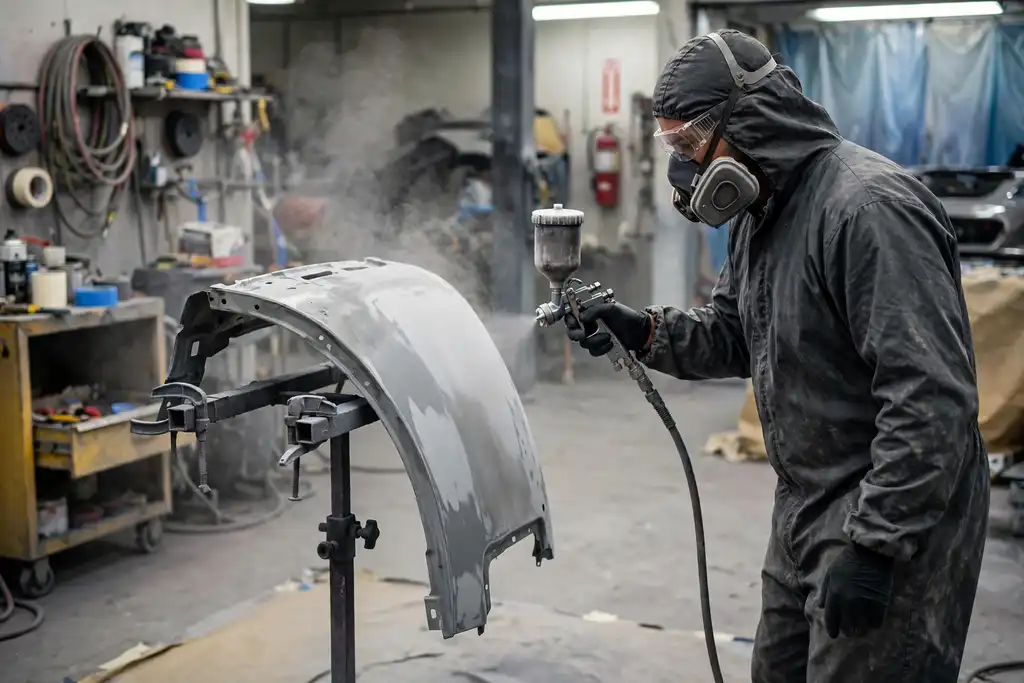
You need a primer that fills sand scratches and holds color under your topcoat. Restoration Shop 2K High is the best primer for auto paint for larger bodywork, with a 1.25 quart kit that includes 1 quart of gray urethane primer surfacer and a 1/2 pint of urethane.
Its high solids content gives superior filling for medium to deep sand scratches, and this direct-to-metal primer provides excellent color holdout under all urethane finishes with no shrinkage. Below, you will find the best primer for auto paint, each one suited to a different need.
Top Recommendation: Restoration Shop 2K High Build
Why We Recommend It: Restoration Shop 2K High earns the recommendation because its high-build urethane formula fills medium to deep scratches and dries fast, sanding easily wet or dry without loading. It also seals and holds color under urethane finishes. The Eastwood pen is handy for tiny repairs, but the Restoration Shop kit covers the bigger work.
10 Best Primer for Auto Paint


1. Restoration Shop 2K High Build Primer Automotive Paint
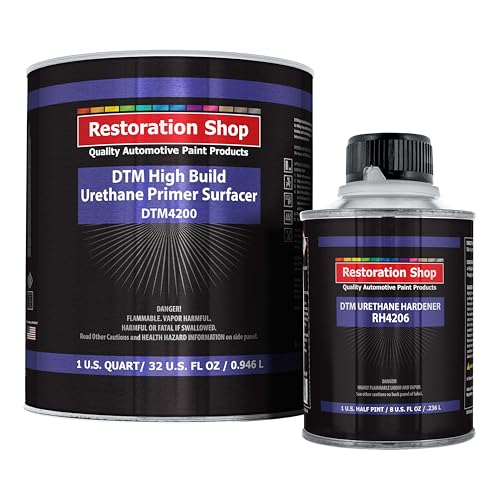
Restoration Shop 2K High is a complete two-component primer kit rather than a single can. It arrives as one quart of gray urethane primer surfacer plus a half pint of urethane hardener, mixed at a 4 to 1 ratio. Together that yields 1.25 quarts of sprayable primer ready for a gun.
The headline trait here is high solids content. That gives the primer strong filling ability, so it handles medium to deep sand scratches without multiple coats. It is built as a direct-to-metal product, which means it can go straight onto properly prepared bare metal.
Adhesion is another part of the pitch. The maker lists bare metal, previously painted surfaces, body filler and most properly prepared automotive plastics as suitable substrates. It also provides good color holdout under all urethane finishes with no shrinkage.
Working with it is meant to be straightforward for anyone used to 2K products. It dries fast and sands easily, wet or dry, without loading the paper. If you want to adjust the shade, it can be tinted with primer tints or base coat toner.
The kit format suits a job where you want one product to fill, seal and build before topcoat. Because it is a two-component system, you do need to mix it properly and work within its pot life. The 1.25 quart yield is a practical size for panel work and smaller repairs.
Restoration Shop formulates and manufactures these coatings in the USA. The company says its products use high-quality ingredients for consistent results. For a refinisher who wants a high-build surfacer and sealer in one step, this kit covers that ground.
2. Eastwood OEM Select Paint Chip and Scratches Touch
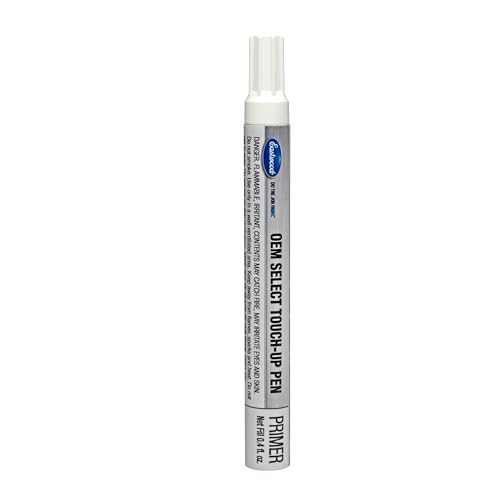
Eastwood OEM Select Paint is a touch-up primer in pen form, not a spray gun product. It holds 0.4 fluid ounces of gray primer inside a durable metal tube. The format is aimed squarely at small damage rather than panel-wide prep.
The applicator is the main feature. It has an interchangeable dual tip, with a chisel tip for filling lines and scratches and a bullet tip for stone chips and nicks. A spring-loaded tip controls primer flow for smoother, more even results.
You use it before applying Eastwood OEM Select touch-up paint. Its jobs are to protect bare metal, enhance adhesion and fill deeper damage. That makes it a prep step in a touch-up routine rather than a standalone primer.
The pen design keeps things clean and easy on small spots. There is no mixing and no spray equipment involved, which suits quick repairs. The trade-off is coverage, since 0.4 ounces goes only so far on small areas.
It suits a driver or detailer fixing road rash and chips without setting up a gun. For anything larger than a chip or a scratch line, a conventional high-build primer makes more sense. As a targeted touch-up tool, the dual tip and controlled flow are the practical selling points.
3. Restoration Shop 2K High Build Primer Automotive Paint
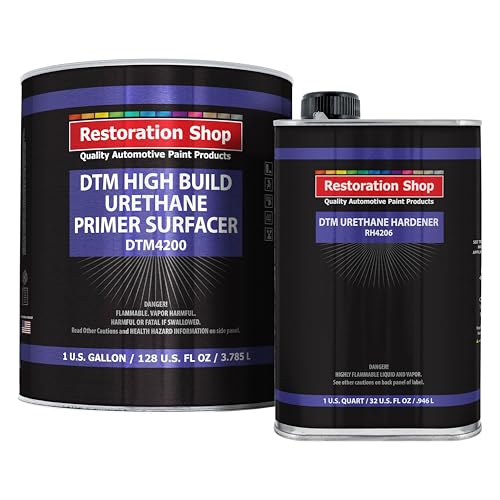
Restoration Shop 2K Repair is a complete 2K high build primer kit in gray. It pairs one gallon of urethane primer surfacer with one quart of hardener. The two parts mix at a 4 to 1 ratio to make 1.25 gallons of sprayable primer.
The high solids content gives this primer strong filling power. It handles medium to deep sand scratches well, so you can smooth a panel without endless coats. That makes it a practical choice when a surface needs real leveling rather than a light sealer coat.
This is a direct-to-metal primer, and it provides excellent adhesion over properly prepared bare metal, previously painted surfaces, body filler, and most properly prepared automotive plastics. It also offers excellent color holdout under all urethane finishes with no shrinkage. Fast drying and easy sanding are part of the package too, and it sands wet or dry without loading the paper.
You can tint the primer with primer tints or base coat toner to suit your project. That flexibility helps when you want a shade that supports the color going on top. The kit format also means you have the hardener on hand and can mix exactly what the job needs.
Restoration Shop formulates and manufactures these coating products in the USA and distributes them throughout the USA. The brand states that its products use high-quality ingredients to deliver consistent, professional results. For anyone working through body repair and refinish steps, this kit covers the surfacer stage in one box.
This kit suits professional auto body work and ambitious DIY refinishing alike. The 1.25 gallon yield is generous enough for larger repair areas or multiple panels. If your project involves deeper scratches and you want a primer that fills and sands predictably, Restoration Shop 2K Repair is worth a close look.
4. 2K High Build Primer Automotive Paint Kit

2K High Build Primer is a complete 2K primer kit in white. It includes one quart of urethane primer surfacer and a half pint of hardener. Mixed at a 4 to 1 ratio, the kit makes 1.25 quarts of sprayable two-component primer.
The high solids content gives this primer superior filling capabilities. It works well for filling medium to deep sand scratches, so panels come out smoother with less effort. The white color is also useful when you want a light base under your finish.
This direct-to-metal primer provides excellent color holdout under all urethane finishes with no shrinkage. It dries fast and sands easily wet or dry without loading the paper. That combination keeps prep moving, whether you sand by hand or with a block.
Adhesion is a strong point. The primer bonds well over properly prepared bare metal, previously painted surfaces, body filler, and most properly prepared automotive plastics. It can also be tinted with primer tints or base coat toner if you need to adjust the shade.
Restoration Shop formulates and manufactures these coating products in the USA and distributes them throughout the USA. The brand says its products use high-quality ingredients so customers get consistent, professional results. The smaller quart kit keeps waste down on modest jobs.
This kit suits smaller repairs, spot work, and projects where a quart of primer covers the need. It is a sensible pick for DIY refinishers and pros handling limited areas. If you want a white high build primer that fills, sands, and seals in one kit, 2K High Build Primer fits the bill.
5. PaintScratch Automotive Primer Paint to Help Fix Scratches
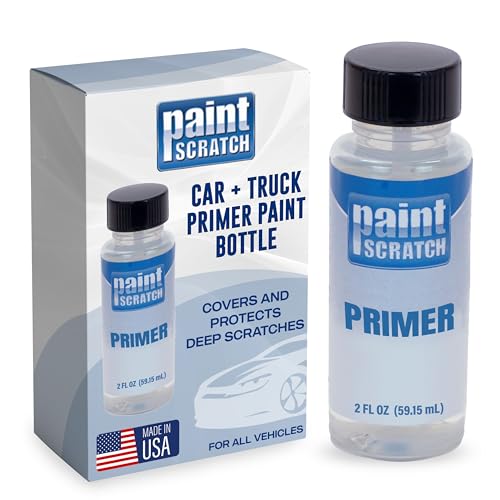
PaintScratch Automotive Primer Paint is a 2 ounce bottle of black primer with a brush cap built into the lid. It is made for touch up work on cars, trucks and other vehicles. The idea is to give the basecoat something to grip so the repair holds up over time.
The formula is designed to dry quickly, which keeps a touch up project moving. You are not stuck waiting around the way you might be with a traditional primer. That matters when you are fixing a chip on a door edge or a scratch on a bumper and want to get the color coat on the same day.
It also fills small imperfections as it goes. Light scratches, sanding marks and similar surface flaws get smoothed over so the basecoat has an even surface to sit on. Because it handles that filling step itself, you can skip extra filler products in many cases.
Application is where this bottle earns its place. The brush cap lets you work into tight spots and control how much primer goes down. Large areas are possible too, but the real strength is accuracy on small repairs where a spray can would be messy.
The primer works on bare metal, plastic and rubber, so it covers most of what you will run into on a vehicle. It promotes adhesion between the basecoat and the damaged surface, which helps prevent peeling and flaking later. That makes it a sensible first step for a repair that needs to last.
This one suits DIY owners doing chip and scratch repair at home. It is not aimed at full panel work or a complete respray. For small, controlled touch ups where you want a primer that goes on exactly where you point it, it fits the job well.
6. 2K High Build Primer Automotive Paint Kit

2K High Build Black is a two component urethane primer kit. It comes with 1 quart of black primer surfacer and a 1/2 pint of hardener. The two mix at a 4 to 1 ratio to make 1.25 quarts of sprayable primer.
The high solids content is the main feature here. It gives the primer strong filling ability, which makes it a good match for medium to deep sand scratches. Body work that needs leveling before topcoat is exactly what this product is built for.
It is a direct to metal primer, so it can go over properly prepared bare metal. It also works over previously painted surfaces, body filler and most properly prepared automotive plastics. Adhesion is the point, and the product is designed to provide it across those substrates.
Color holdout under urethane finishes is another thing it handles, and the maker states there is no shrinkage. It dries fast and sands easily, wet or dry, without loading the paper. That combination keeps a refinish job moving instead of stalling at the sanding stage.
The kit can be tinted with primer tints or base coat toner if you need to adjust the shade. Mixing is straightforward with the 4 to 1 ratio, and the quart and half pint sizes are set up to be used together. You get a full sprayable batch from one kit.
This primer suits someone doing real body repair, not just a chip. It is aimed at panel work, filler blending and surface leveling before paint. The products are made in the USA, and the kit format gives you the primer and hardener in one box.
7. Eastwood OEM Select Paint Chip and Scratch Touch
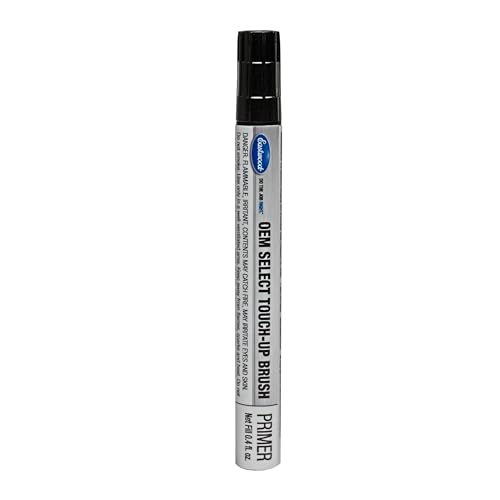
The Eastwood OEM Select Scratch is a touch up primer built around a brush applicator rather than a spray can. It comes in a 0.4 ounce metal tube, and the fine bristles let you place material exactly where you need it. This is a small format product made for small repairs, not for covering whole panels.
The long reach applicator holds a good supply of primer so you are not constantly reloading the brush. That matters when you are working on a chip or a narrow scratch and want a smooth, even result. The fine bristles give you controlled delivery, which keeps the primer inside the damaged area instead of spreading onto surrounding paint.
The primer itself is gray, which makes it easy to see where you have applied it before the top coat goes on. Eastwood intends it to be used before their OEM Select touch up paint. The job it does is threefold: protect bare metal, improve adhesion for the paint that follows, and fill deeper damage so the repair sits closer to level.
Because the tube is durable metal and holds only 0.4 ounces, it stores easily in a glovebox or toolbox without taking up space. The brush format suits someone who wants to deal with stone chips and parking lot scratches themselves. It is less about speed and more about putting a small amount of primer in a small place.
This is a good fit for a careful owner doing spot repairs on a daily driver or a weekend car. If your damage is a deep chip down to metal, the primer step is what keeps rust from starting under the touch up paint. The Eastwood OEM Select Scratch keeps that step simple and contained.
8. Rust-Oleum Acrylic Enamel 2X Spray Paint Gloss

The Rust-Oleum Acrylic Enamel 2X is a spray paint that also acts as a primer, so you get two jobs from one can. It is a general purpose product intended for metal, most plastics and wood. The color is gloss black and each can holds 12 ounces.
The all in one paint and primer formula is the main selling point here. It provides excellent coverage and adhesion, and Rust-Oleum says it delivers double the coverage compared with their standard spray. That means one can covers up to 12 square feet, which is a useful figure to know before you start a project.
Drying is quick. The coating dries to the touch in 20 minutes, so you can move on with a job without waiting around all afternoon. The any angle spray feature lets you work at odd orientations, which helps on awkward shapes and hard to reach areas. The finish is described as smooth and attractive, and the durable coating is built for long lasting protection.
Using it is straightforward. You clean and prepare the surface, then spray in light passes until you have the coverage you want. Because the primer is built into the paint, you skip a separate priming step on compatible materials. That saves time on furniture, garden items, tools and similar around the house projects.
This suits someone who wants one can that handles both the prep layer and the color layer. It is not a dedicated automotive primer, but for metal parts, brackets and general workshop items it covers a lot of ground. If you need a gloss black finish with good adhesion and fast handling time, the Rust-Oleum Acrylic Enamel 2X is a practical choice.
9. Rust-Oleum Farm & Implement Gray Primer Paint

Rust-Oleum Farm & Implement Gray is a heavy duty primer paint built for equipment that lives outdoors. It is made for tractors, trailers, lawn mowers and other implements that take a beating. The formula is designed as a rust preventative base coat for metal surface preparation.
The rust preventative formula protects items from wear and provides excellent coverage. It dries to the touch in 2 to 4 hours and covers up to 130 sq. ft. per quart. That spread rate makes it practical for larger panels and full equipment restoration jobs.
Durability is the main selling point here. The heavy duty paint is ultra durable and resists chipping and weather damage. Rust-Oleum calls it the ideal tractor paint for any conditions, and the flat finish matches original equipment manufacturer colors.
This is a simple product to work with on farm and industrial equipment. You apply it as a corrosion resistant base coat before your topcoat. The flat gray finish gives you a neutral starting point that works with OEM color matching.
The size is a 32 ounce pack of two, so you get two quarts in one purchase. That suits bigger restoration projects where one quart would not stretch far enough. The packaging keeps you supplied for multi piece jobs.
This primer suits anyone repairing or repainting farm and industrial equipment. It is a good fit for tractors, trailers and mowers that face weather and wear. If you want a rust preventative base coat with a flat OEM style finish, this one is worth a look.
10. Custom Shop 1K High Build Primer Spray Paint

Custom Shop 1K High is a high build primer spray in a 12 ounce grey can. It is an automotive sandable primer made for metal, plastic and fiberglass. The formula is described as direct to metal, so it bonds strongly to steel, aluminum, fiberglass, SMC and urethane painted surfaces.
Application is straightforward thanks to the flat fan high atomization nozzle. That nozzle provides a large fan pattern and delivers excellent coverage from the spray can. The direct to metal primer requires no preparation, which saves time on car restoration projects.
The formula is versatile across surfaces and substrates. It works as primer for cars, metal primer, plastic primer spray paint and wheel primer. It adheres to both flexible and rigid substrates, so grey primer spray paint covers a wide range of bodywork jobs.
The filling properties are what set this primer apart. It creates a smooth foundation for paint and the high build formula fills minor imperfections. As a sandable automotive grade primer, it lets you work the surface to a perfect finish, and the grey color suits any topcoat.
Compatibility matters when you are building a paint system. This primer is compatible with most automotive paint refinish topcoats. The primer filler spray paint creates an ideal surface for painting, and the self etching primer properties help on metal surfaces.
This spray primer suits car restoration and auto body work. It is a good choice for anyone who wants a sandable high build primer over steel, aluminum, fiberglass or plastic. The 12 ounce can and direct to metal formula make it a practical option for smaller panels and touch up work.
Our Testing Process: Why These Rankings Are Different
The goal here is simple. We want to look past the marketing claims on a can and focus on what actually matters when you are choosing a primer. That means asking how a product behaves, what it is made of, and whether it earns its place in a real repair or refinish job.
Our evaluation drew on product specifications, materials and build, patterns in owner feedback, brand reputation and overall value. We weighed those factors against how each primer is meant to be used, because a product that suits one job may not suit another. What mattered most was the fit between the product and the work it is designed for, and that is where standouts like Restoration Shop 2K High and Eastwood OEM Select Paint separated themselves from the pack.
We compared products across a wide price range, from budget-friendly cans to higher-end 2K systems. A higher price does not always mean a better result, and an expensive primer can still be the wrong choice for your surface, your equipment or your skill level. The point is to match the product to the job, not to pay more for its own sake.
This section is built on research and evaluation, not hands-on testing, so treat it as a starting point rather than a final verdict. Our aim is to give you trustworthy, data-driven guidance you can check against your own needs. Use it to narrow the field, then confirm the details that matter for your project.
Complete Buyer’s Guide: How to Choose Primer for Auto Paint
Understanding Why Primer Matters Under Auto Paint
Primer sits between bare metal or sanded bodywork and your topcoat, and it does a job paint alone cannot. It creates a uniform surface so the colour coats lay down evenly, and it gives the topcoat something to grip. A good primer also seals minor imperfections and helps protect the metal underneath from moisture and rust. Skipping this layer weakens adhesion and shortens the life of the finish.
Key Features to Look For
Start with the build a primer offers, since high build products fill sanding scratches and small low spots. Check the mix ratio and pot life on 2K products, because these two-part systems need accurate measuring and a working window. Also confirm topcoat compatibility, so the primer suits the paint going over it and no reaction occurs.
Types of Primer Compared
Two-part 2K primers such as Restoration Shop 2K High, Restoration Shop 2K Repair and 2K High Build Primer cure through a chemical reaction and give strong adhesion and build. Single stage 1K primers like Custom Shop 1K High are simpler to mix and spray but offer less chemical resistance. Aerosol options such as PaintScratch Automotive Primer Paint and Eastwood OEM Select Scratch suit small touch up jobs rather than full panels.
How to Use Primer for Best Results
Clean and sand the panel first, then mix the primer exactly to its stated ratio and strain it before spraying. Apply light coats and let each one flash off, building thickness gradually instead of flooding the surface in one pass. Once cured, sand the primer smooth with the appropriate grit before any topcoat goes on.
What to Avoid
Do not spray over grease, wax or silicone residue, because contamination causes fisheyes and poor adhesion. Avoid mixing 2K products by eye, since a wrong ratio can leave the primer soft or slow to cure. Never rush the flash time between coats or skip sanding, as both lead to a rough base under your paint.
Matching Primer to Your Repair Situation
For bare metal and larger bodywork, a high build 2K primer gives the filling and sealing you need. For spot repairs and small scratches, an aerosol or 1K product keeps the job manageable. If you are working over existing finishes, use a primer rated for that substrate and test a small area first.
When to Expect Results and How to Maintain Primer
Cure times vary by product and conditions, so follow the stated window before sanding or topcoating. Store mixed primer only for its pot life, and keep sealed cans in a dry place away from temperature extremes. Sanded, properly cured primer should stay clean and dry until the colour coats go on.
Best Primer for Auto Paint FAQs
Are There Any Primers for Auto Paint That Work on Bare Metal?
Yes, some primers are made to go straight onto bare steel or aluminum. These are usually called etch primers or epoxy primers. They bond chemically to the metal instead of just sitting on top.
Etch primer for auto paint contains a mild acid that bites into the metal surface. Epoxy primer for auto paint seals the metal and offers strong rust protection. Both need the metal to be clean and free of grease before you spray.
Check the label to confirm the primer is rated for bare metal. Some primers are only meant for use over existing paint or body filler. Using the wrong one on bare steel can lead to poor adhesion.
Are There Any Tips to Avoid Primer for Auto Paint Problems Like Peeling?
Most peeling comes from poor surface prep rather than the primer itself. Sand the panel dull and clean it with a degreaser before spraying, because any wax, oil or silicone left behind will cause adhesion failure. Pay attention to edges and panel gaps where contaminants collect.
Apply thin coats and respect the flash times on the label, since spraying heavy in one pass traps solvent and weakens the film. Avoid spraying in very humid or cold conditions, which slow curing and trap moisture. Keep your gun distance and speed consistent so the film builds evenly.
Use the primer within its stated recoat window, and scuff the surface if you wait too long before the next coat. Following the data sheet closely prevents most common failures.
Can I Use Primer for Auto Paint Over Old Paint?
Yes, you can prime over old paint if that finish is sound and properly prepared. Sand the surface dull so the new primer has a mechanical grip, then wipe away all grease, wax and silicone with a prep cleaner. Peeled or cracked areas must be feathered out or removed entirely, because anything loose will lift under the fresh coats.
Choose a primer designed for cured finishes, such as a sealer primer, which gives a uniform base and blocks the old color from bleeding through. Spray thin coats and let them flash off between passes rather than flooding the panel.
Watch for chalky or heavily oxidized paint, since primer will not bond to it and may fail later. Test a small area first to confirm adhesion before committing to the whole panel.
How Do I Apply Primer for Auto Paint Correctly?
Begin with a clean, sanded panel and wipe it down with a prep cleaner to remove dust and oils. Shake the primer thoroughly, then test the spray pattern on scrap material before touching the vehicle. Thin coats always beat one heavy pass, which traps solvent and can cause defects.
Keep the can or gun moving at an even speed and distance, overlapping each pass by about half for full coverage. Let each coat flash off before adding the next, and build two or three light layers until coverage is even. Rushing the flash time leads to runs, solvent pop and poor adhesion.
Once the primer is fully cured, sand it smooth with fine grit and wipe off the dust before spraying color. Watch for dry spray or orange peel, which signal too much distance or too fast a pass.
How Long Should Primer for Auto Paint Dry Before Sanding?
Drying time depends on the primer type and the conditions around you. Aerosol primers often flash off in around thirty minutes but need longer before sanding. Two-part epoxy primers may need several hours or even overnight before they are ready.
Always check the product data sheet for the recoat and sanding window, since those numbers are specific to the product. Humidity and cold weather slow curing, while warm, dry conditions speed it up. Plan your work around the weather rather than forcing the schedule.
Sanding too early clogs the paper and ruins the surface, while sanding too late can leave the primer hard and difficult to cut. Wait until the film feels firm and does not clog or ball up on the paper. If you miss the window, scuff lightly before the next coat.
What Does Primer for Auto Paint Actually Do?
Primer for auto paint sits between the bare metal or old finish and the topcoat. It gives the color coat something to grip, so the paint does not flake off later. It also fills small scratches and sanding marks so the surface looks even.
Good primer for auto paint also blocks moisture from reaching bare steel. That helps prevent rust from starting under the paint. Some primers add extra build so you can sand the surface perfectly flat.
Think of it as the foundation layer. Skip it and the topcoat may peel, chip or show every imperfection underneath. A proper primer for auto paint makes the final result smoother and longer lasting.
What Type of Primer for Auto Paint Should I Look For, Aerosol or Gun Grade?
Aerosol primer suits small repairs, touch ups and hobby work because it needs no mixing or equipment. It is easy to use and forgiving for beginners, but coverage per can is limited. Large panels get expensive fast, and the spray pattern is less controllable than a gun.
Gun grade primer comes in larger quantities and needs a spray gun and compressor. Two-part epoxy and urethane primers offer better durability and build, which suits full panels or whole vehicle work. They also give more consistent results once you are set up properly.
Match the primer to the job size and your setup. Small spot repairs favor cans, while bigger projects reward a gun. Either way, confirm the primer is compatible with your topcoat, and check the data sheet for recoat windows so the layers bond properly.
Which Primer is Best for Auto Paint on Plastic Bumpers?
Flexible plastic bumpers need a primer made specifically for plastic, often an adhesion promoter. Standard metal primer may not grip the material, and the wrong product can crack or peel as the bumper flexes. Look for a primer that stays flexible after curing, since rigid films fail on parts that bend.
Clean the bumper thoroughly and scuff it lightly so the primer has something to bite into. Some plastics also need a quick wipe with a plastic prep agent to remove mold release and oils. Apply thin coats and let them cure fully before the color coat goes on.
Check the label for the plastic types the primer covers, because not every product works on every plastic. Read the data sheet for flash times and recoat windows, and test on a hidden area if you are unsure.
Final Verdict
Anyone who wants a simple aerosol touch up will be happiest with PaintScratch Automotive Primer Paint, based on our research and data analysis. It suits spot repairs and small panels with spray can ease and color matched convenience. Restoration Shop 2K Repair is the better route for larger bodywork and serious builds that need catalyzed durability and high build coverage. Both earn their place for different jobs, so match the product to the work in front of you.